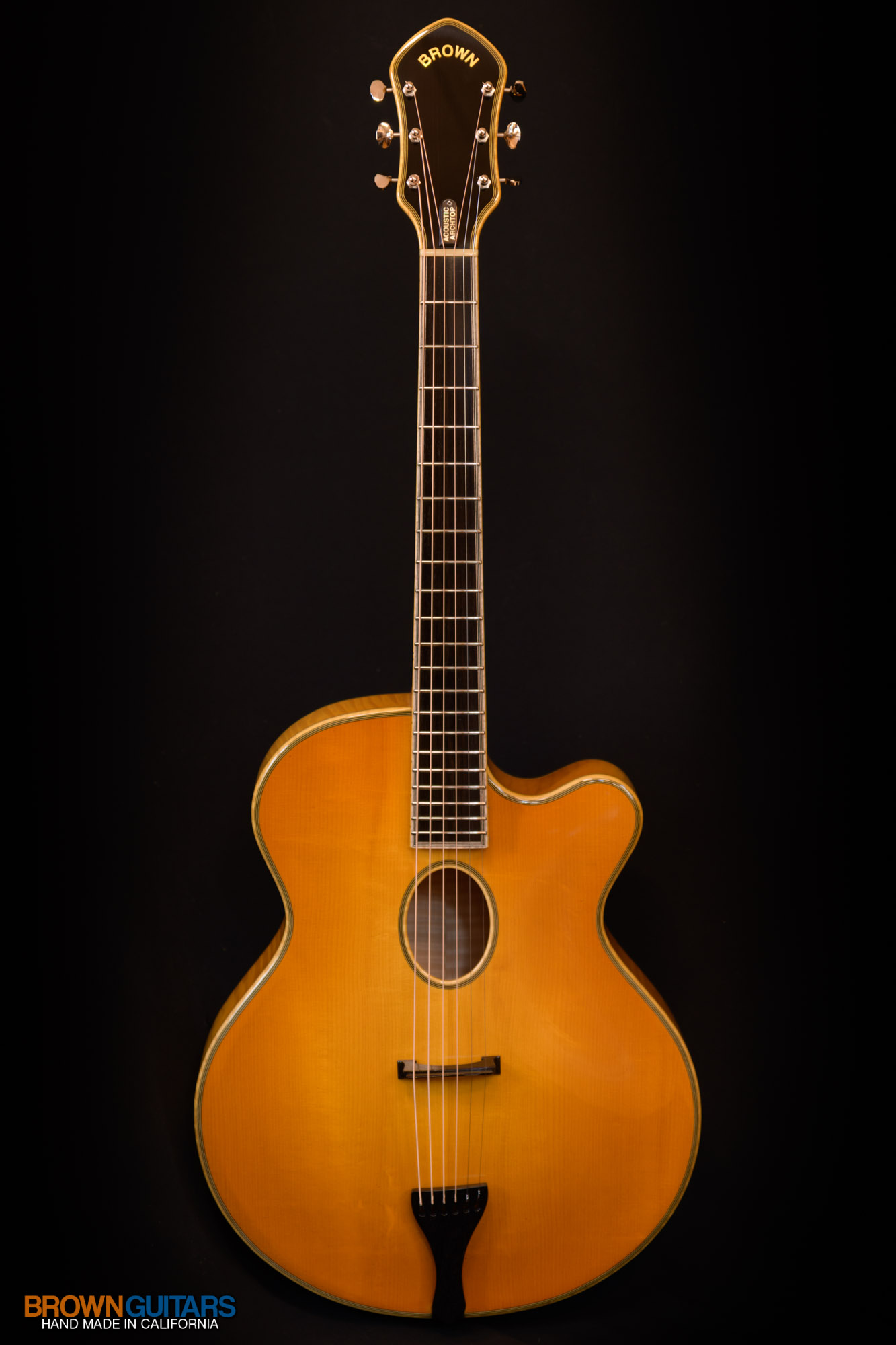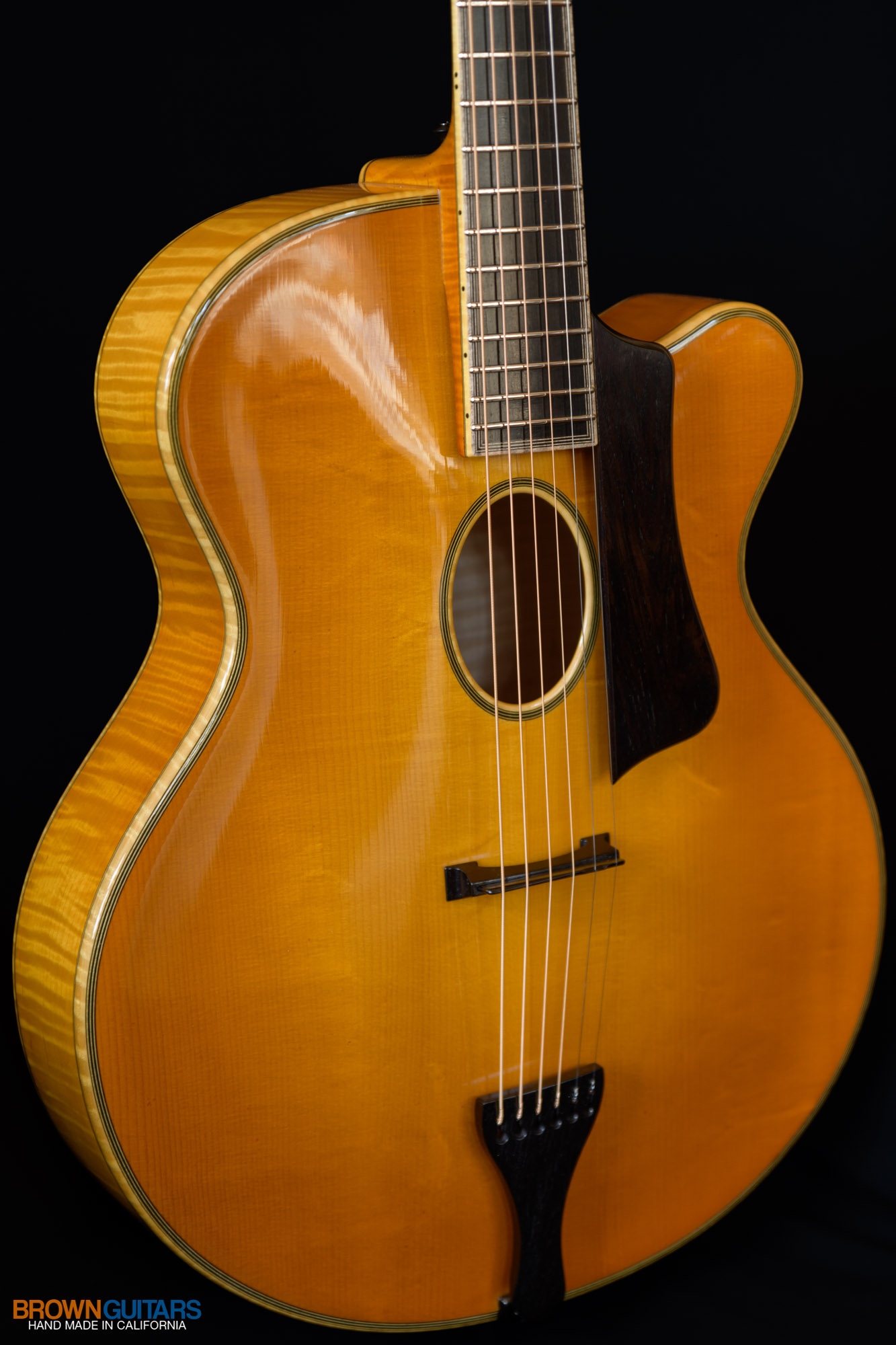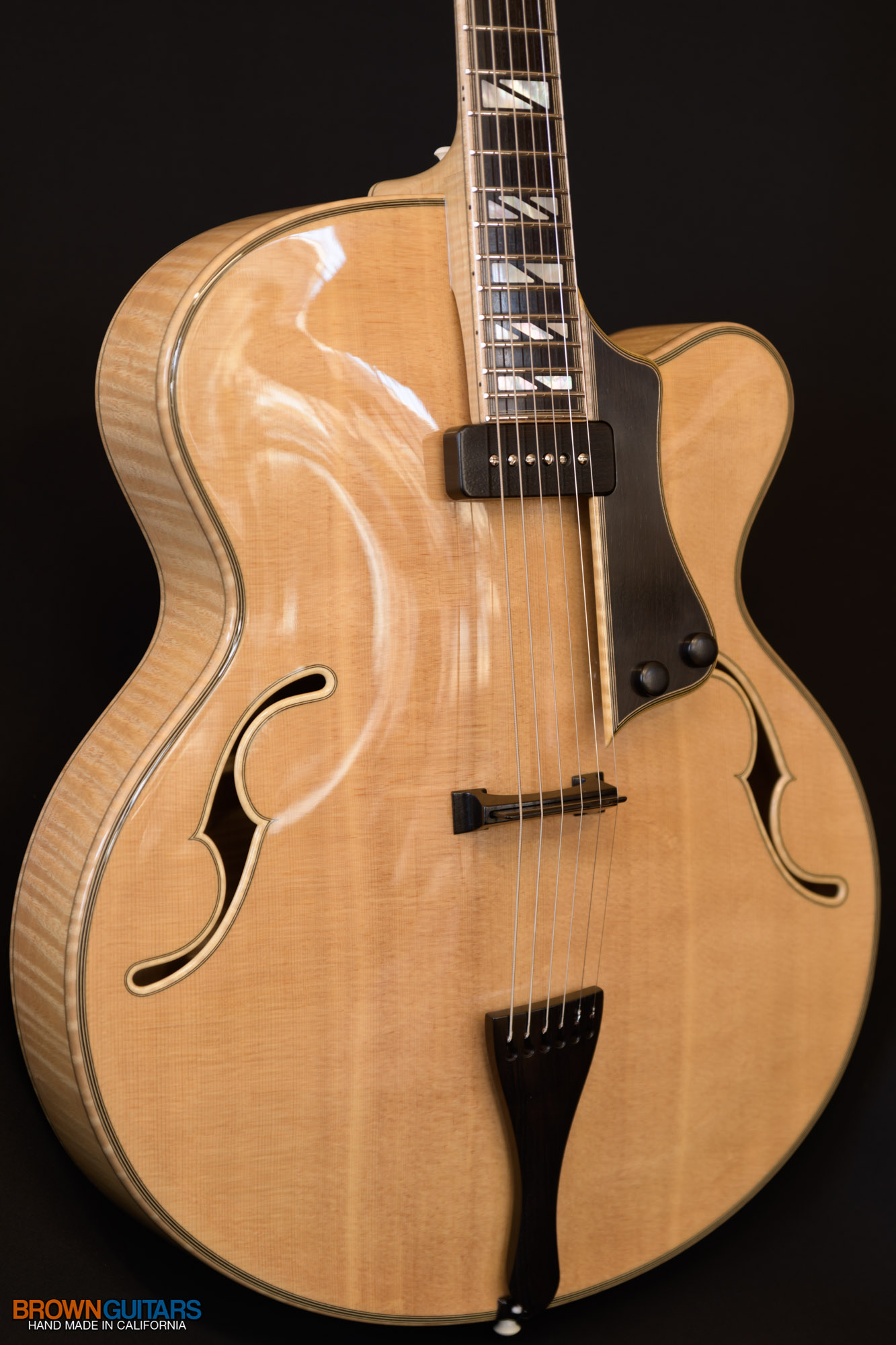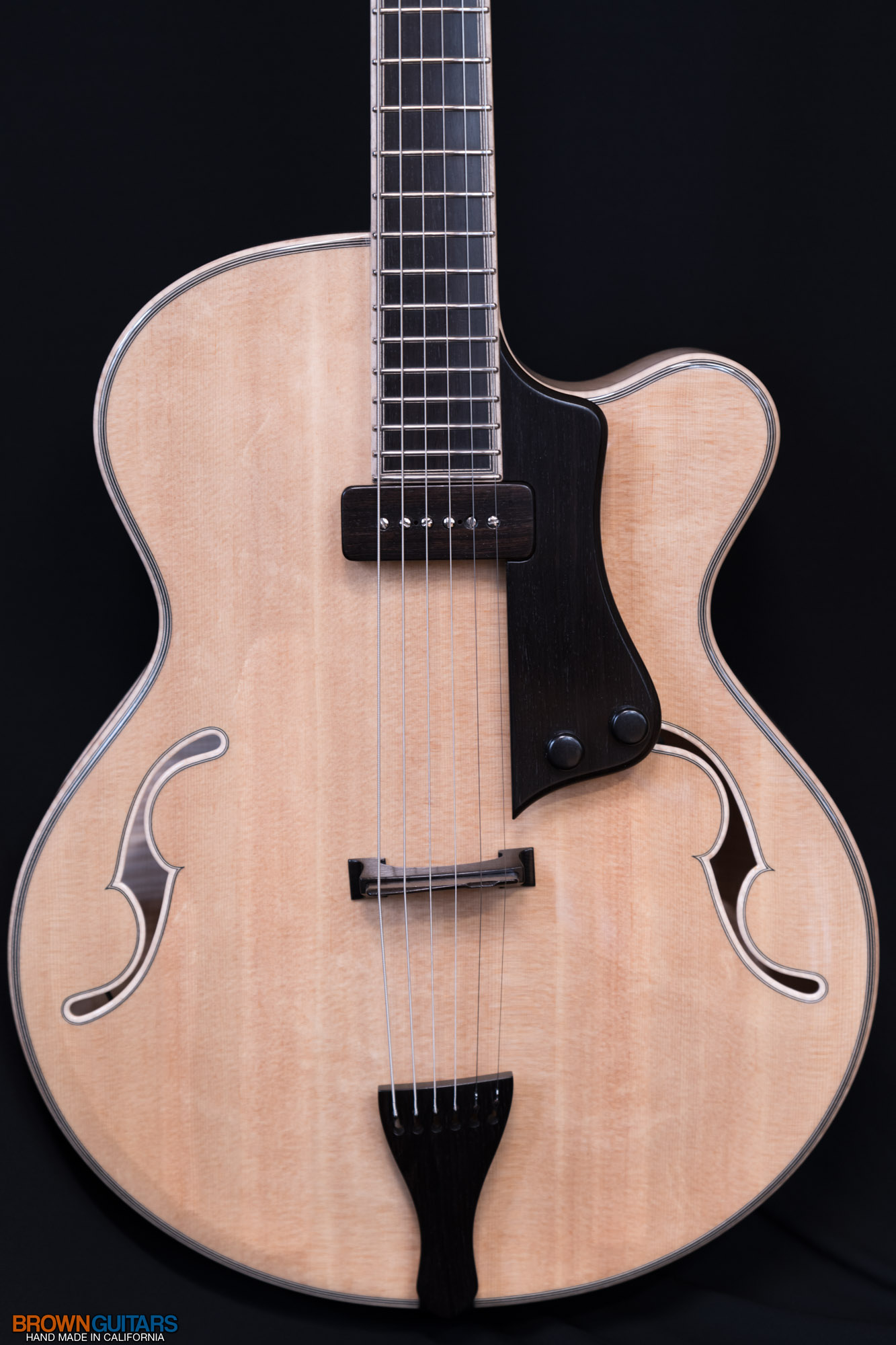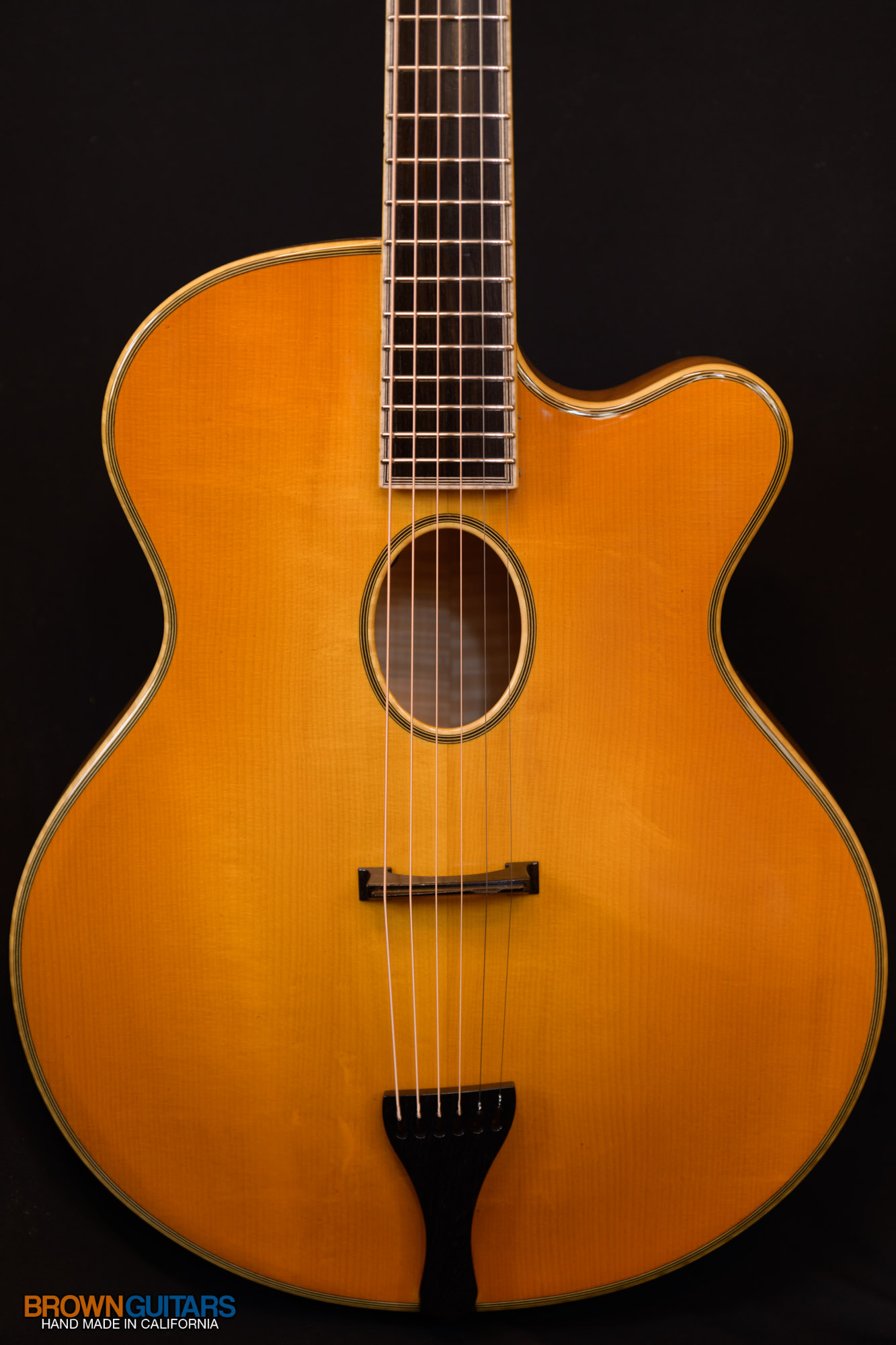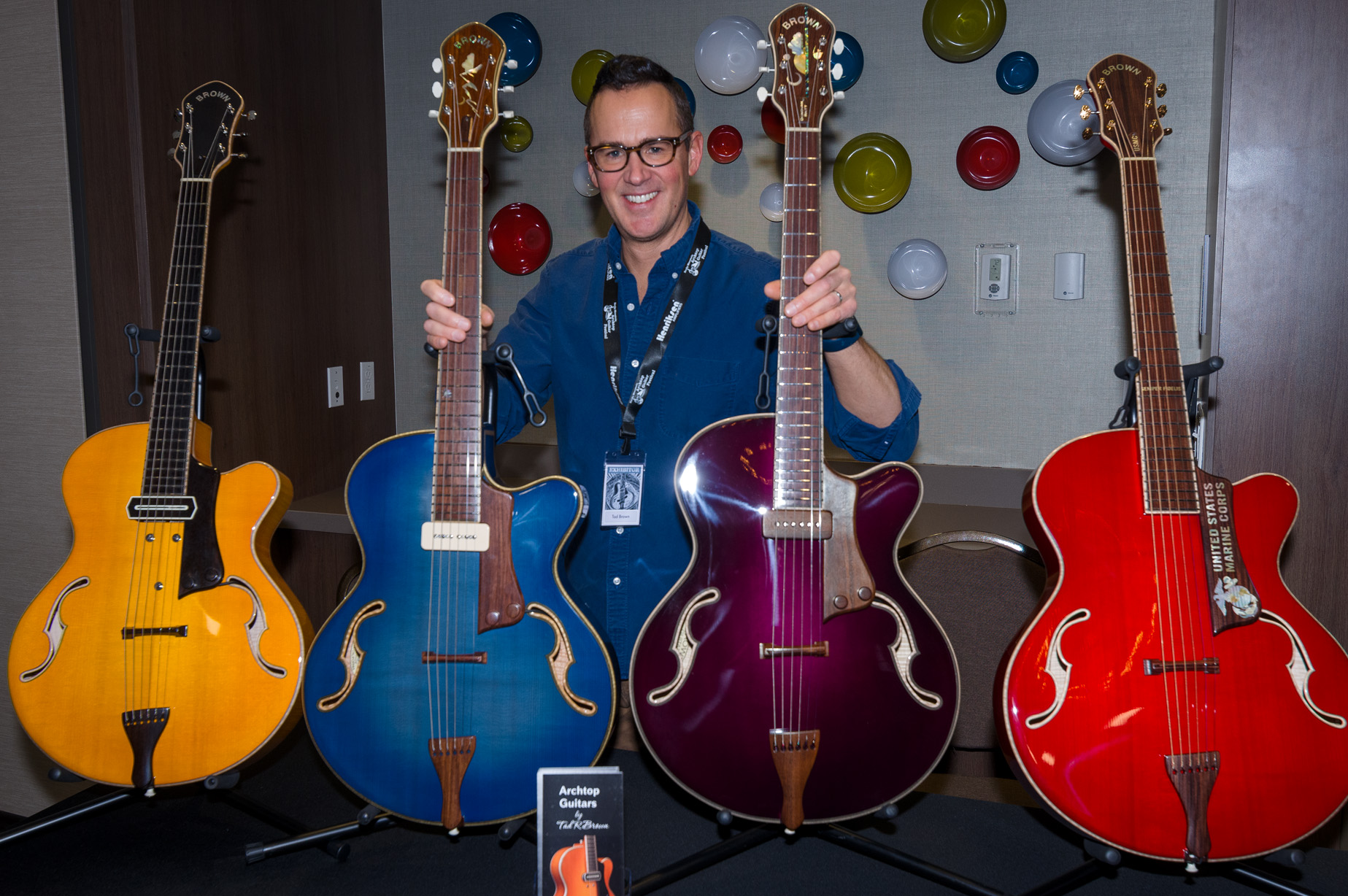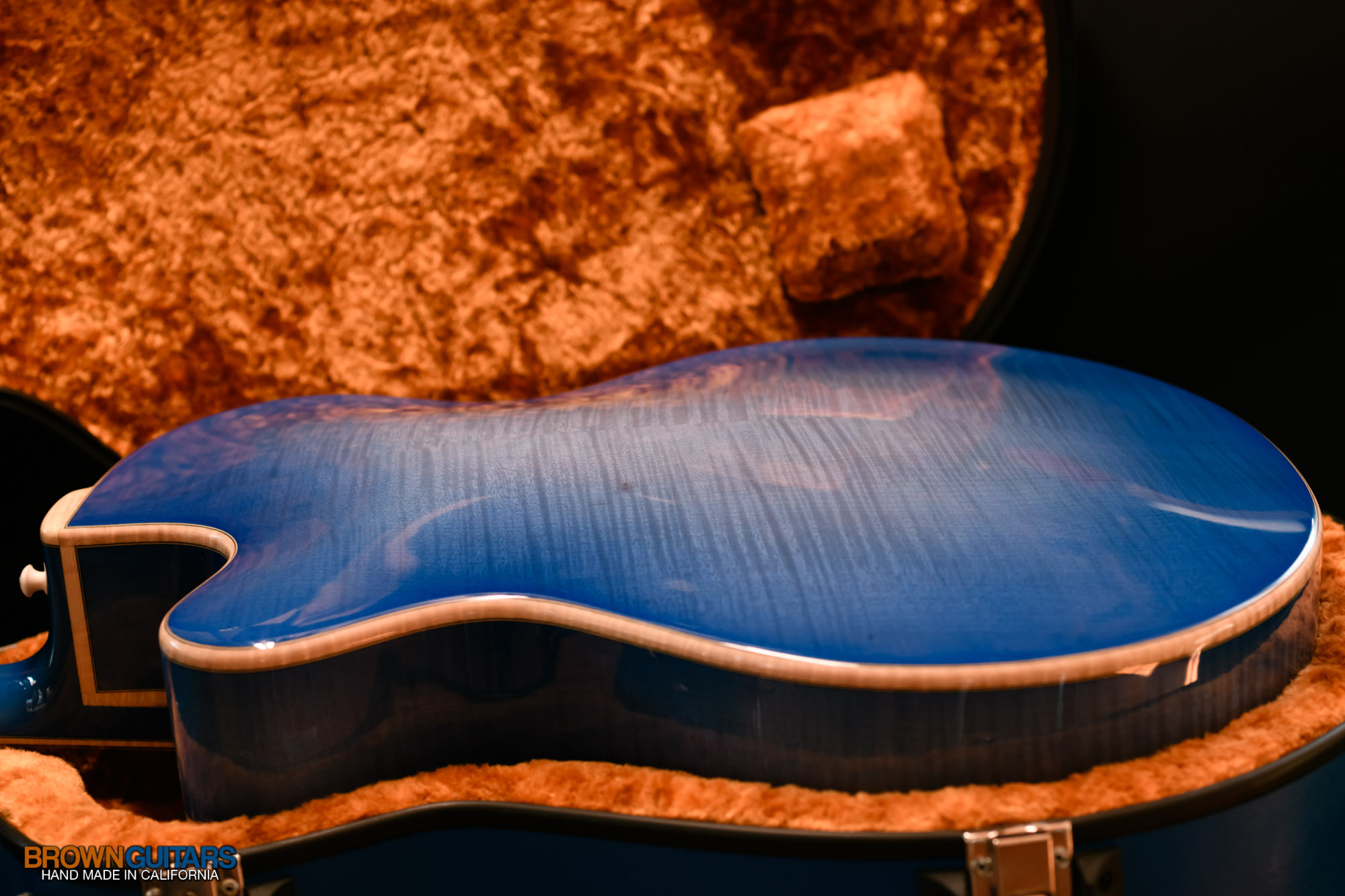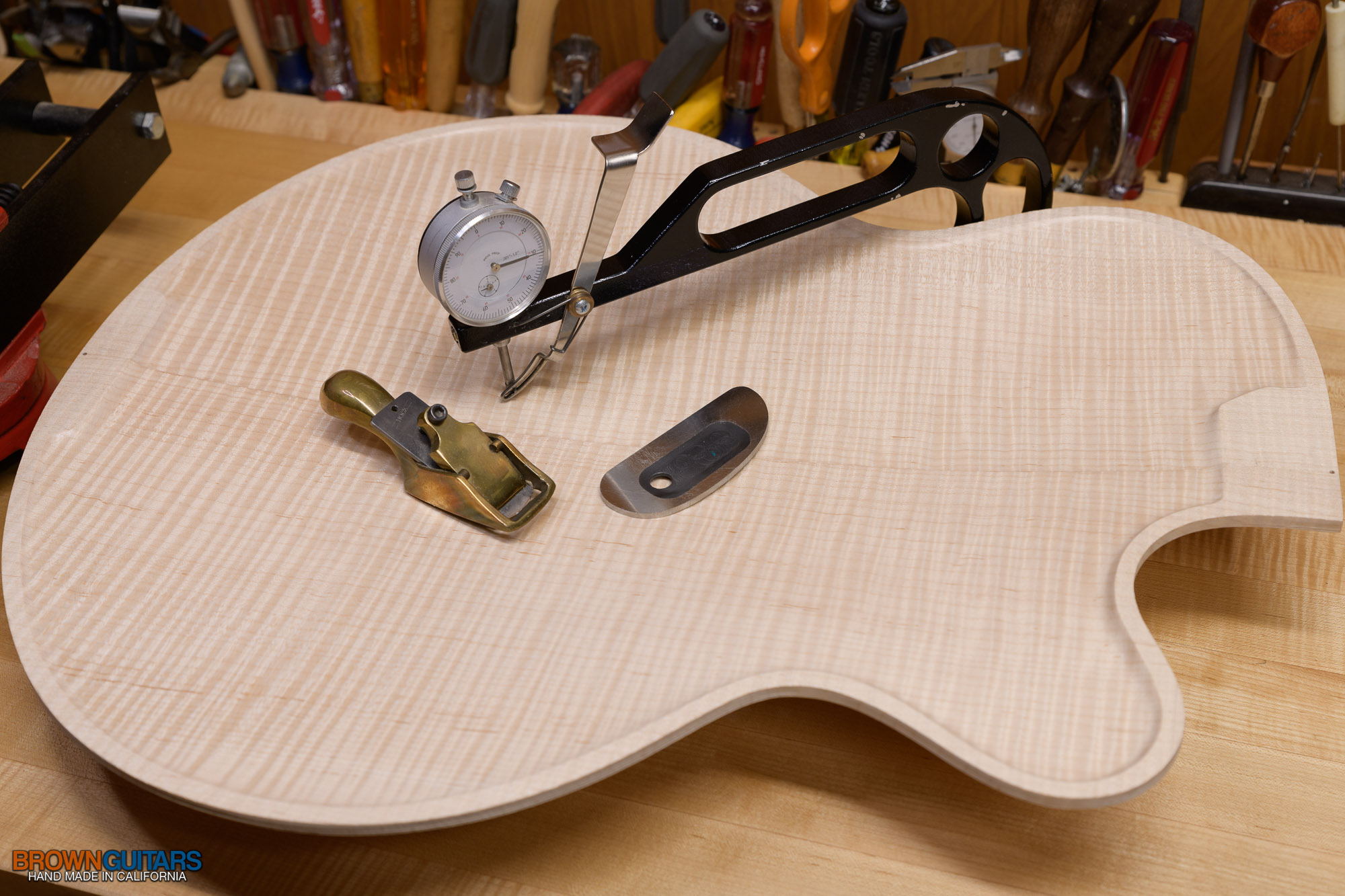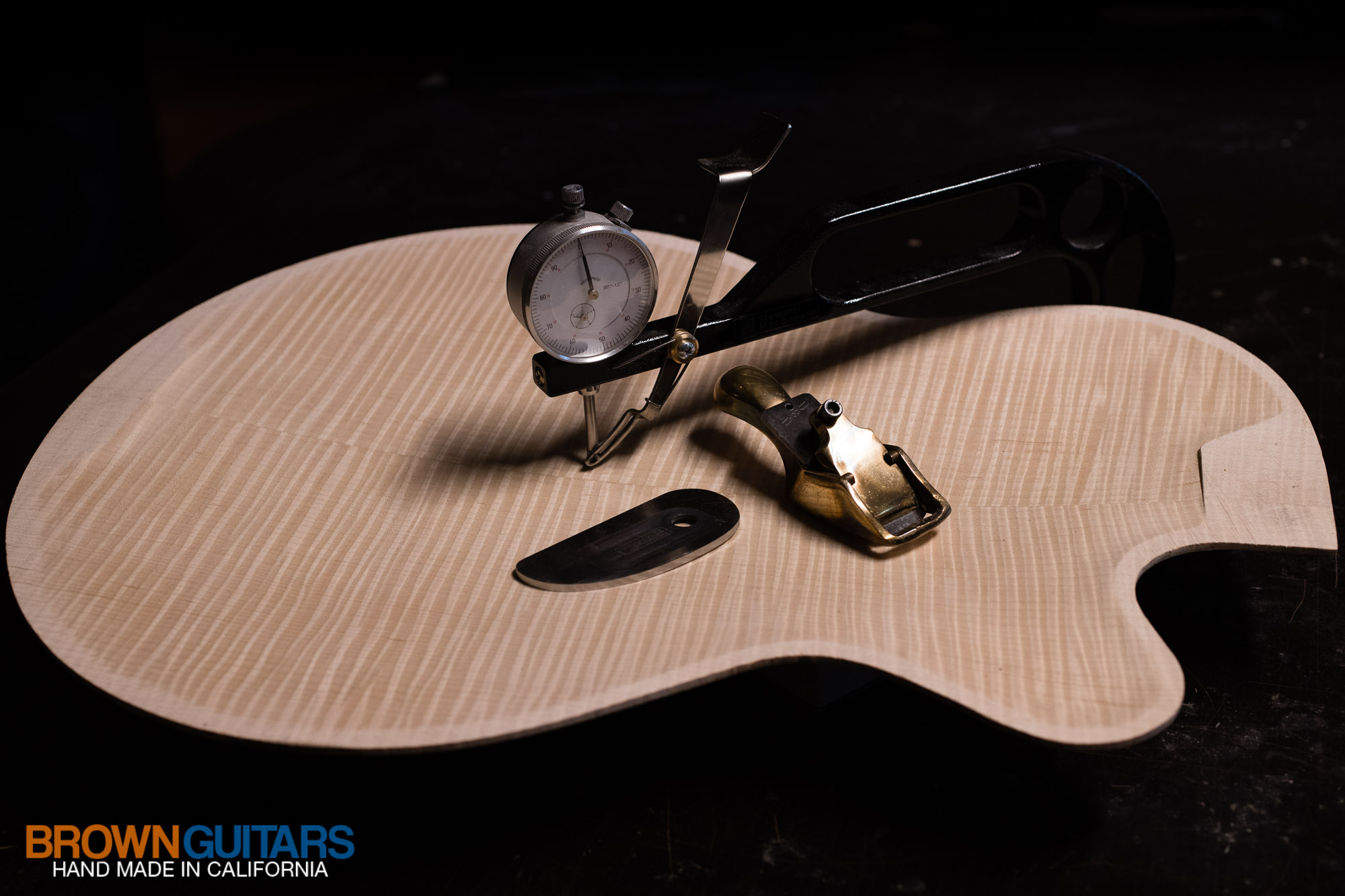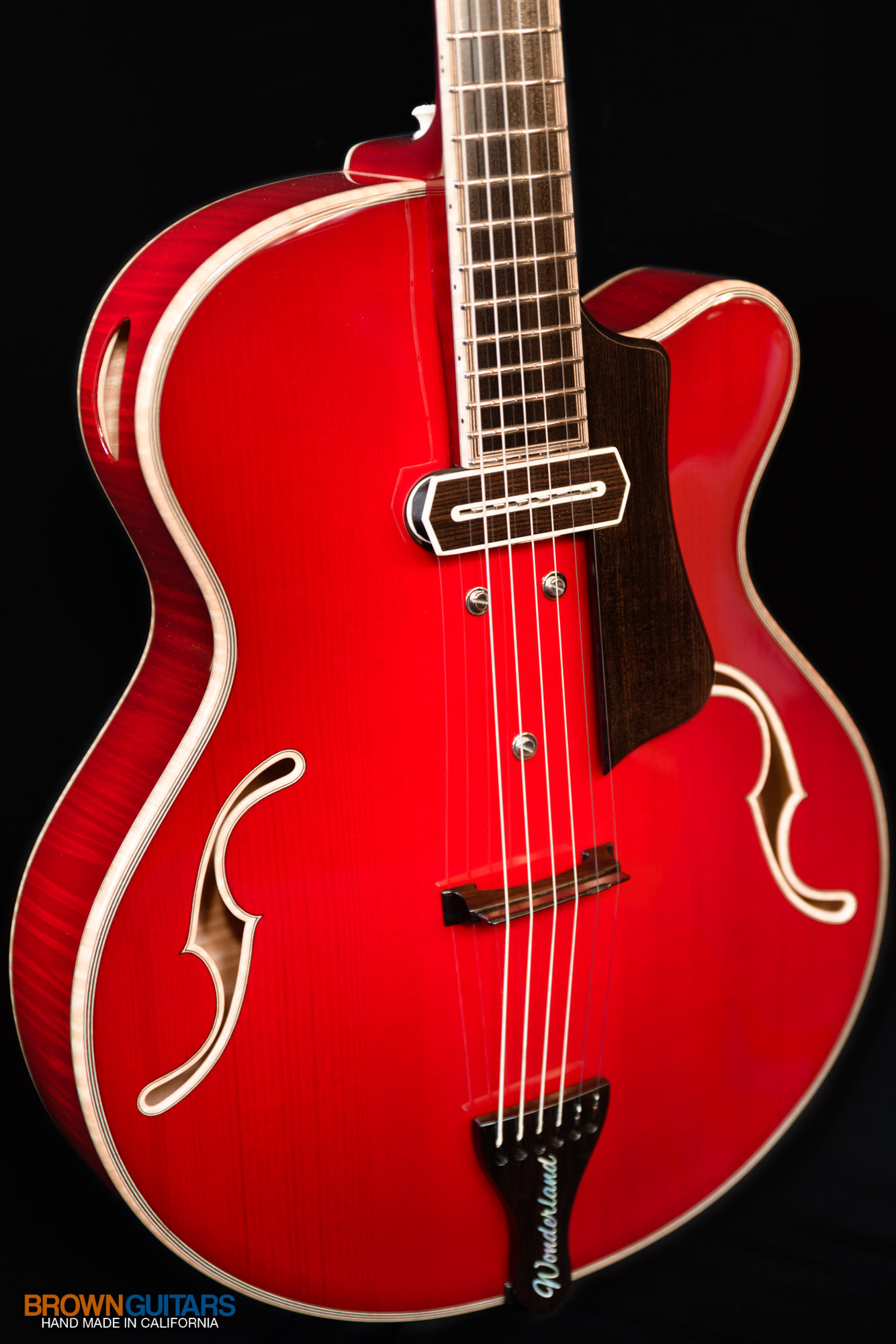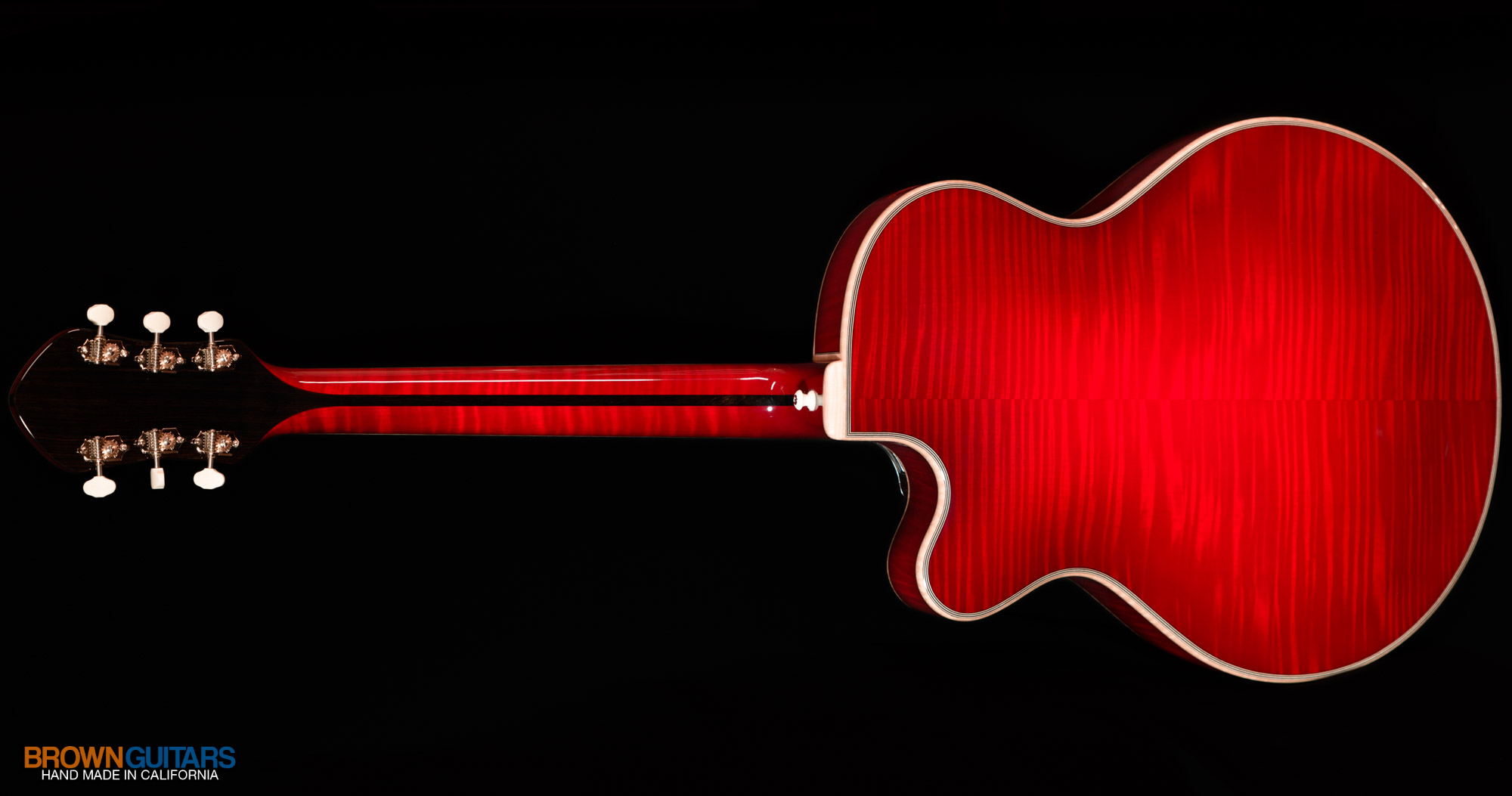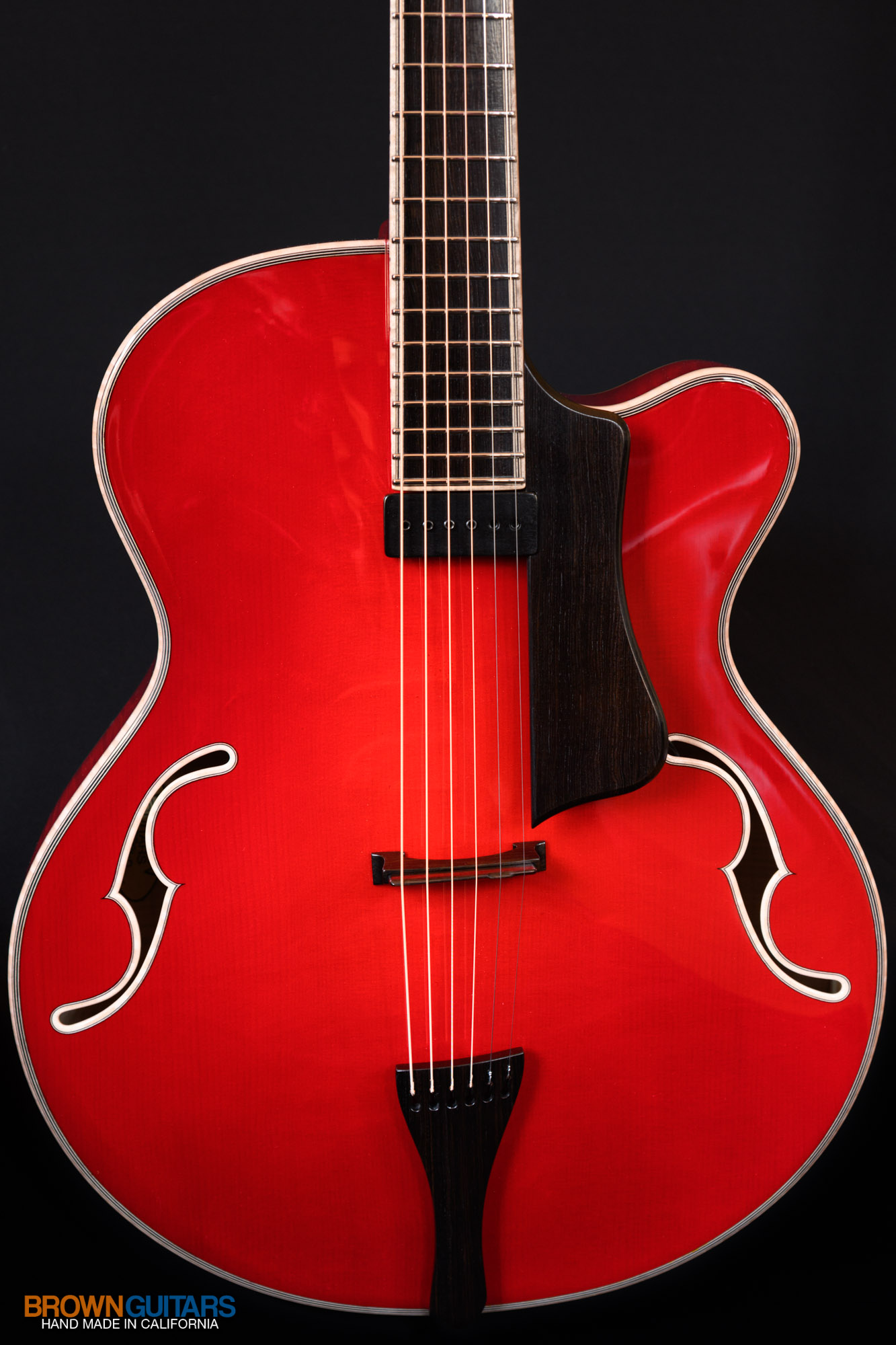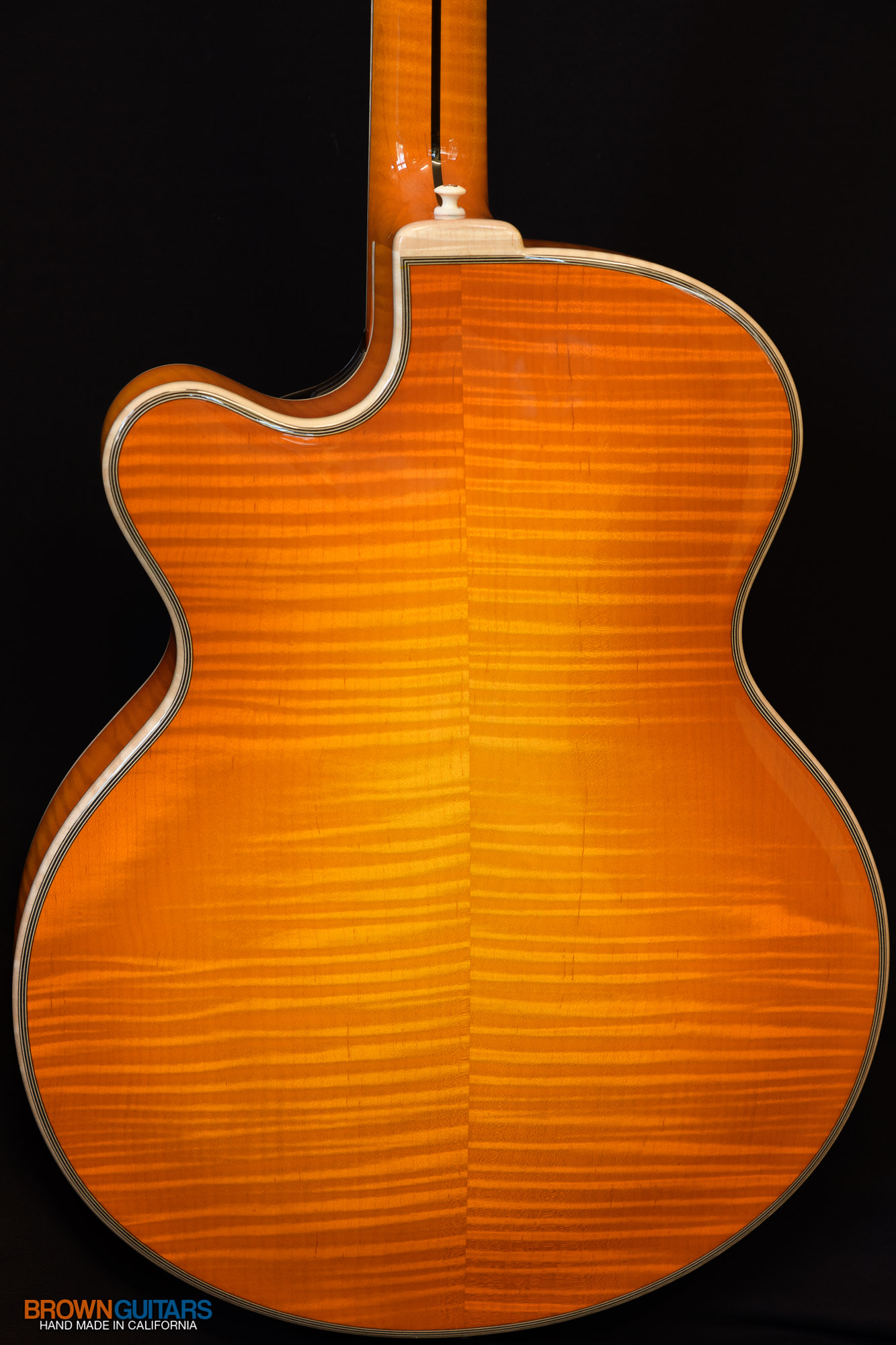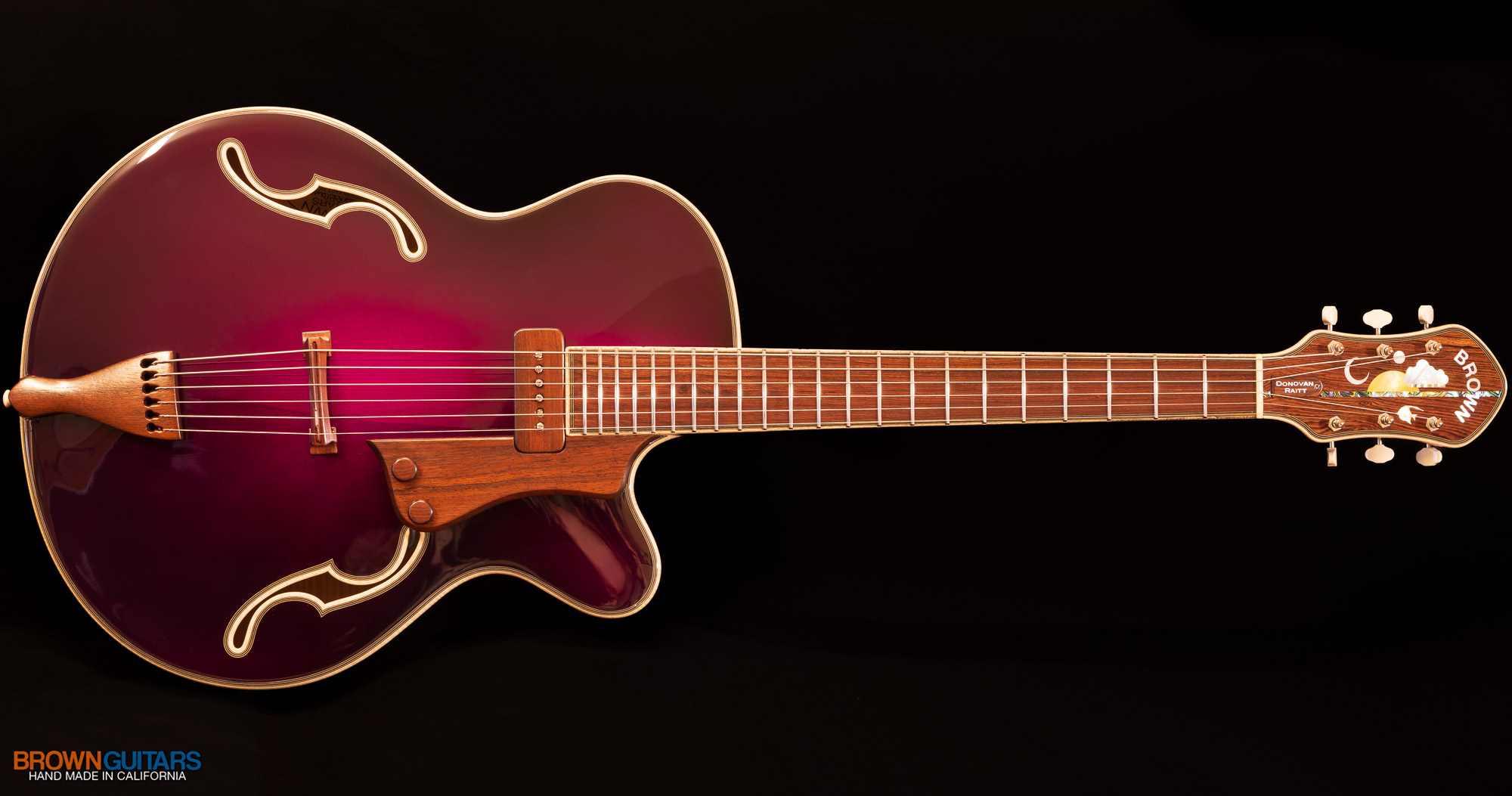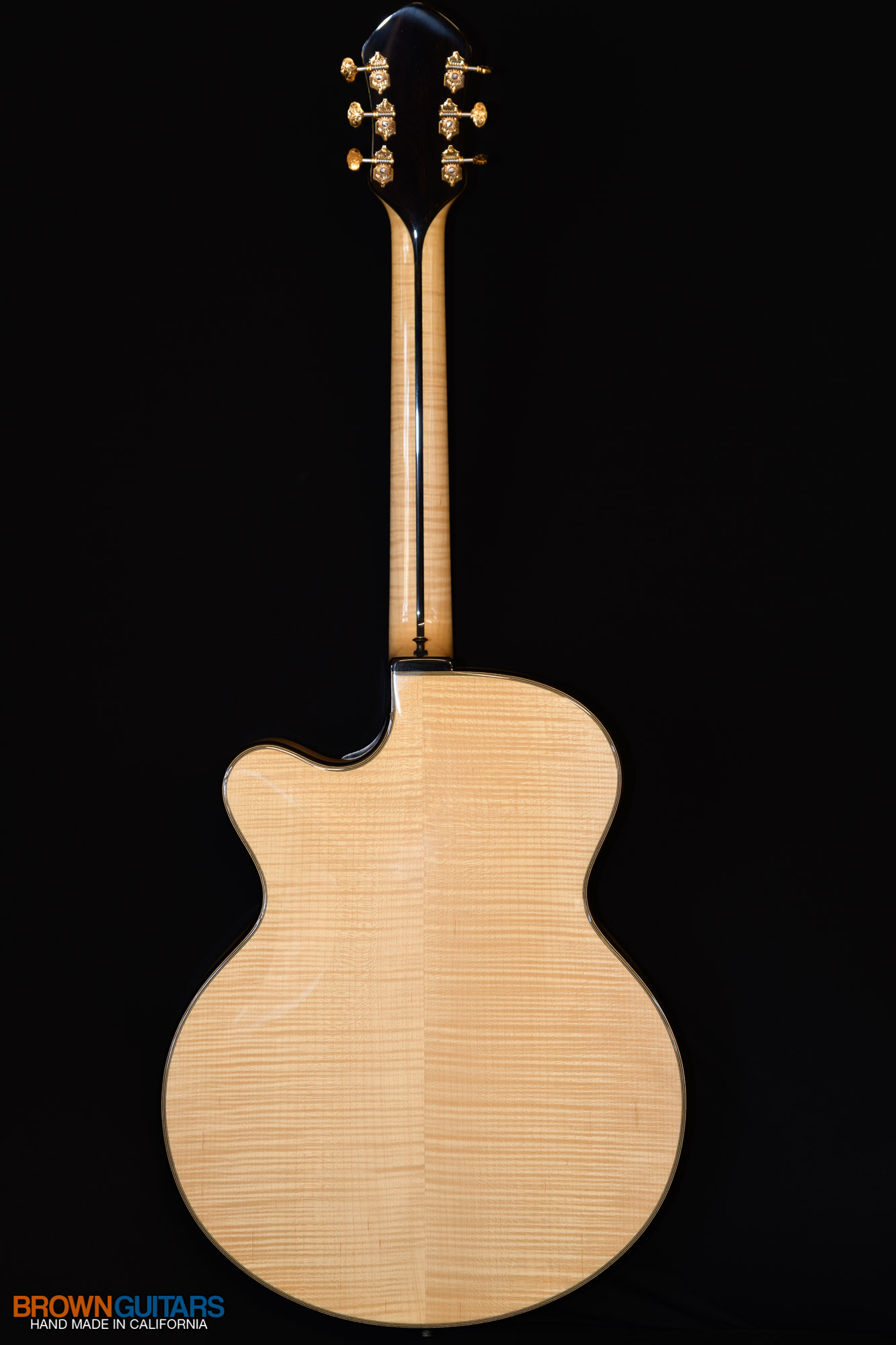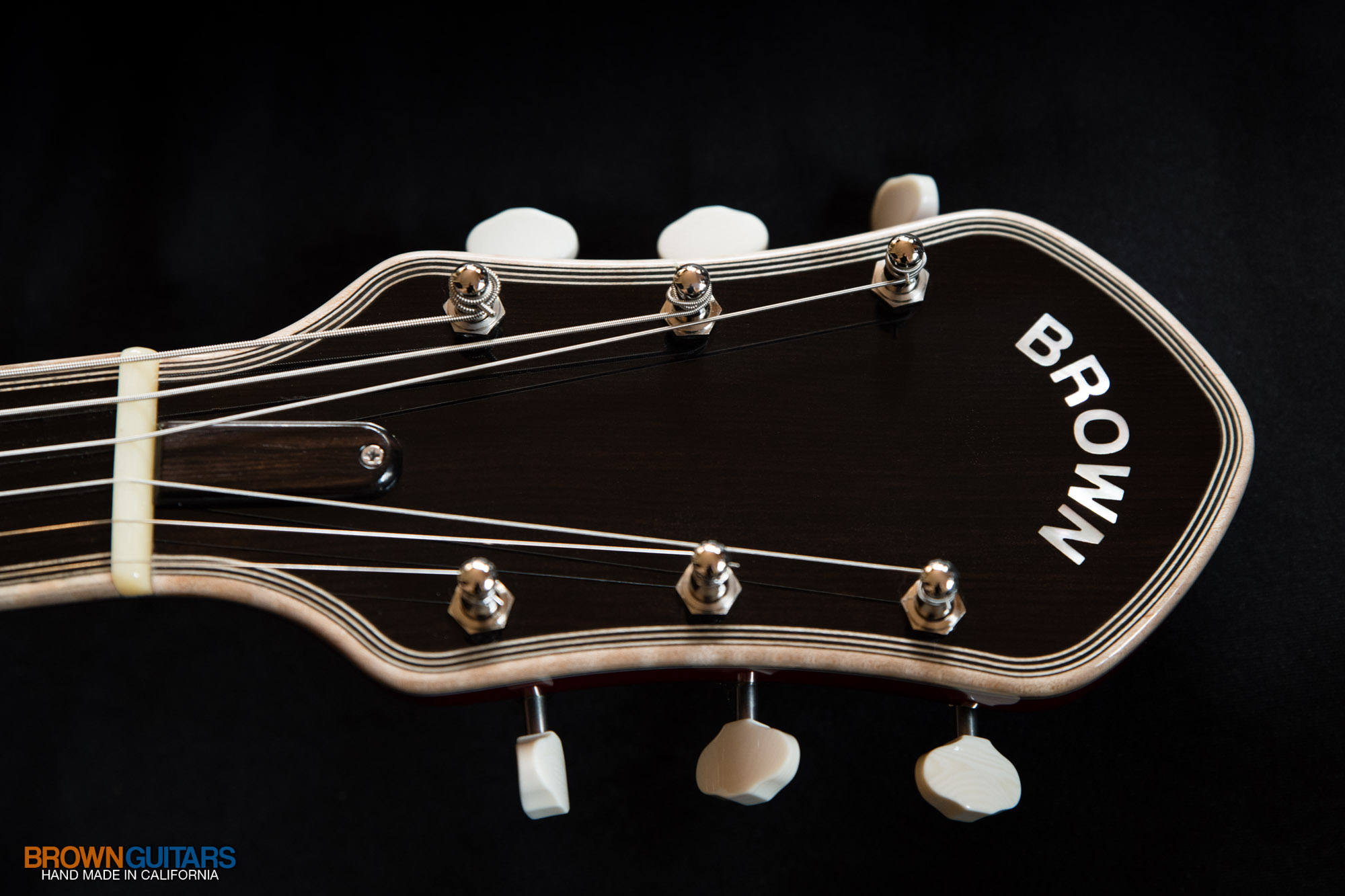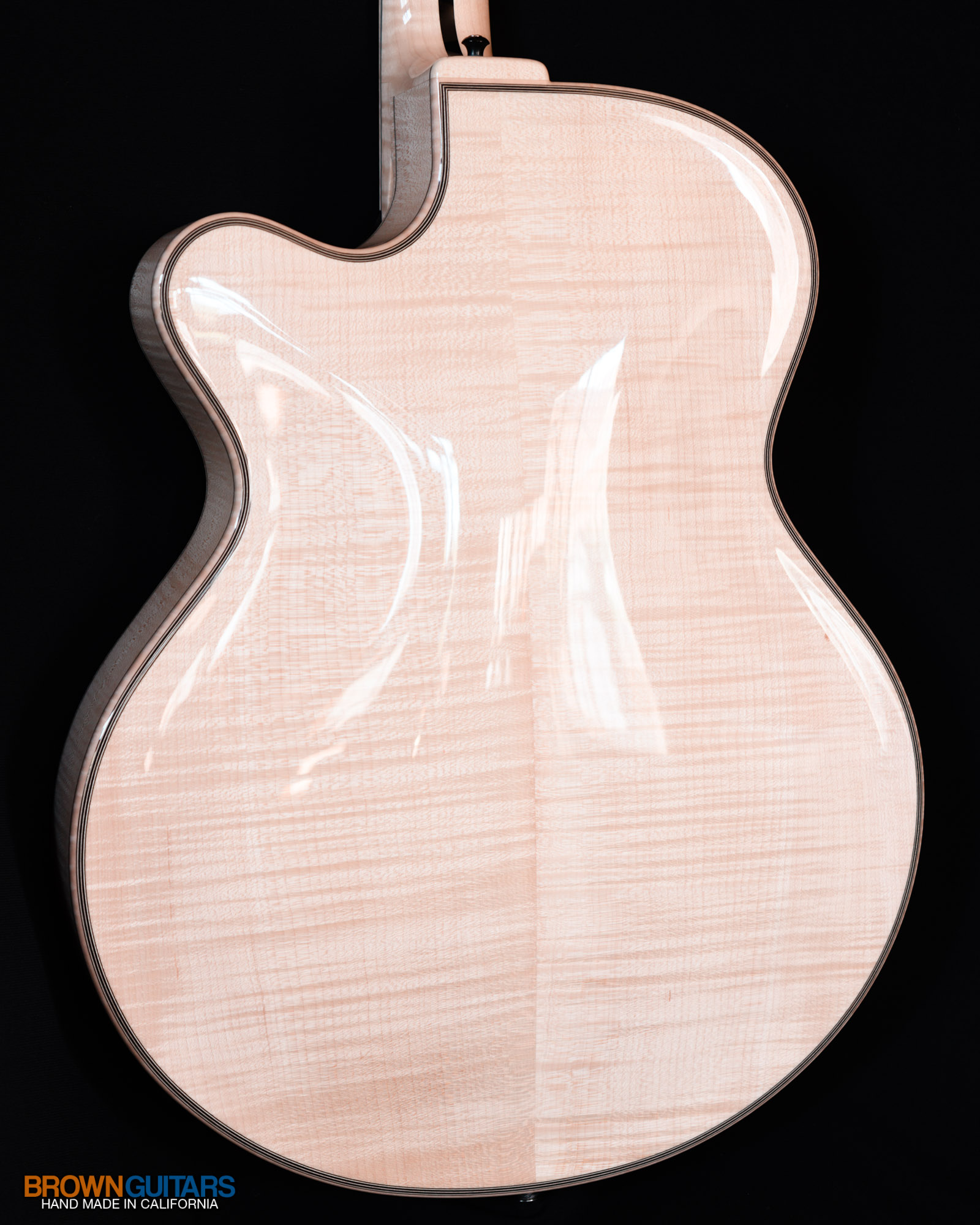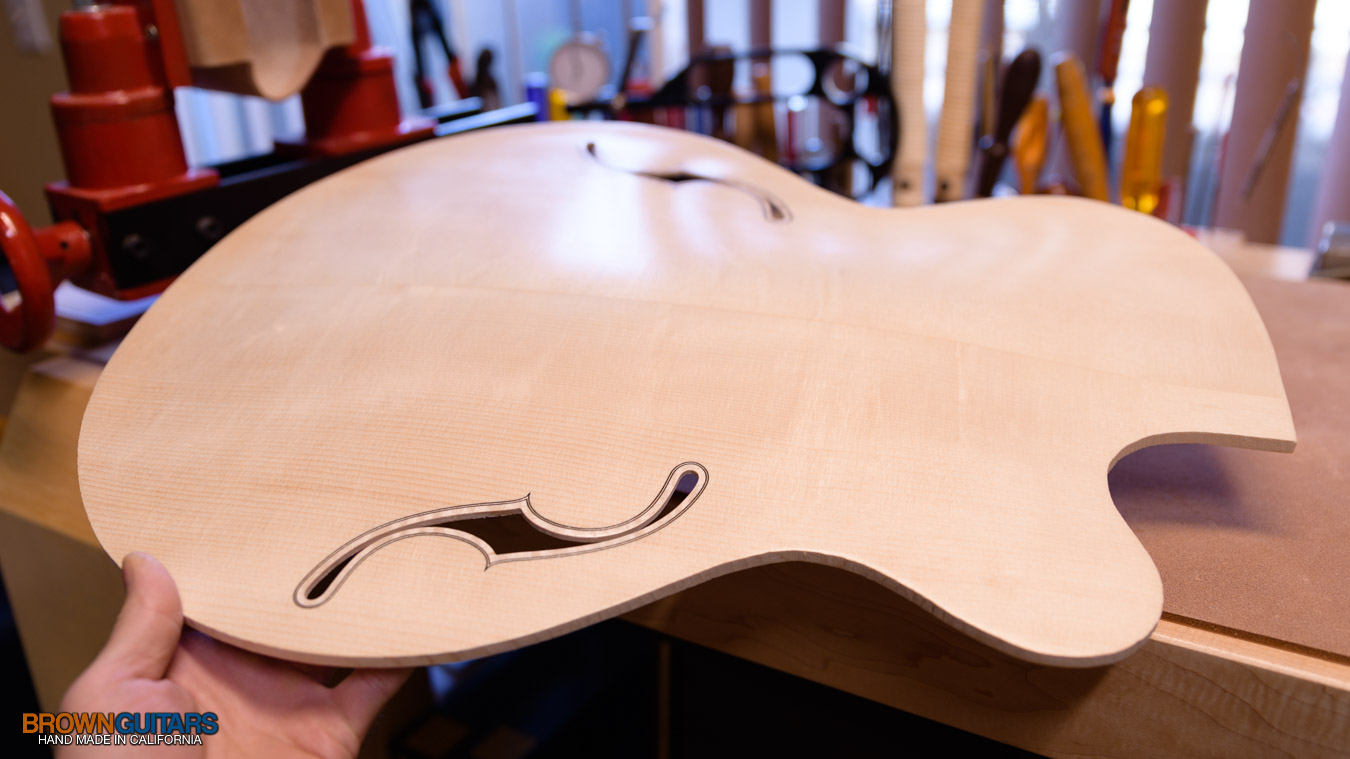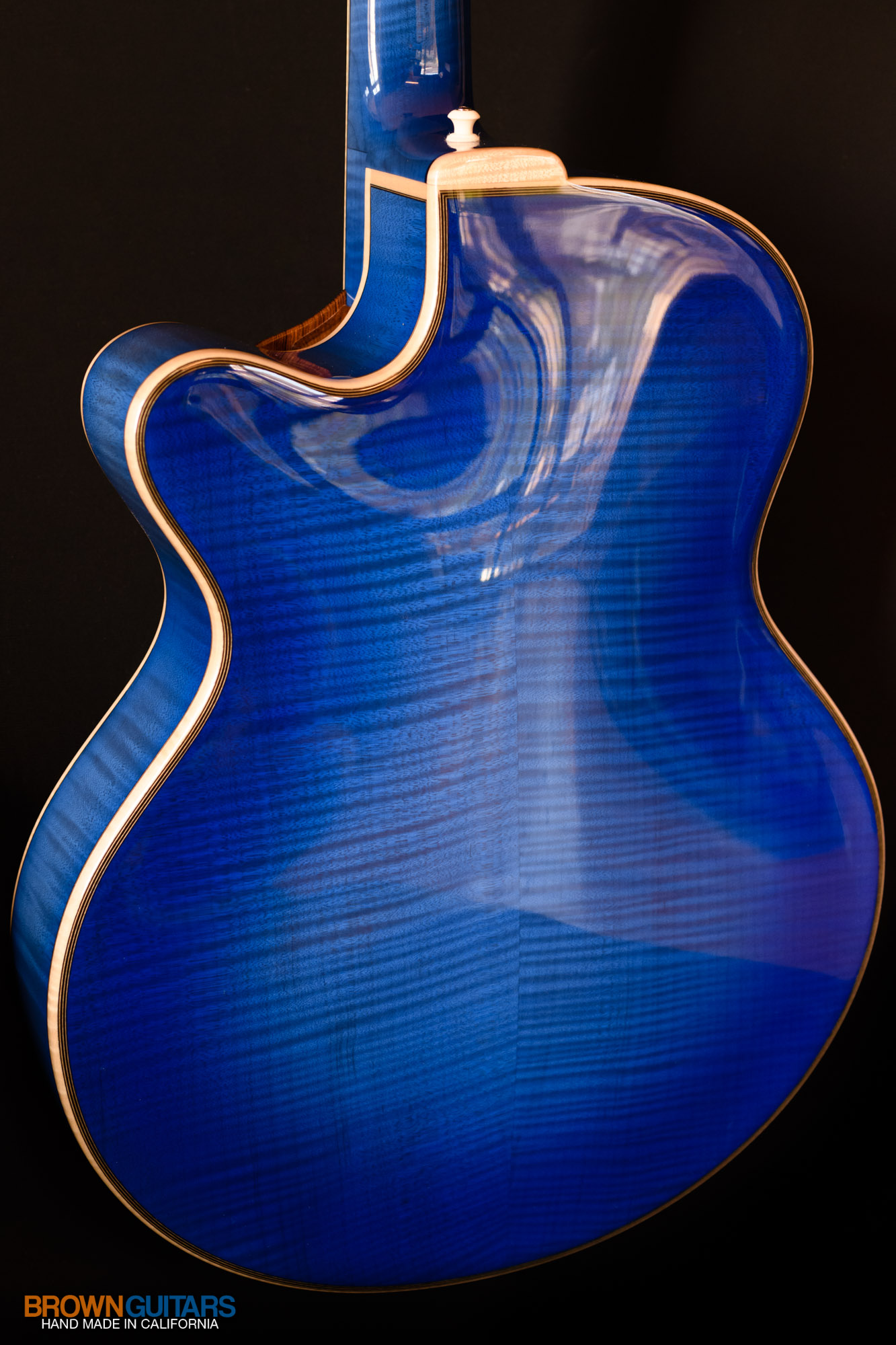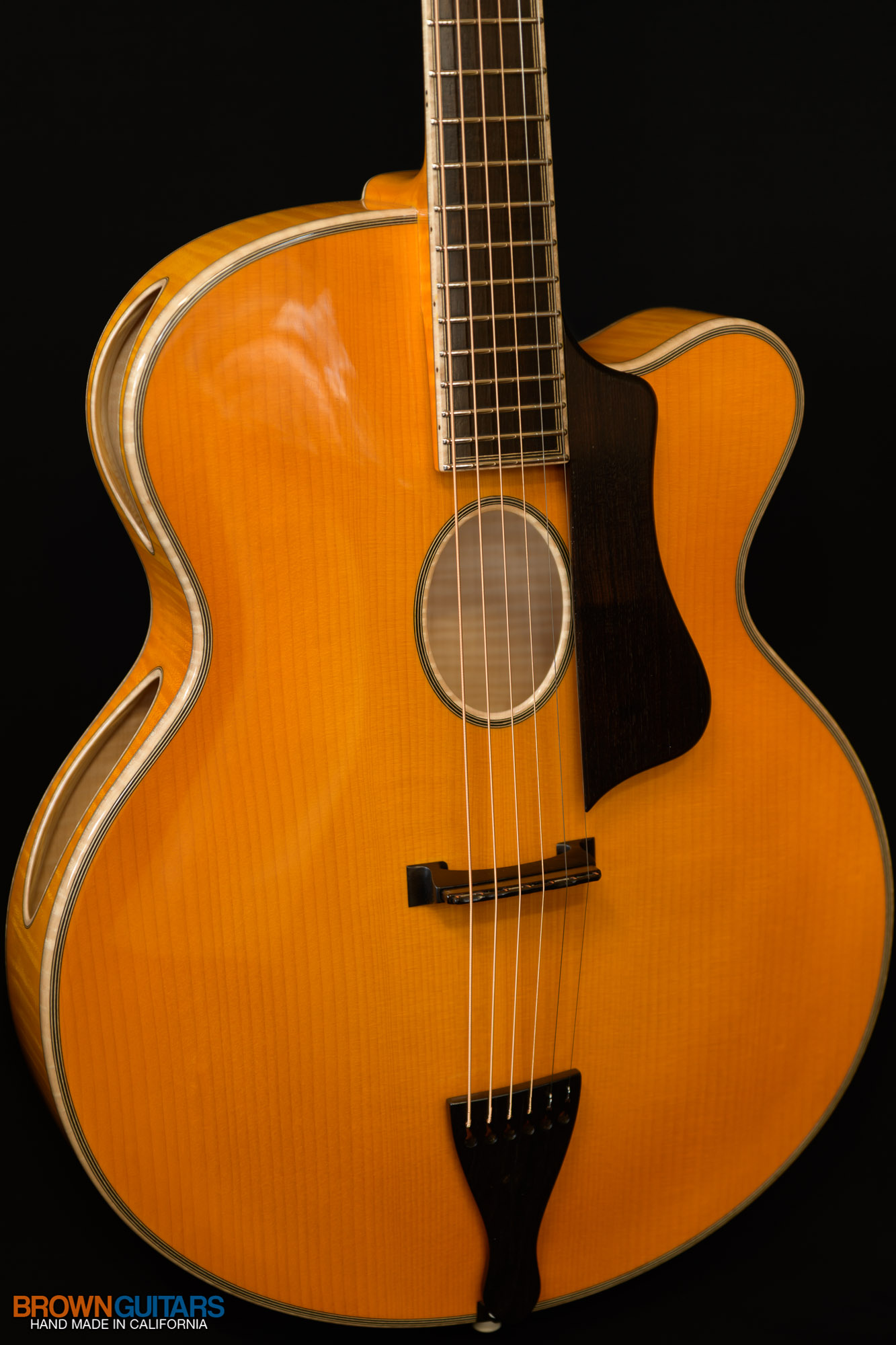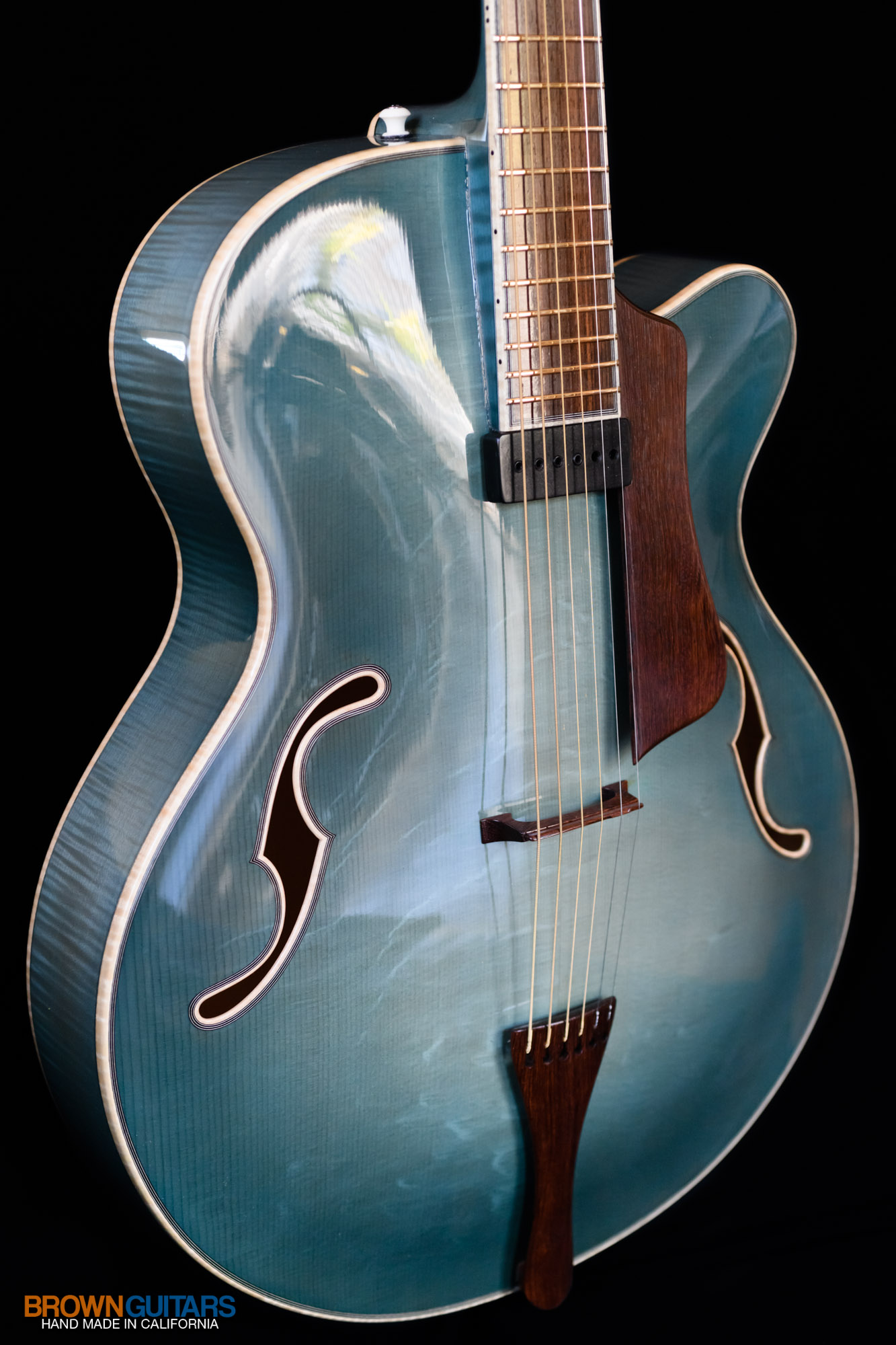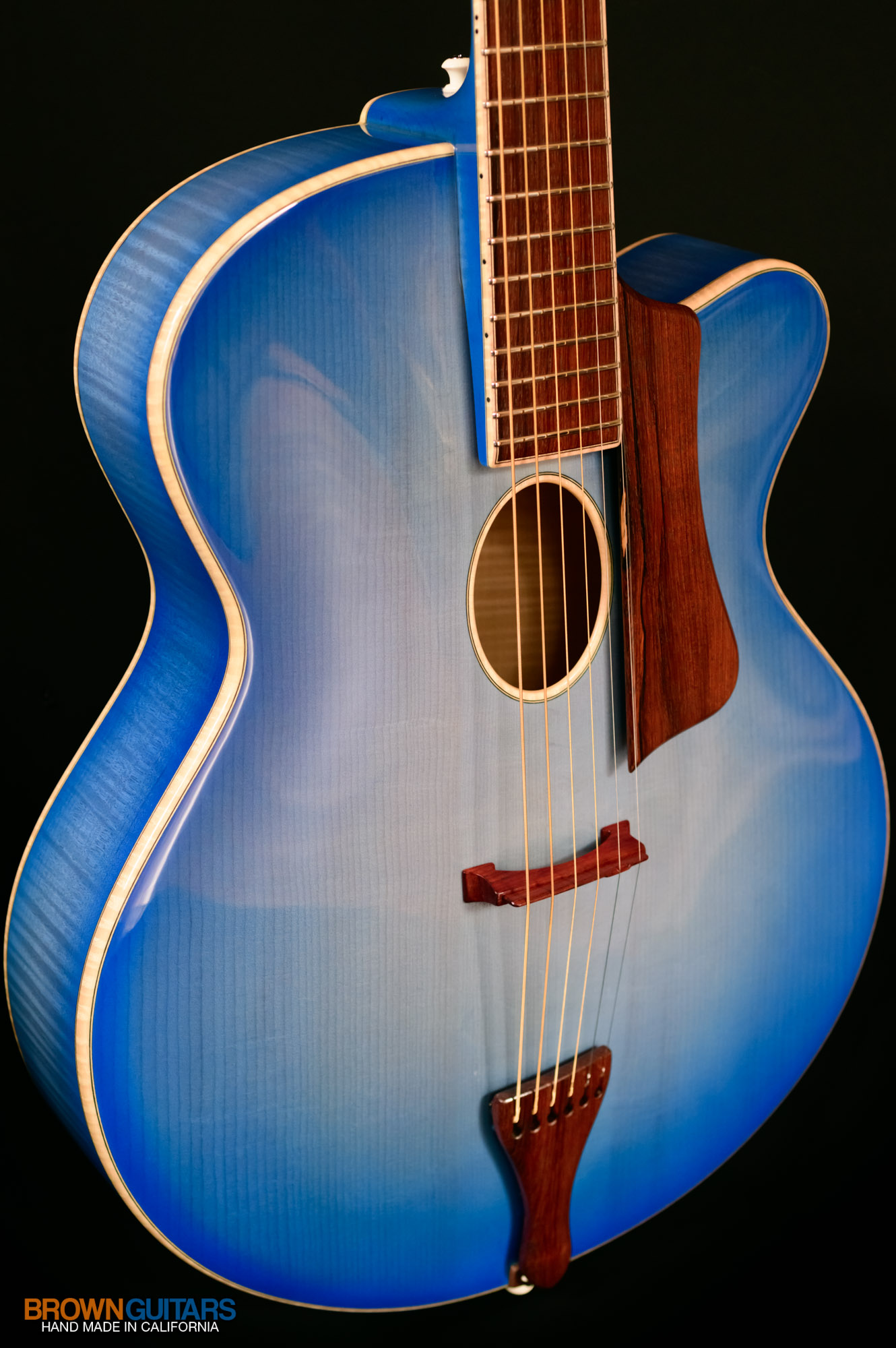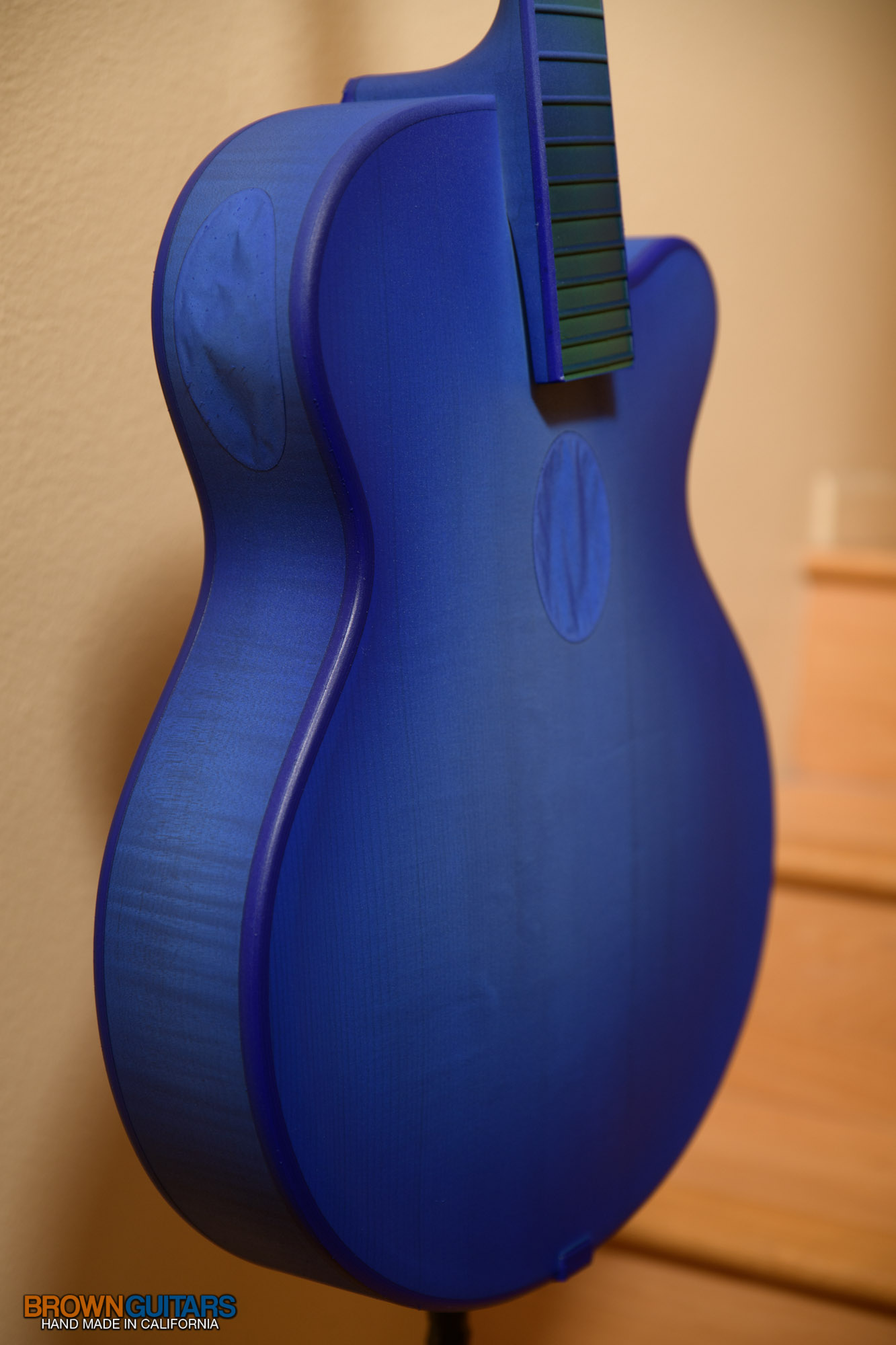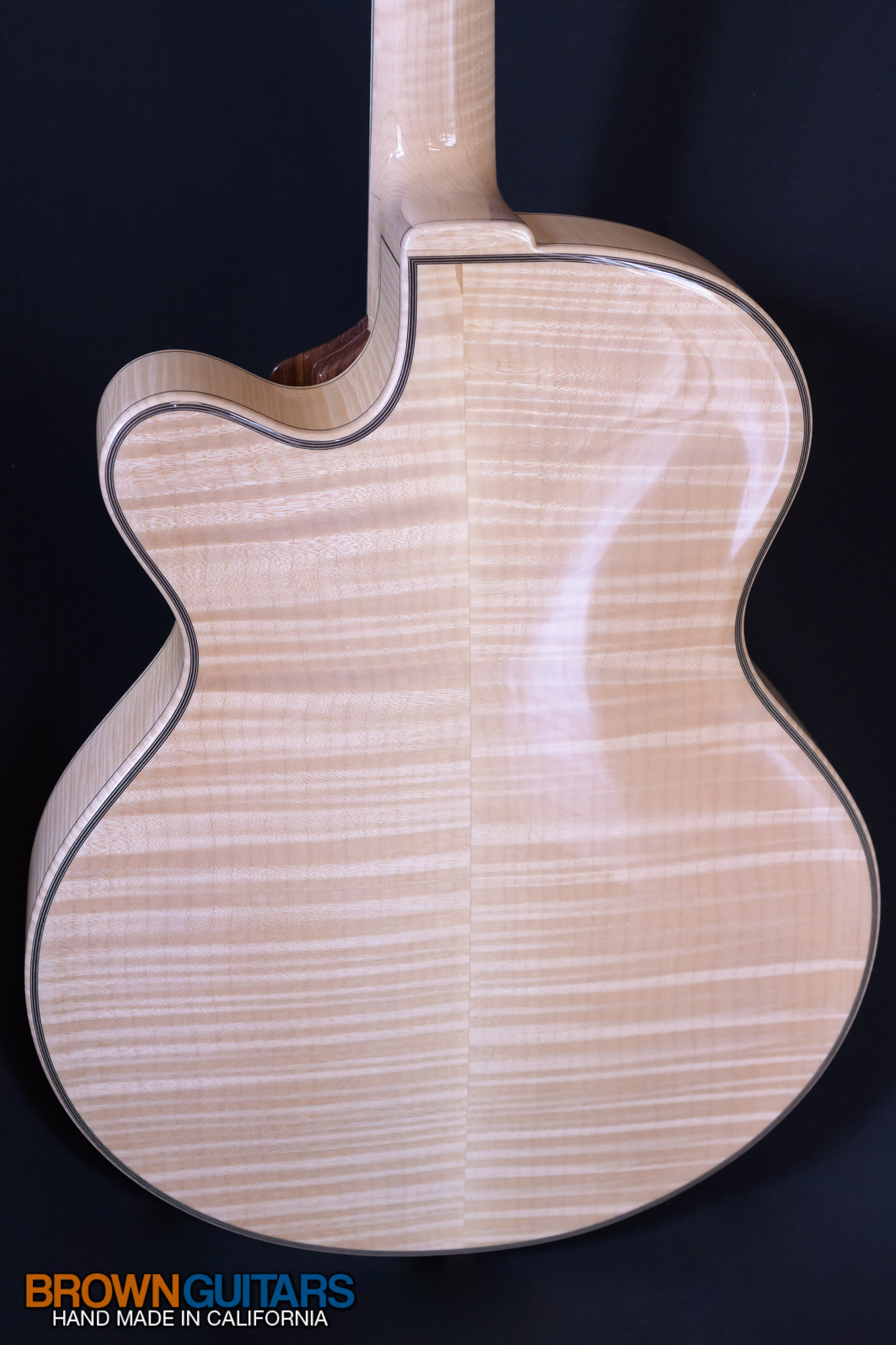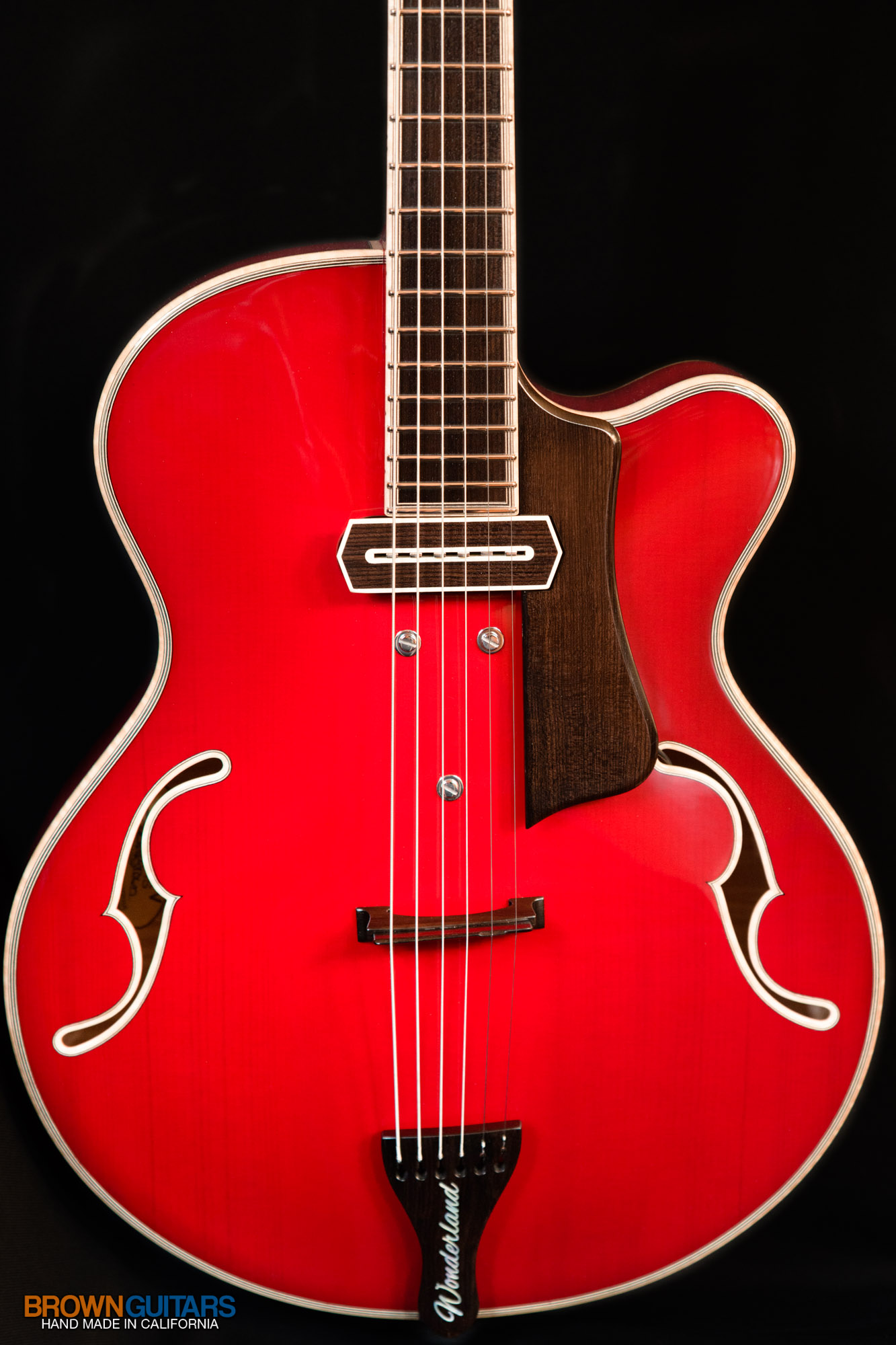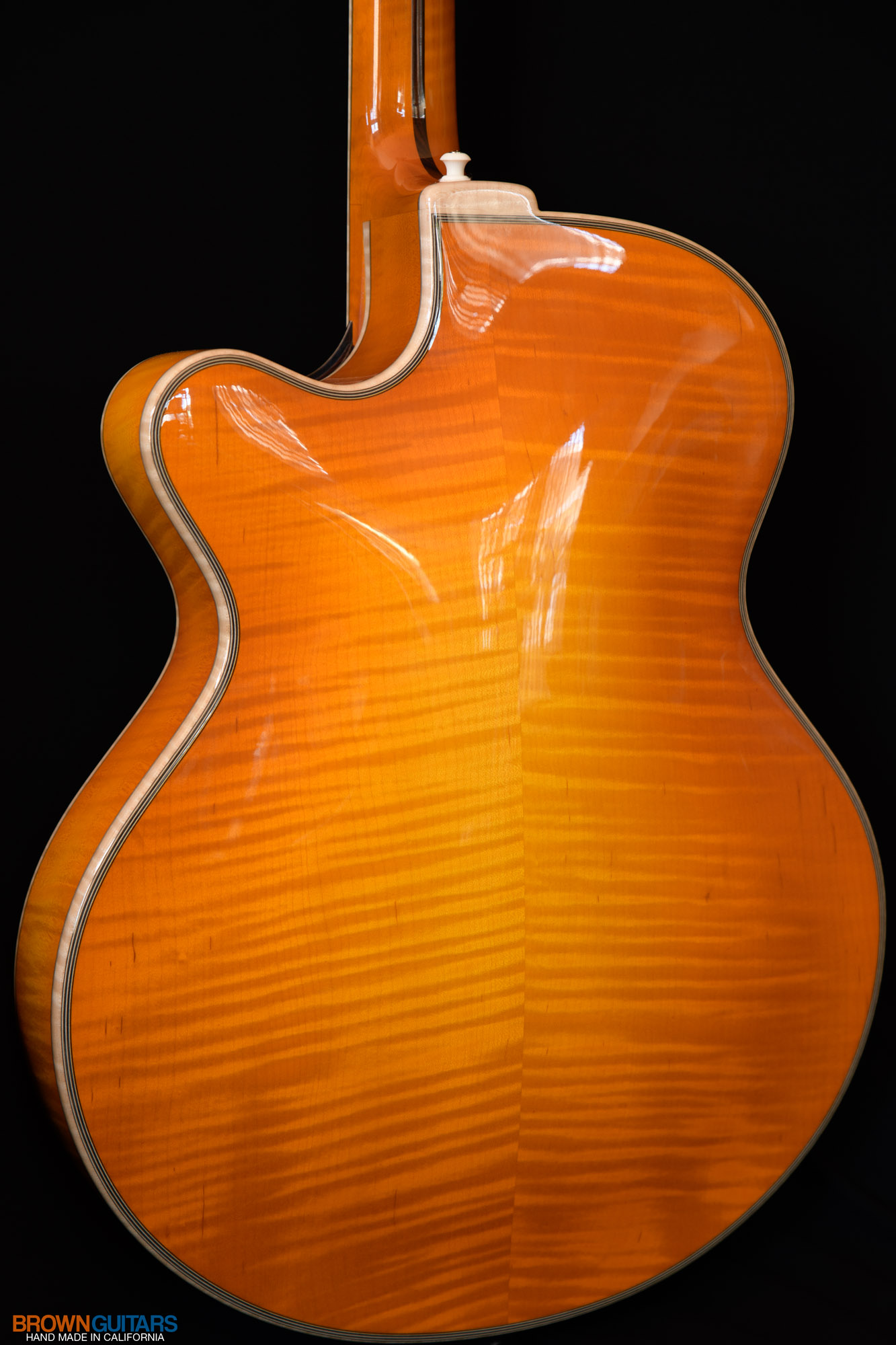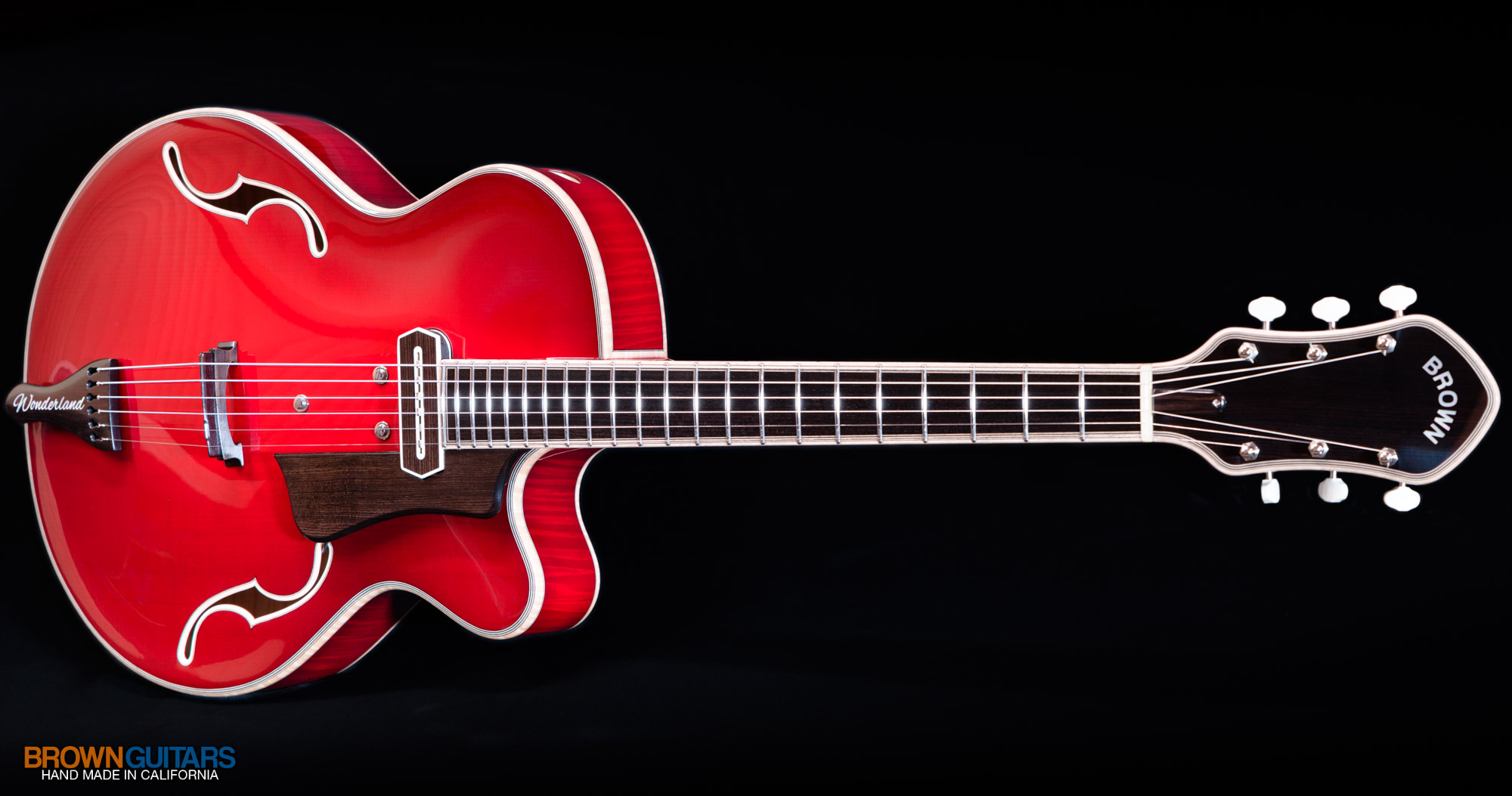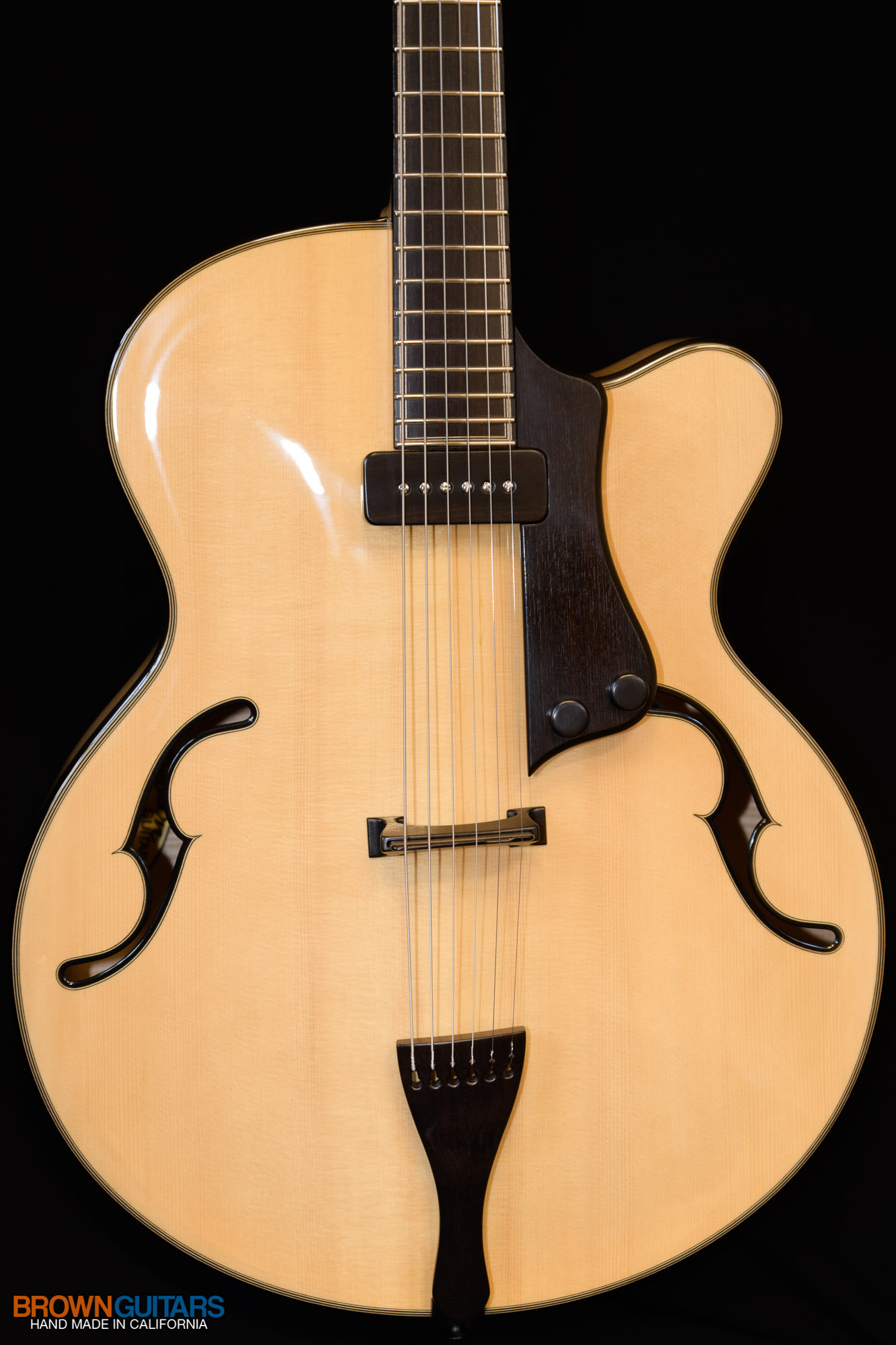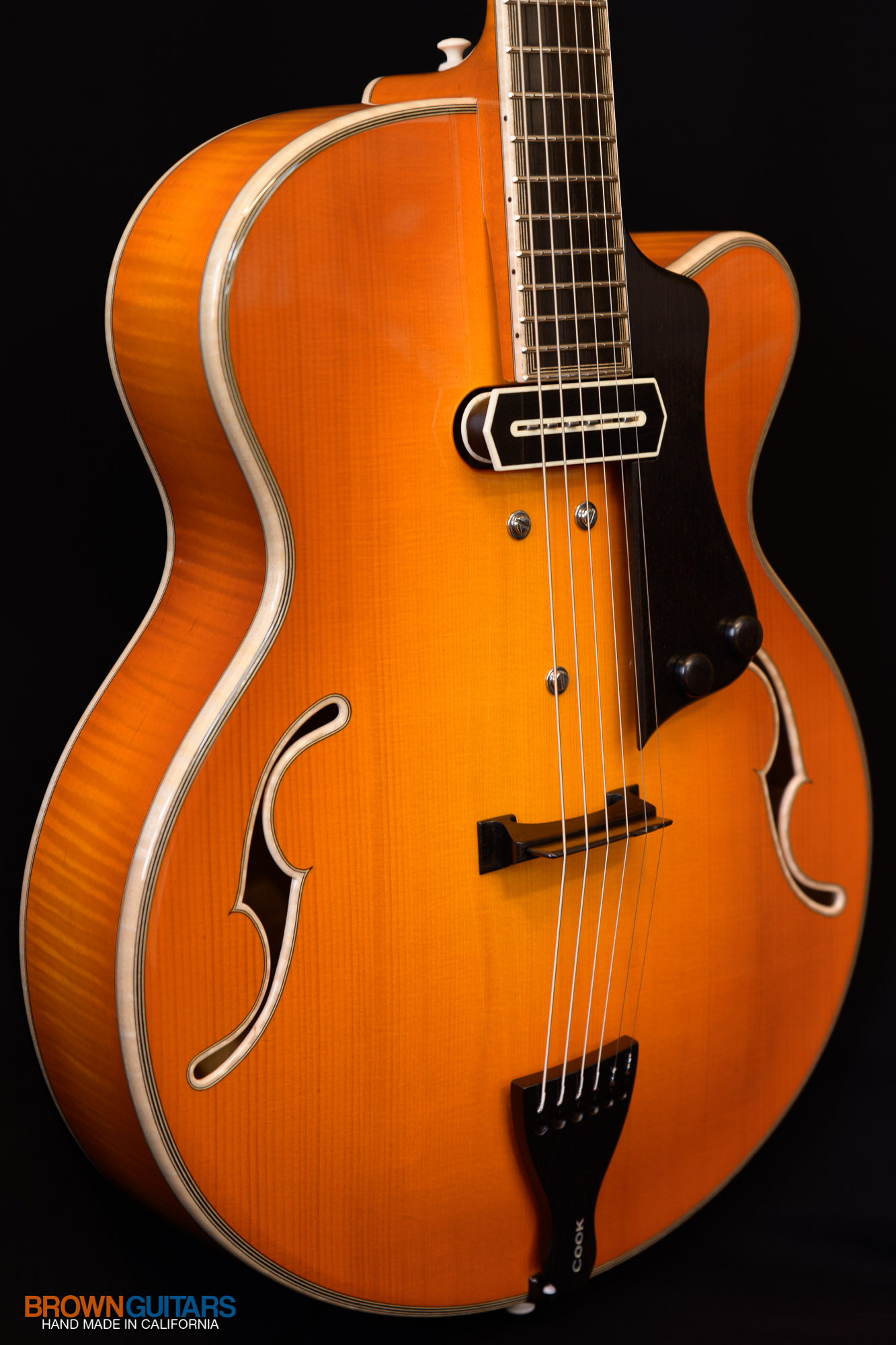
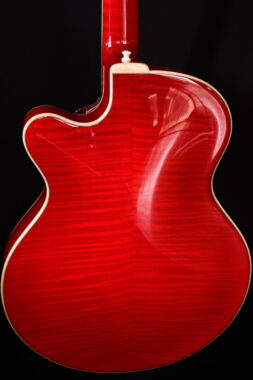
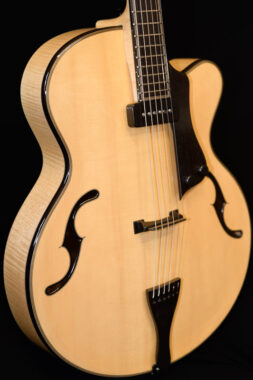
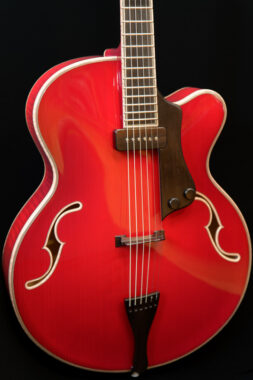
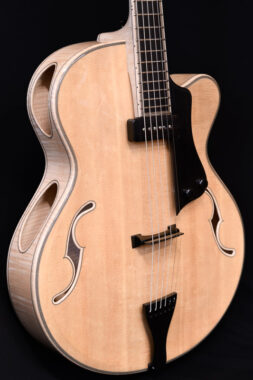
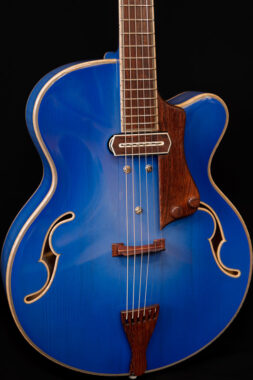
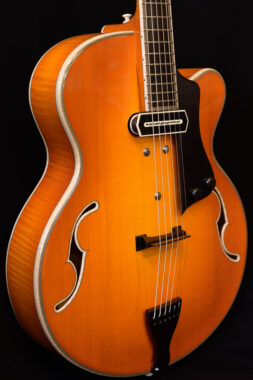
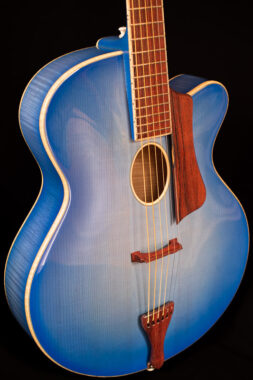
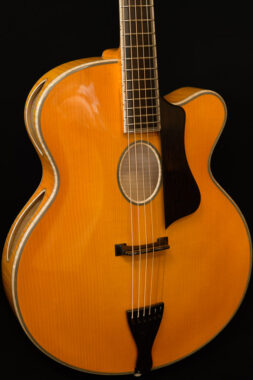
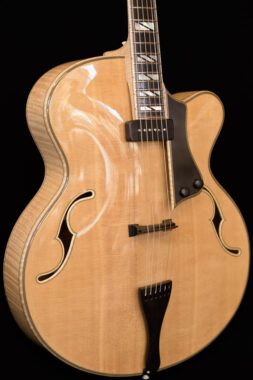
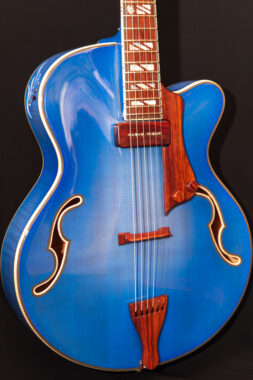
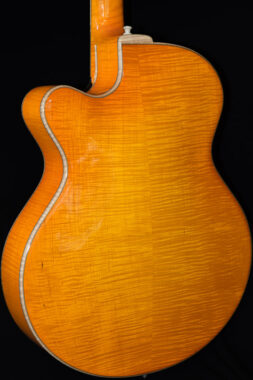
Tad Brown’s guitars are crafted with a musician’s discerning ear—designed for those who understand that critical differences in tone, playability, and longevity come down to exceptional craftsmanship, thoughtful design, and the careful selection of materials. This unwavering dedication is evident in every aspect of his instruments, from their remarkable acoustic performance to their refined ergonomics and aesthetic beauty. Each guitar stands as a testament to the belief that there are no shortcuts in lutherie—only a commitment to the craft and a relentless pursuit of excellence.
For Tad, every completed instrument is both a milestone and the starting point for the next. This continual drive for refinement has defined his work from the beginning and remains the core philosophy behind every guitar that leaves the shop. The archtop is not an instrument bound by rigid tradition, but one that is still actively evolving. Compared to the centuries-long refinement of orchestral stringed instruments like the violin, the archtop guitar is a 20th-century creation, still in its early stages of development—remaining an open canvas for thoughtful design and innovation.
Tad’s approach to the archtop guitar is deeply informed by decades of hands-on repair and setup work—diagnosing, maintaining, and correcting the recurring design flaws that cause so many factory instruments to fail over time. Every structural and material choice on a Brown archtop is a direct answer to those lessons learned at the repair bench.
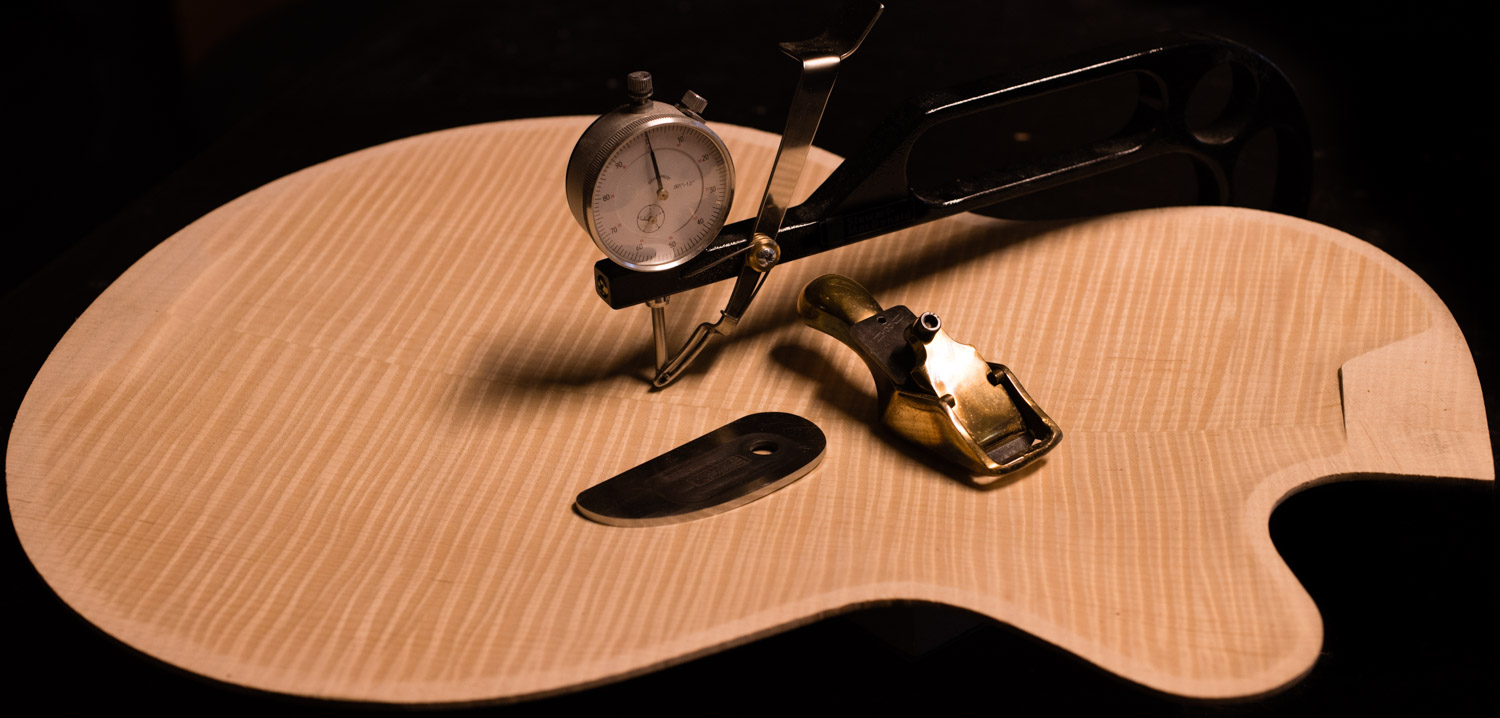
While many modern archtop builders focus primarily on recreating legendary designs of the past, Tad is dedicated to moving the instrument forward. Drawing inspiration from time-honored tradition, he applies the same acoustic principles that have shaped the violin and cello over centuries. These instruments are engineered for pure acoustic efficiency at their core—featuring lightweight bridges, finely carved plates, and minimal mass to maximize tonal response.
By thoughtfully incorporating these principles into the archtop framework, Tad creates instruments that resonate with exceptional clarity, warmth, and dynamic depth. Every element, from the feather-light bridge to the finely voiced top and back plates, works in harmony to allow the instrument to respond to the lightest touch with remarkable sensitivity and expressive richness—pushing the boundaries of what an archtop can achieve unplugged and amplified alike.
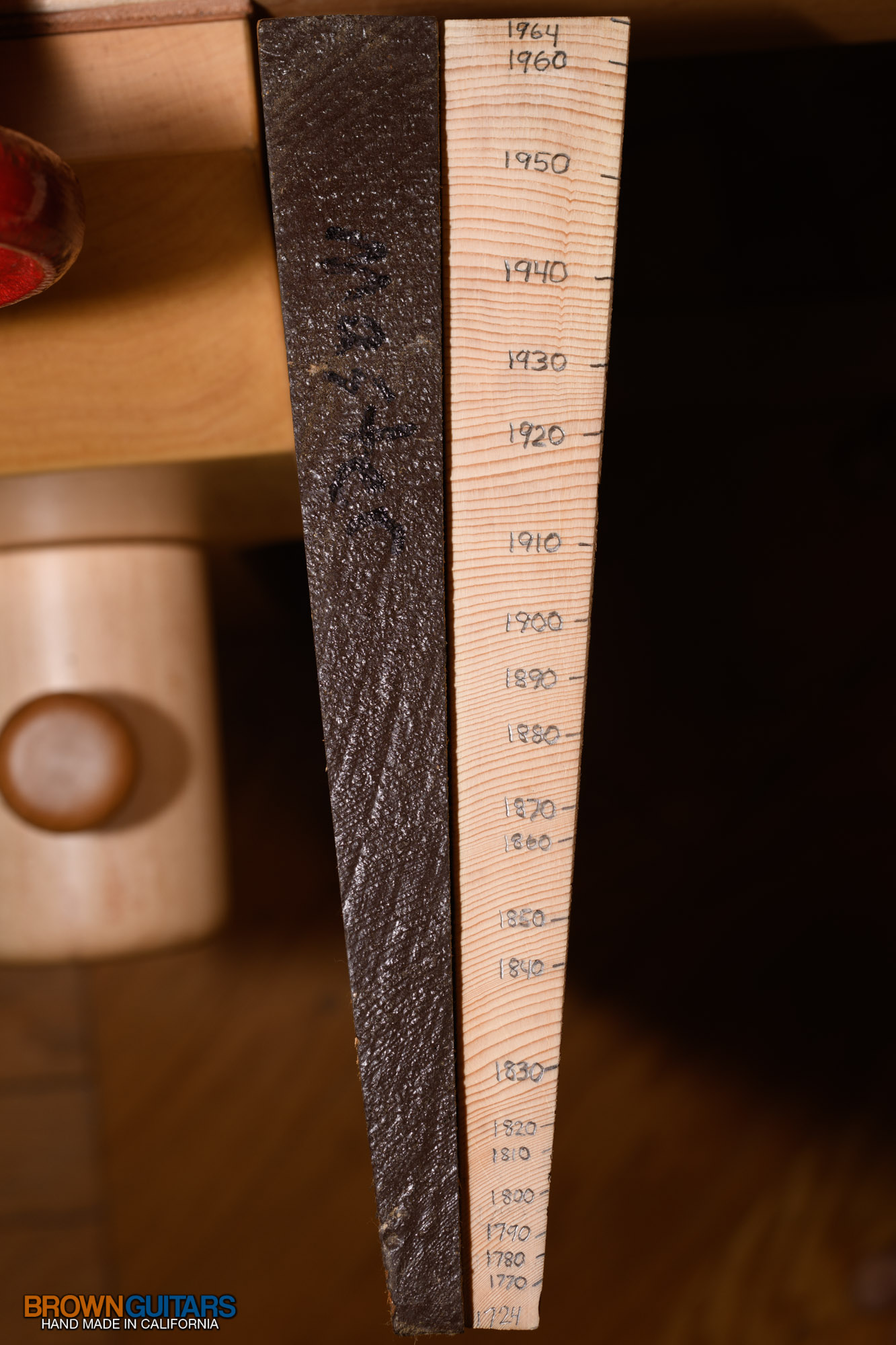
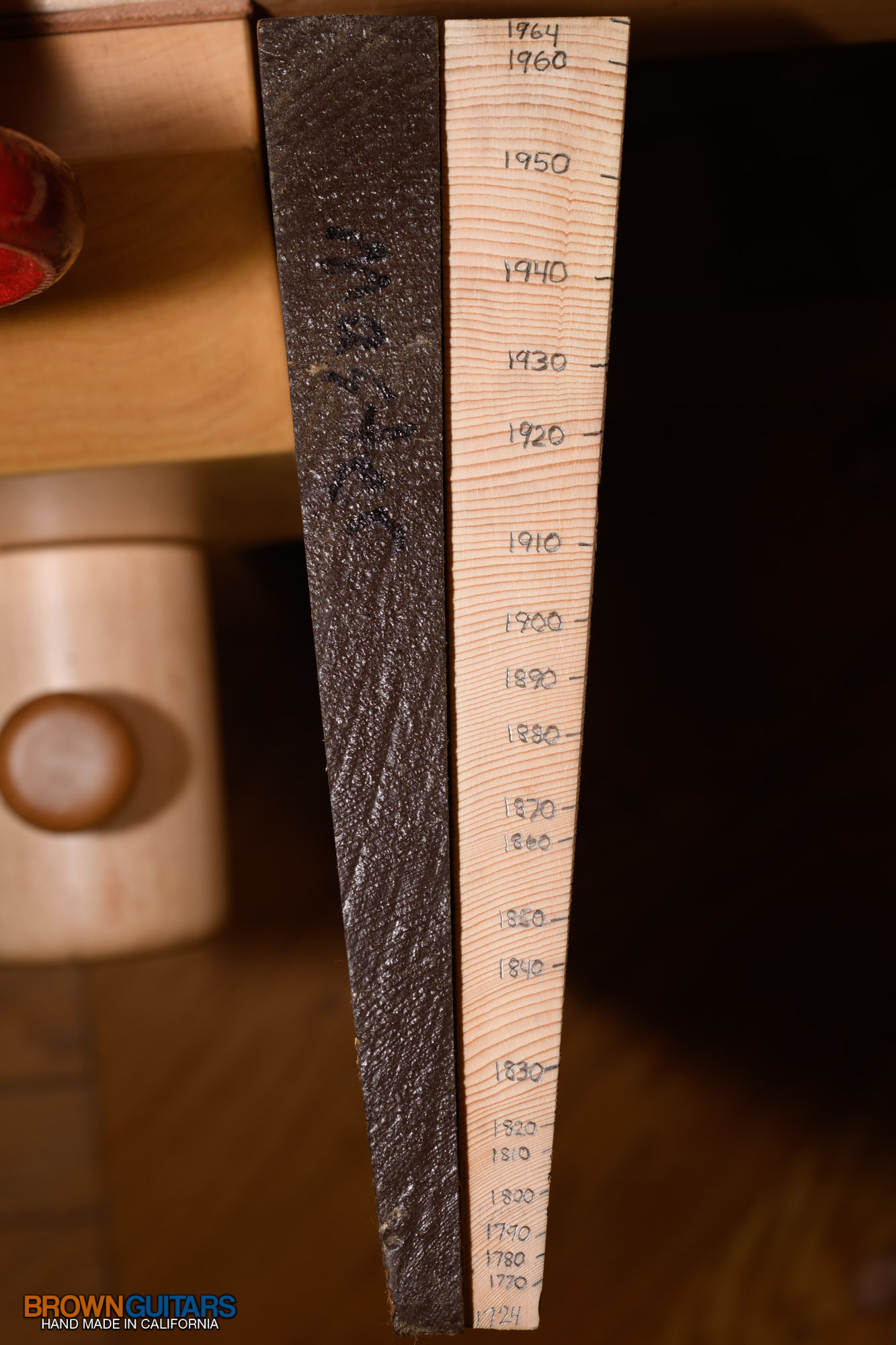 If you study the most celebrated historic instruments, you’ll notice they rely on a surprisingly narrow family of woods. The old violin masters gravitated toward certain specific materials not out of mere tradition or habit, but because they simply sounded the best. Centuries later, the golden era of American lutherie established a sonic standard of its own that remains the ultimate reference point for guitars today.
As many of the time-honored woods have now become scarce and harder to source responsibly, navigating the tonewood market requires a careful ear. In the acoustic flattop market, this scarcity has led to many factory instruments being built from exotic alternative woods—driven more by commercial marketing and striking grain figures than by acoustic physics. Historic and vintage guitars, however, set a high bar not easily surpassed. A big part of that benchmark comes down to the materials that made those masterworks so legendary in the first place.
For Tad, tonewood selection is a pragmatic pursuit: a beautiful piece of wood is only valuable if it sounds great. Every piece is chosen primarily for its acoustic performance, but fortunately, nature’s finest acoustic woods are also inherently stunning.
The true challenge lies in sourcing them. Finding these rare woods in instrument-grade quality—and in the substantial sizes required for archtop lutherie—is an arduous process. Rather than relying on industry trends or decorative hype, Tad carefully evaluates each piece, ensuring it proves its acoustic worth before it ever earns its place on an instrument.
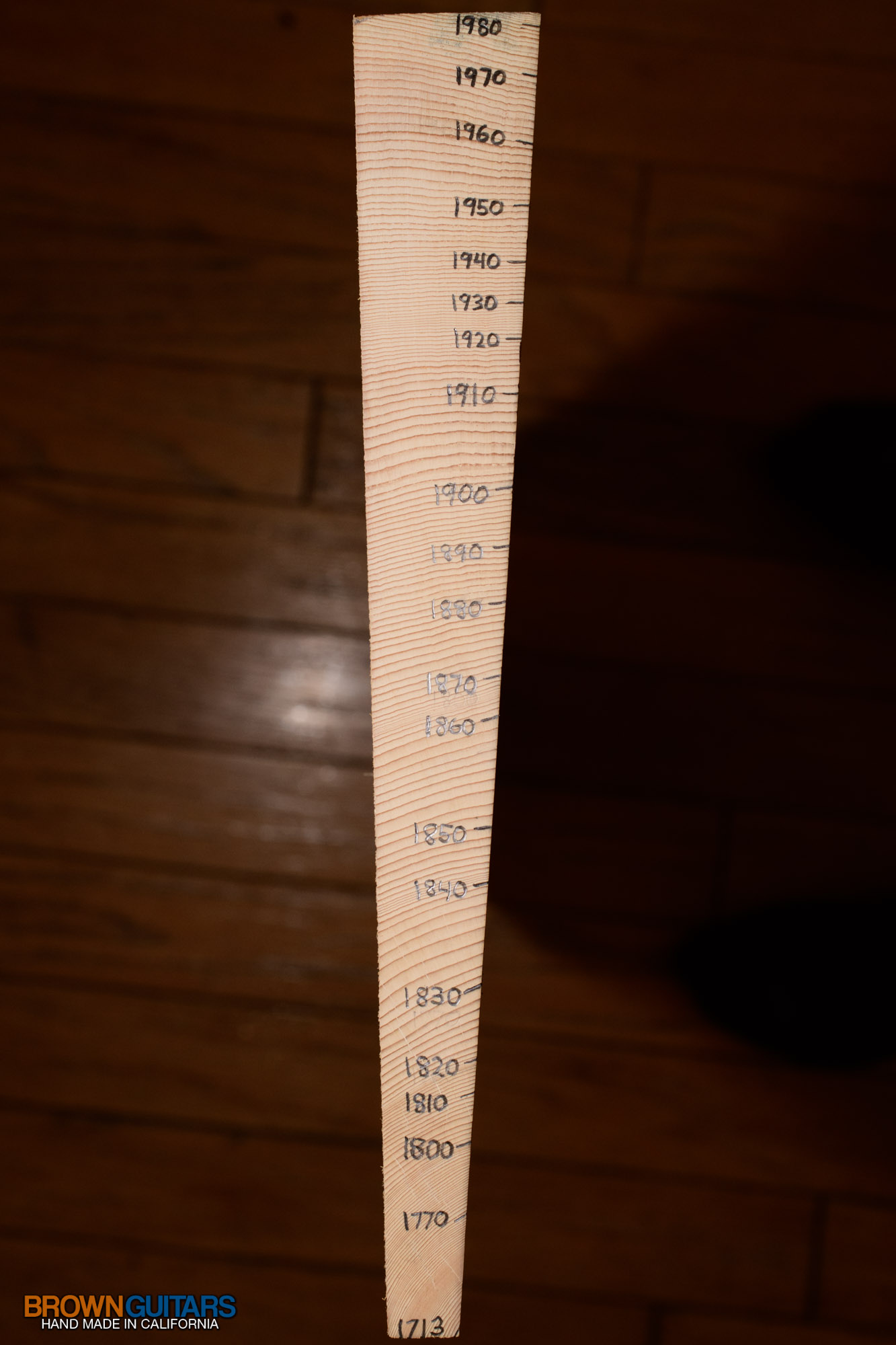
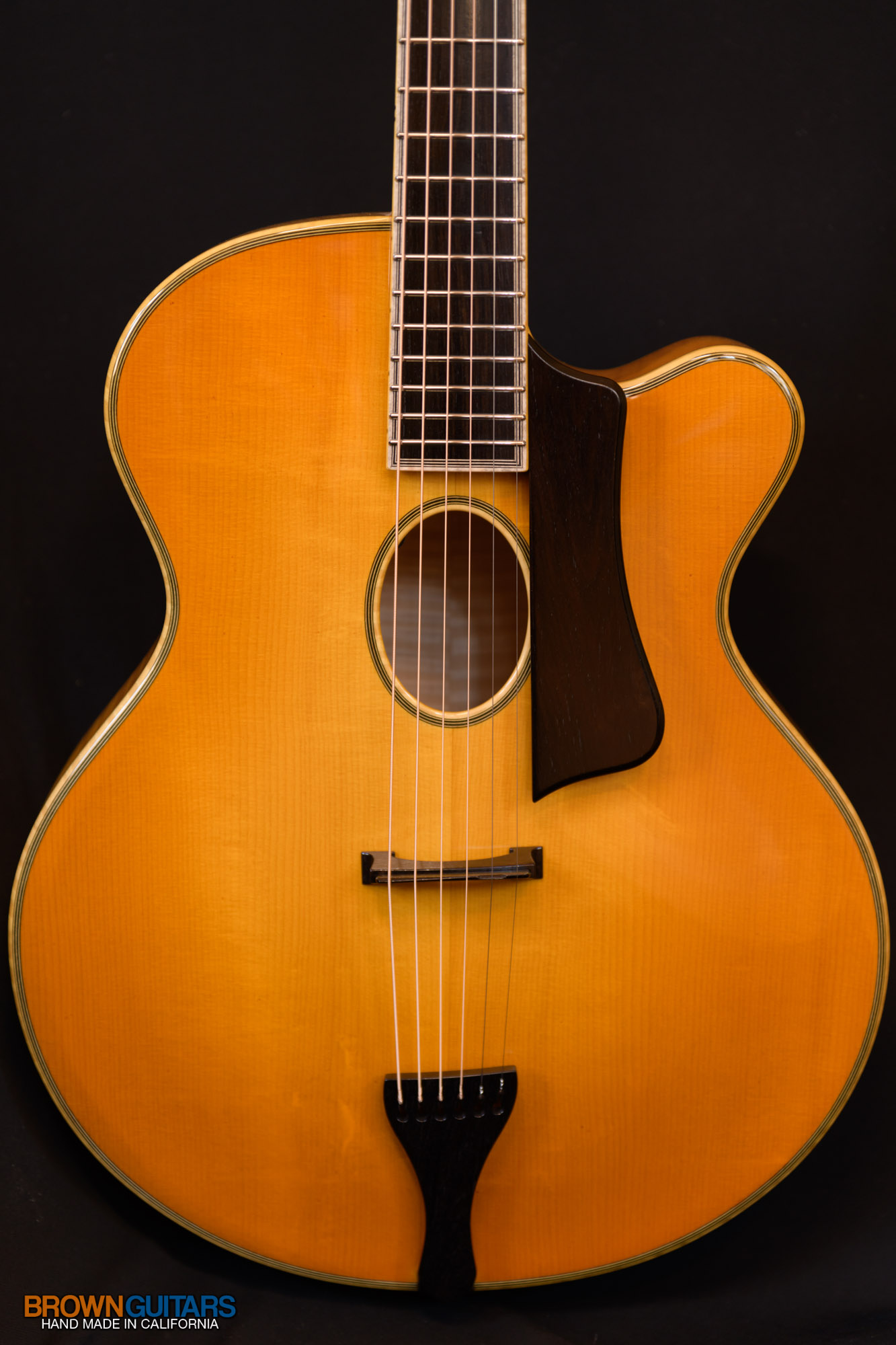
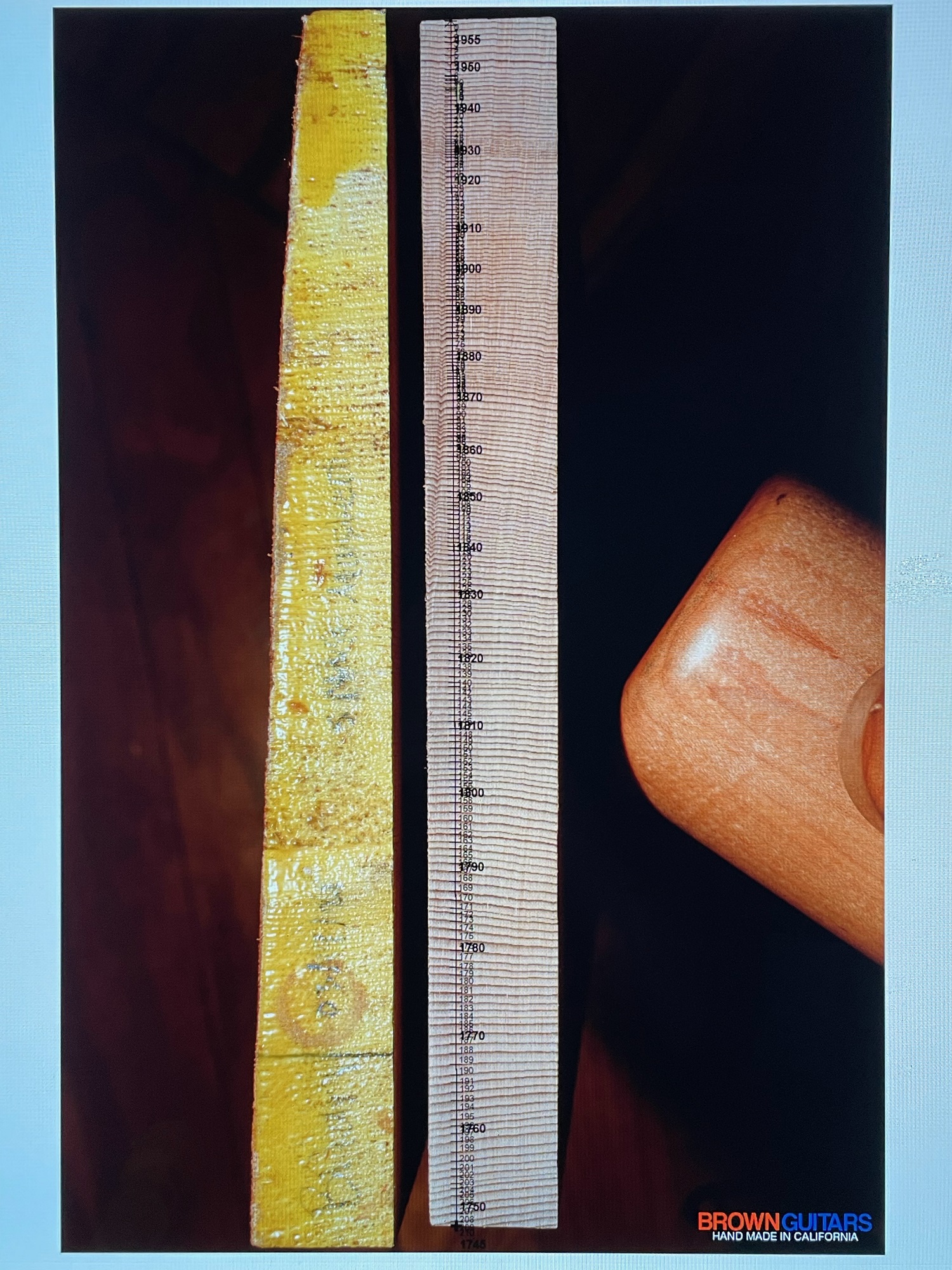
It is a fascinating question in historical lutherie: what if the classical Italian masters had access to North American tonewoods? The finest golden-era instruments of 20th-century American lutherie offer a compelling answer. The iconic acoustic guitars so revered today owe much of their celebrated power and projection to old-growth Adirondack Red Spruce. Far from a choice of convenience, red spruce remains unmatched for its extraordinary headroom, clarity, and dynamic punch—which is why it remains Tad’s primary choice for top plates.
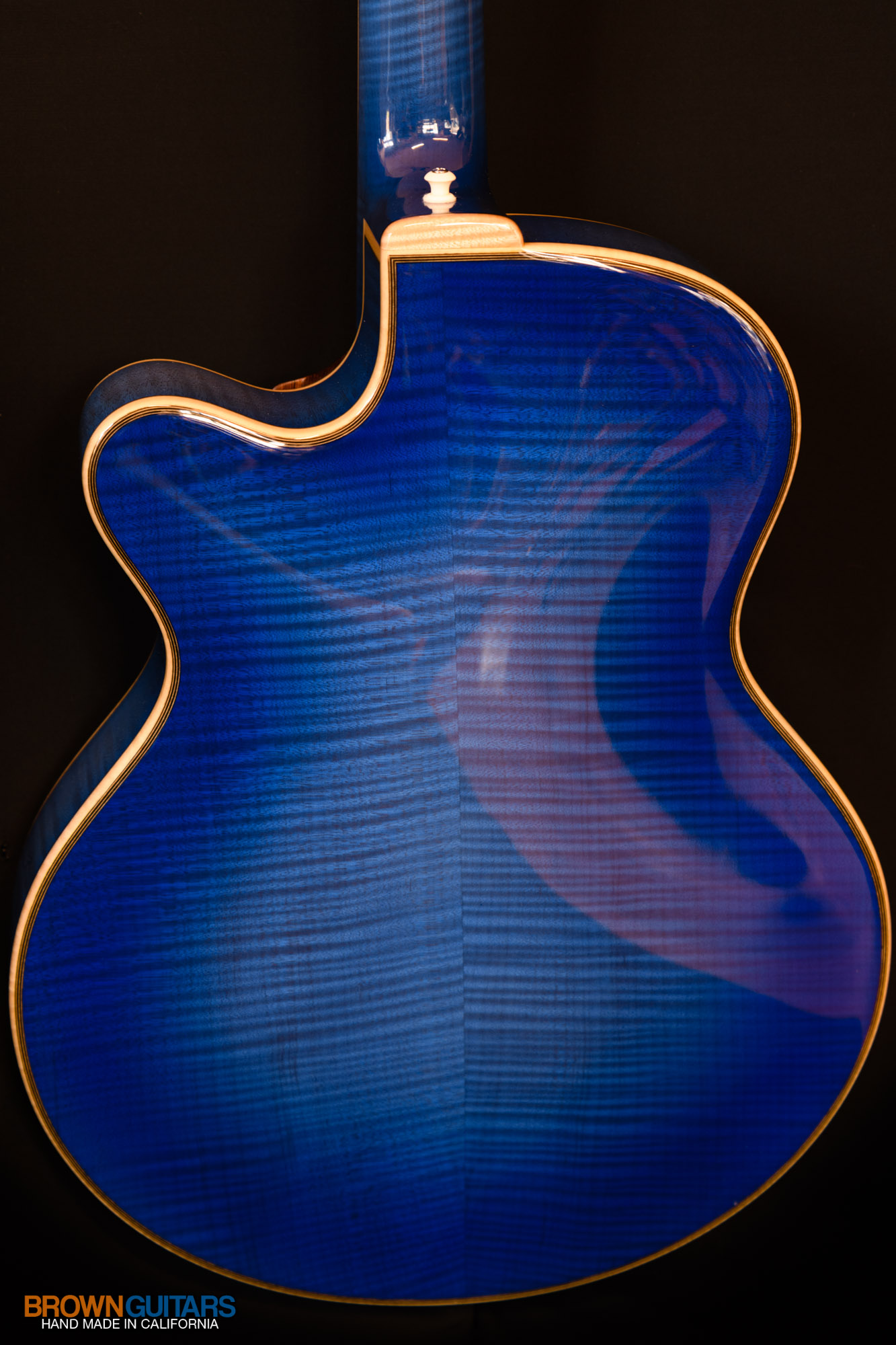
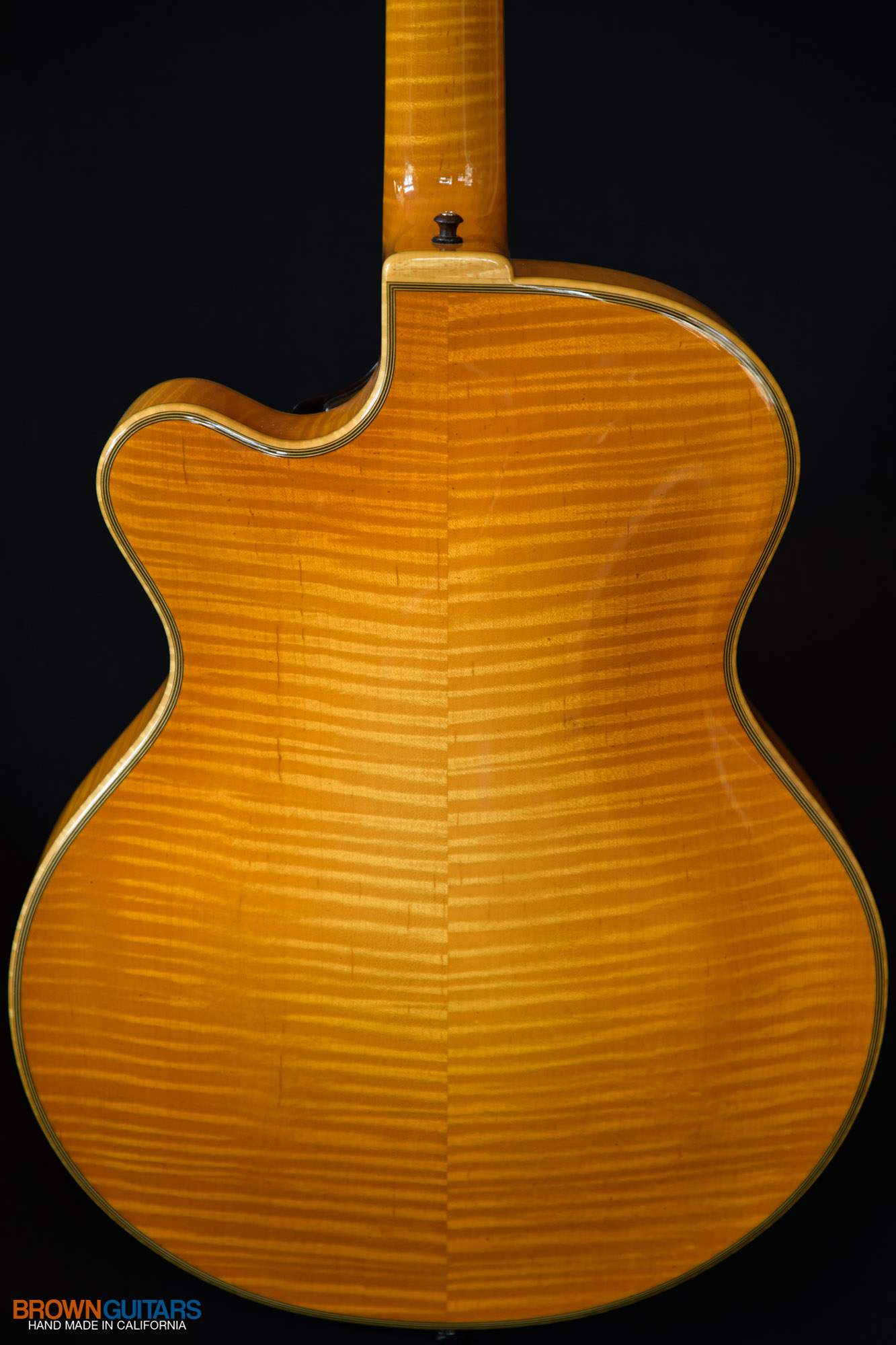
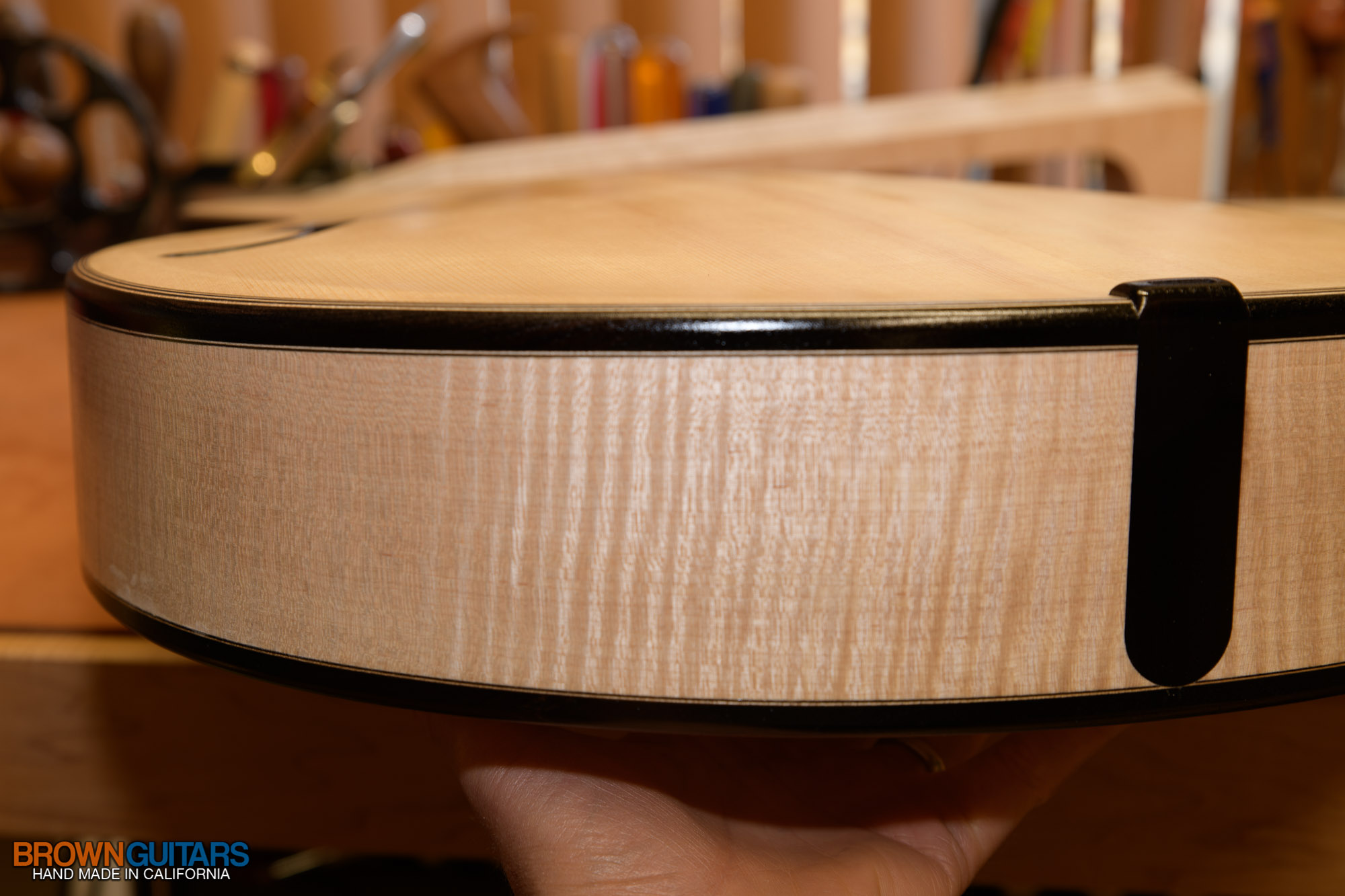
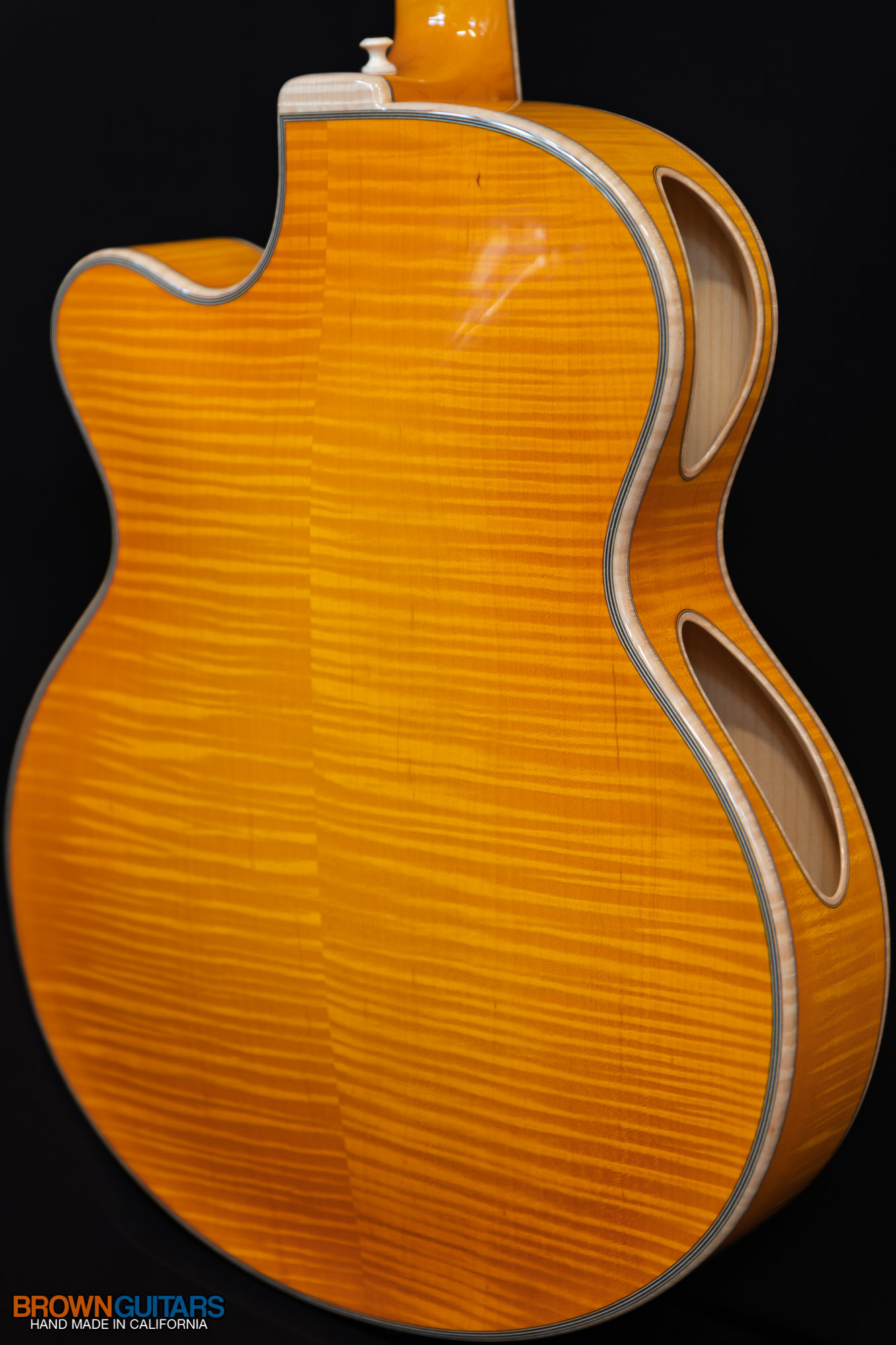
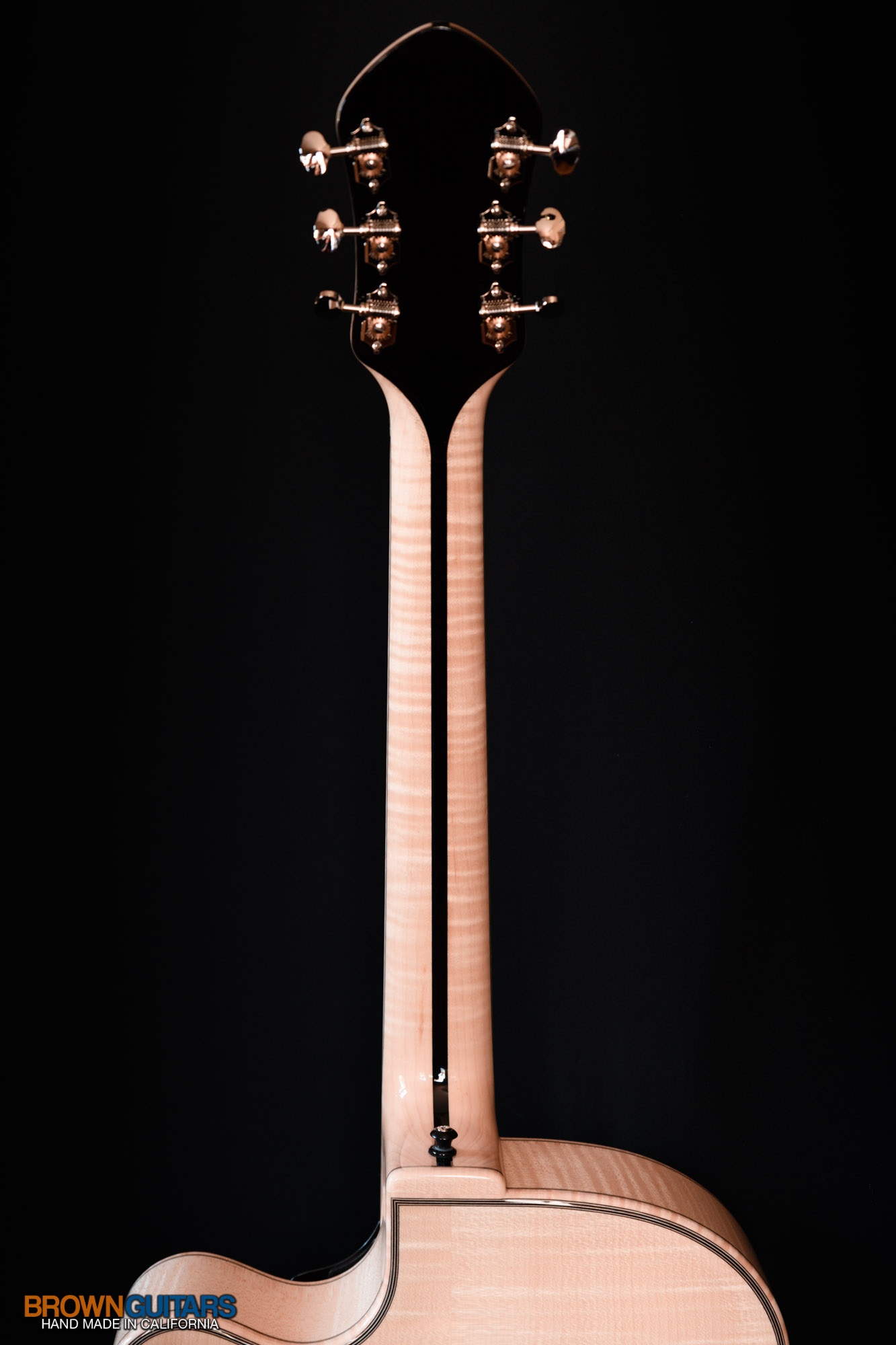
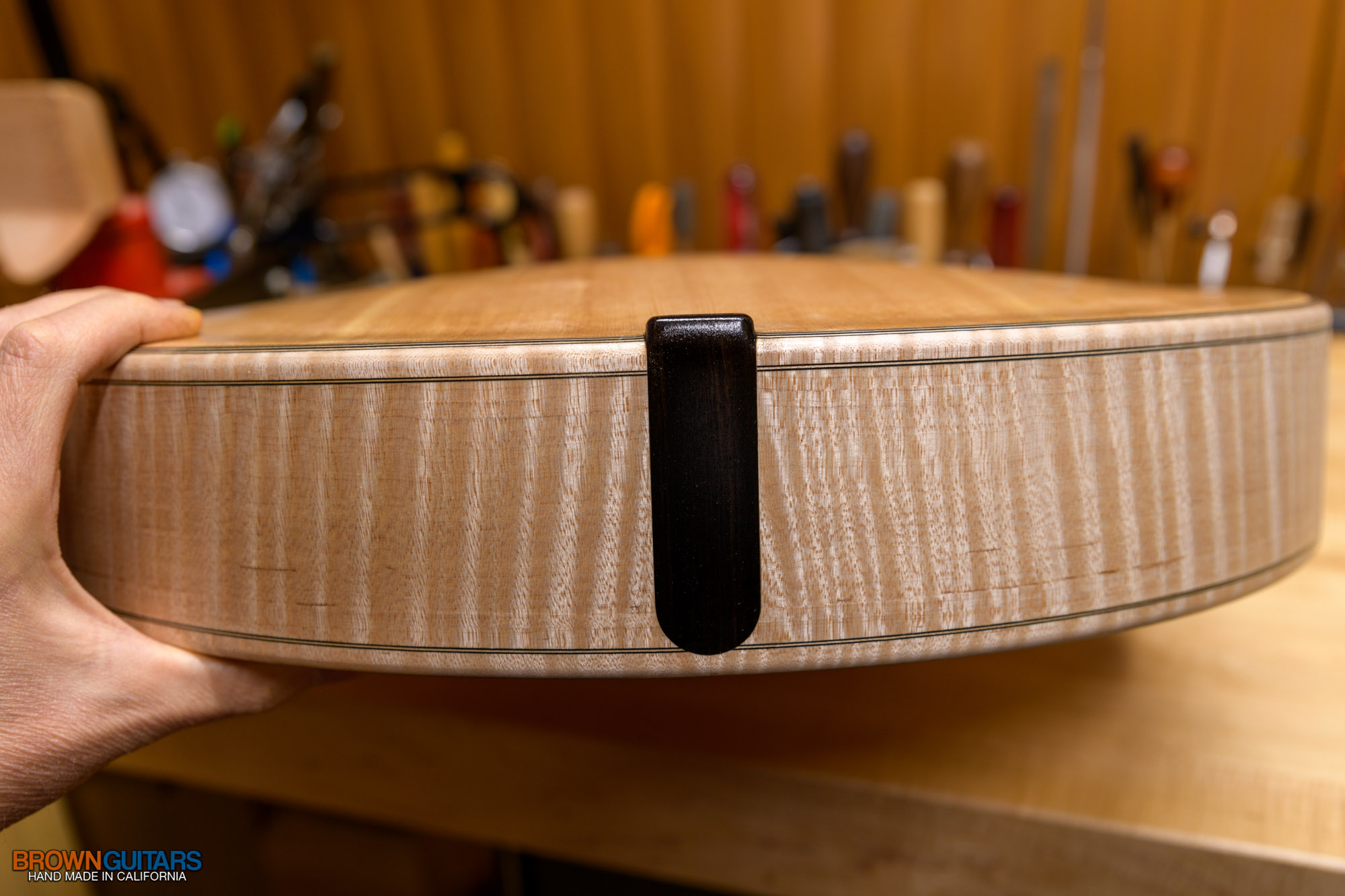
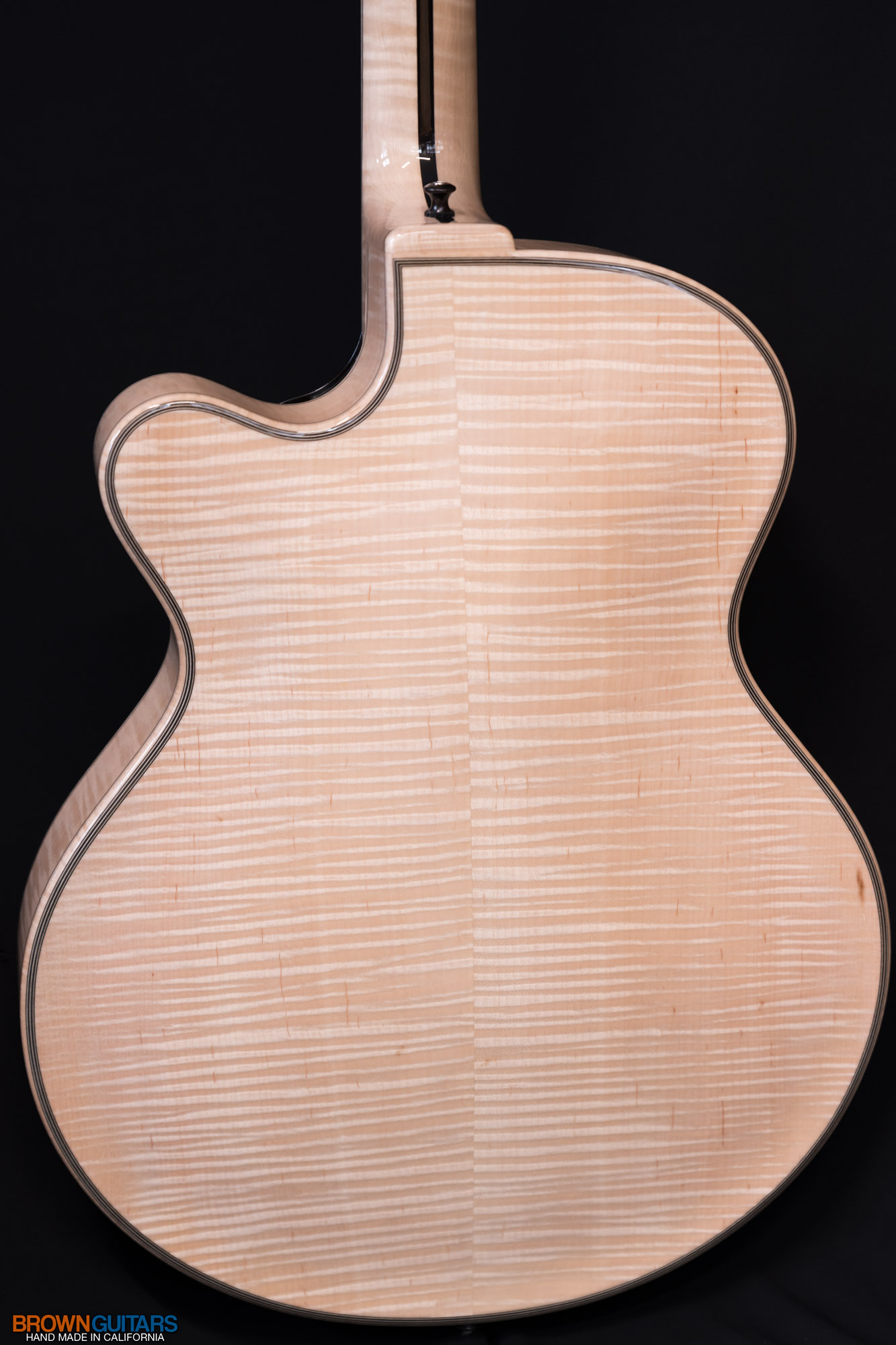
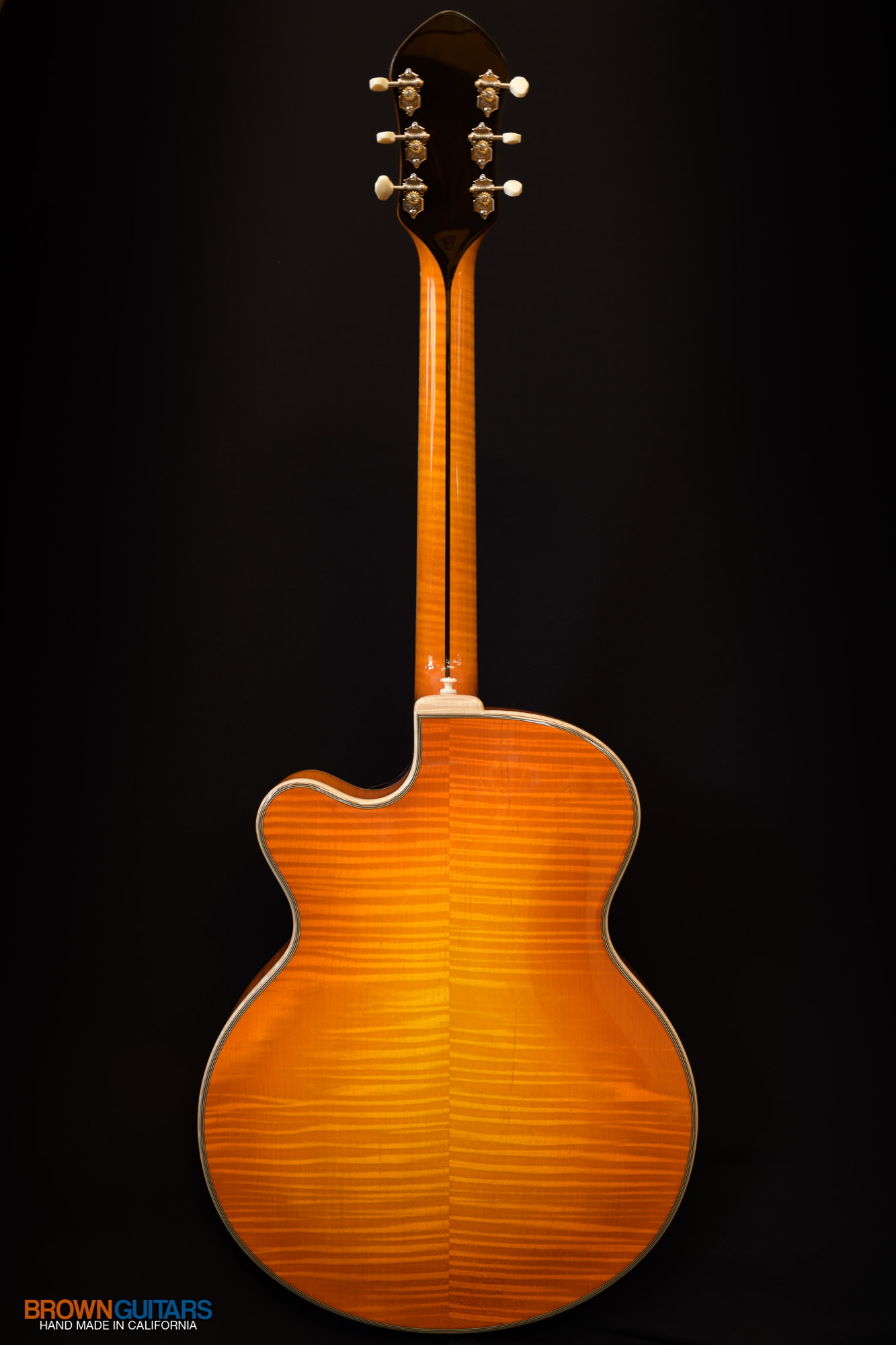
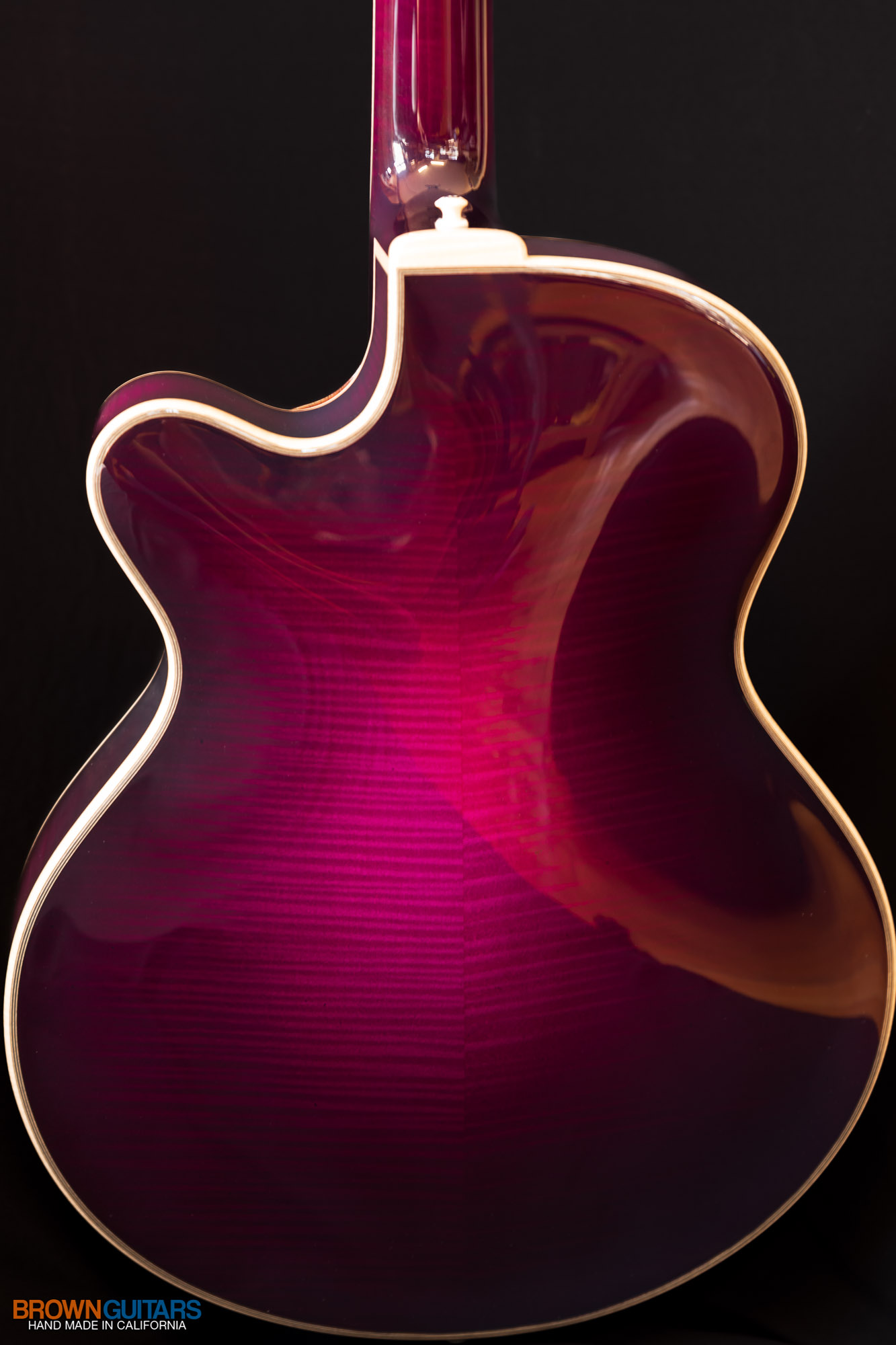
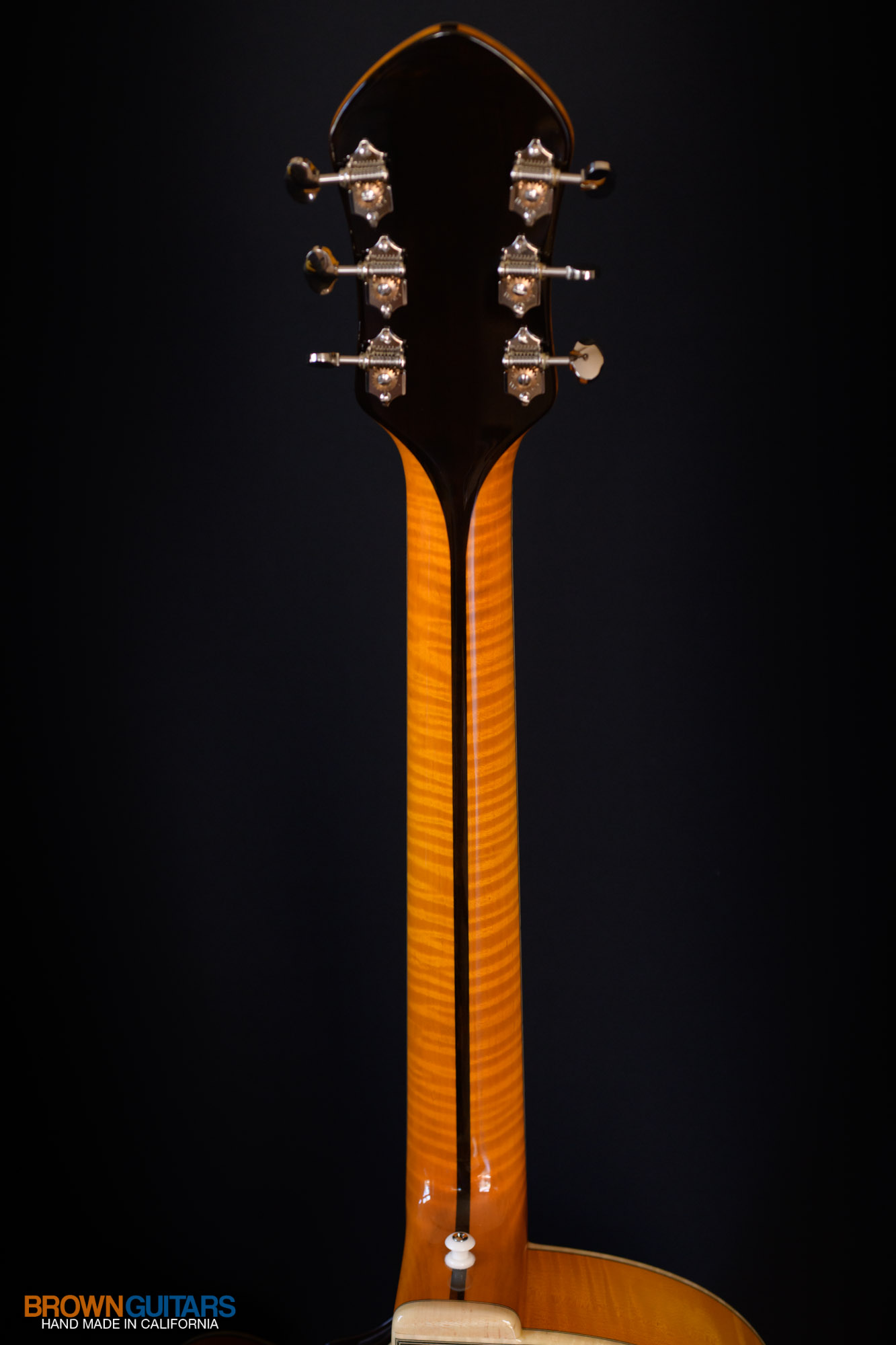
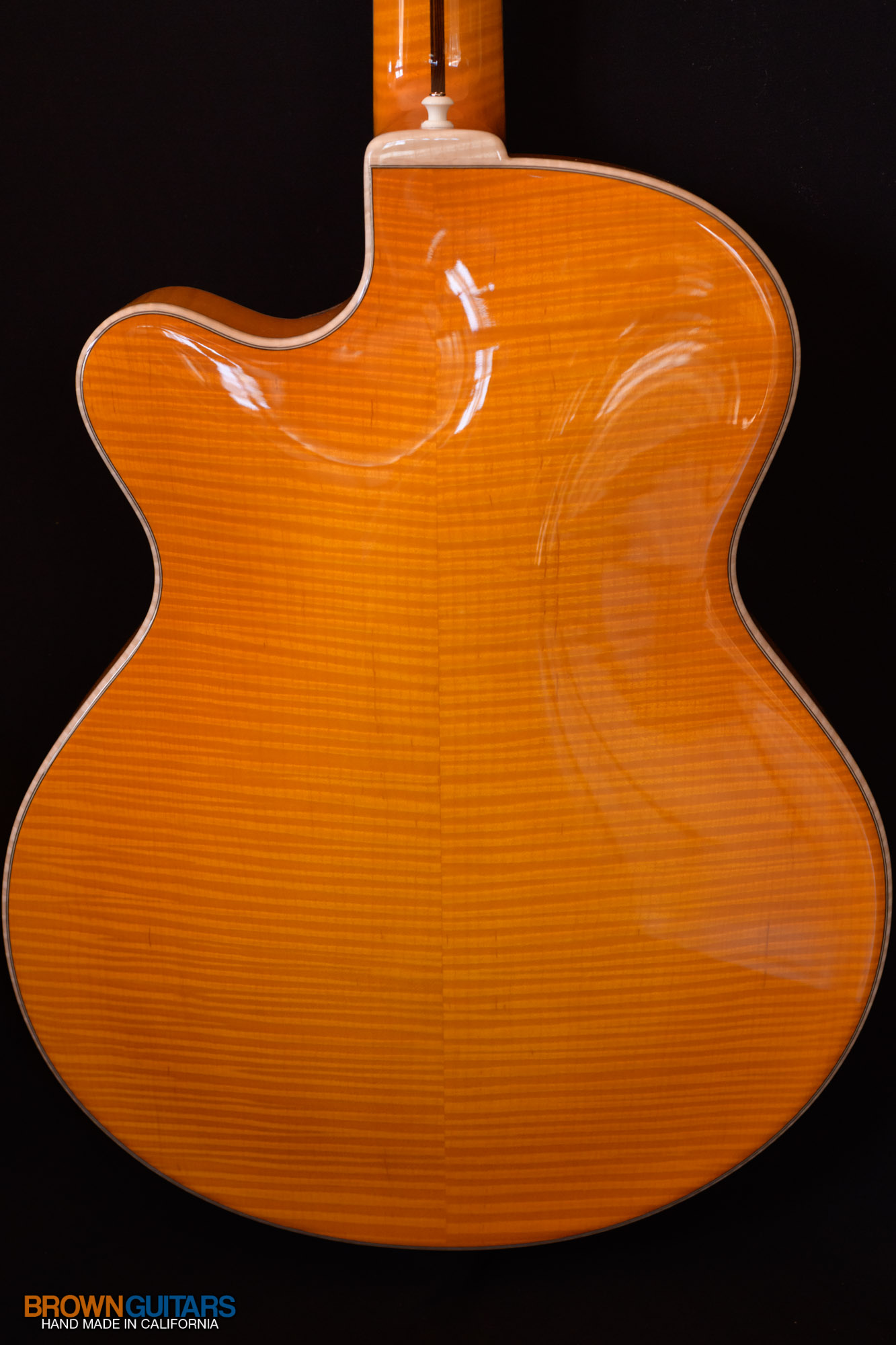
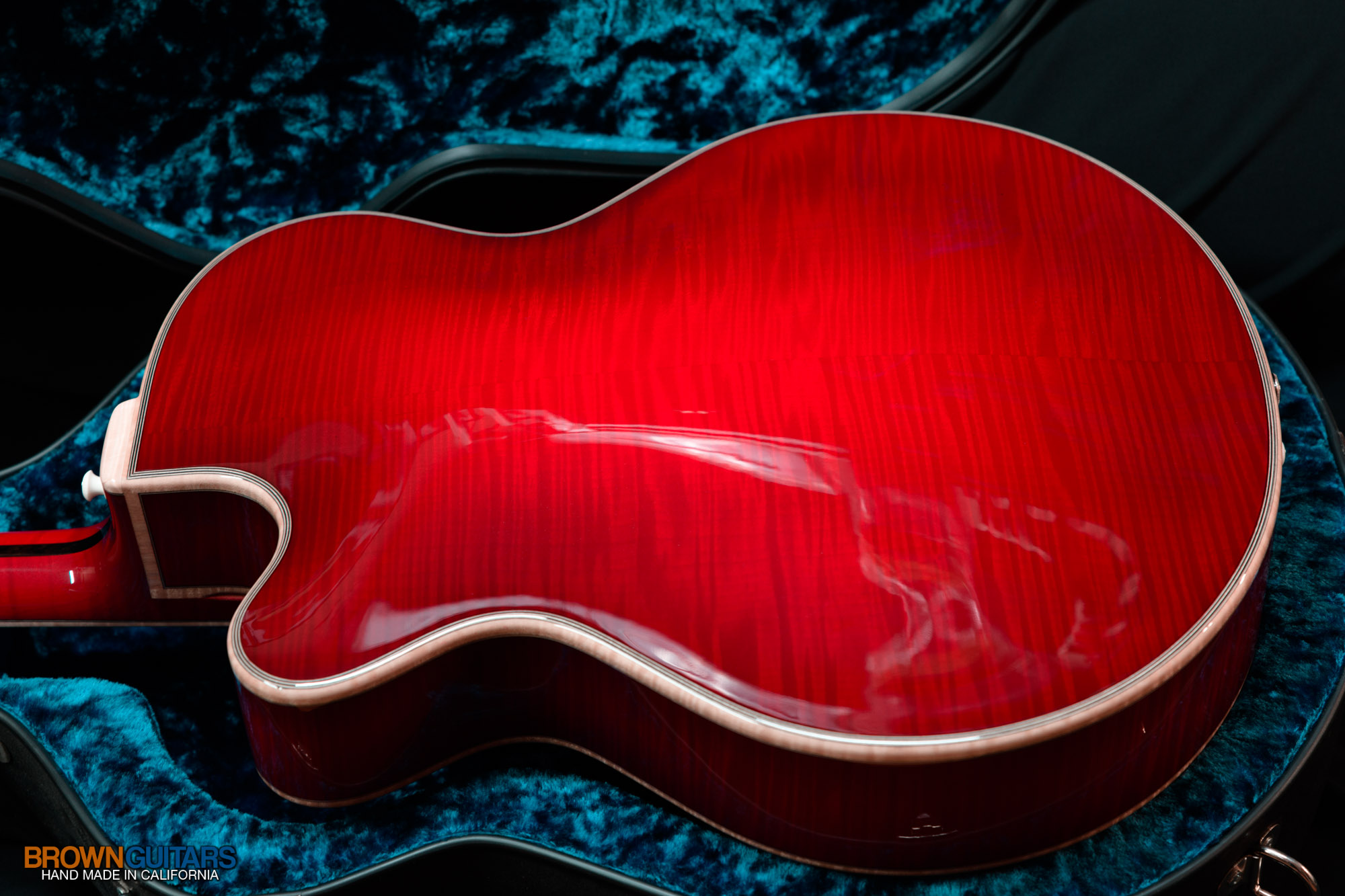
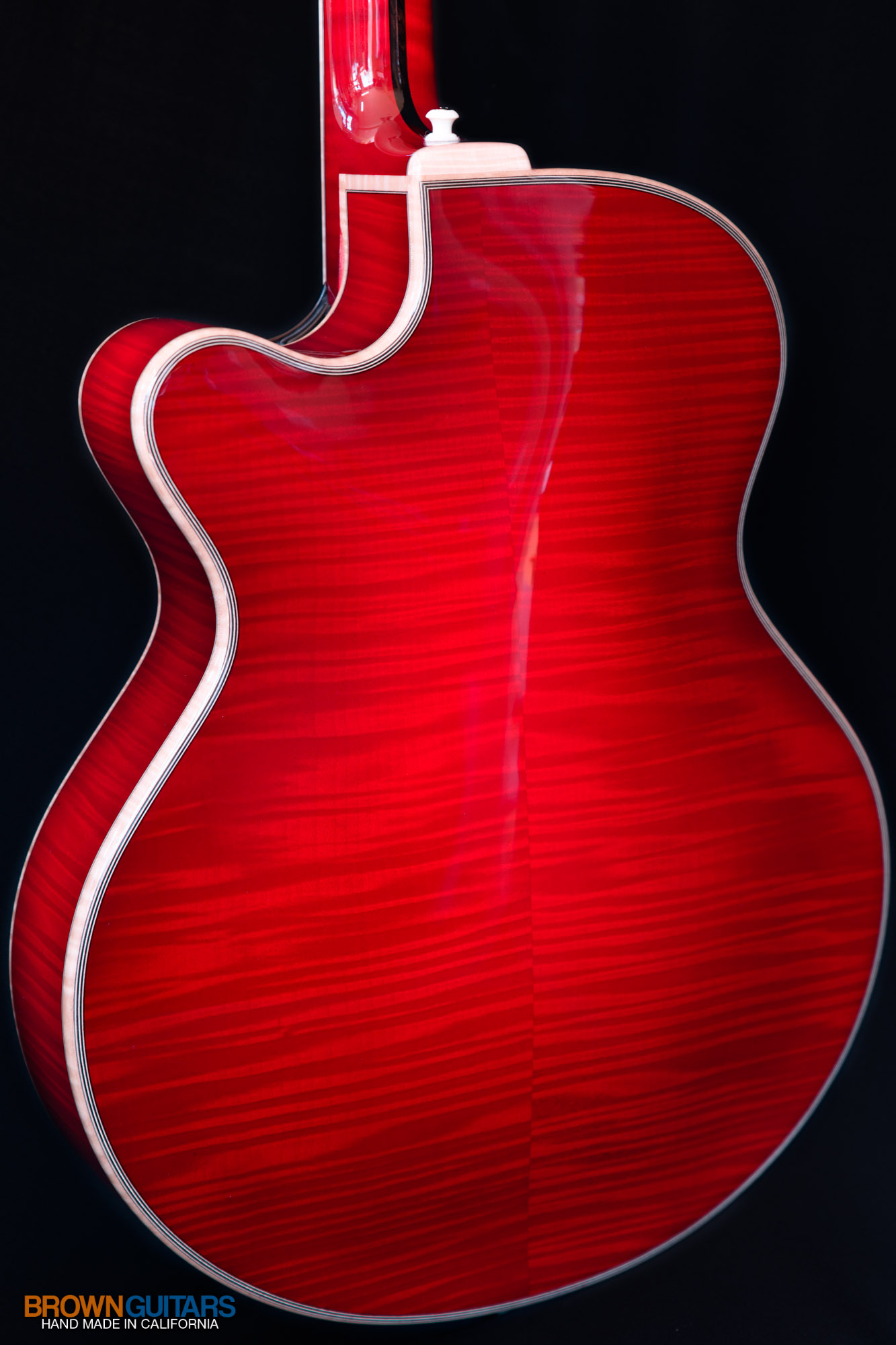
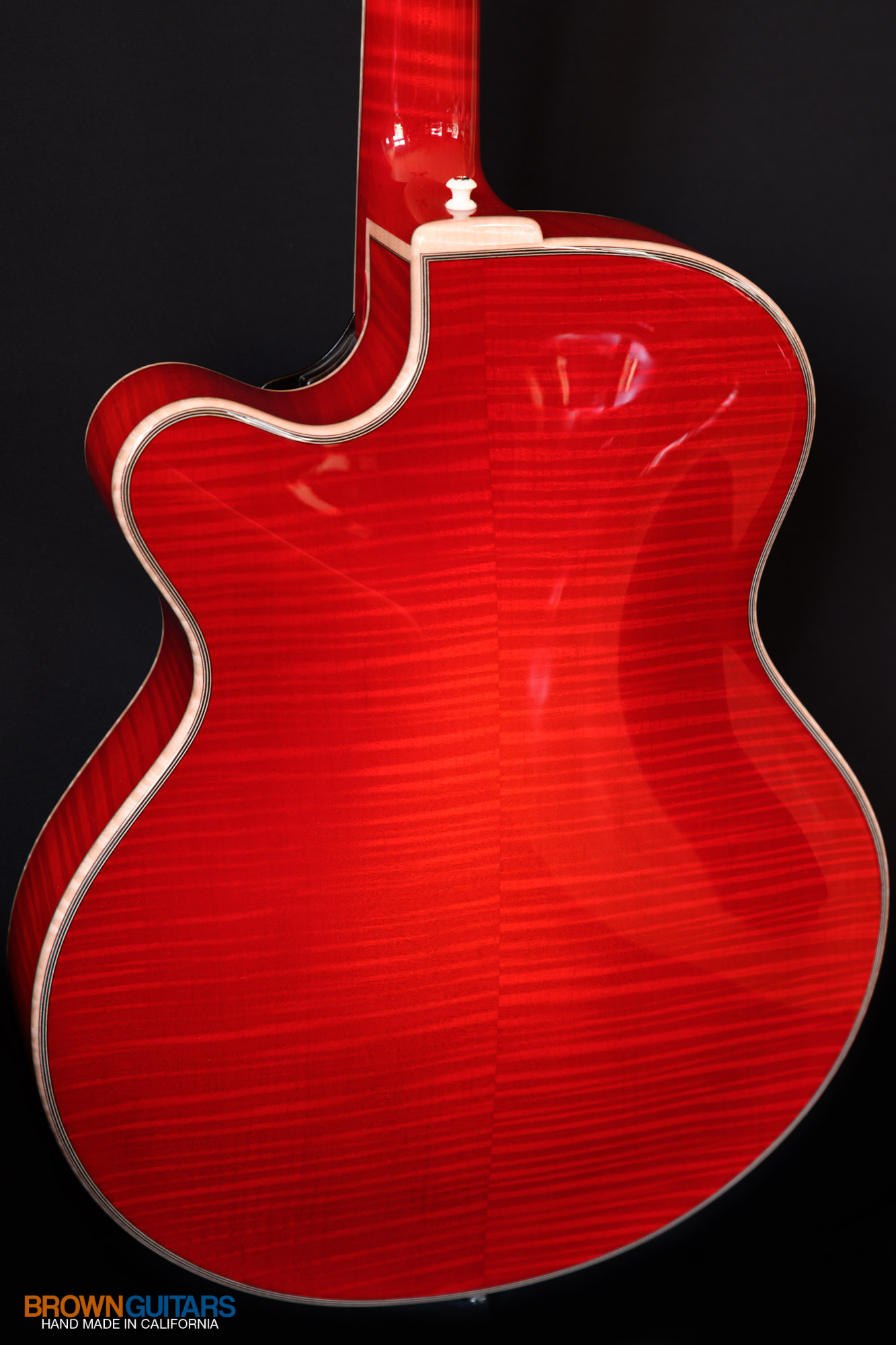
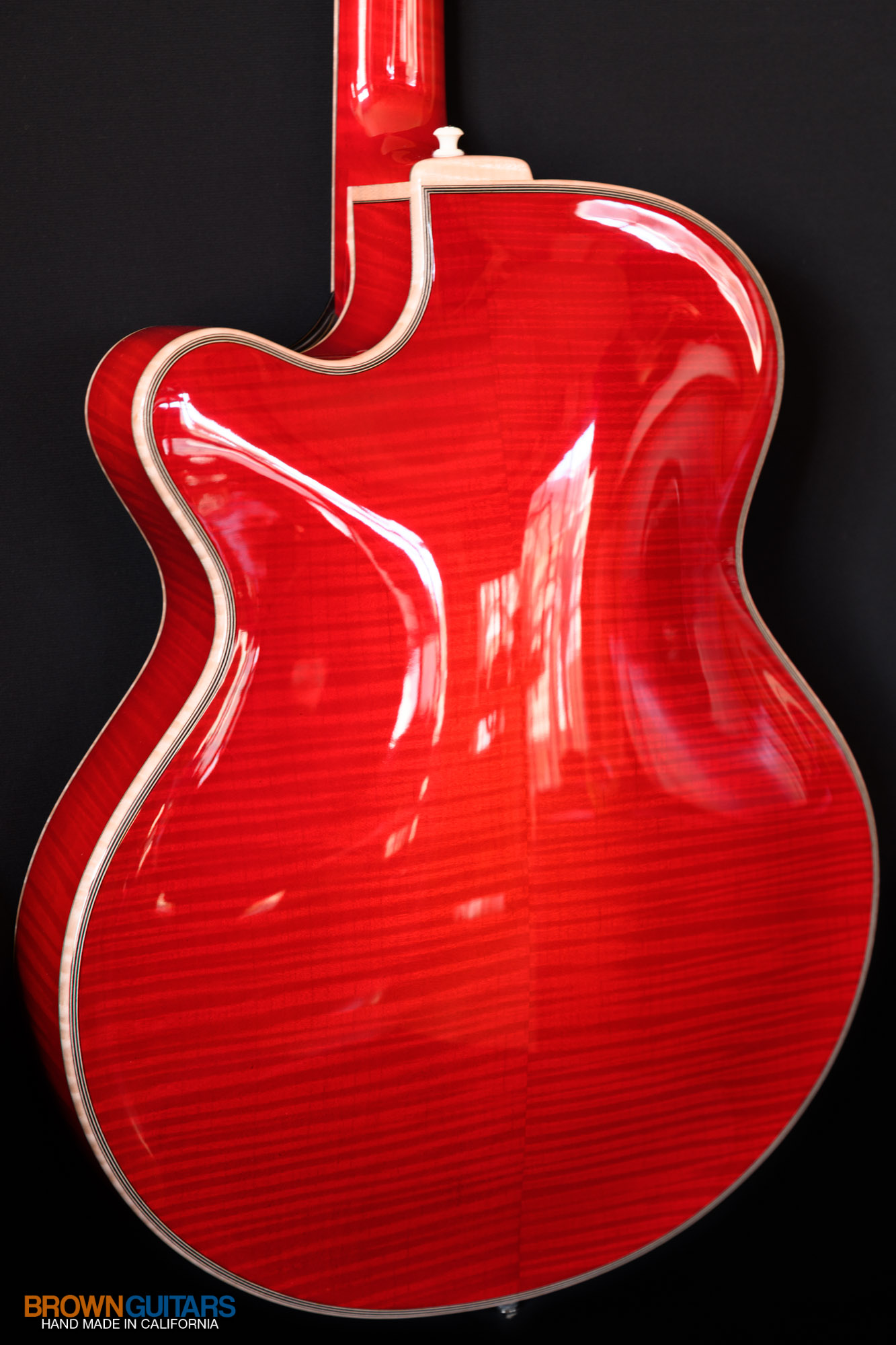
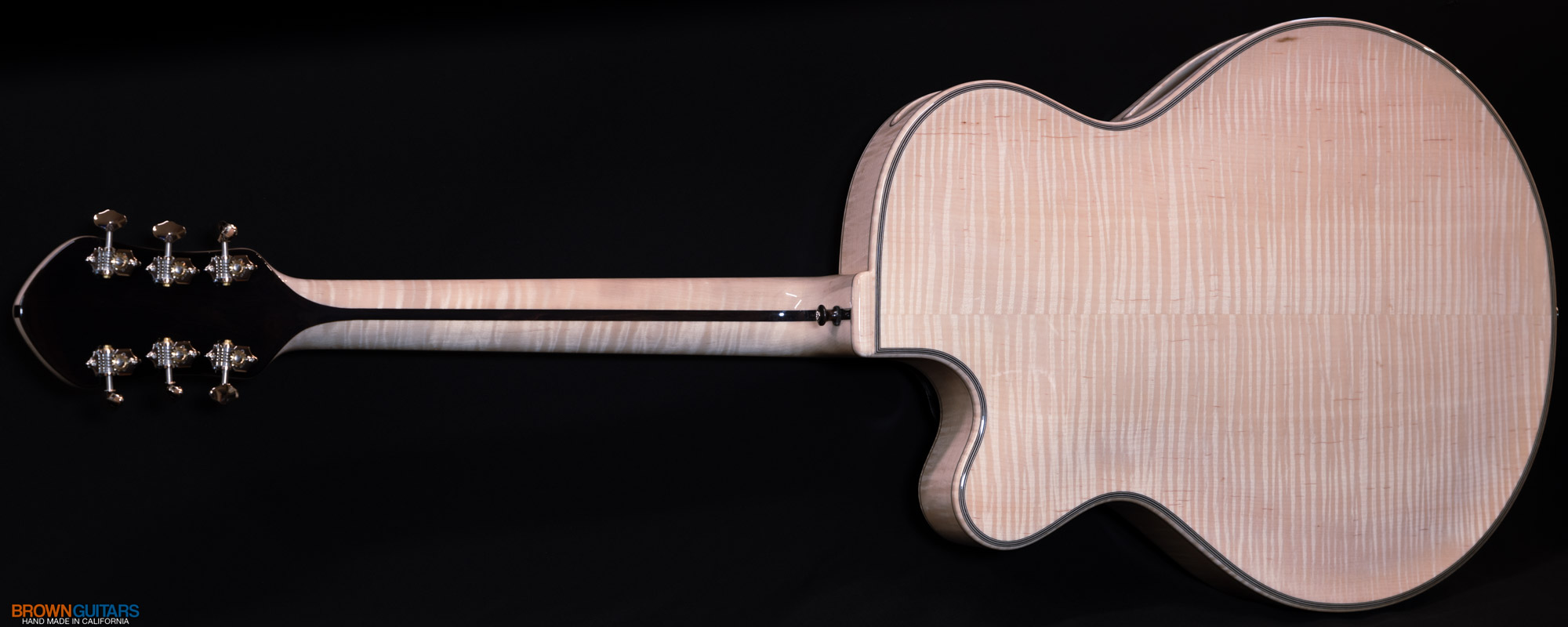
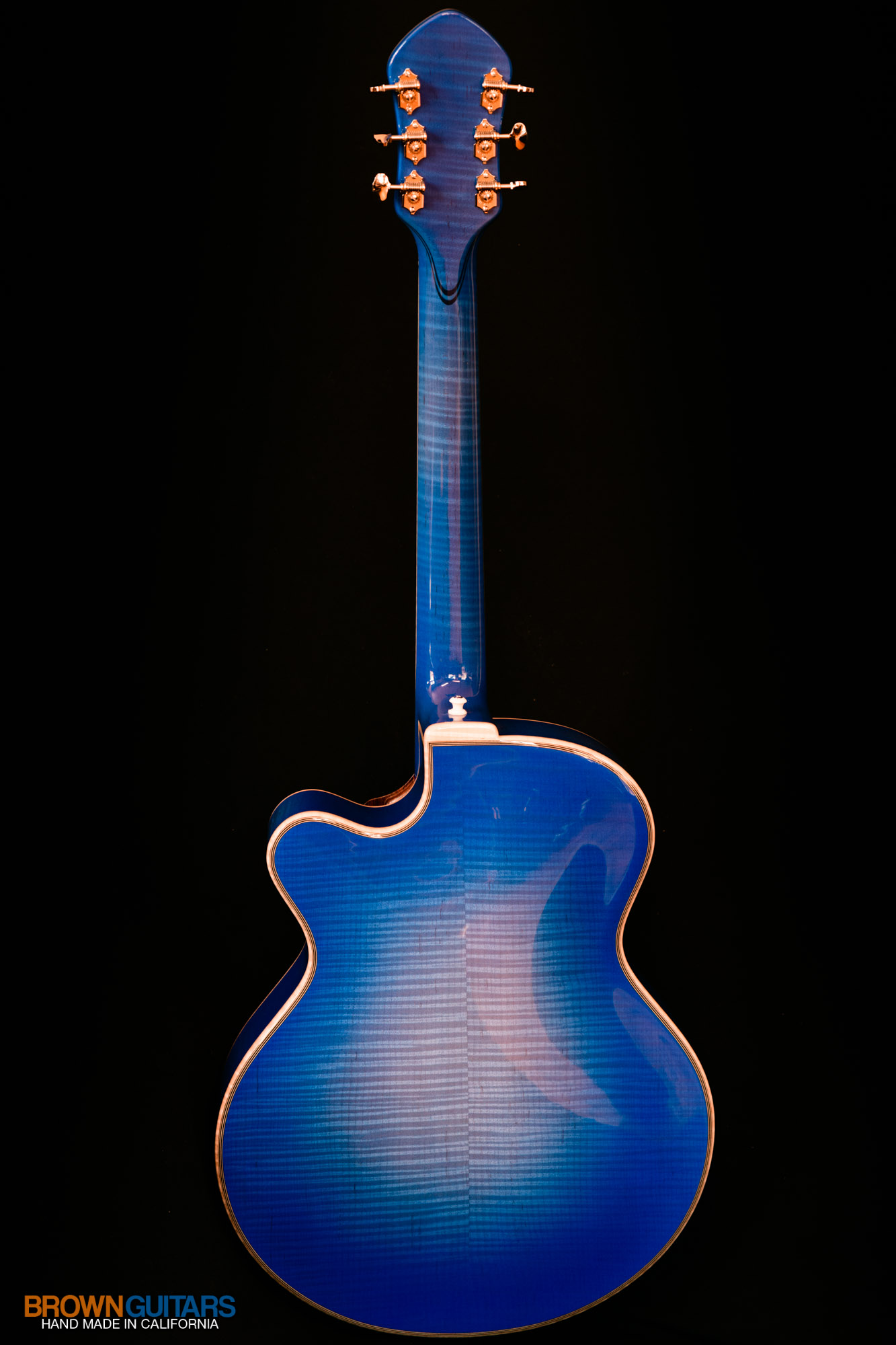
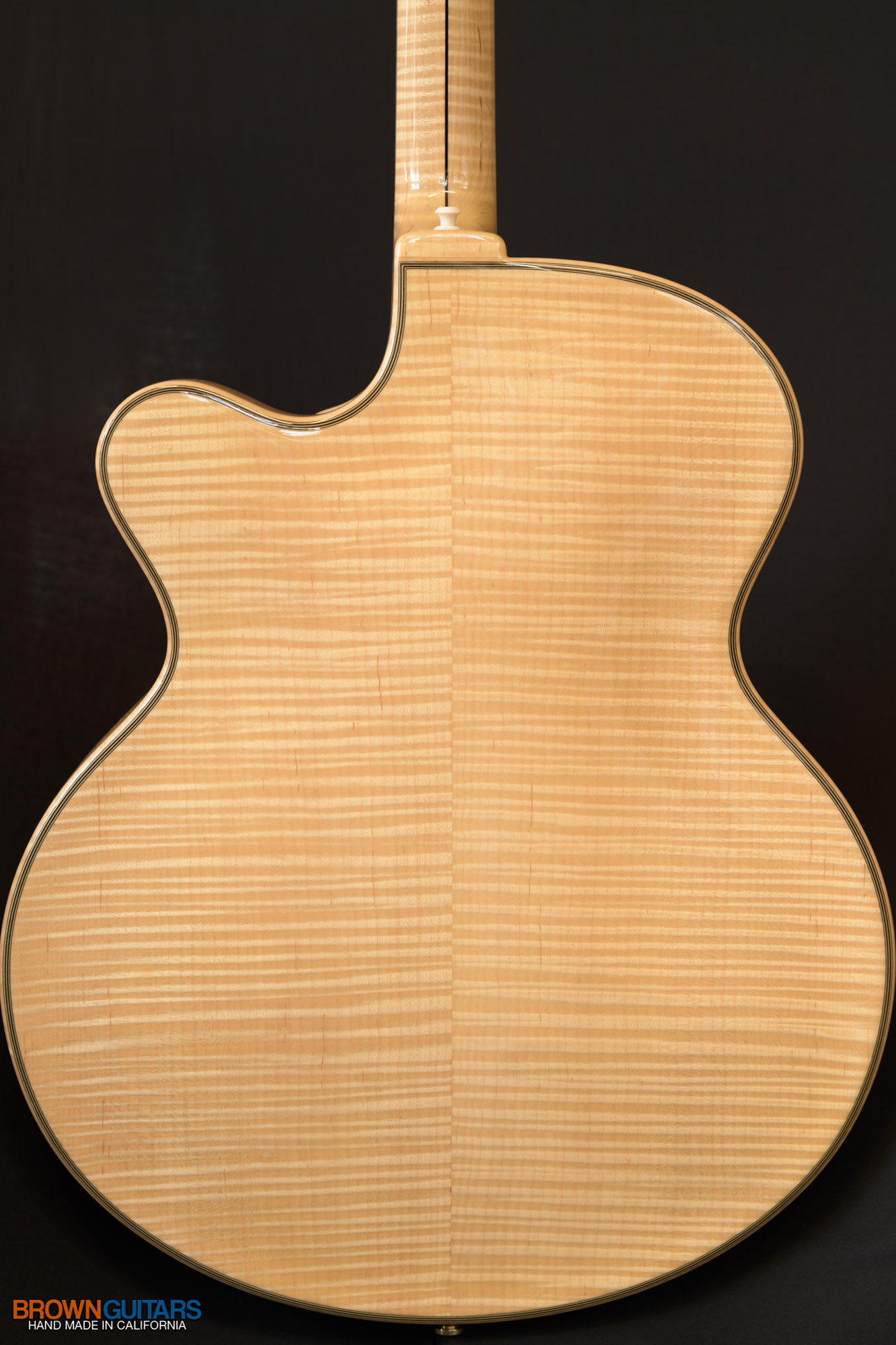
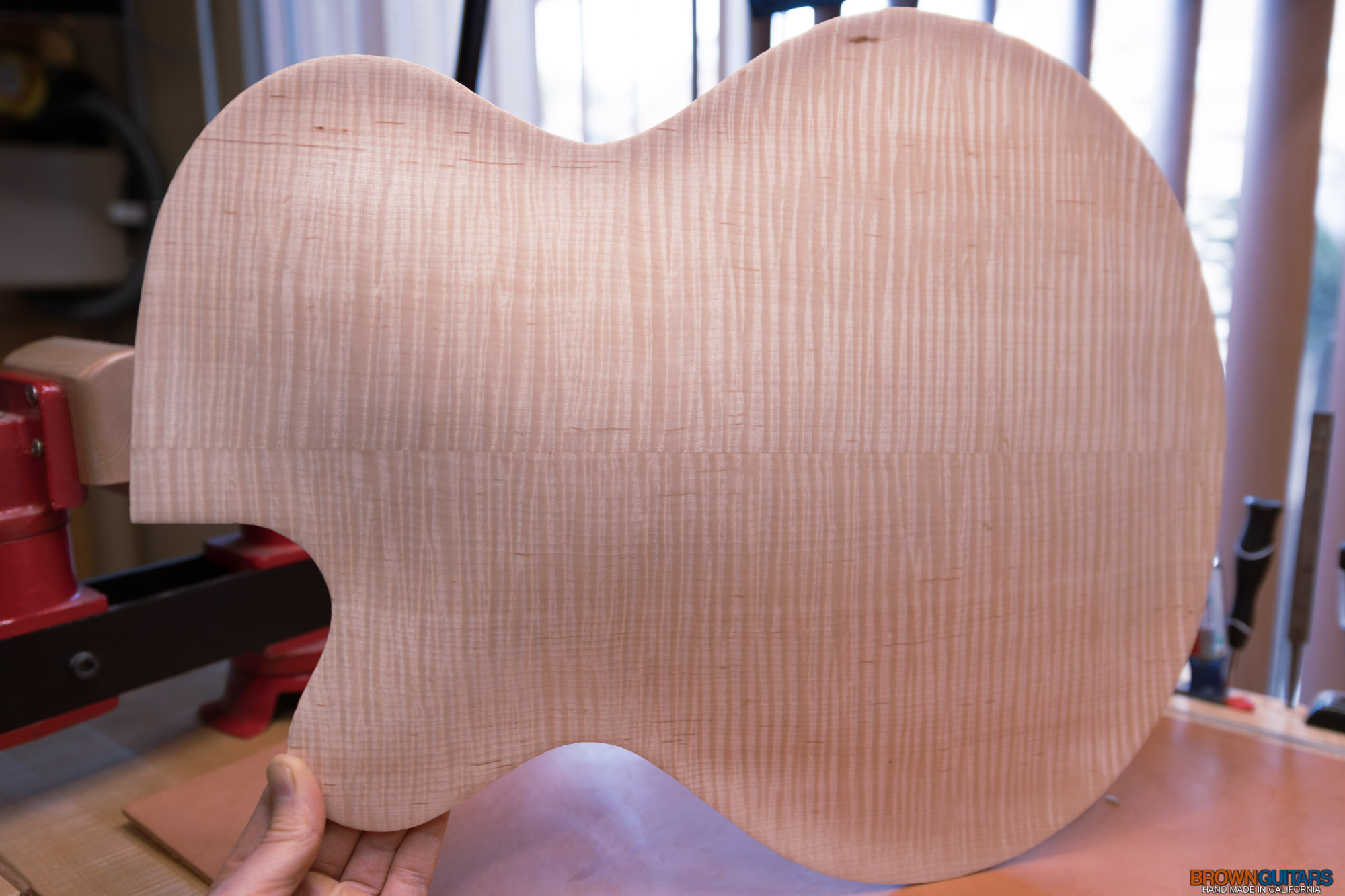
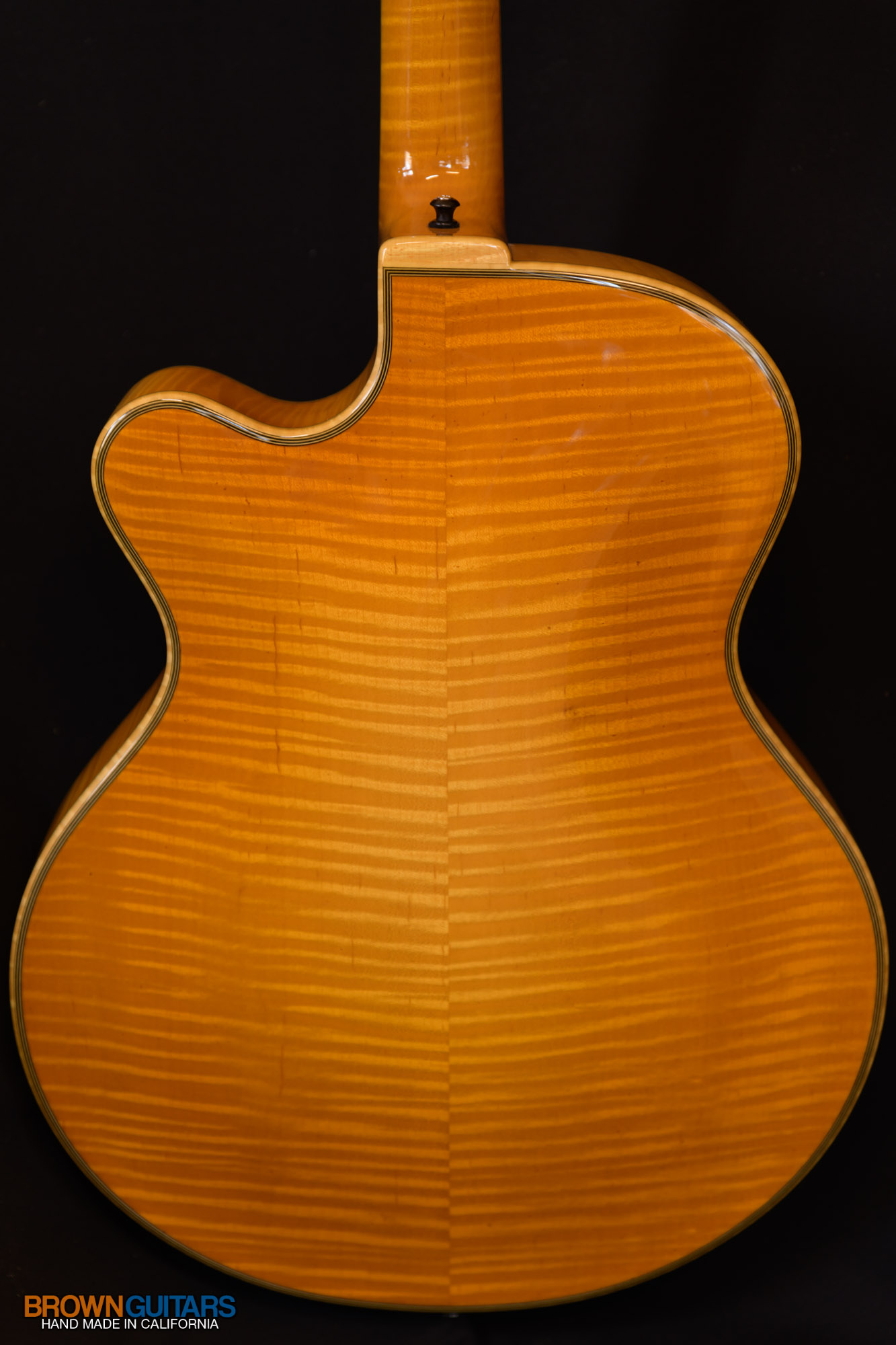
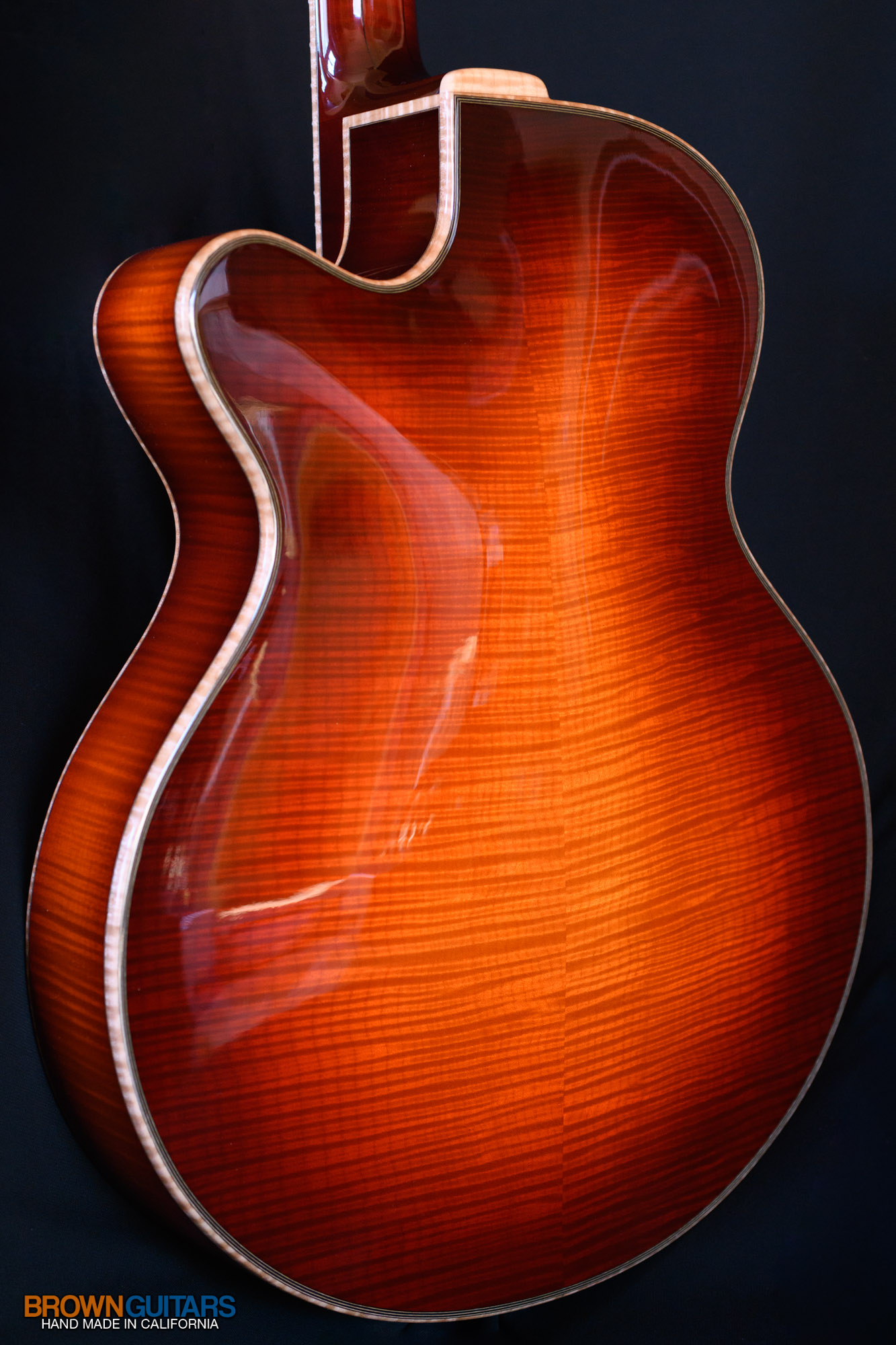
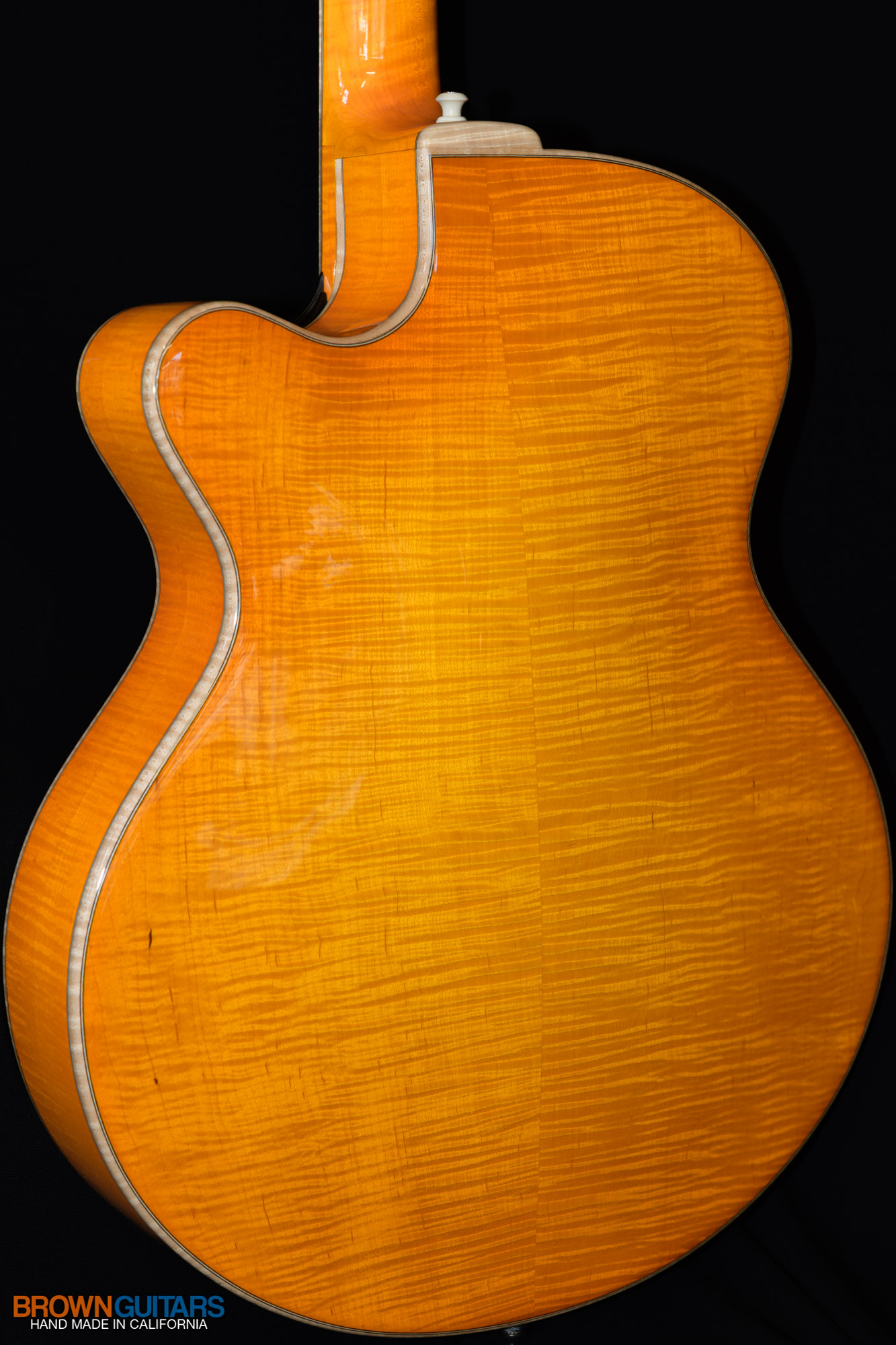
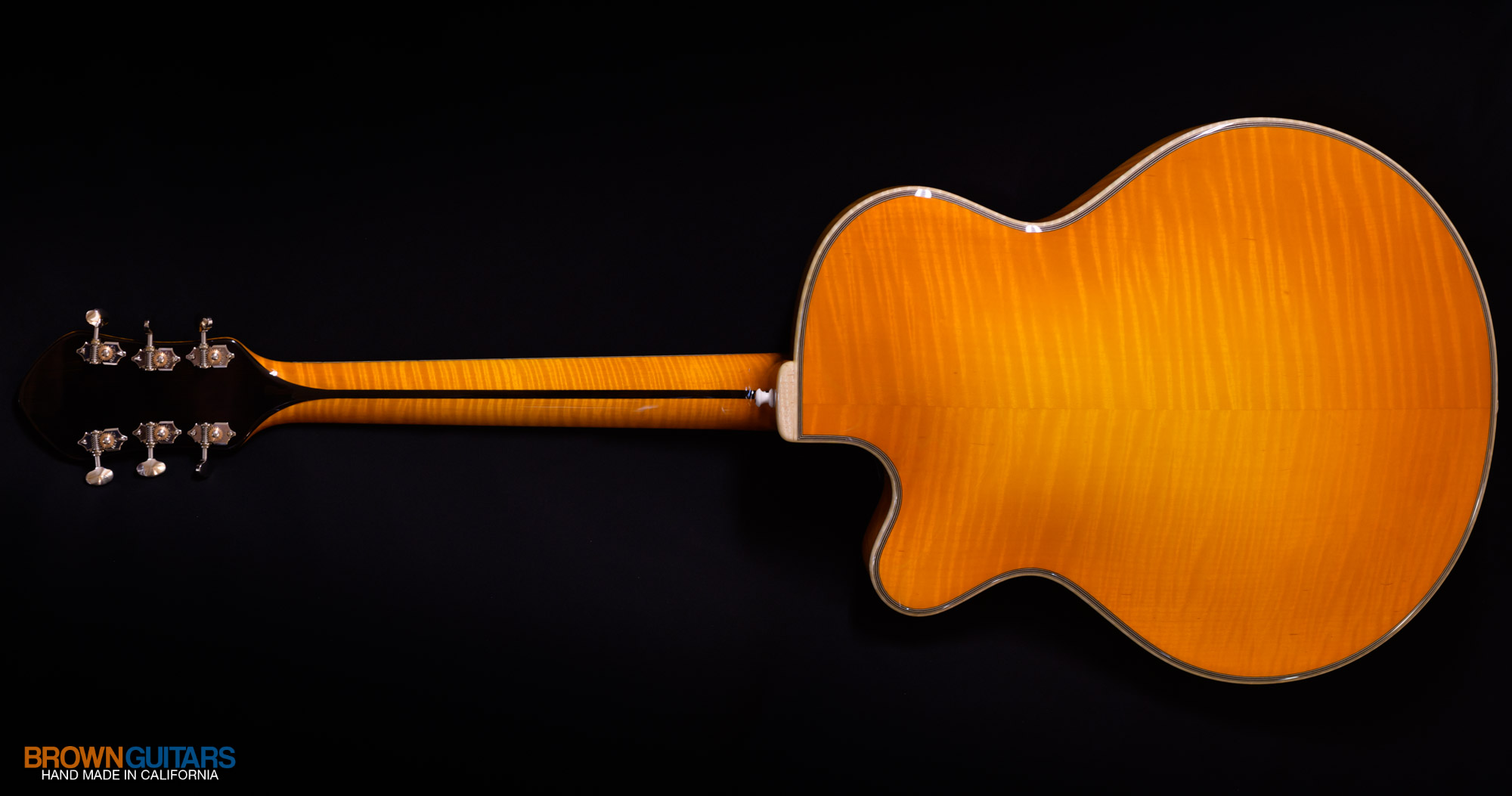
 A similar pragmatic, sound-first philosophy governs his back and sides and neck woods. Rather than importing European maples out of mere tradition, Tad utilizes exceptional domestic varieties like North American Red Maple and Sugar Maple. Grown right here, these native hardwoods offer equally stunning visual appeal and acoustic vibrancy.
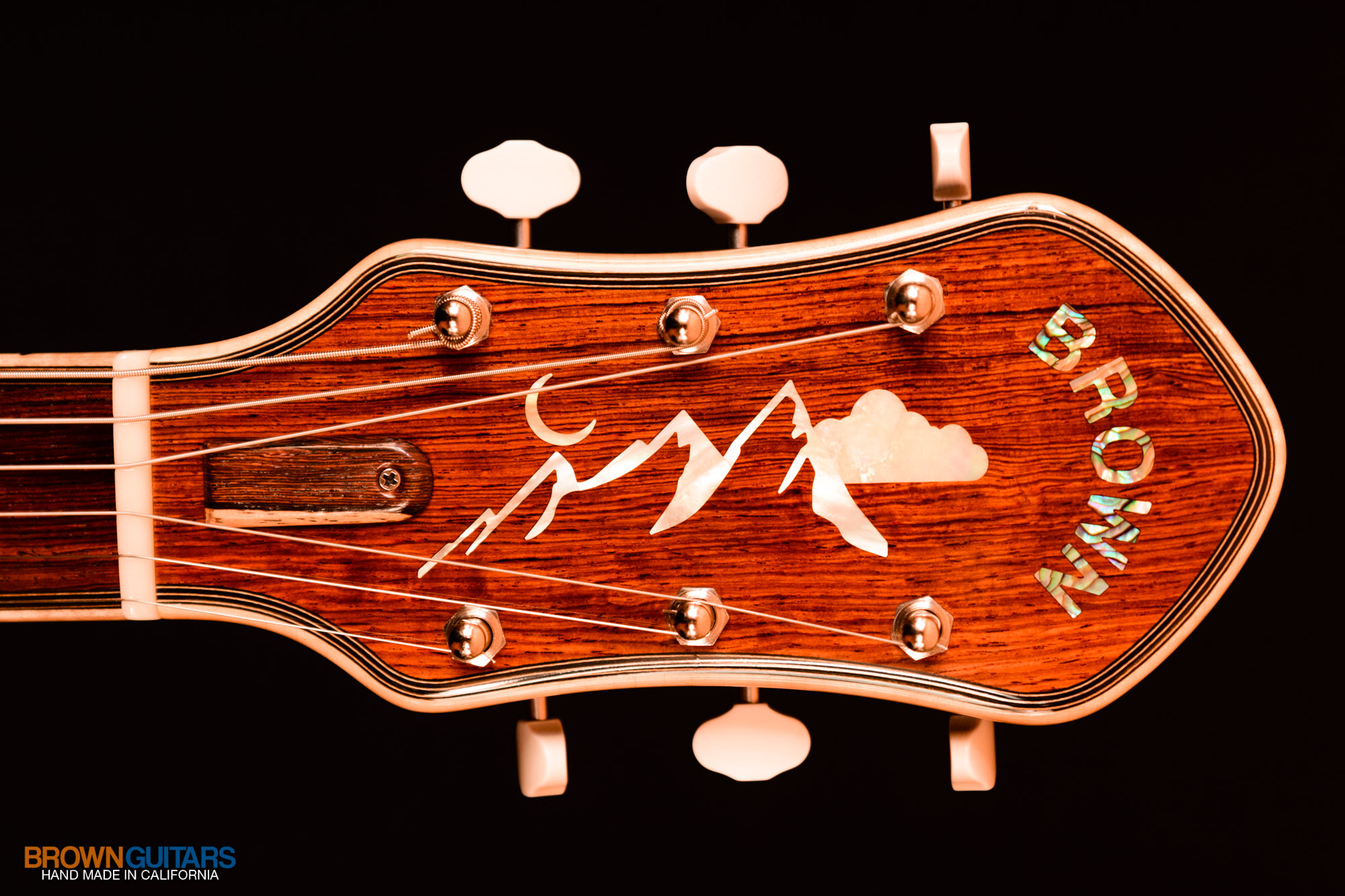
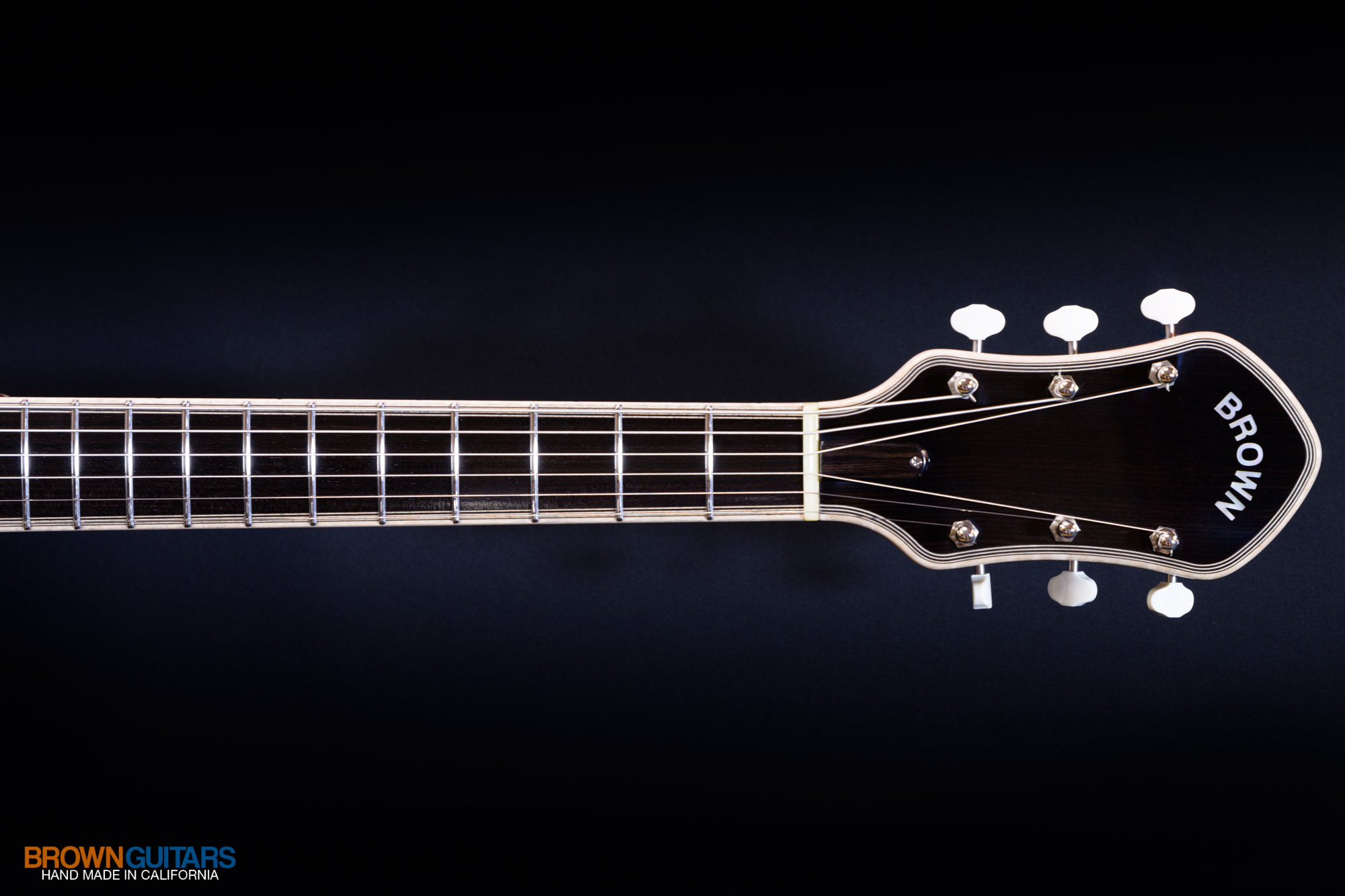
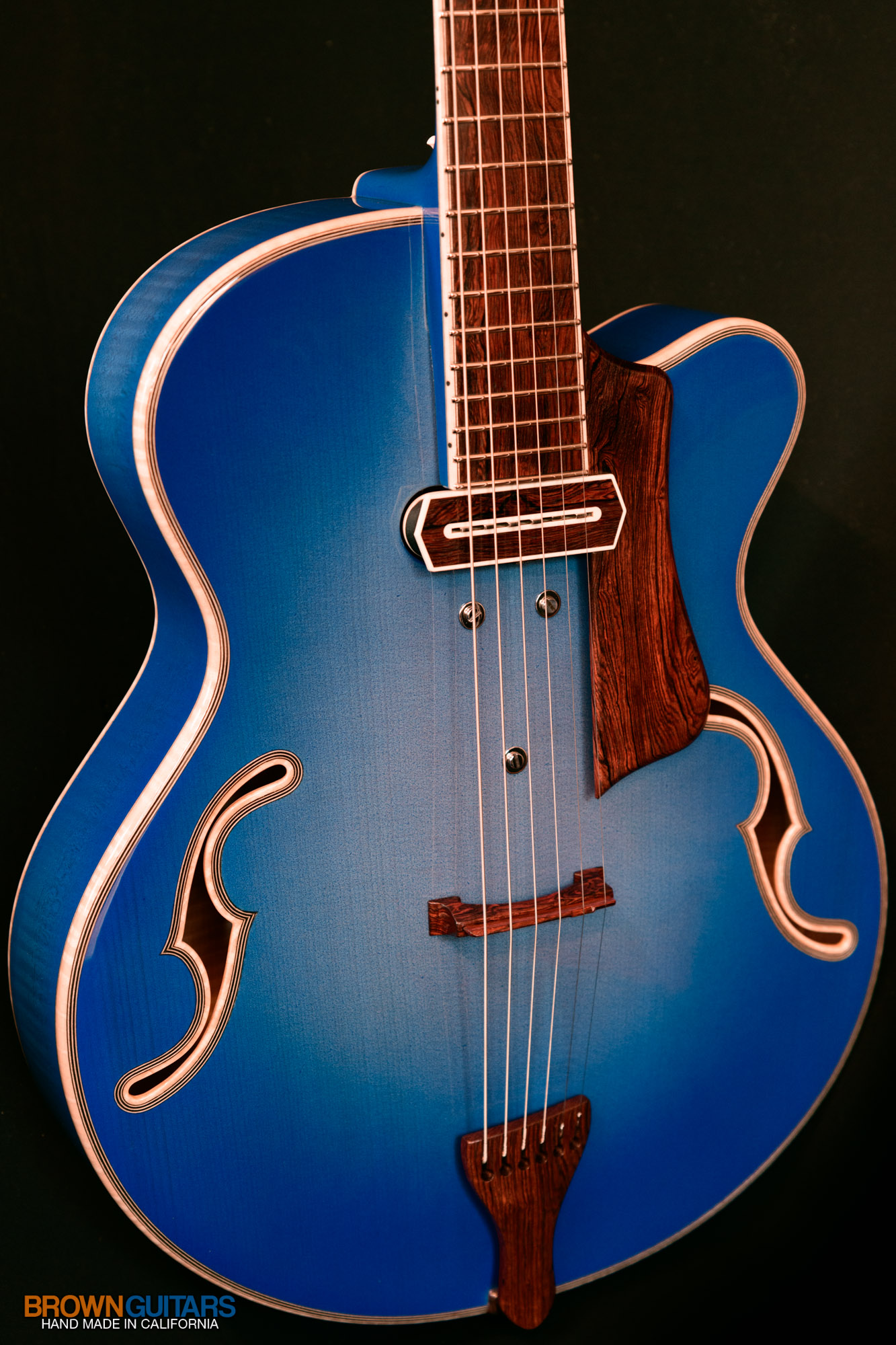
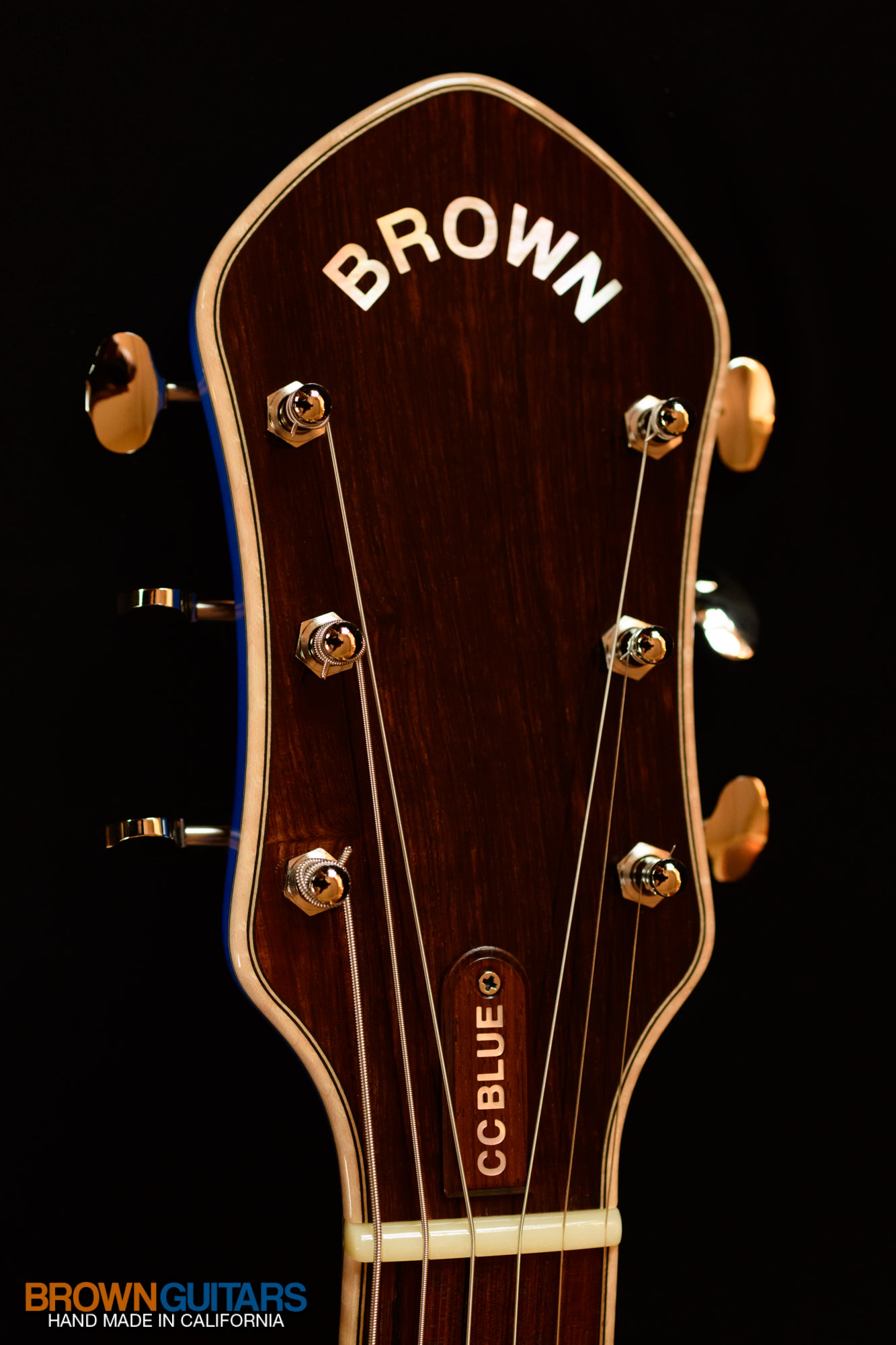
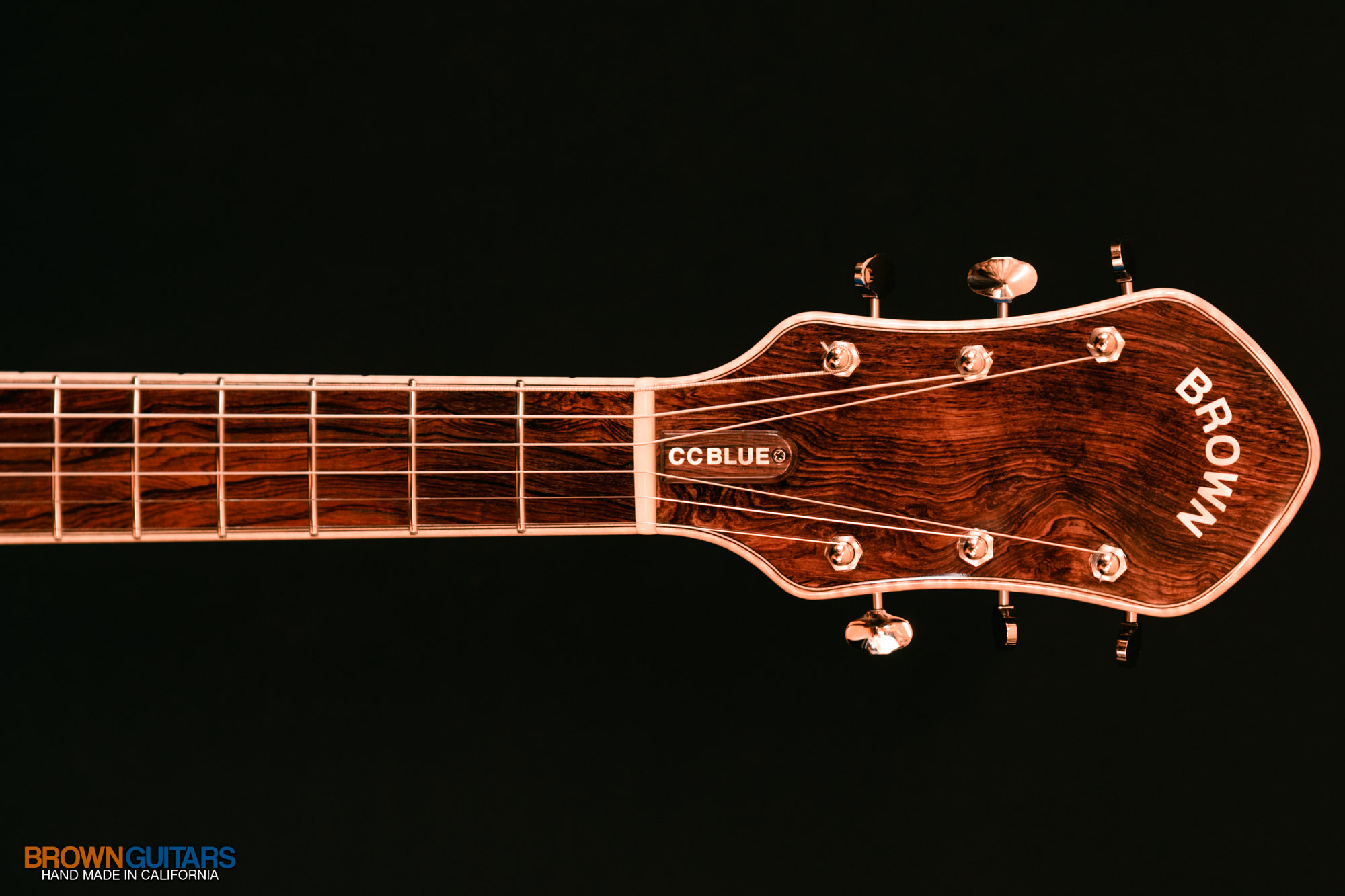
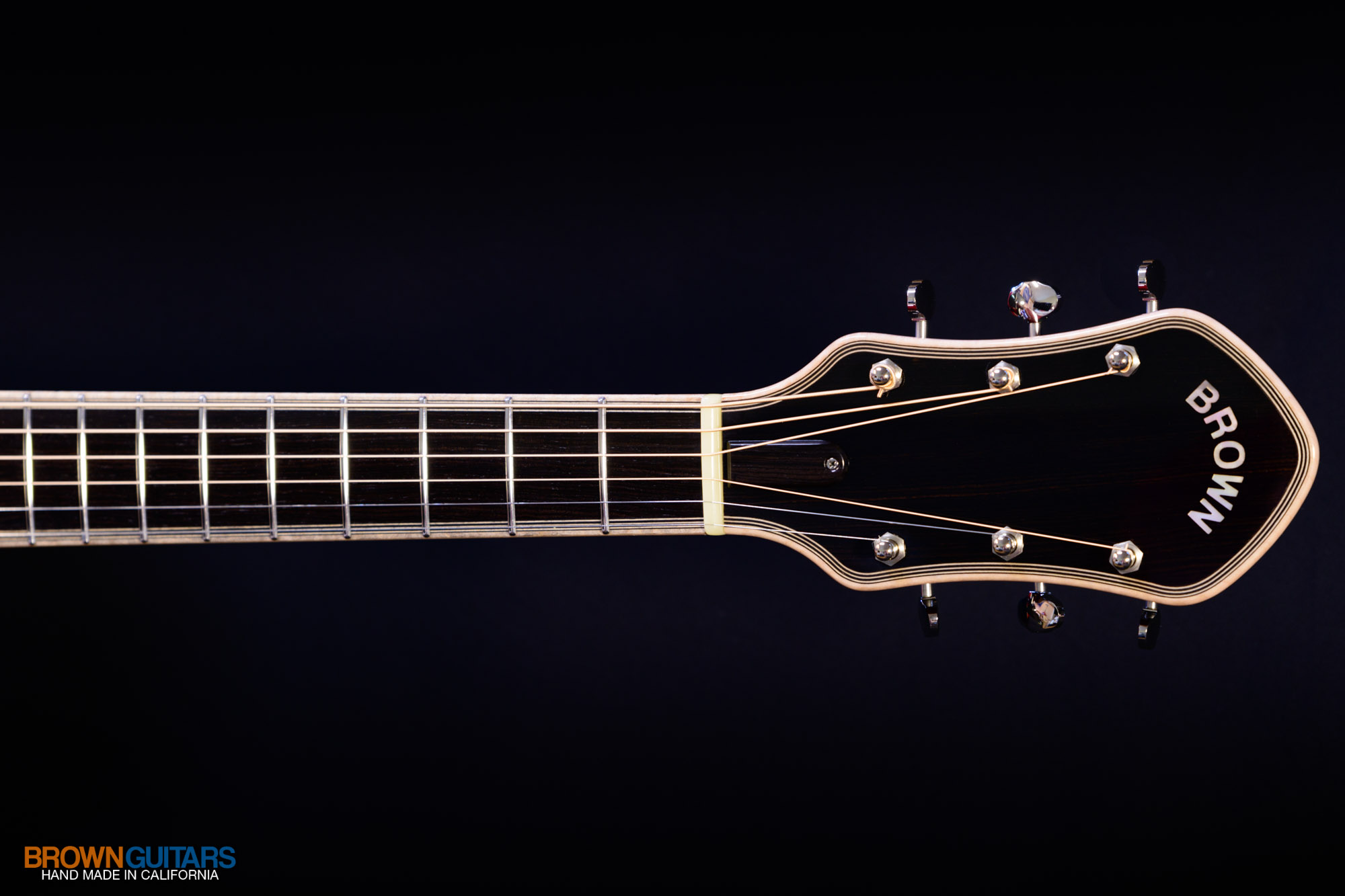
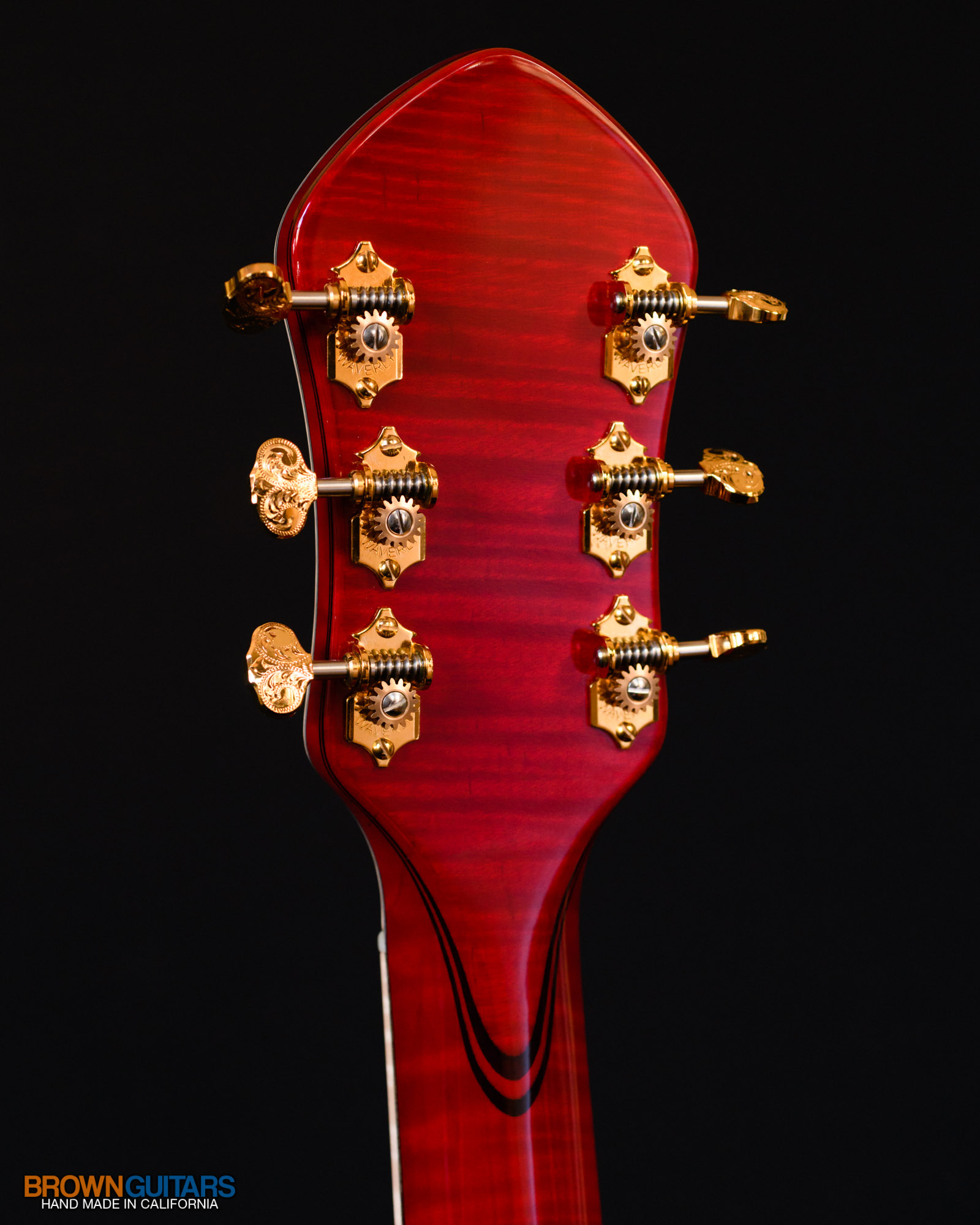
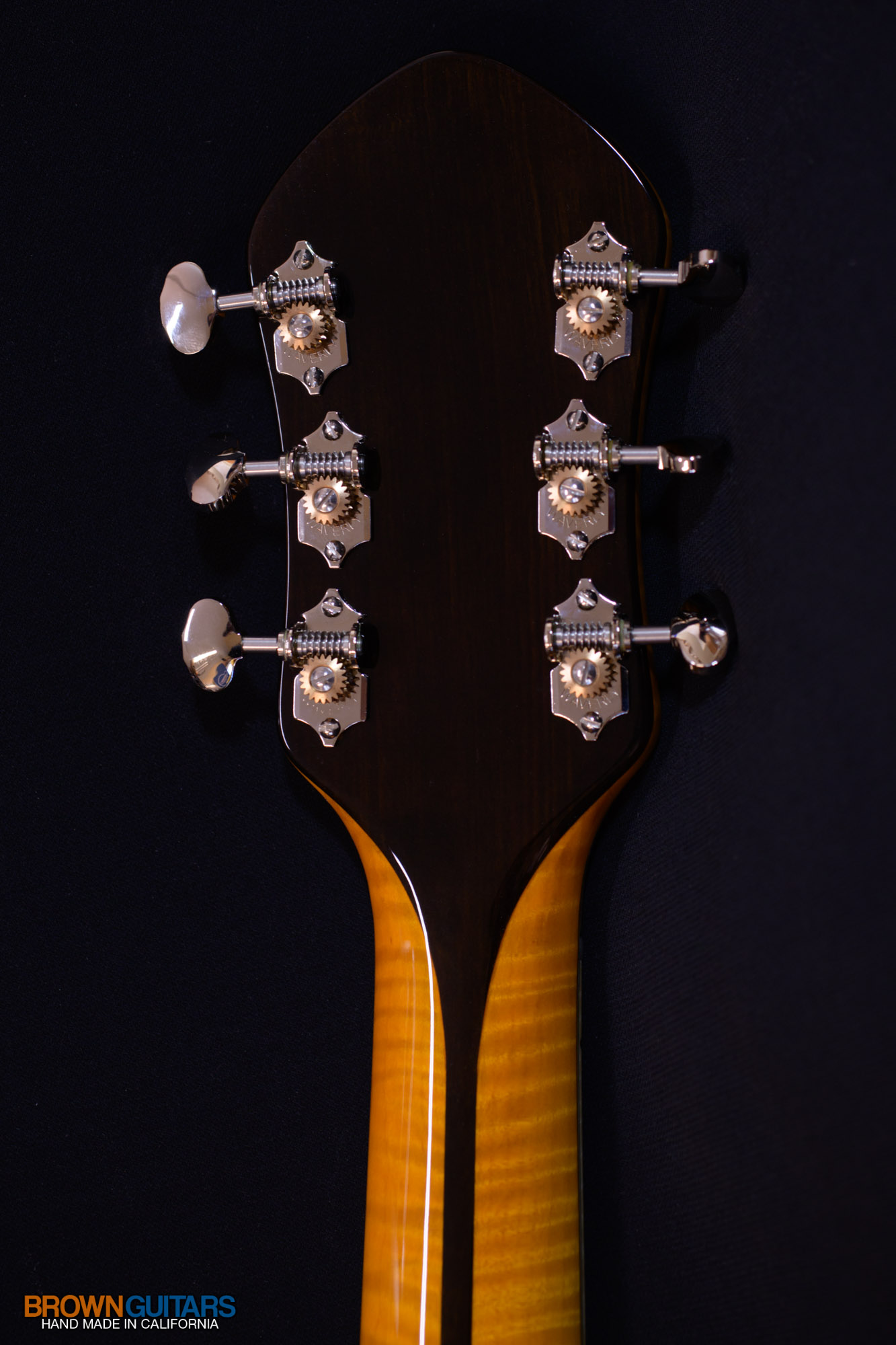
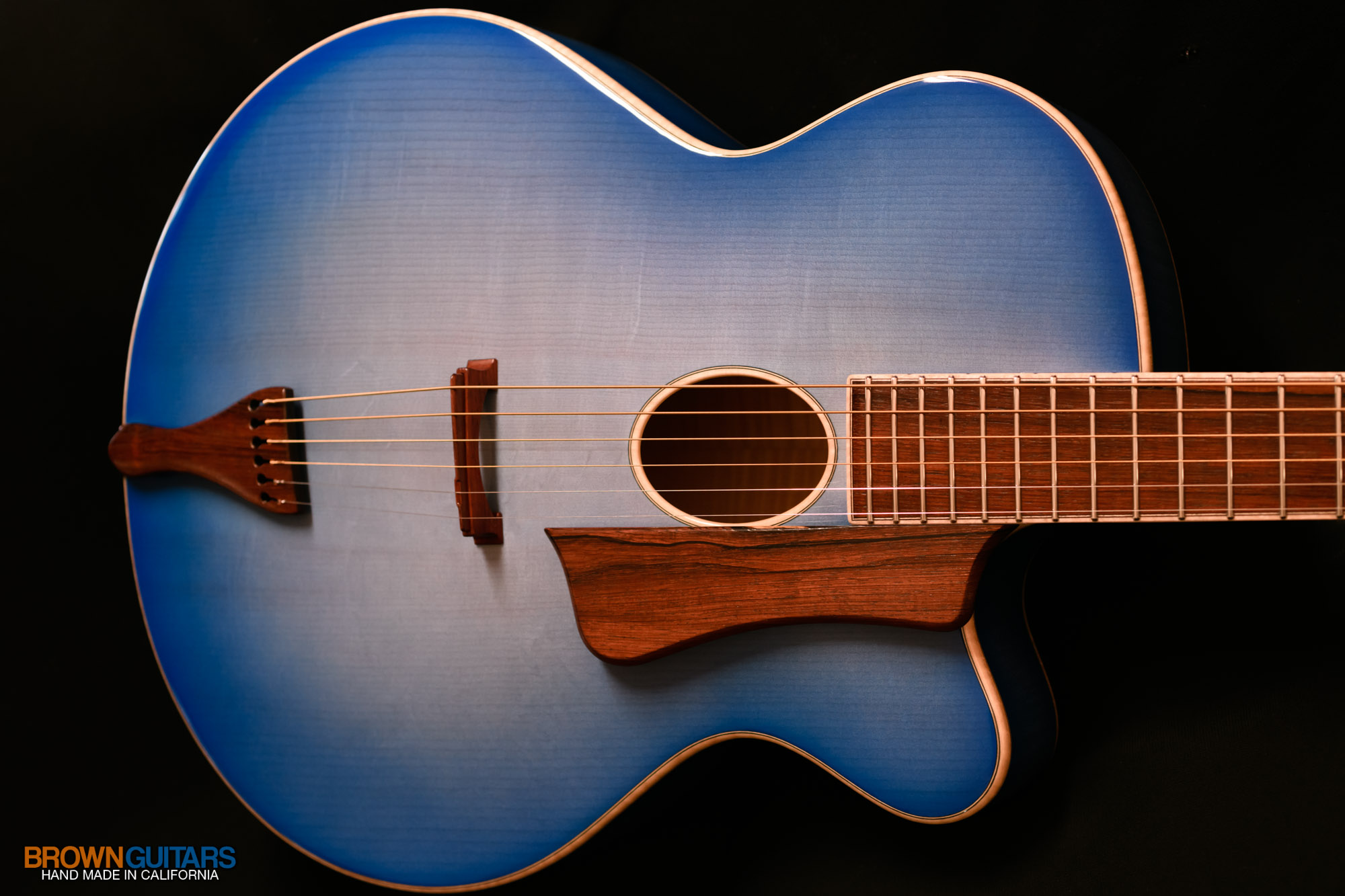
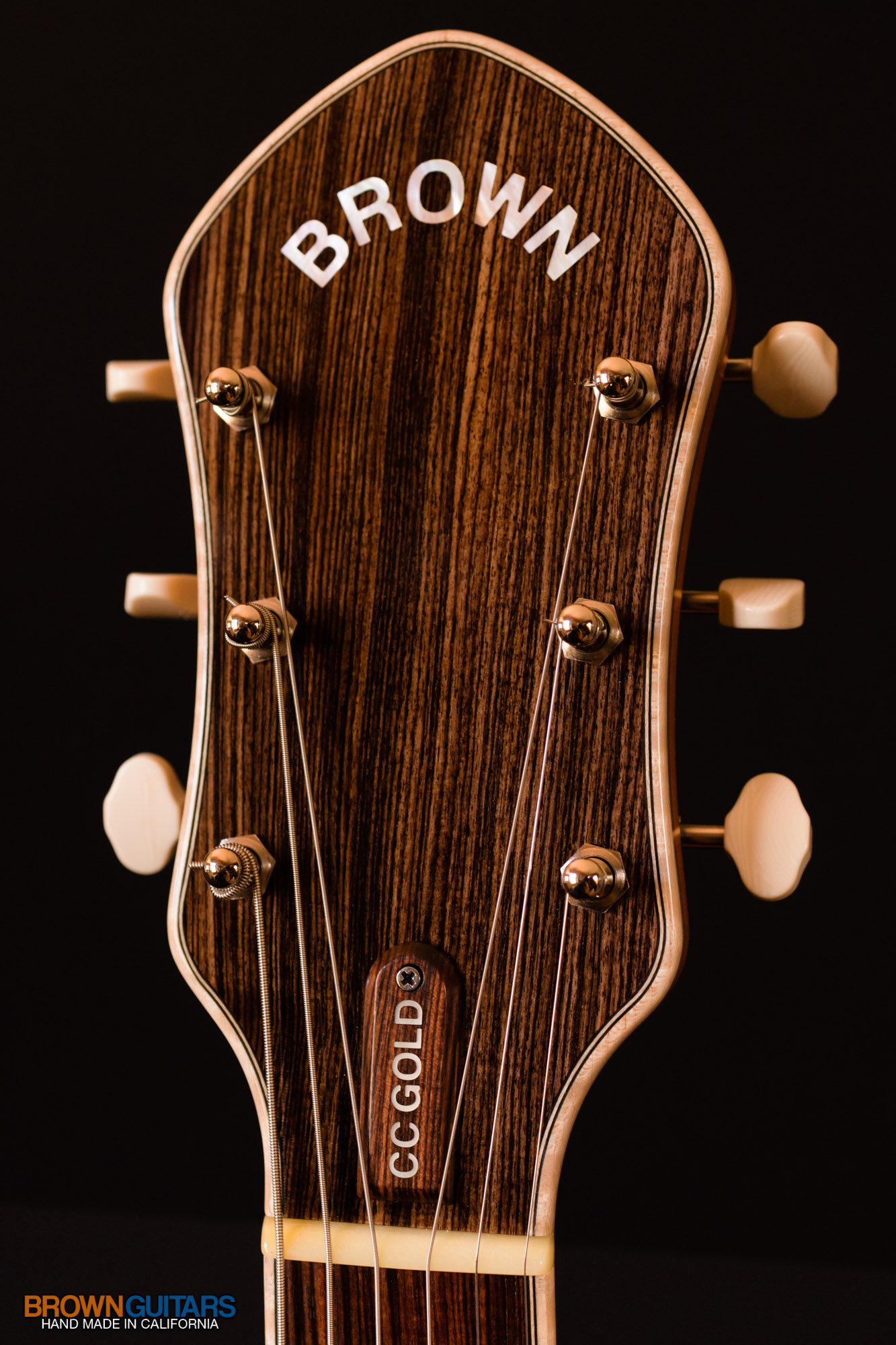
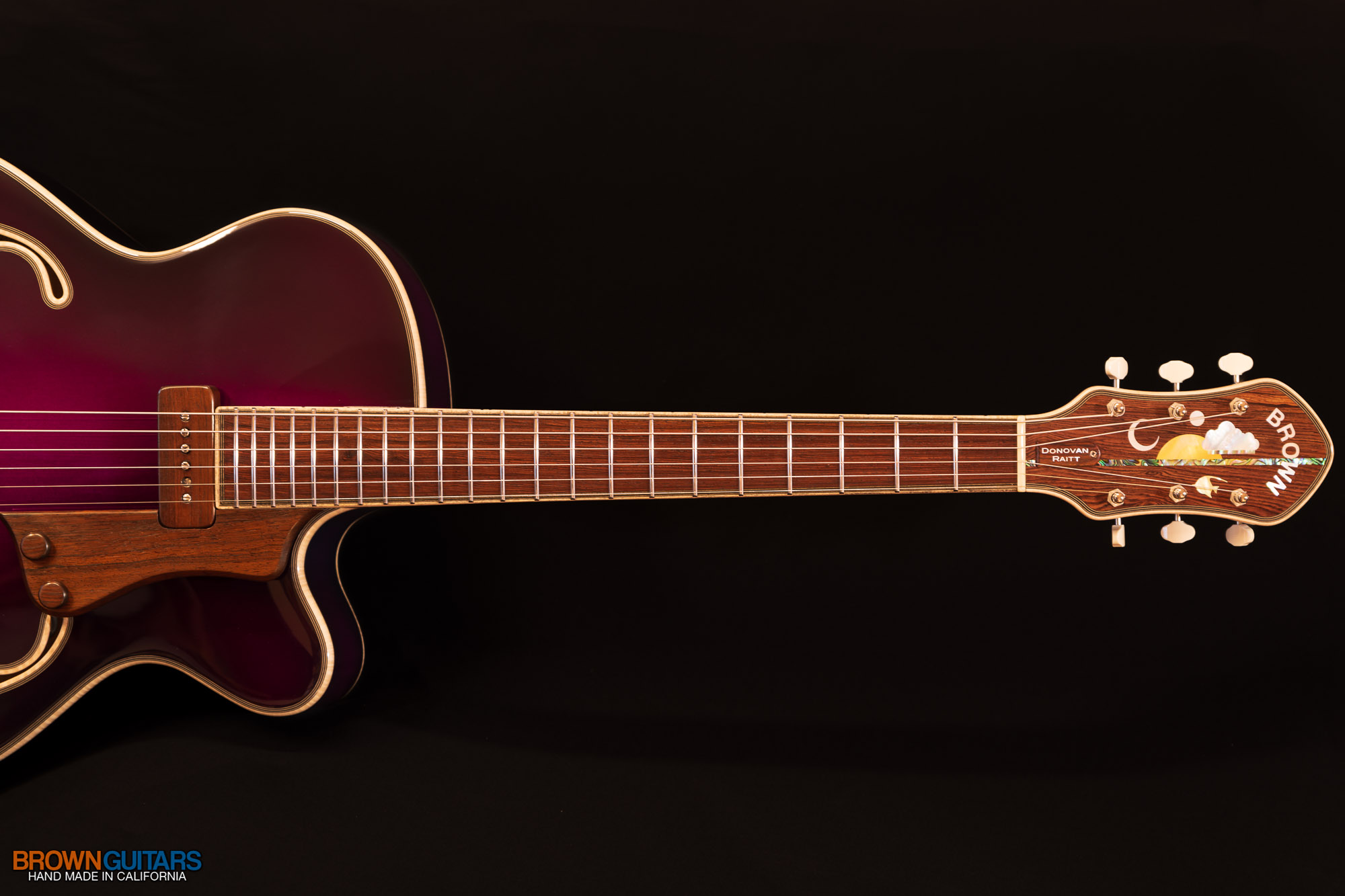
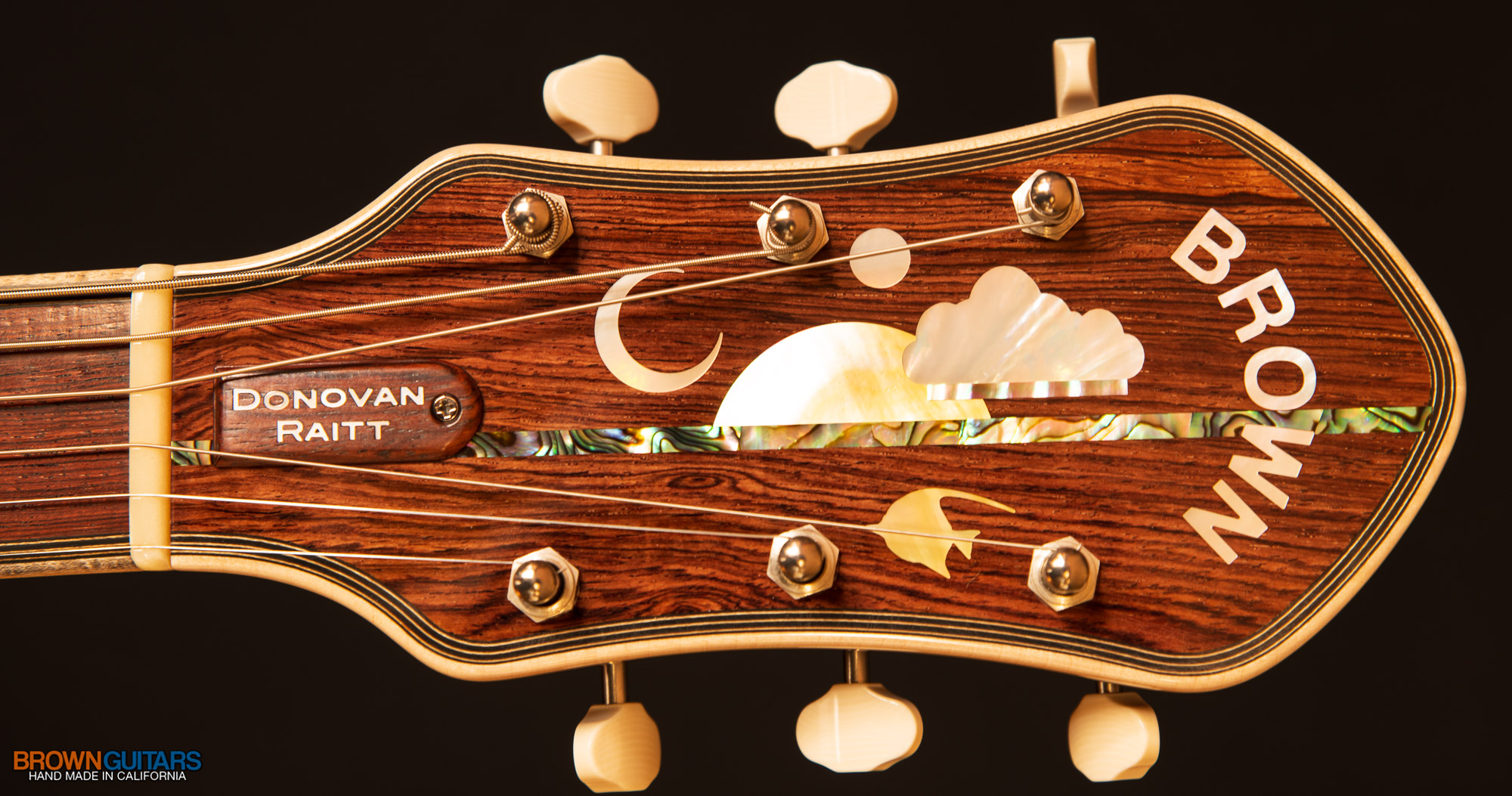
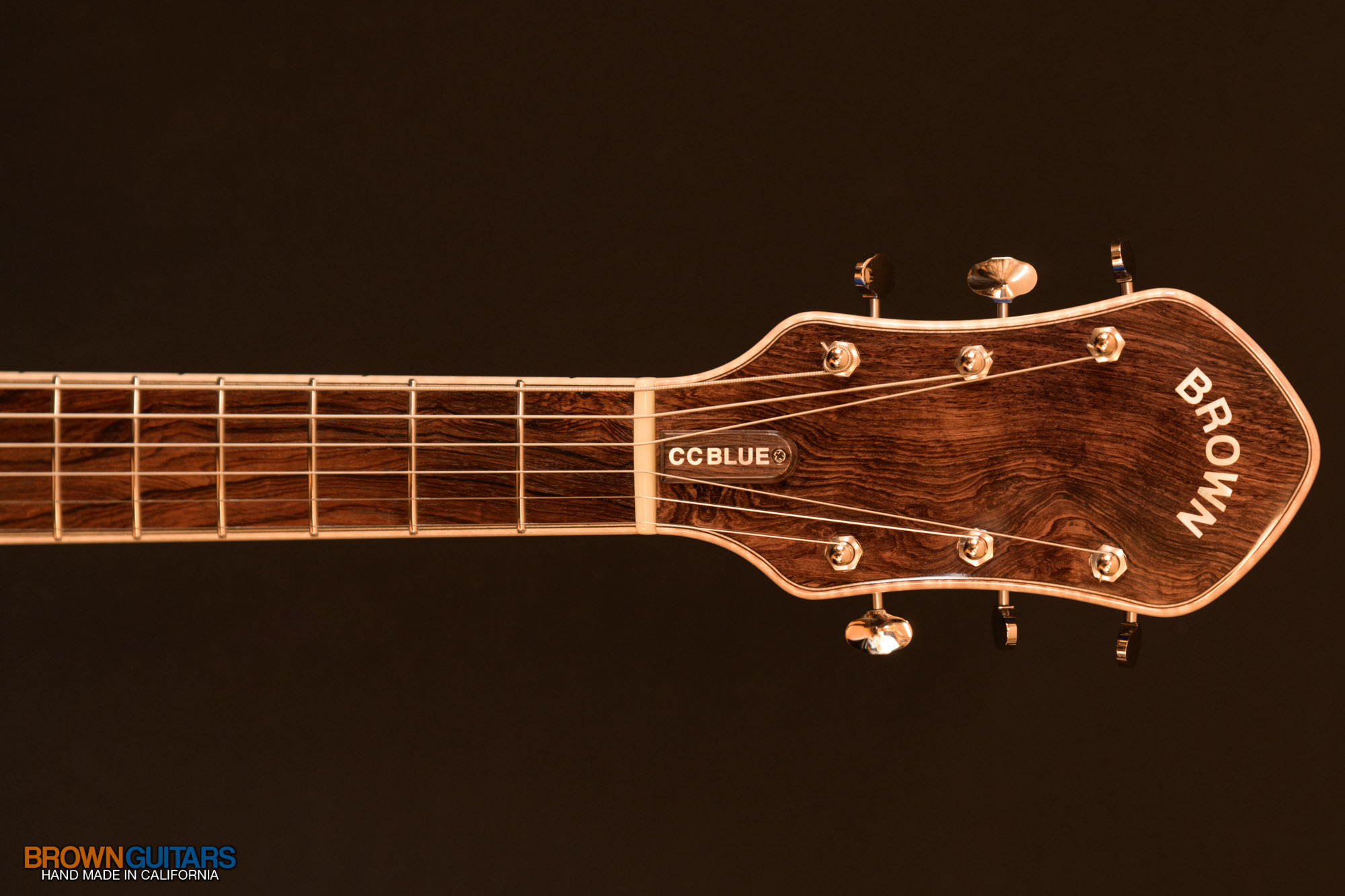
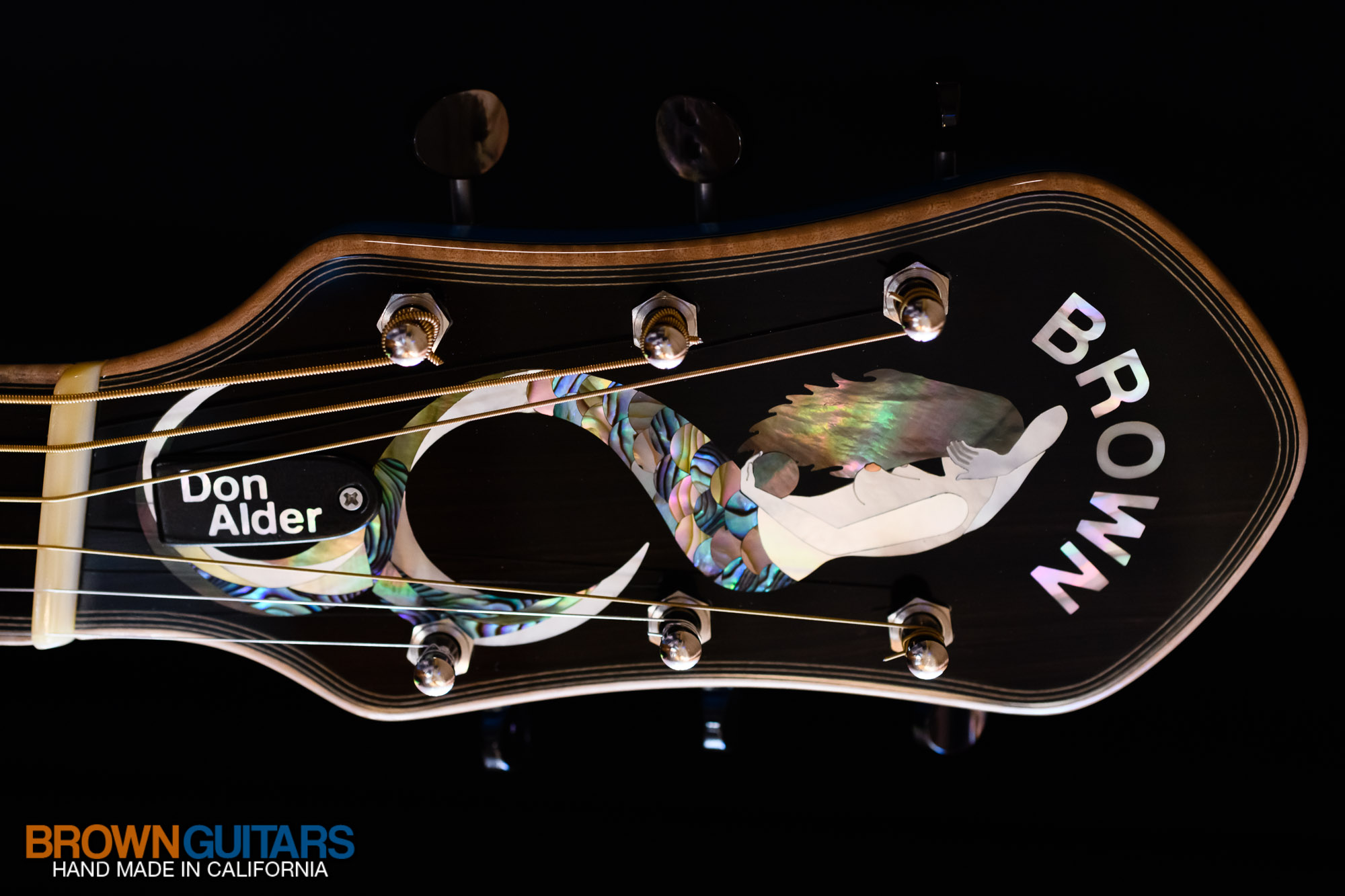
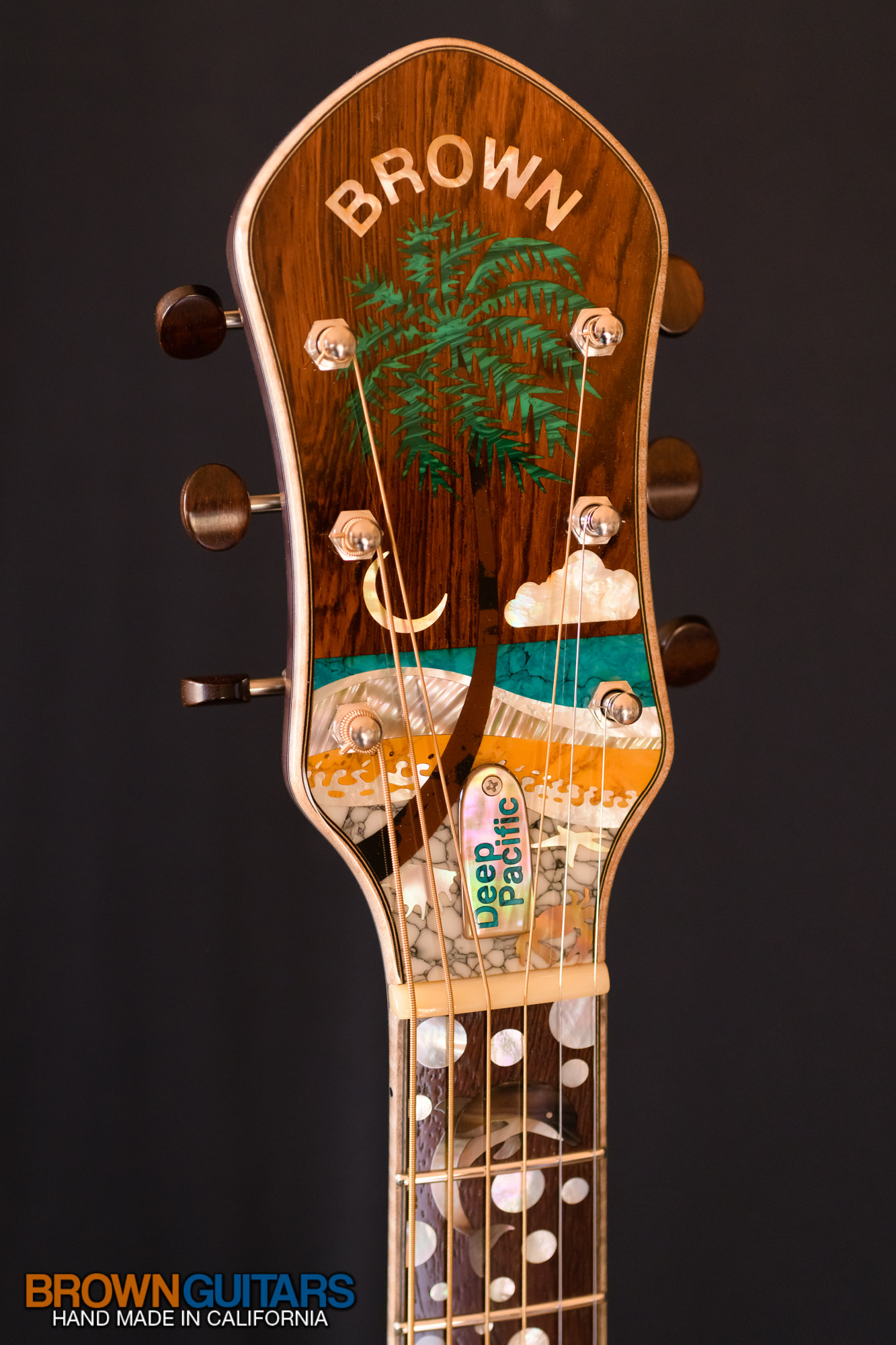
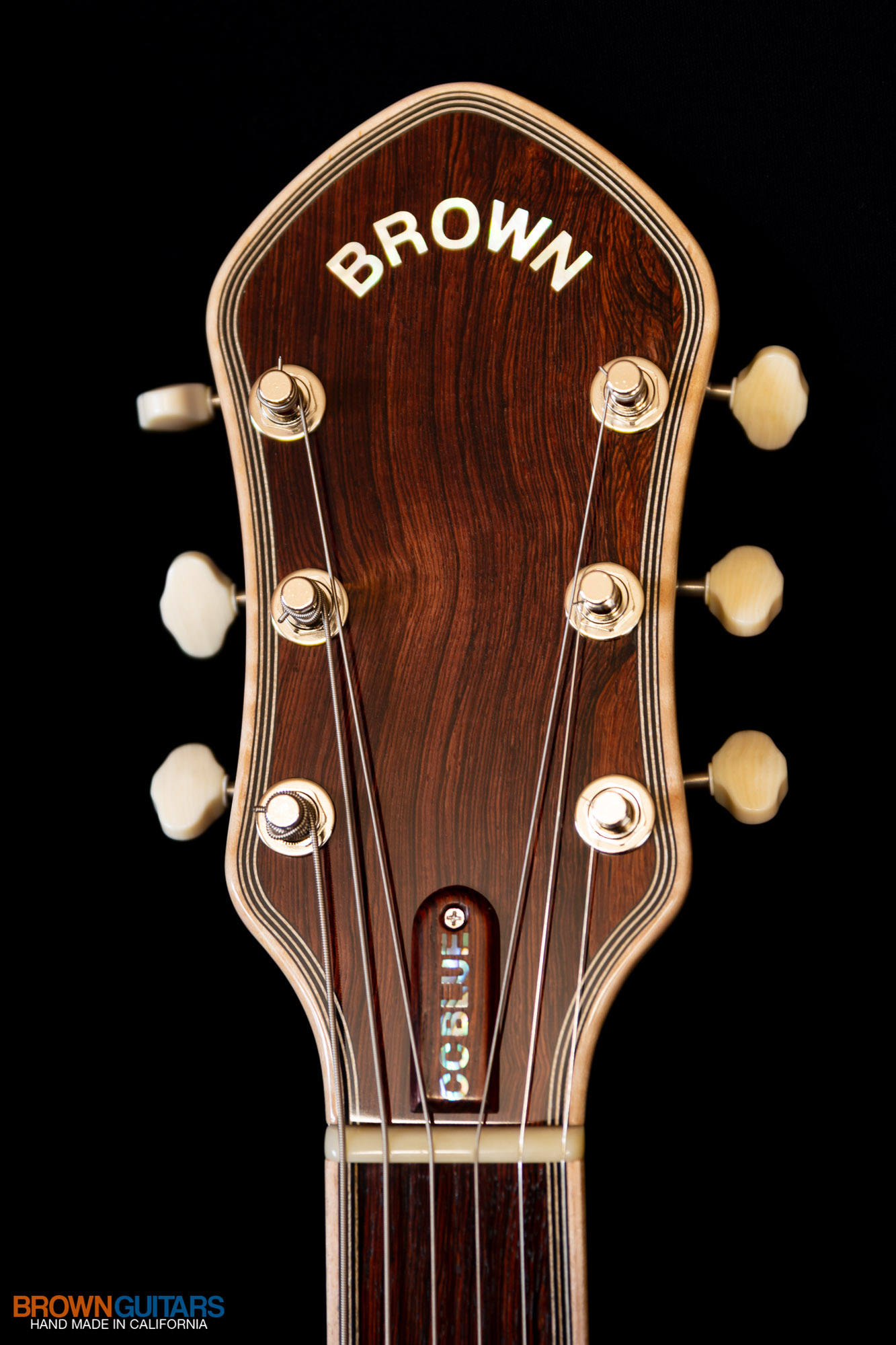
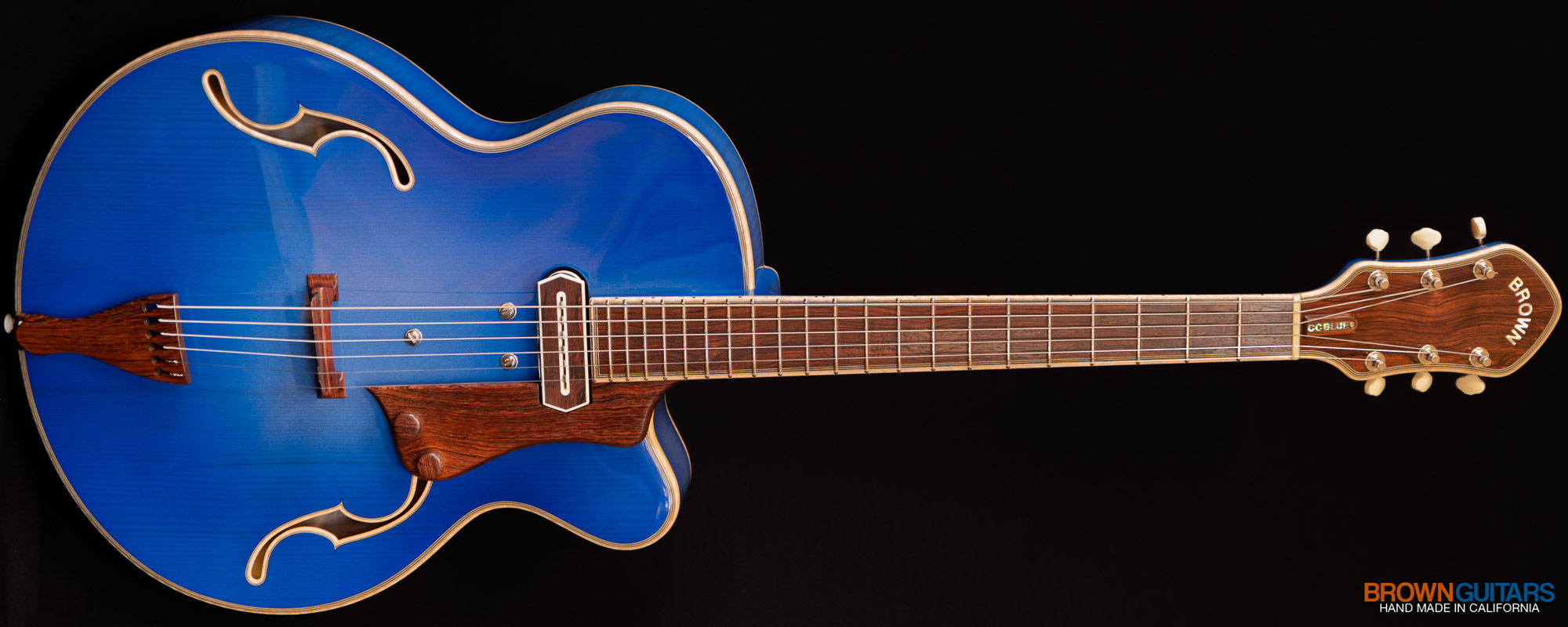
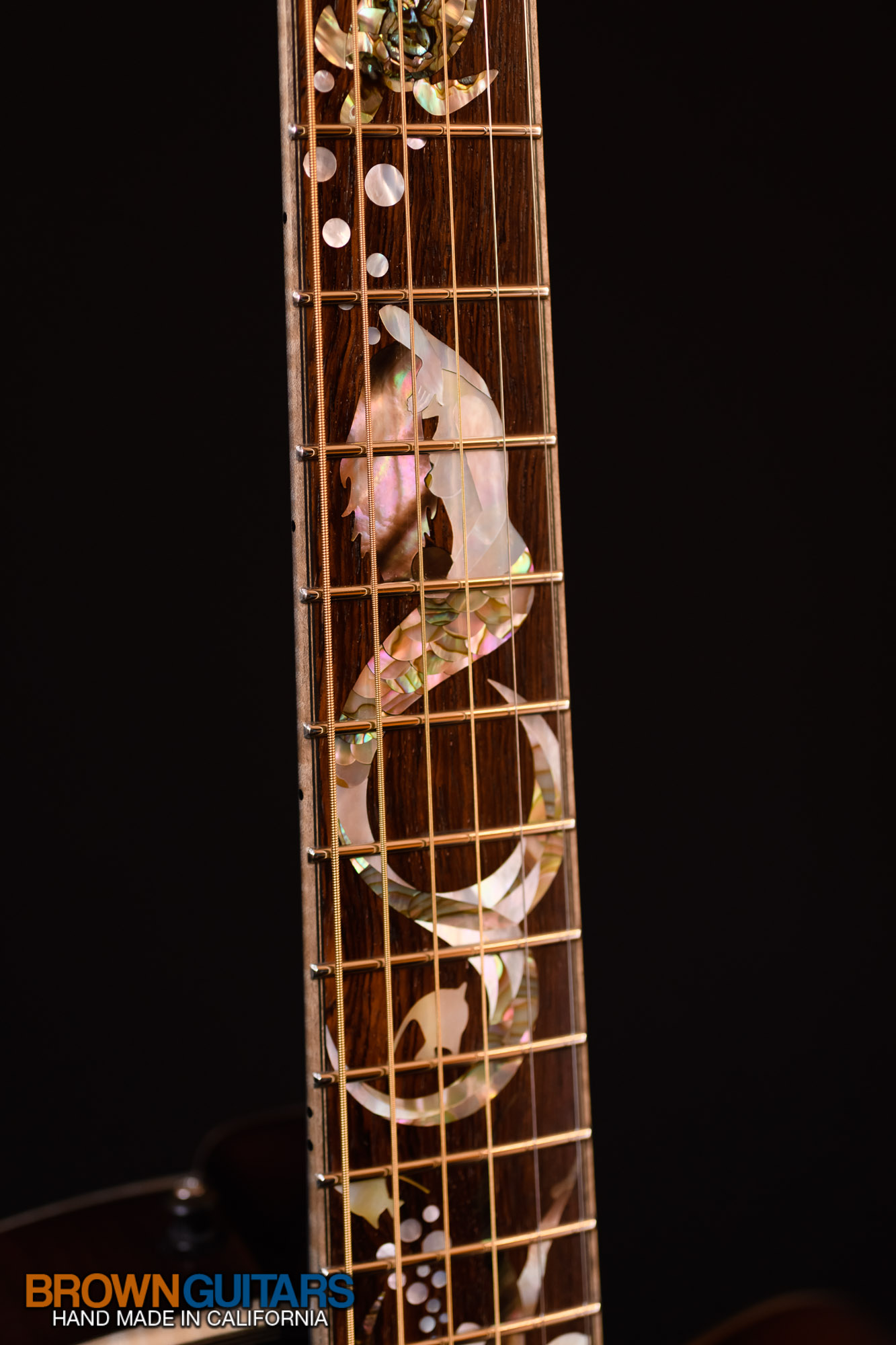
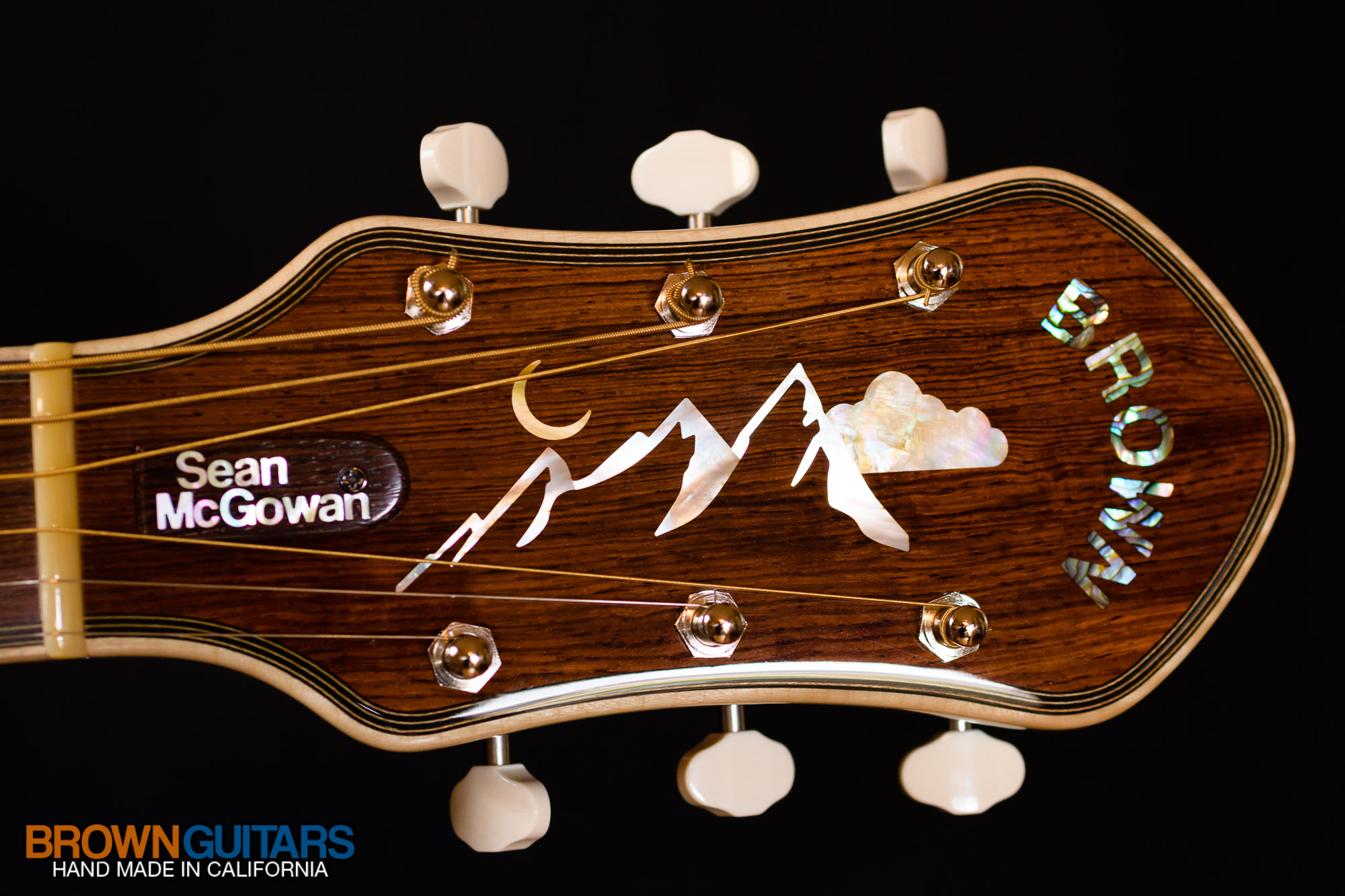
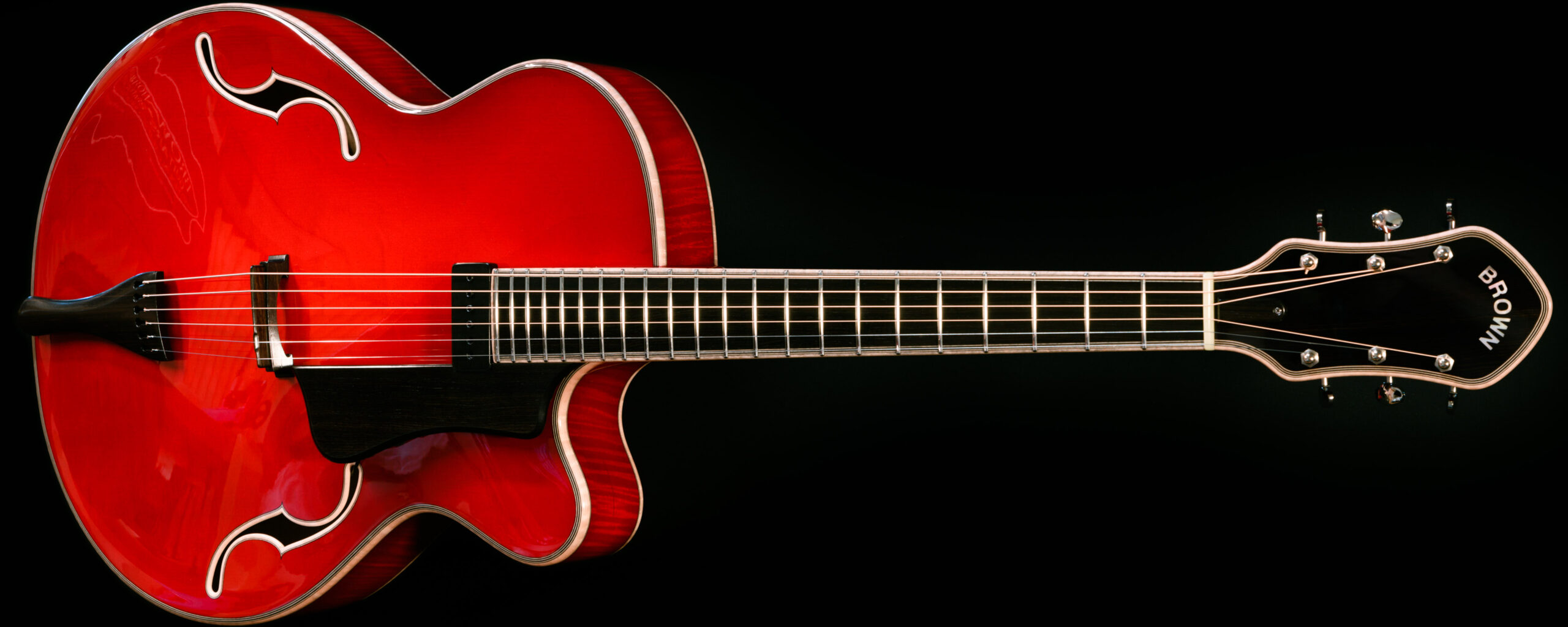
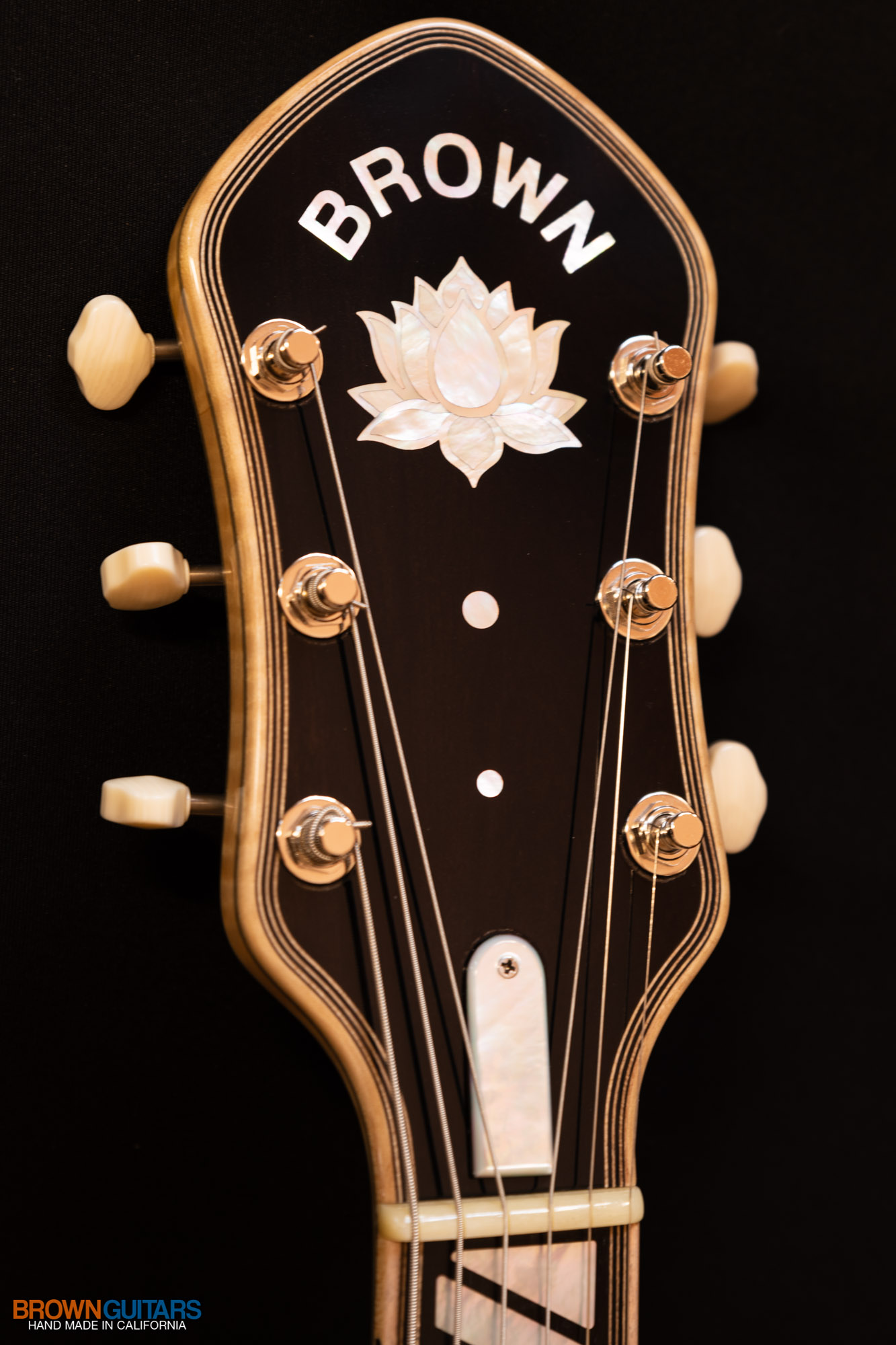
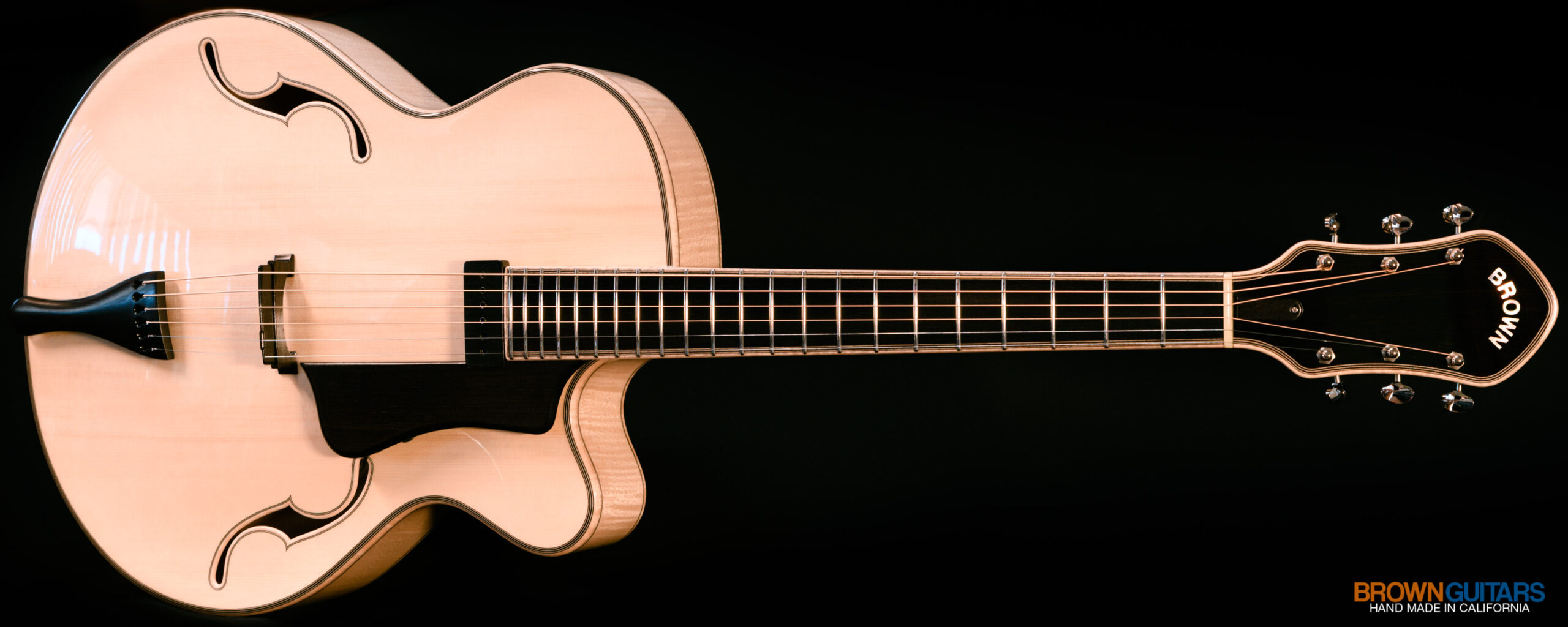
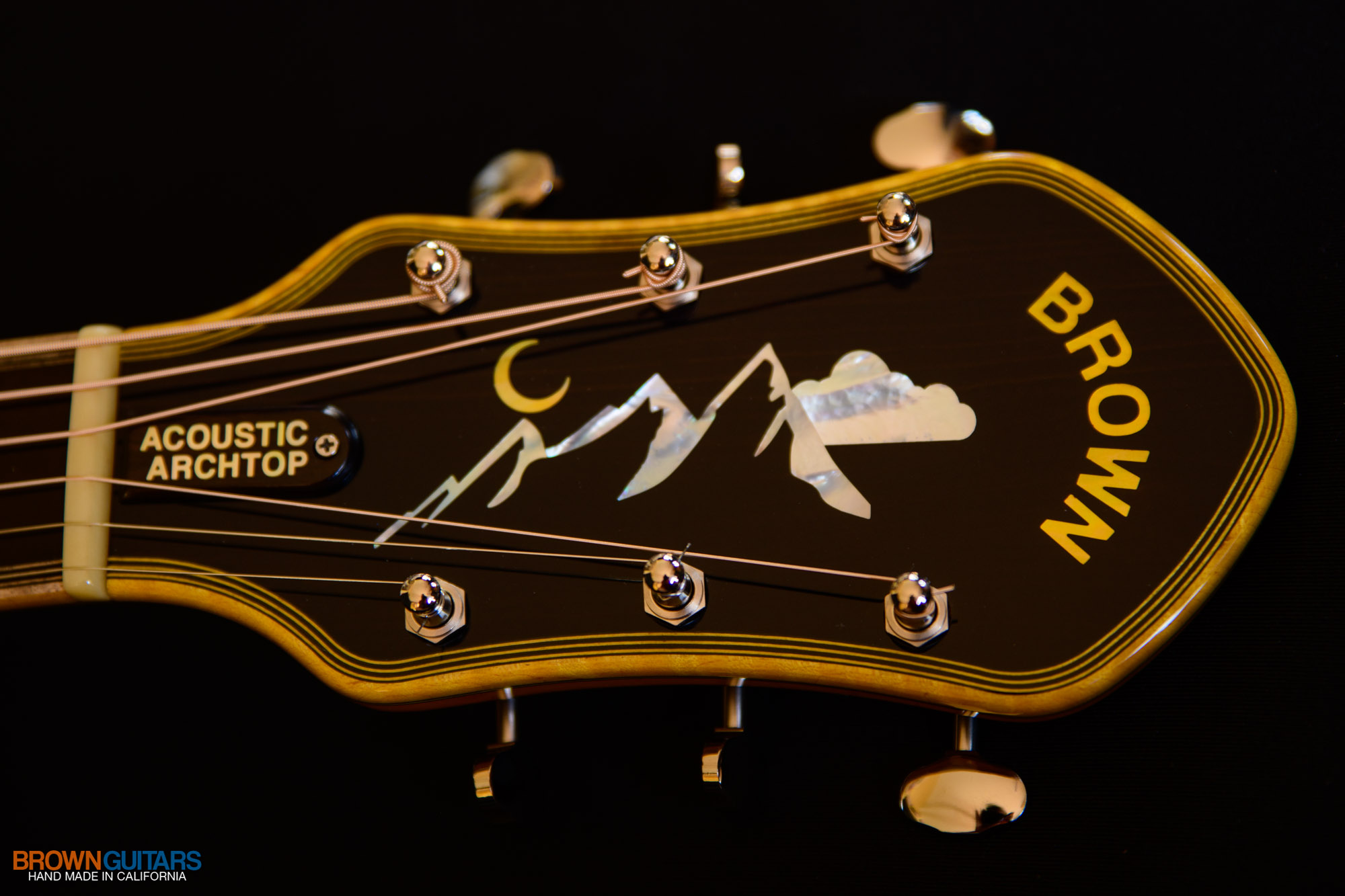
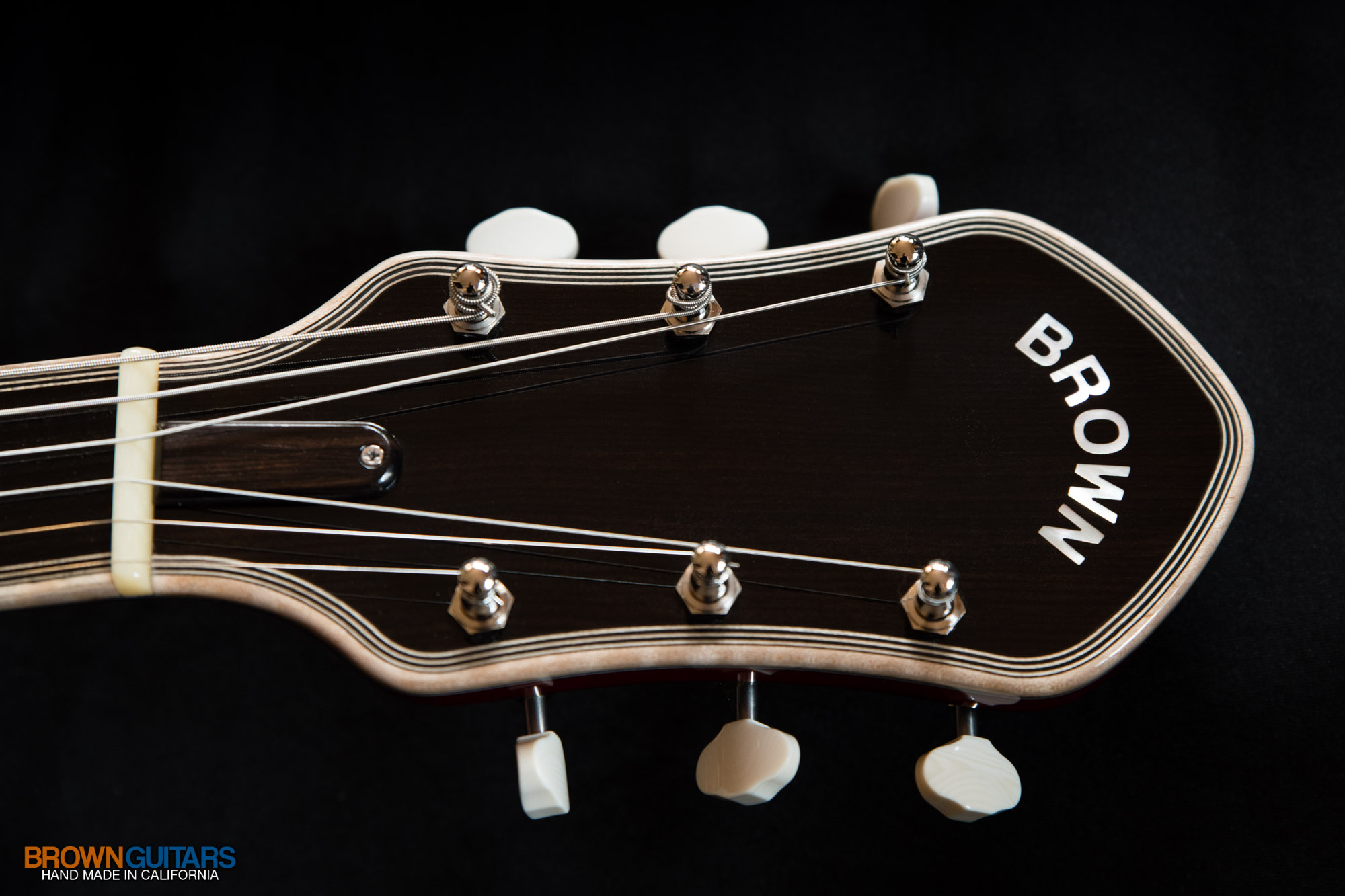
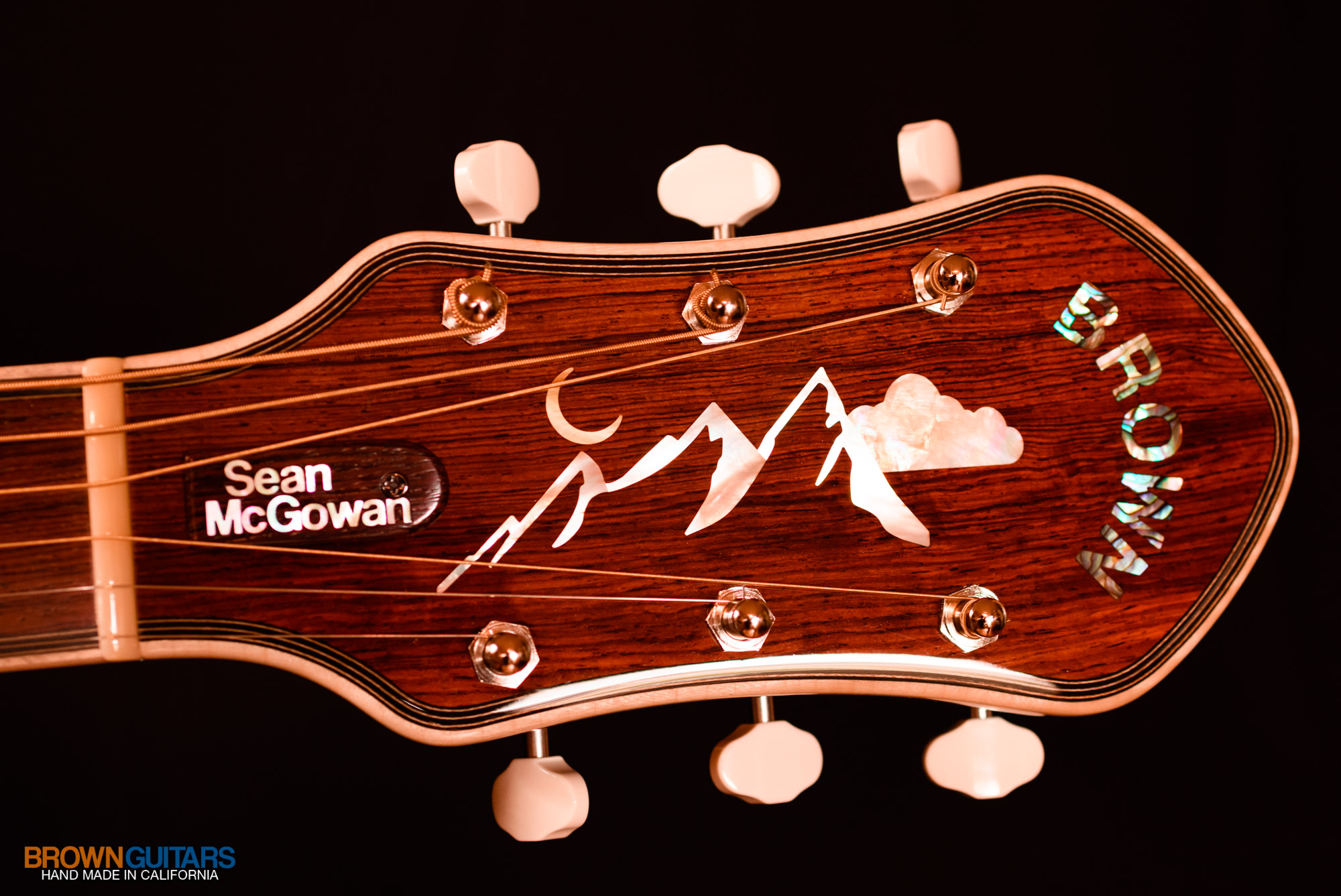
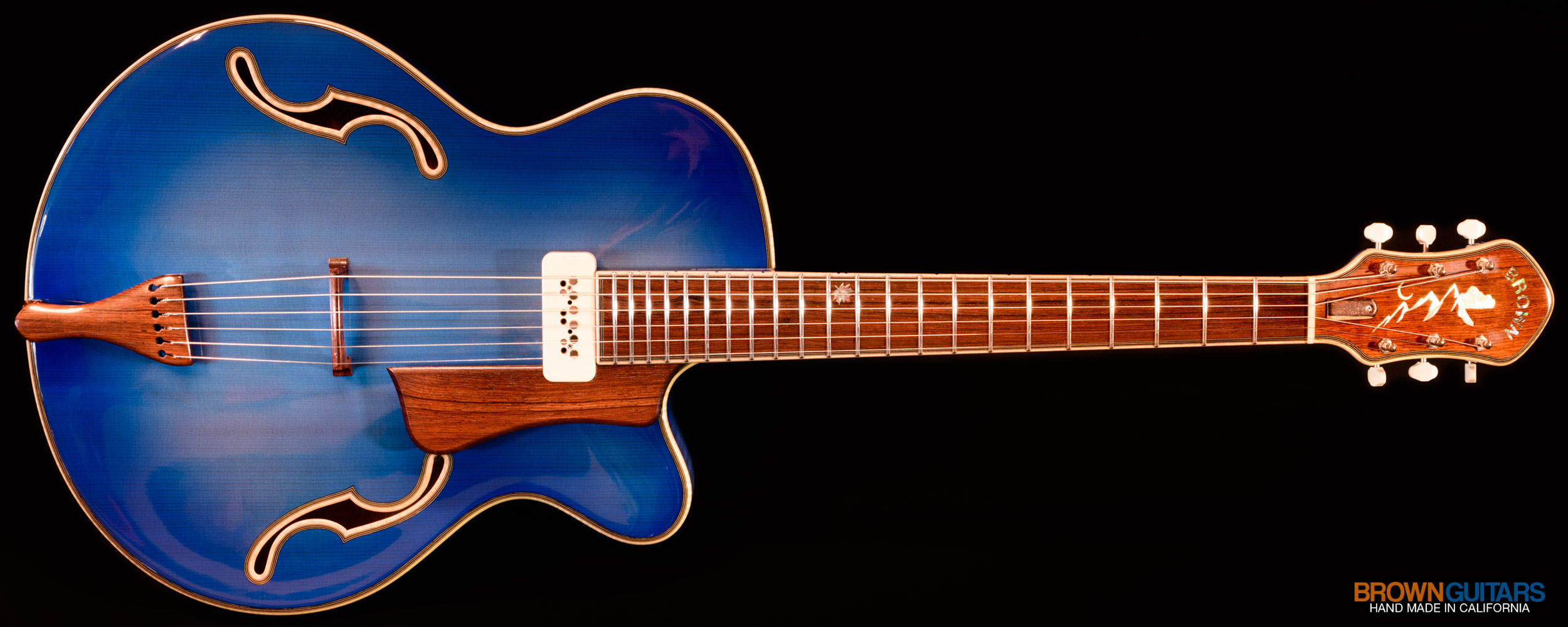
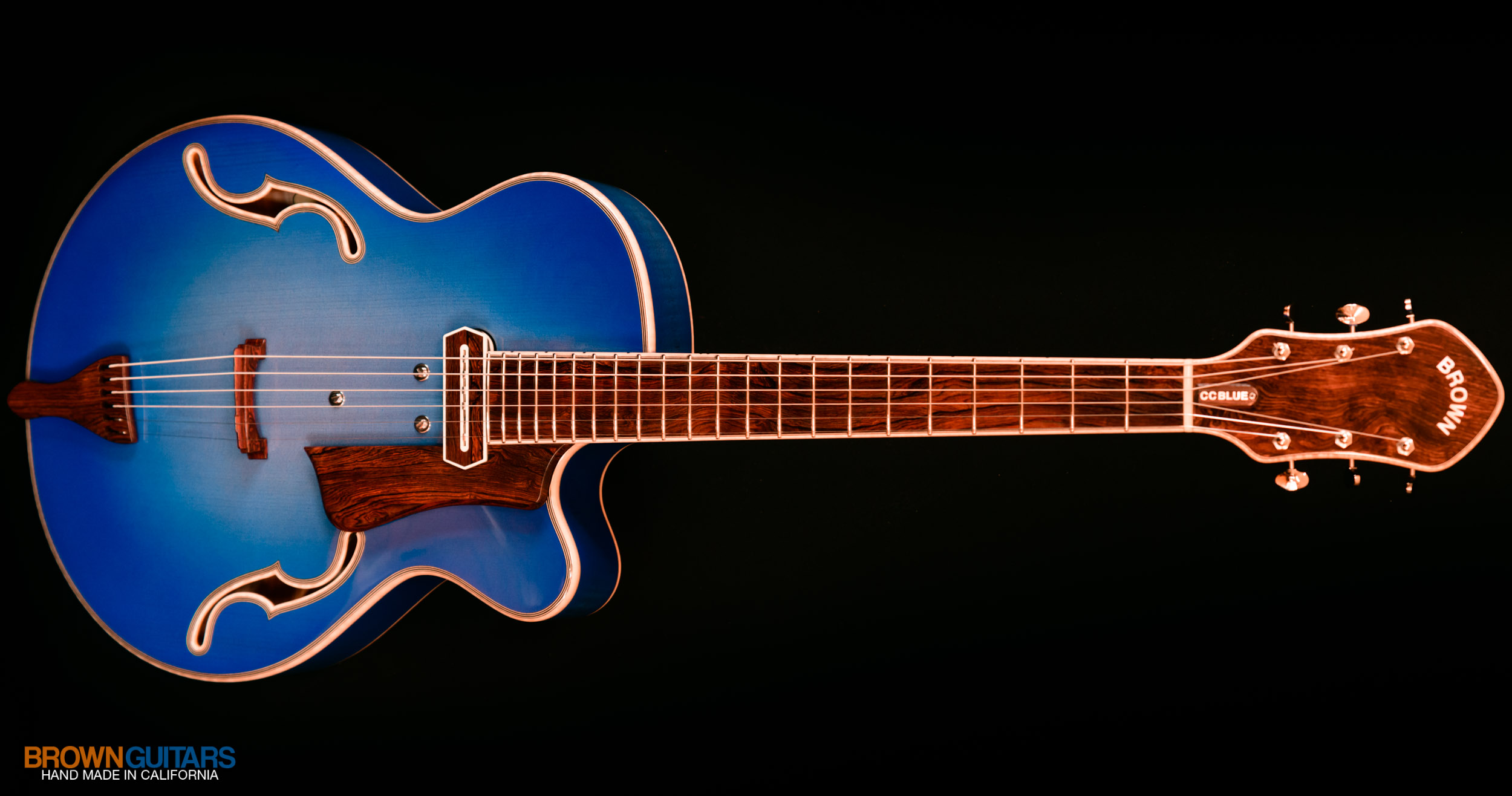
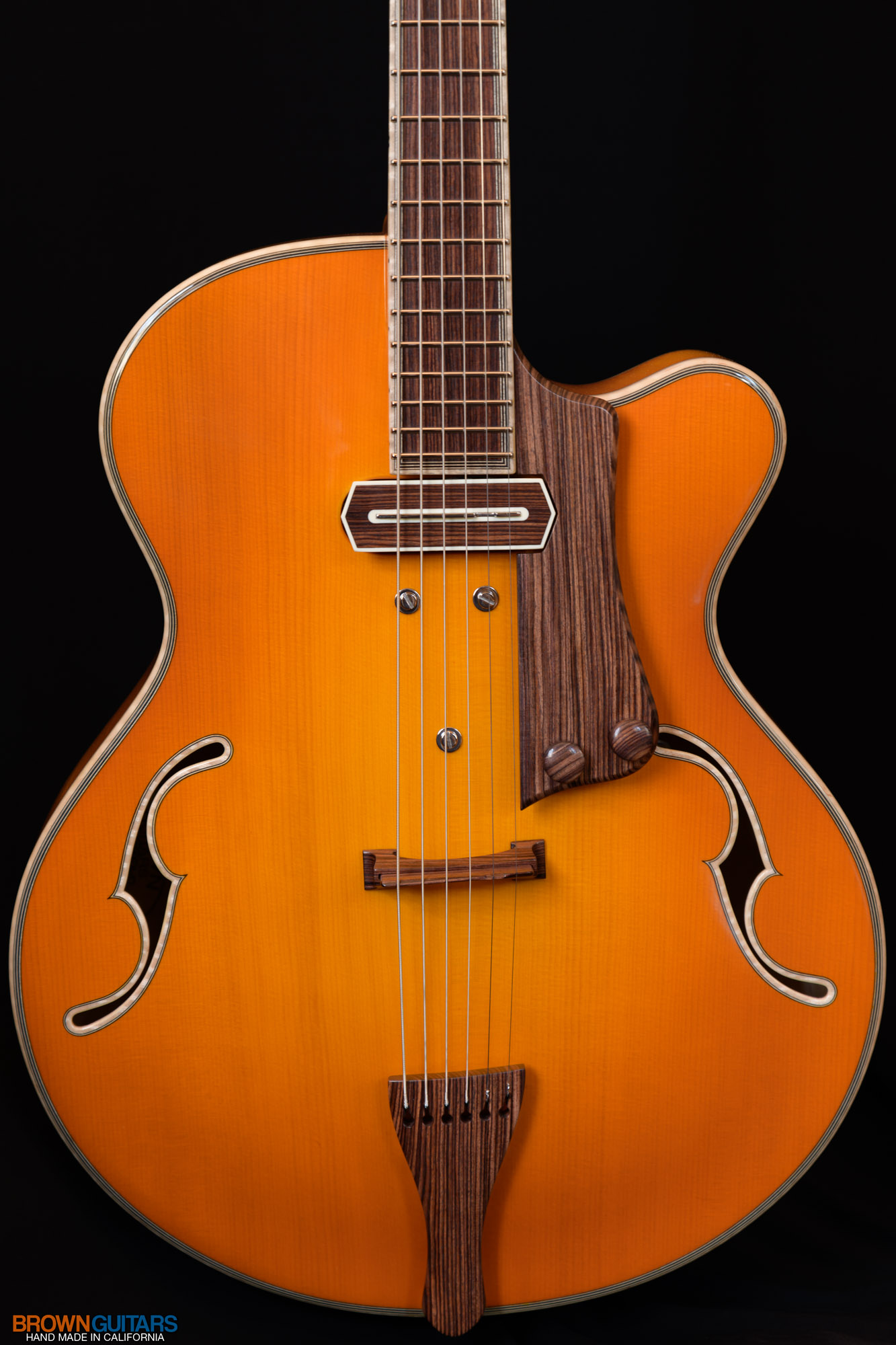
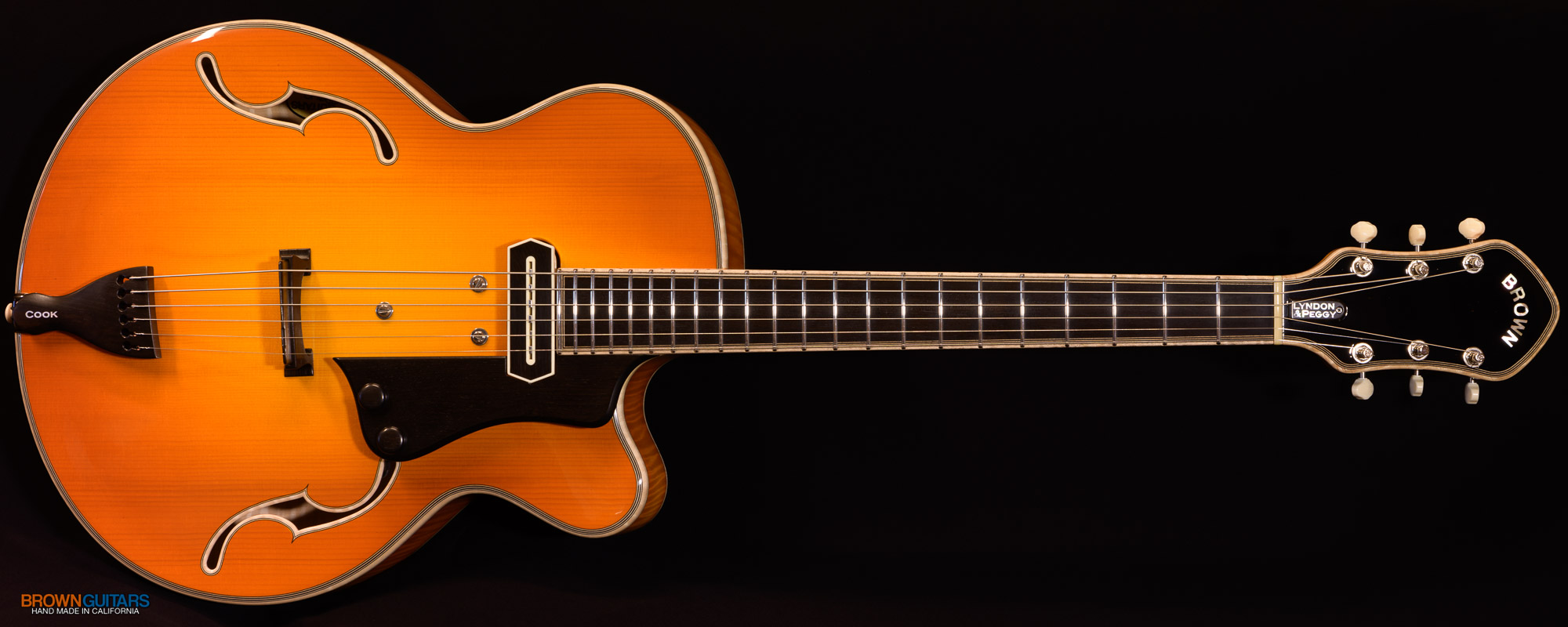
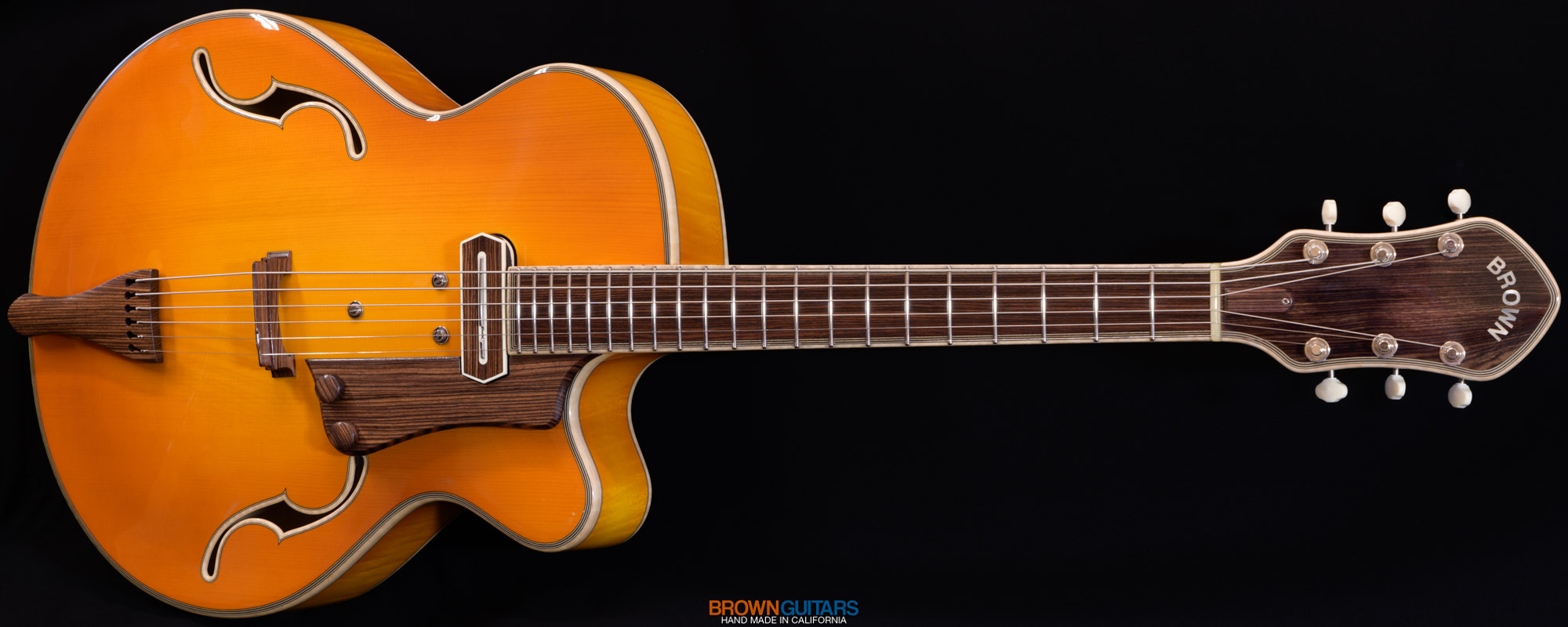
When it comes to wood selection for fingerboards, bridges, fingerrests, and appointments, each build follows an all-or-nothing approach—ensuring a unified aesthetic and cohesive acoustic response. To maintain visual and acoustic harmony across all appointments, Tad resaws large billets in-house—matching the fretboard, bridge, tailpiece, headplates, and fingerrest from the same continuous wood source.
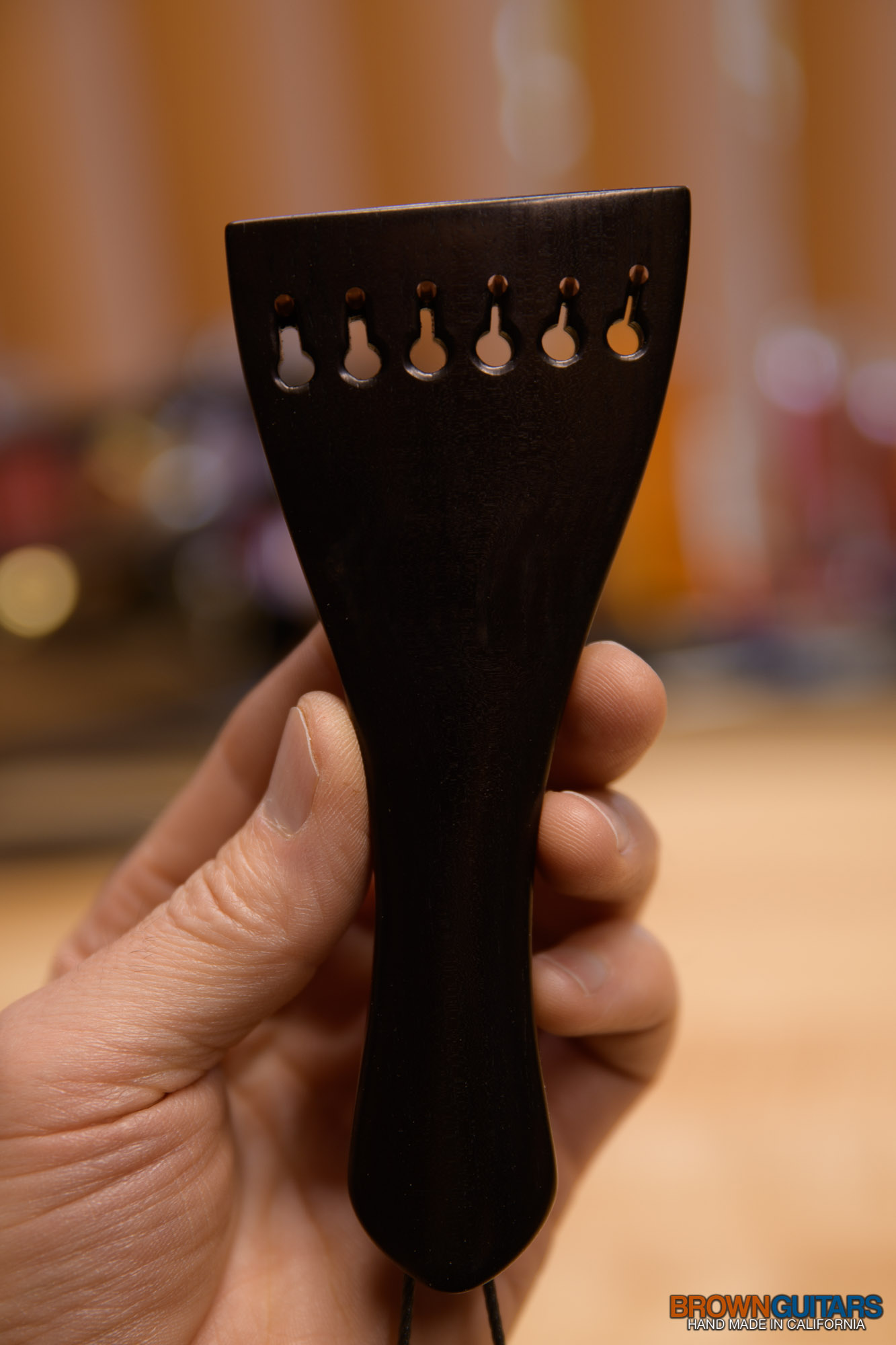
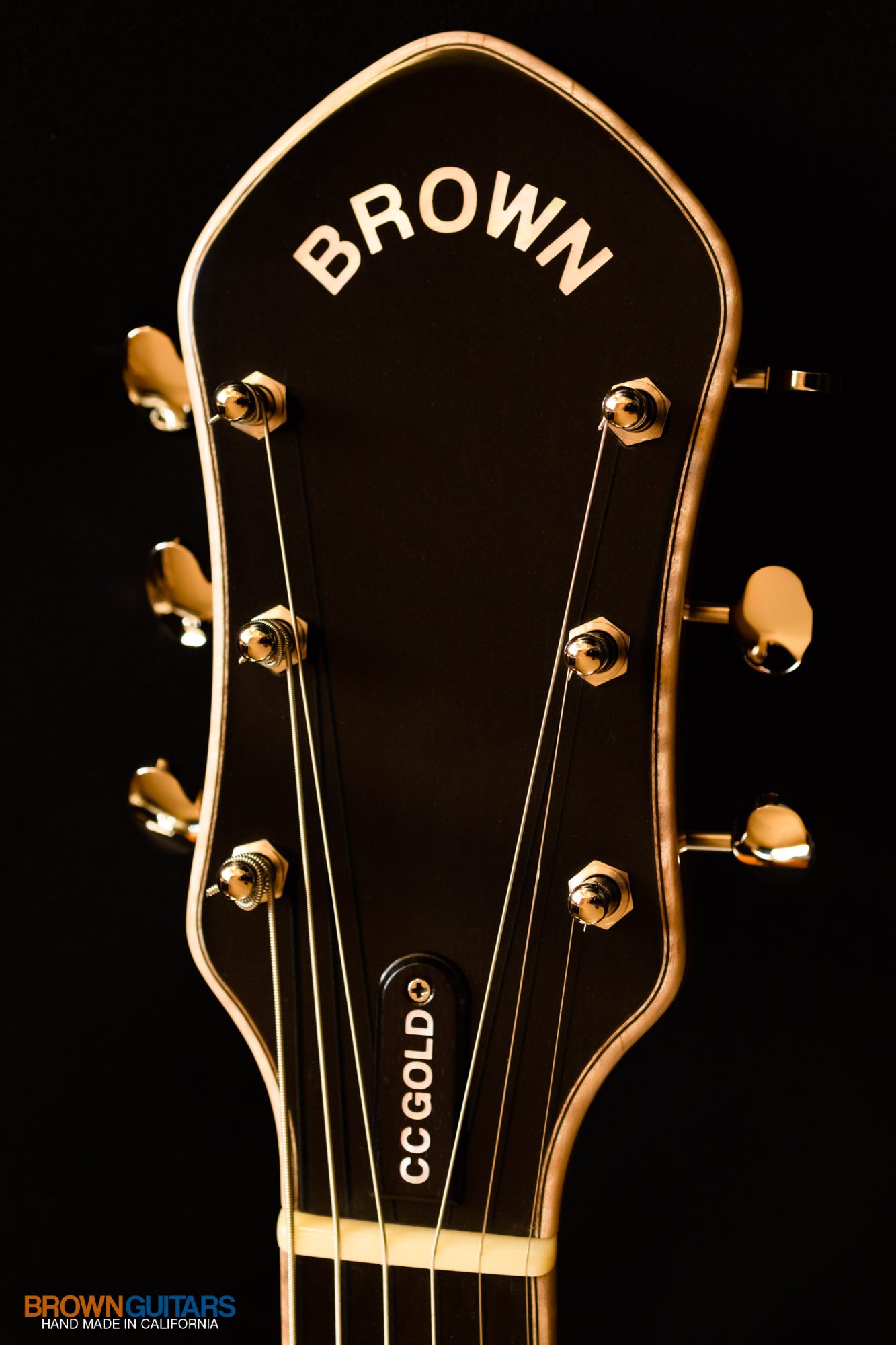
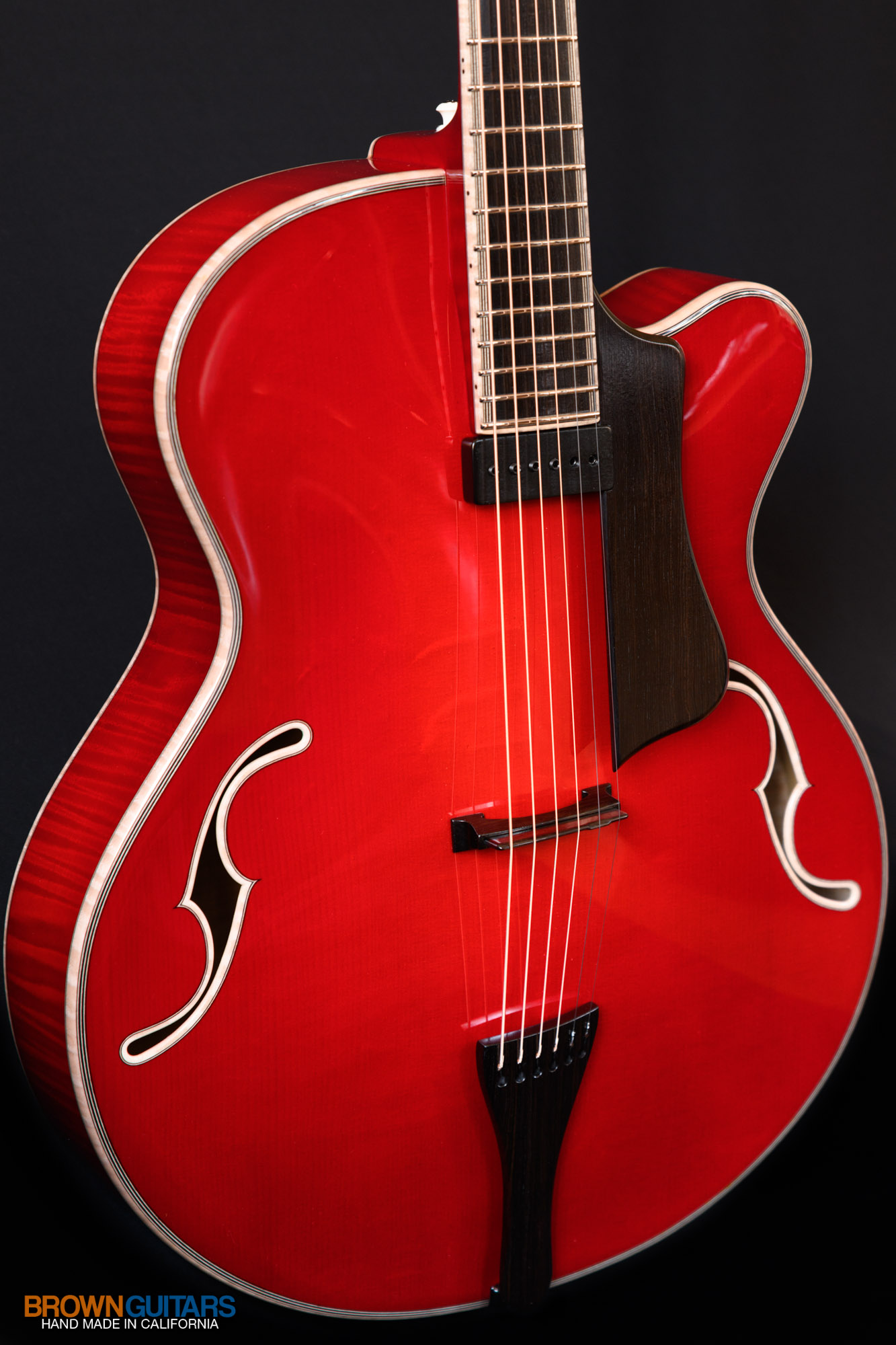
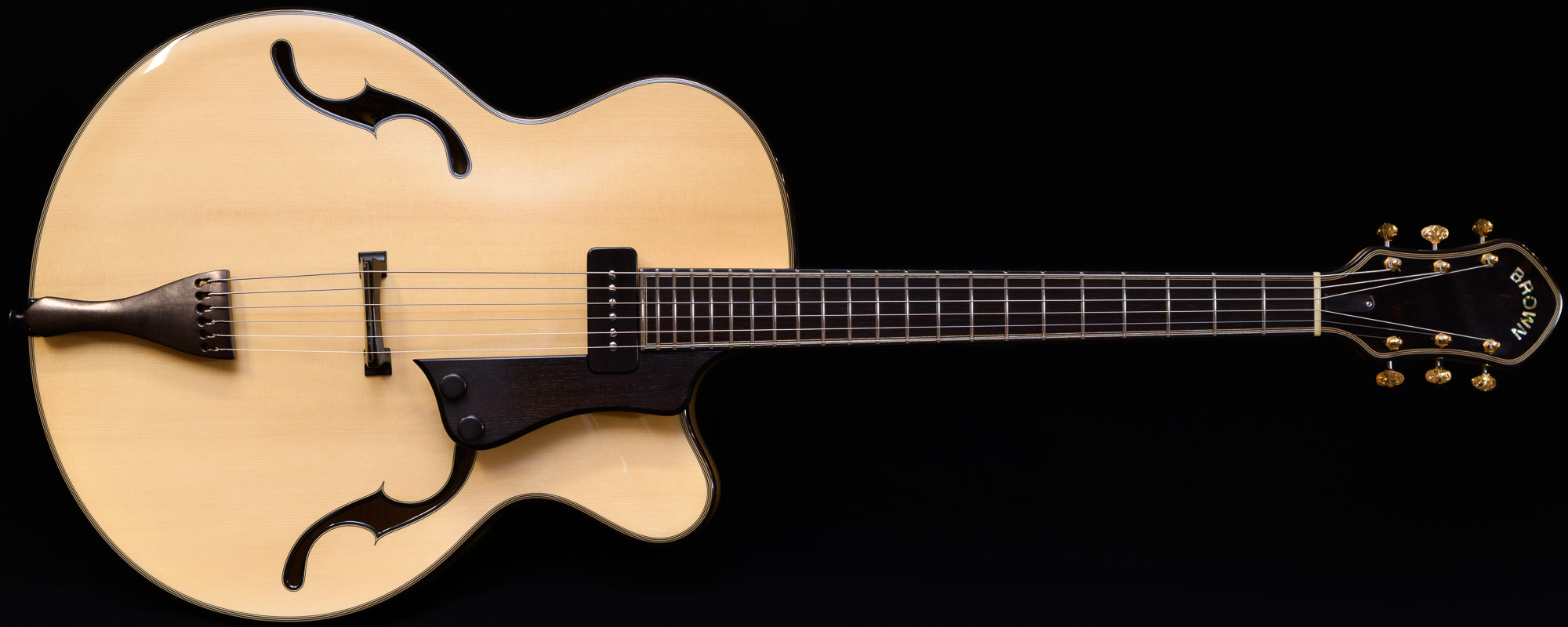
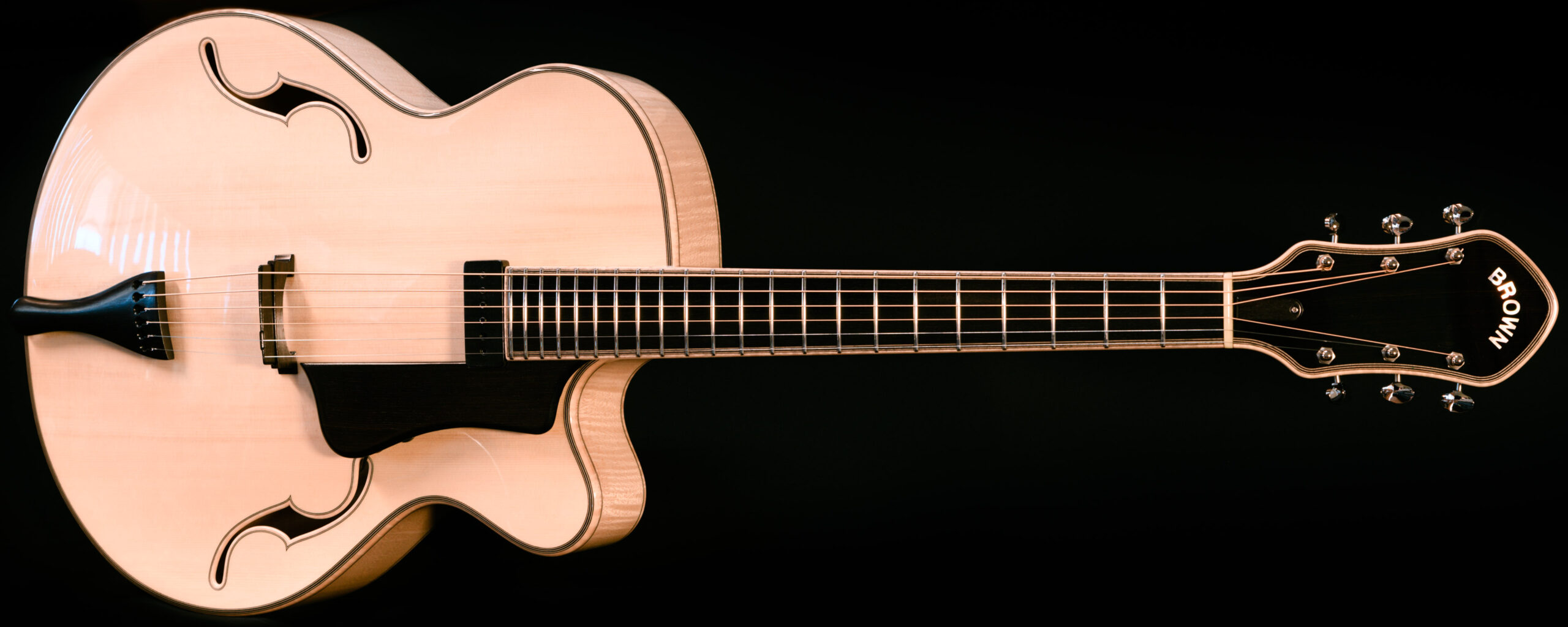
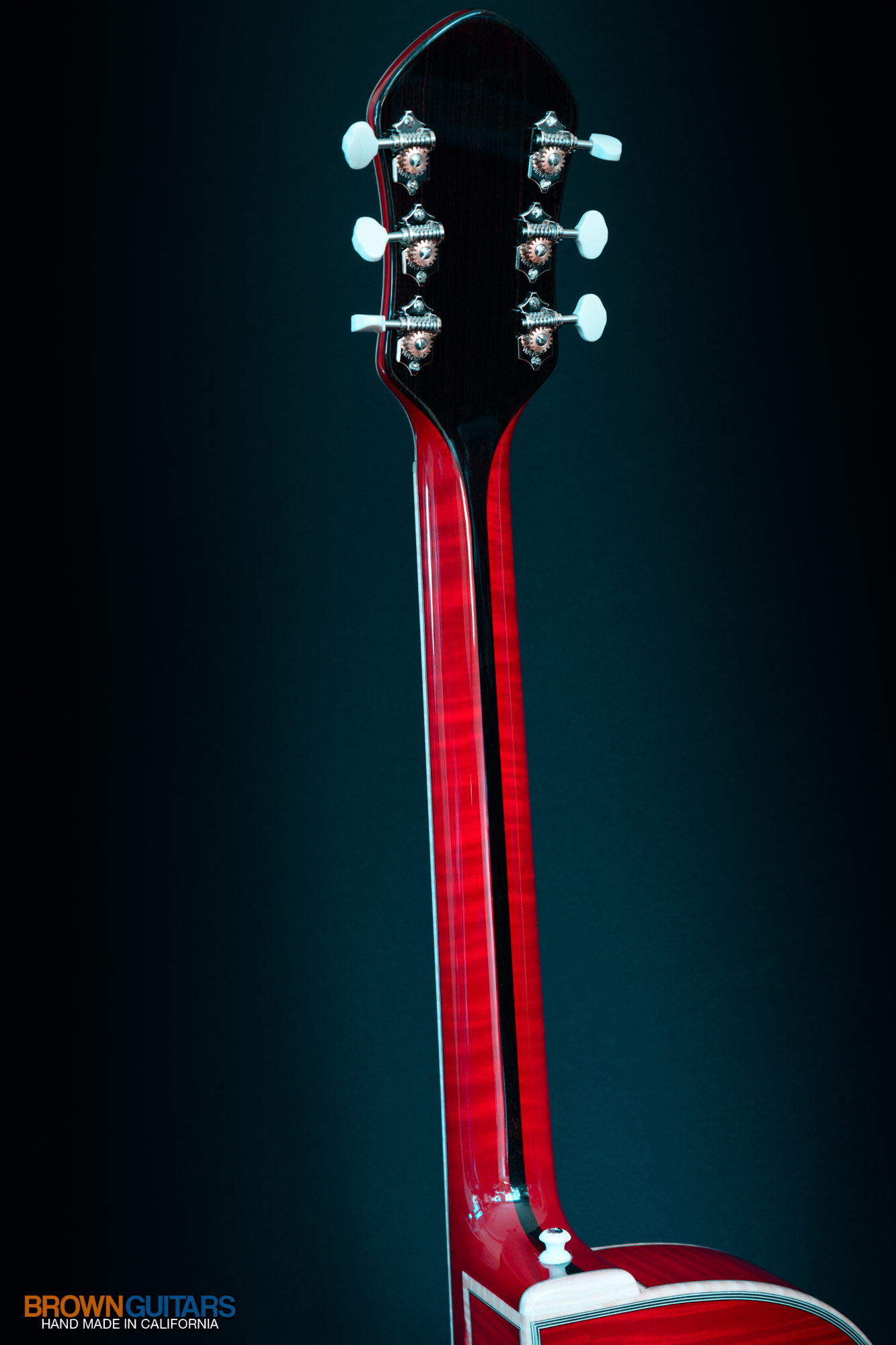
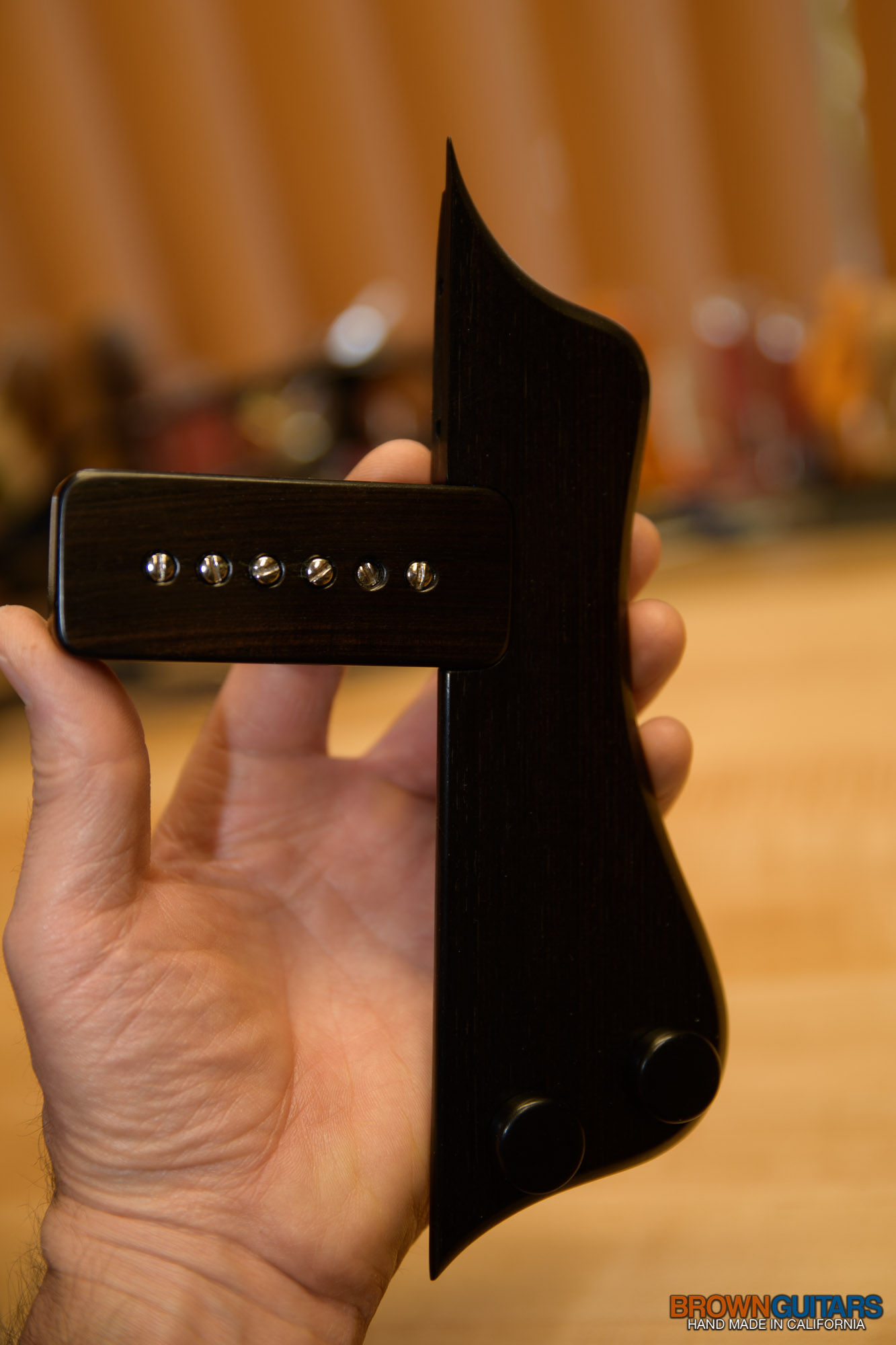
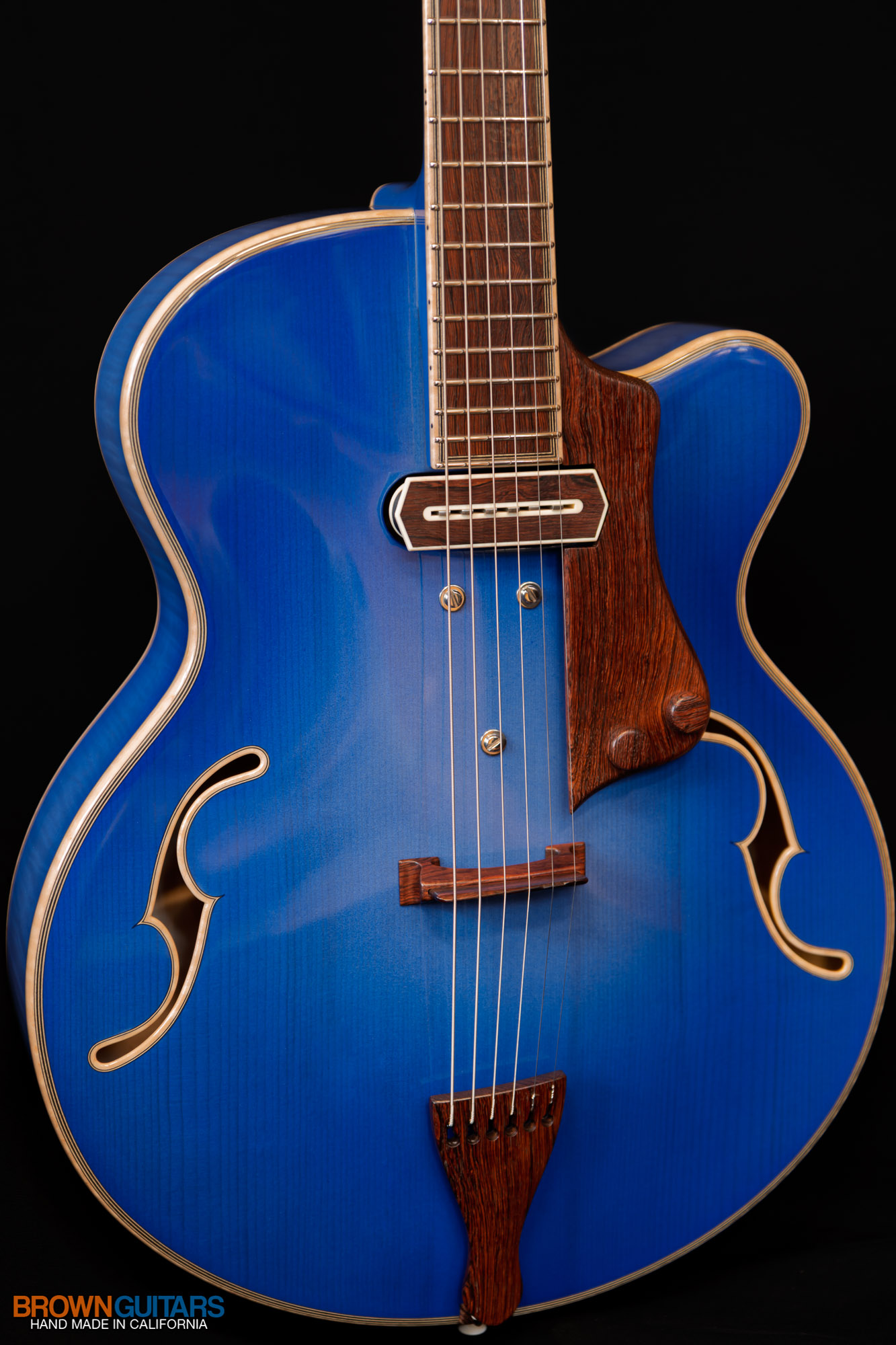 African Blackwood: While Gabon ebony has long been associated with high-end guitars, modern commercial ebony is frequently brittle, overly dry, and acoustically dampening. When a classic black aesthetic is preferred, Tad chooses African Blackwood. Beyond its historical use in ancient Egyptian royal furniture, this true rosewood has been prized for centuries in classical guitars and fine woodwind instruments for its unparalleled tone. Jet-black, non-brittle, and extraordinarily lively, African Blackwood is exquisitely beautiful and provides a far more vibrant tonal contribution.
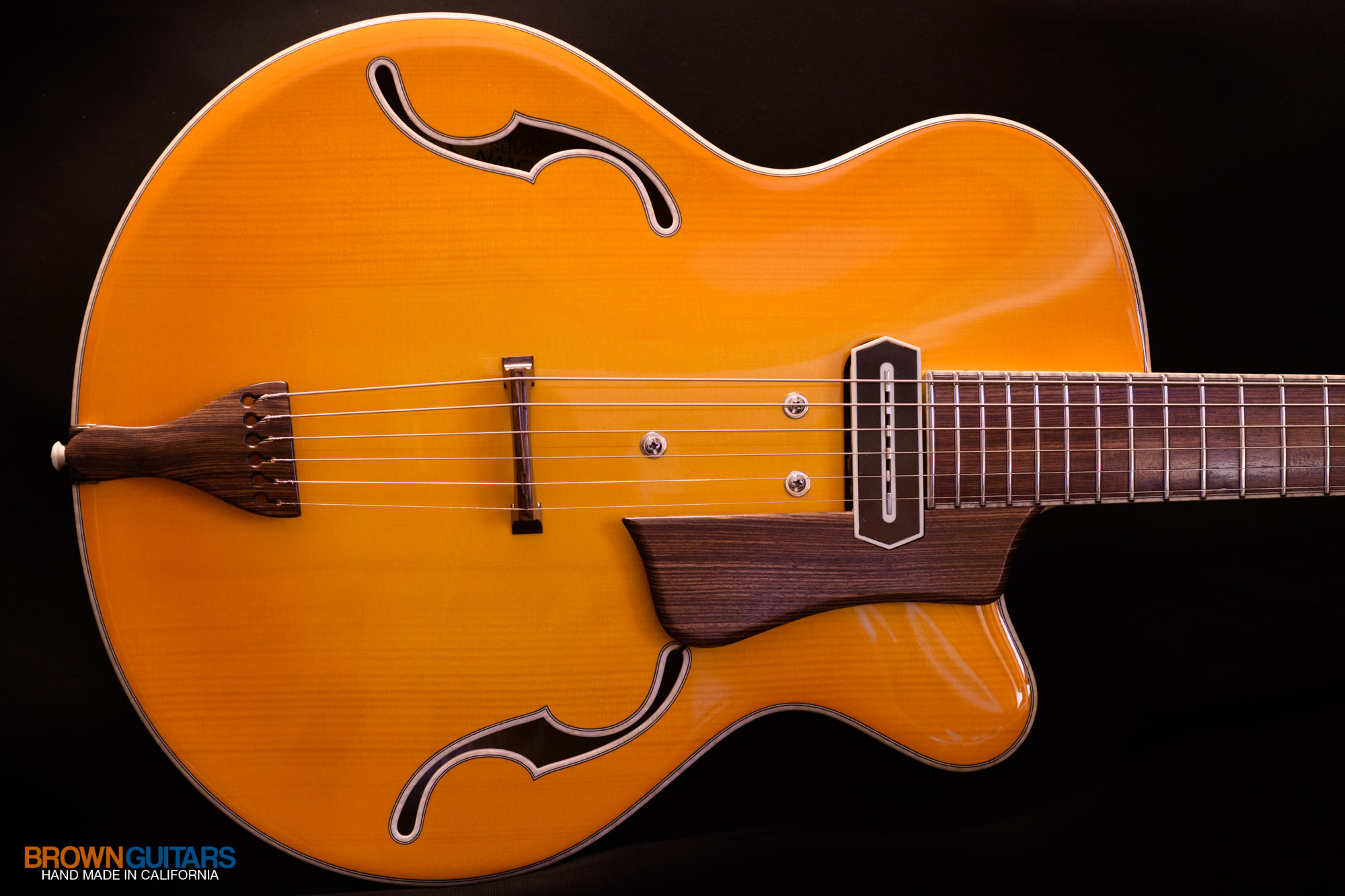
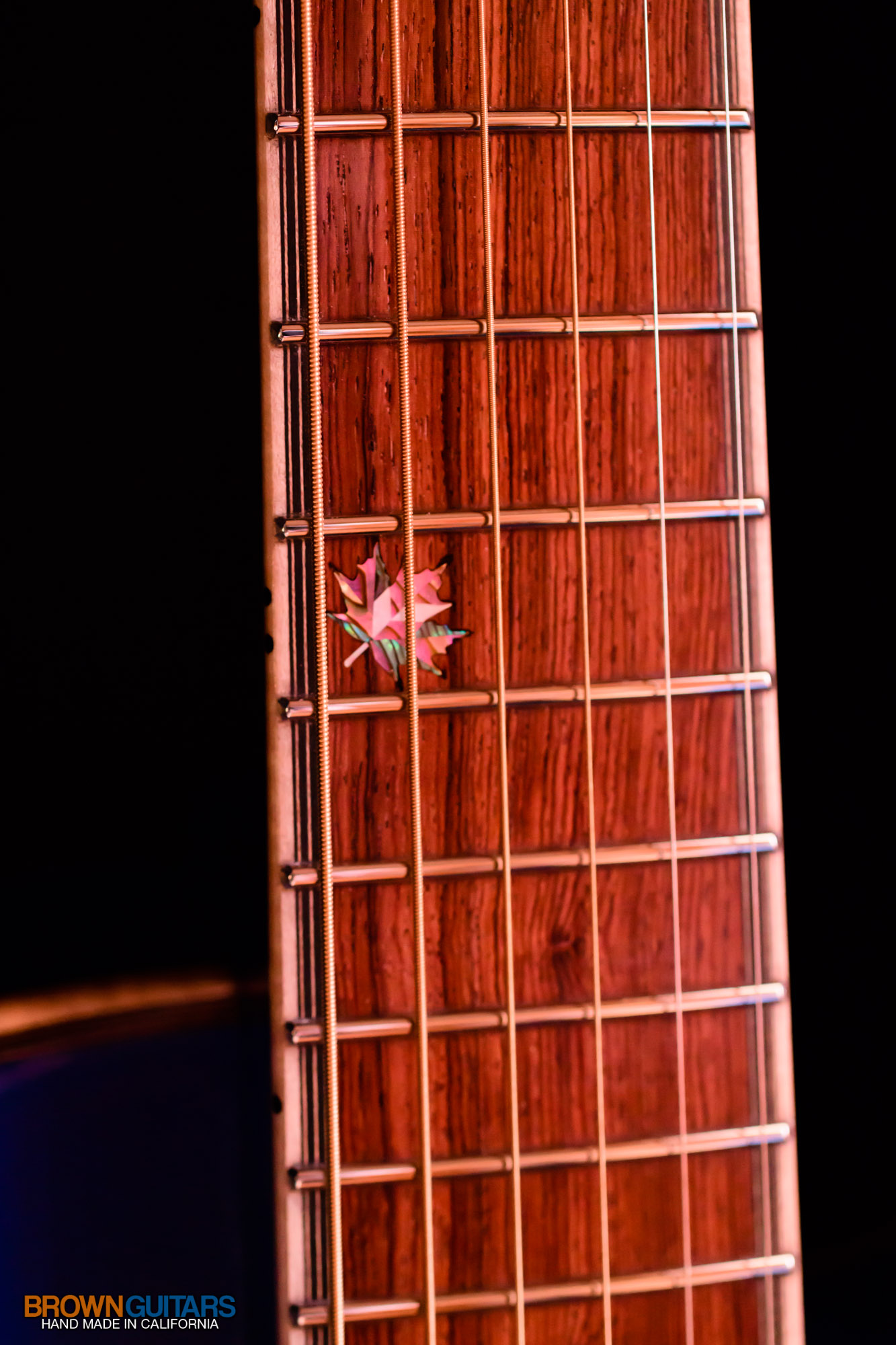
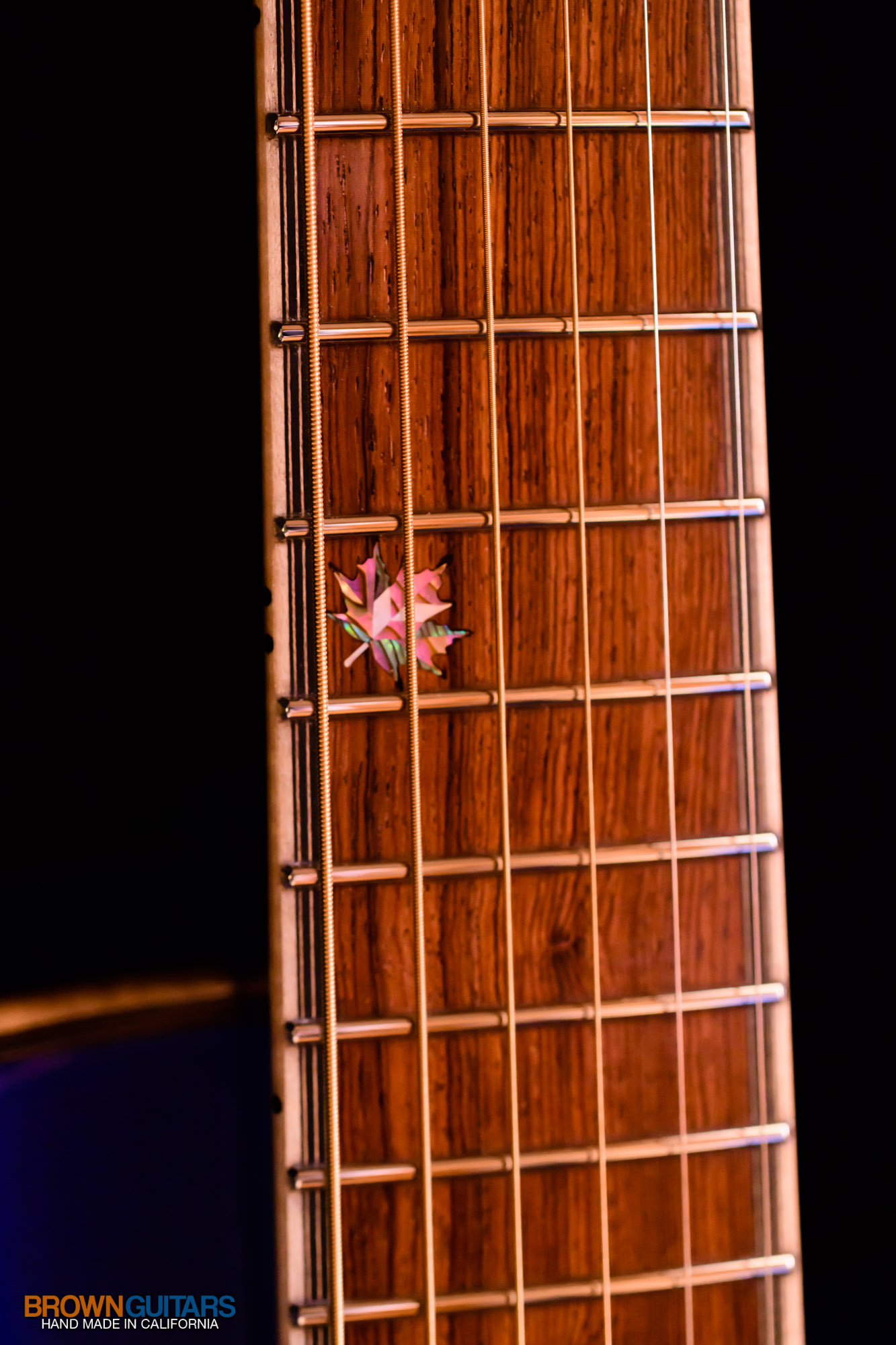
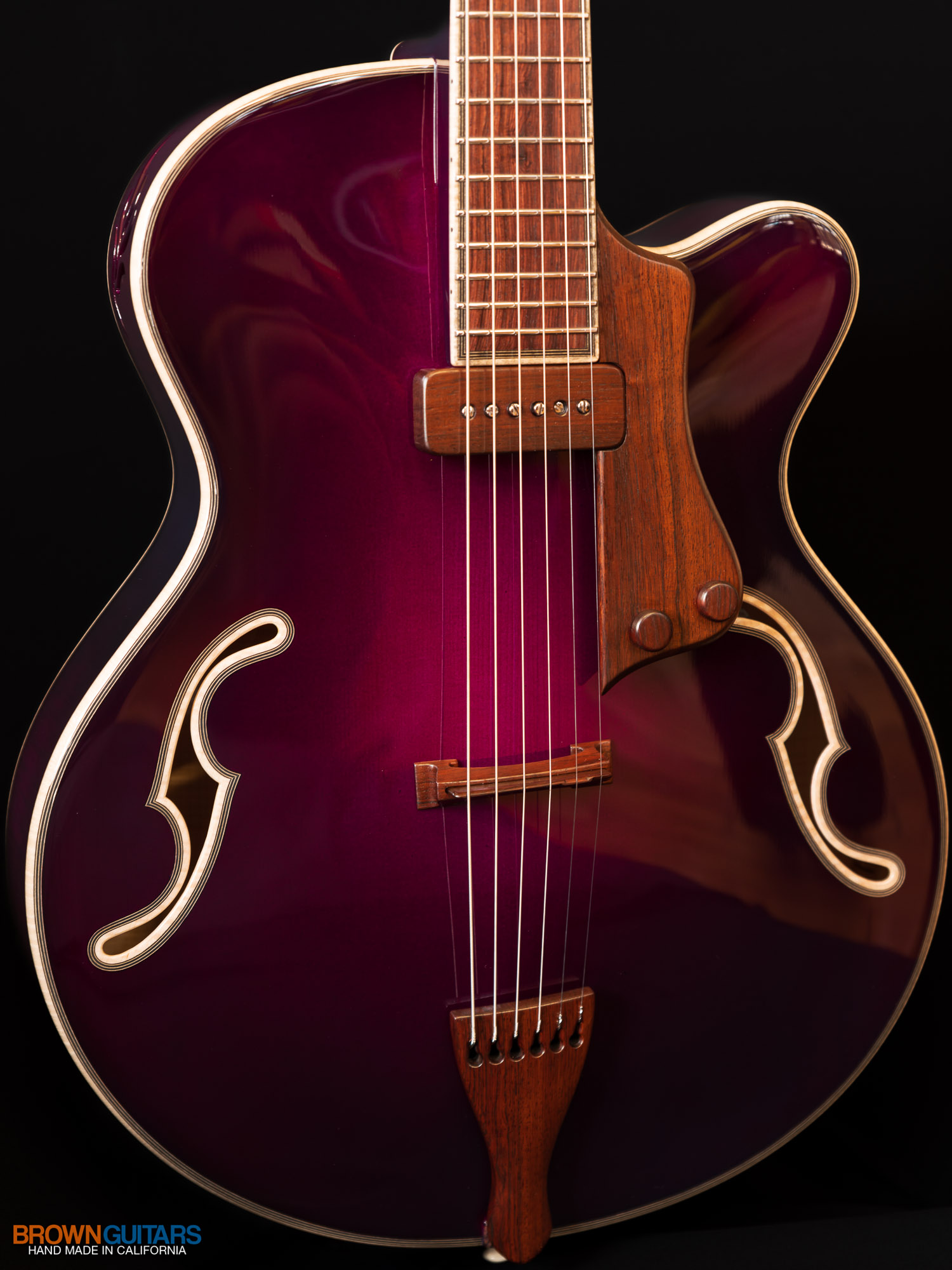
 Honduras Rosewood: While Brazilian rosewood remains heavily restricted and increasingly variable in quality, Honduras Rosewood stands as one of the greatest tonal materials on Earth. Highly resonant and sonically dense, it is the undisputed wood of choice for fine marimba bars due to its incredible pitch clarity and ring. When a rosewood aesthetic is desired, Tad utilizes Honduras rosewood to ensure every note projects with warm, bell-like articulation.
Acquiring these top-quality, instrument-grade tonewoods is painstaking and expensive, and made significantly more difficult by the sheer volume and thickness required for hand-carved archtops compared to other types of guitars. While standard acoustic flattops use thin, resawn sheets, an archtop requires top and back plates joined from solid wood wedges over an inch thick that must be entirely free of internal defects throughout. Each instrument is a thoughtful balance of acoustic physics, structural integrity, and visual harmony—where materials are chosen not for hype, but for sound.
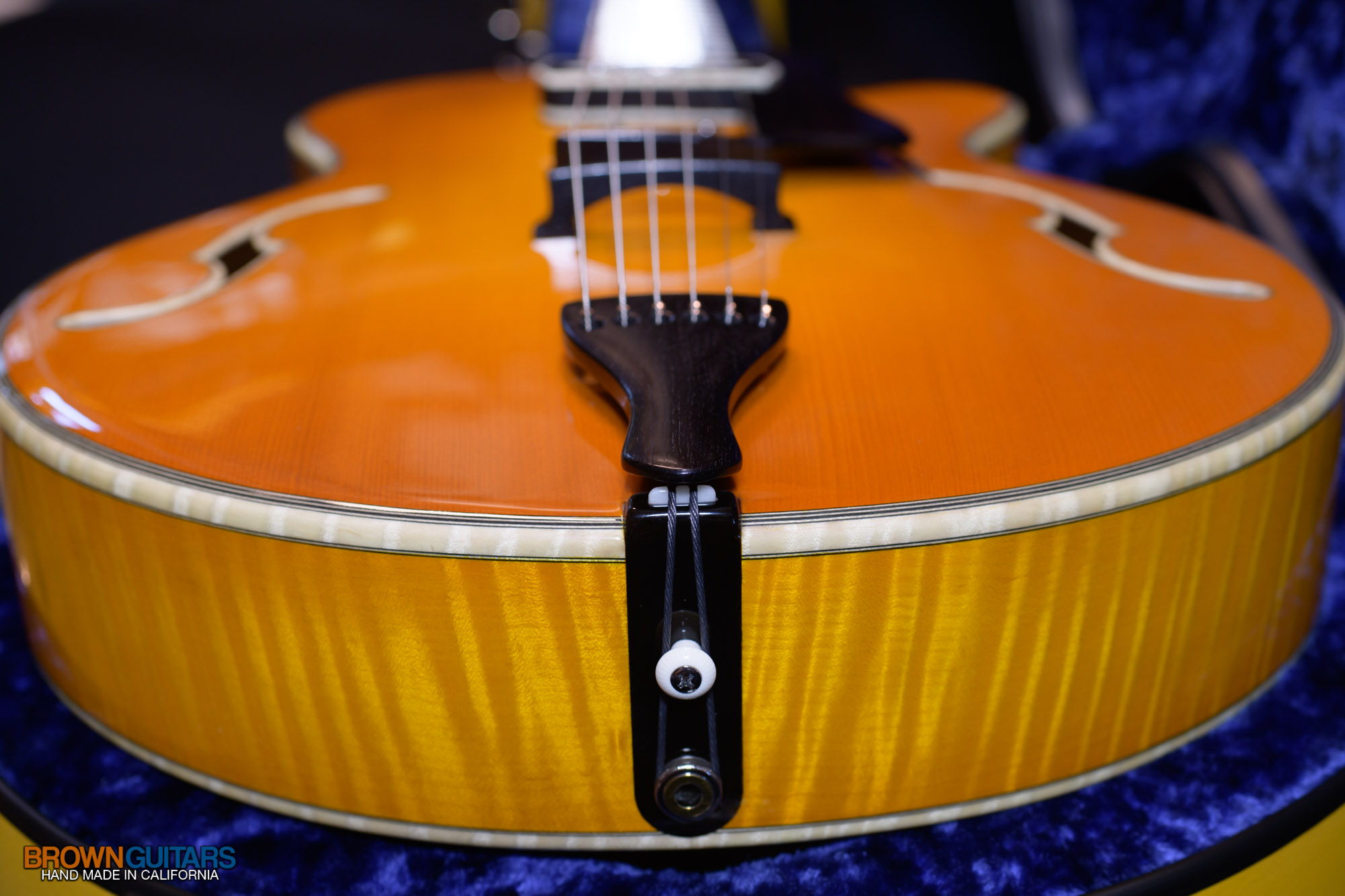
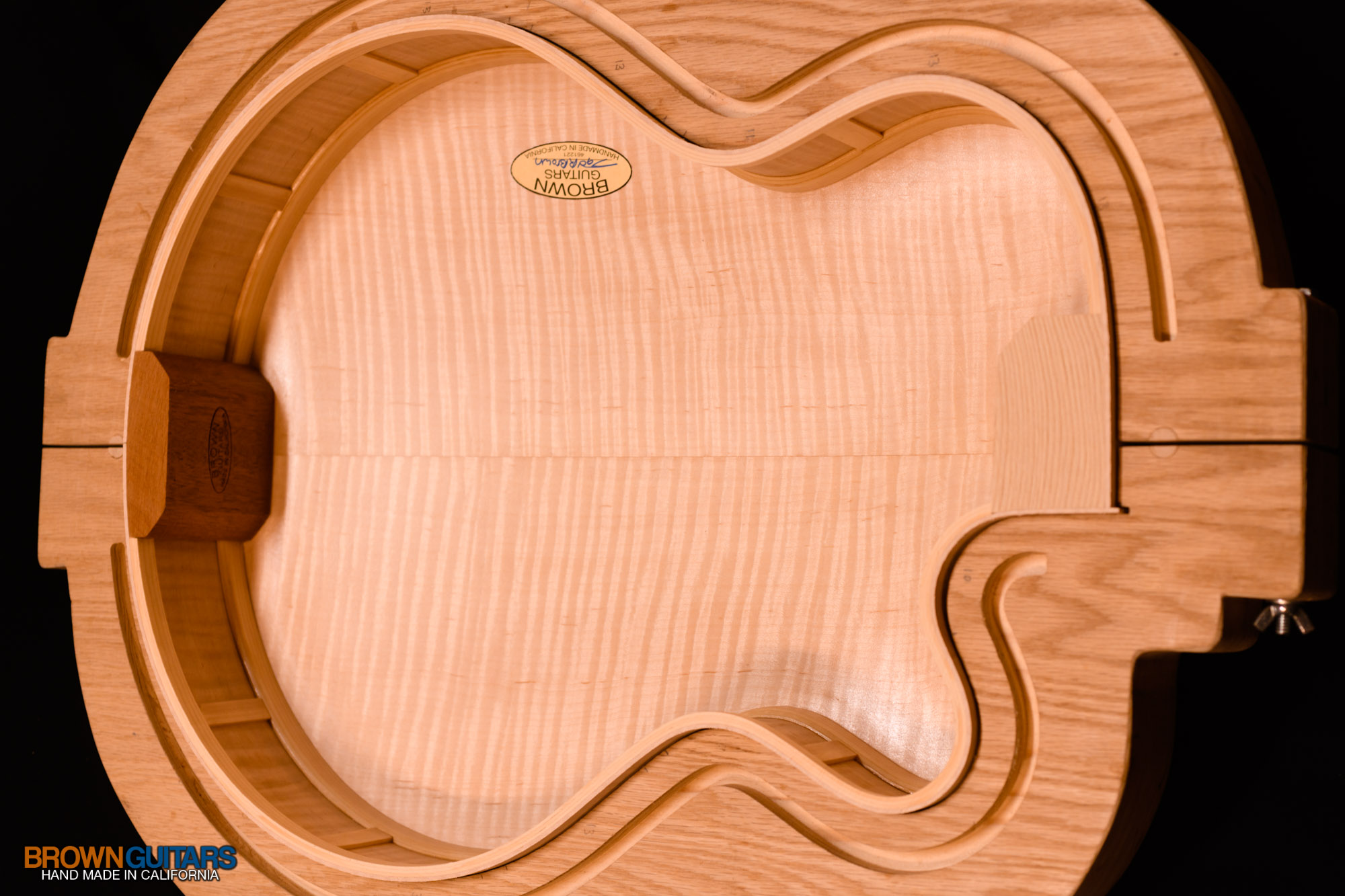
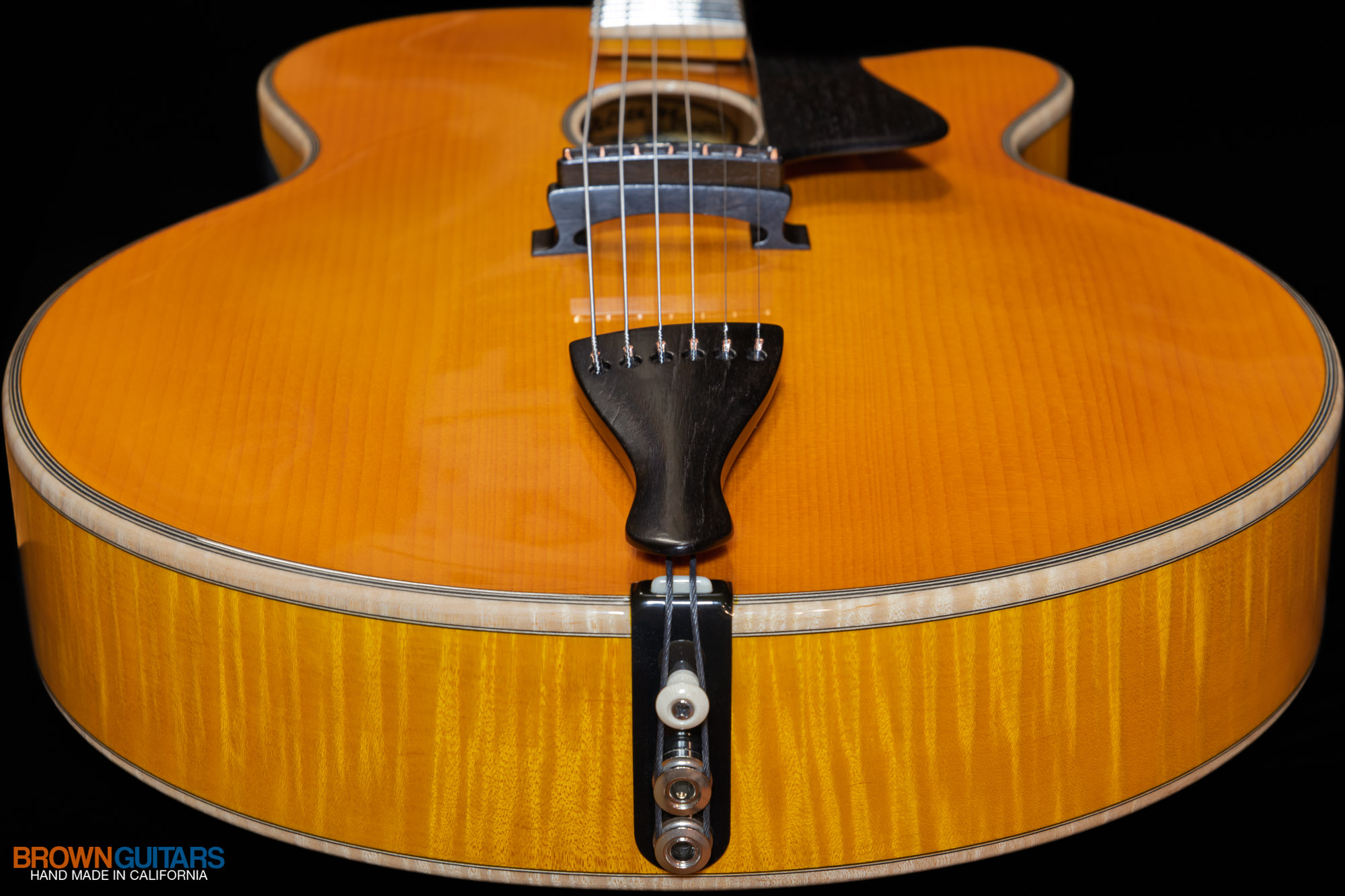
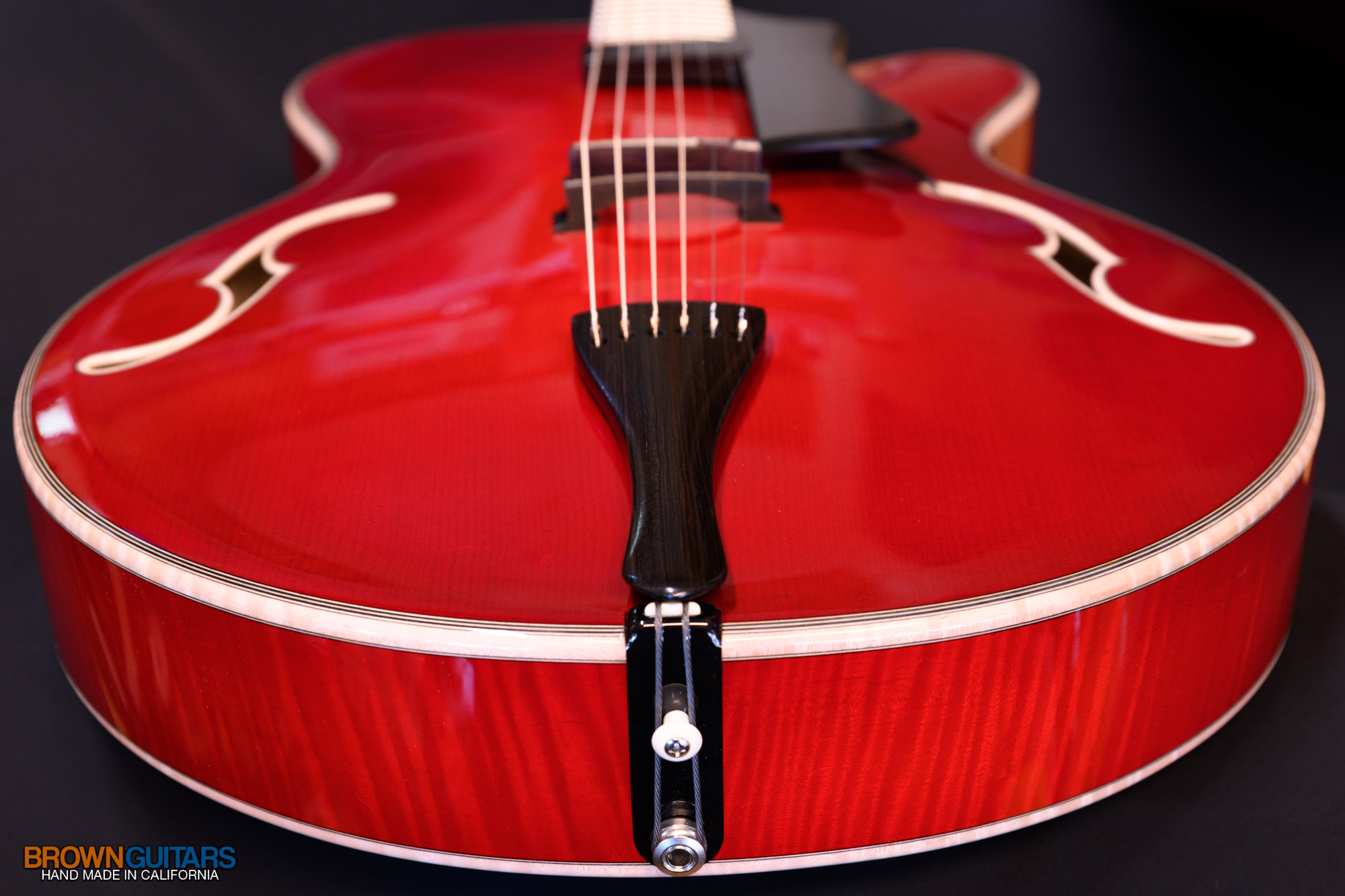
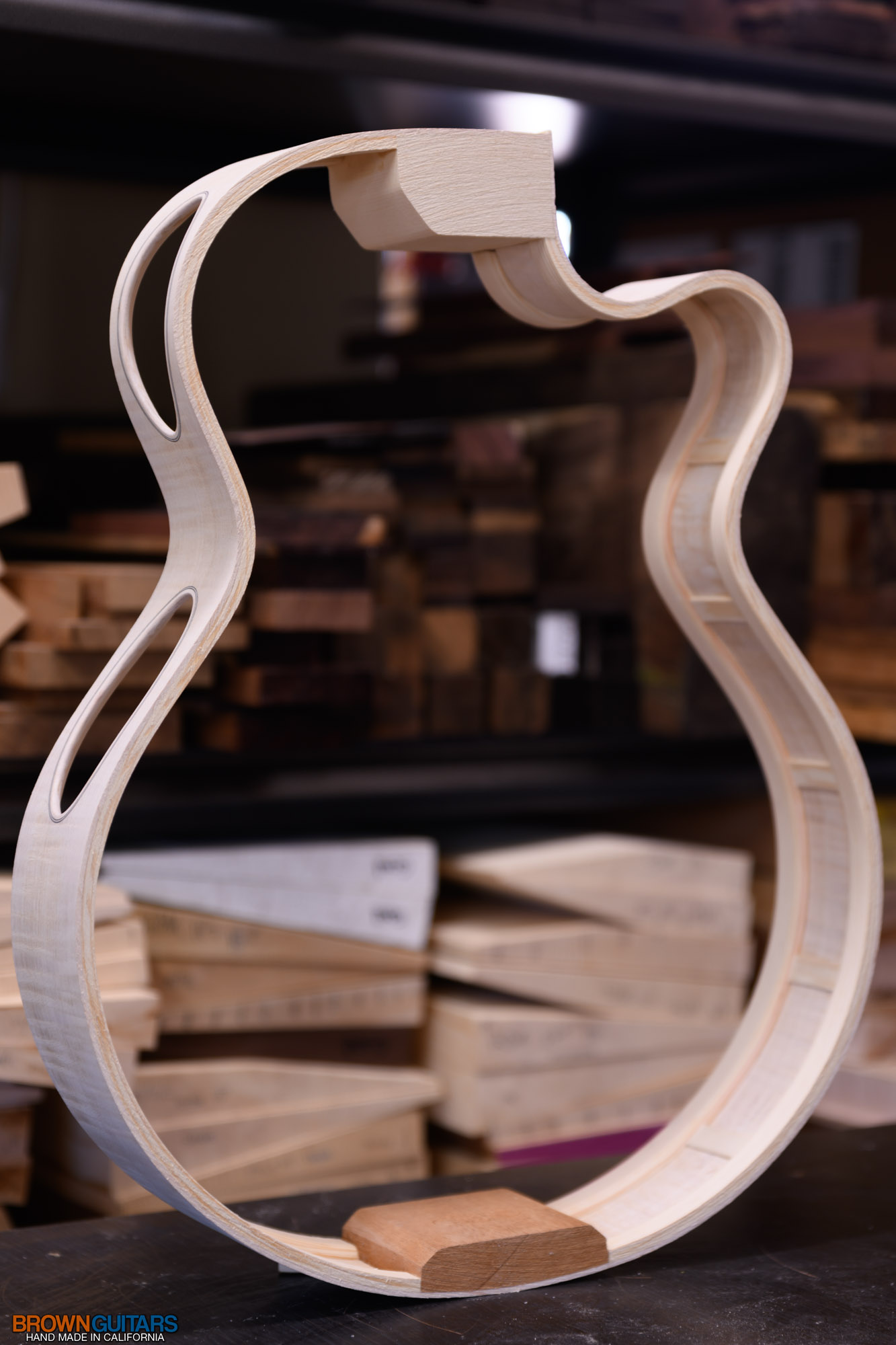
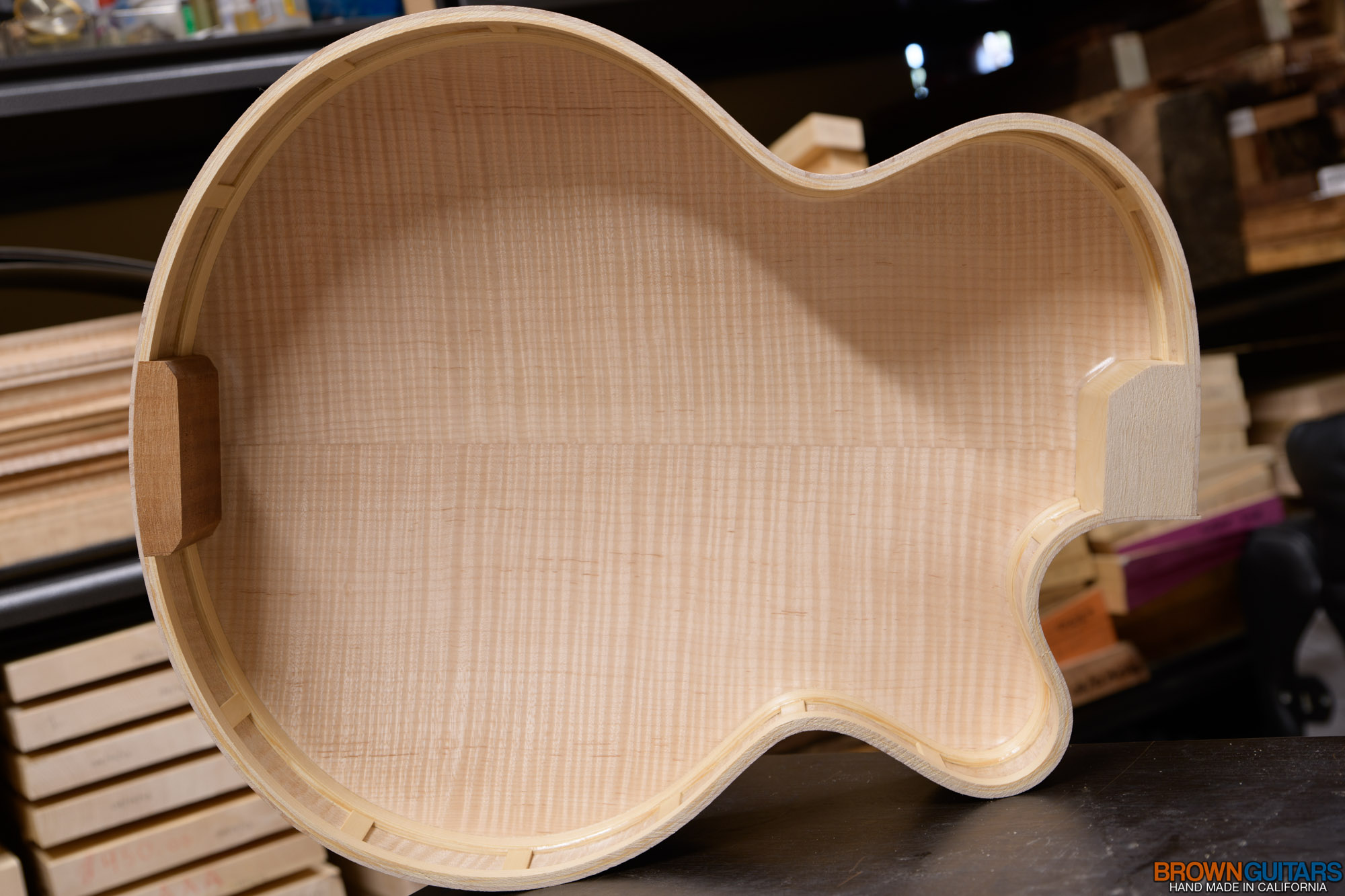
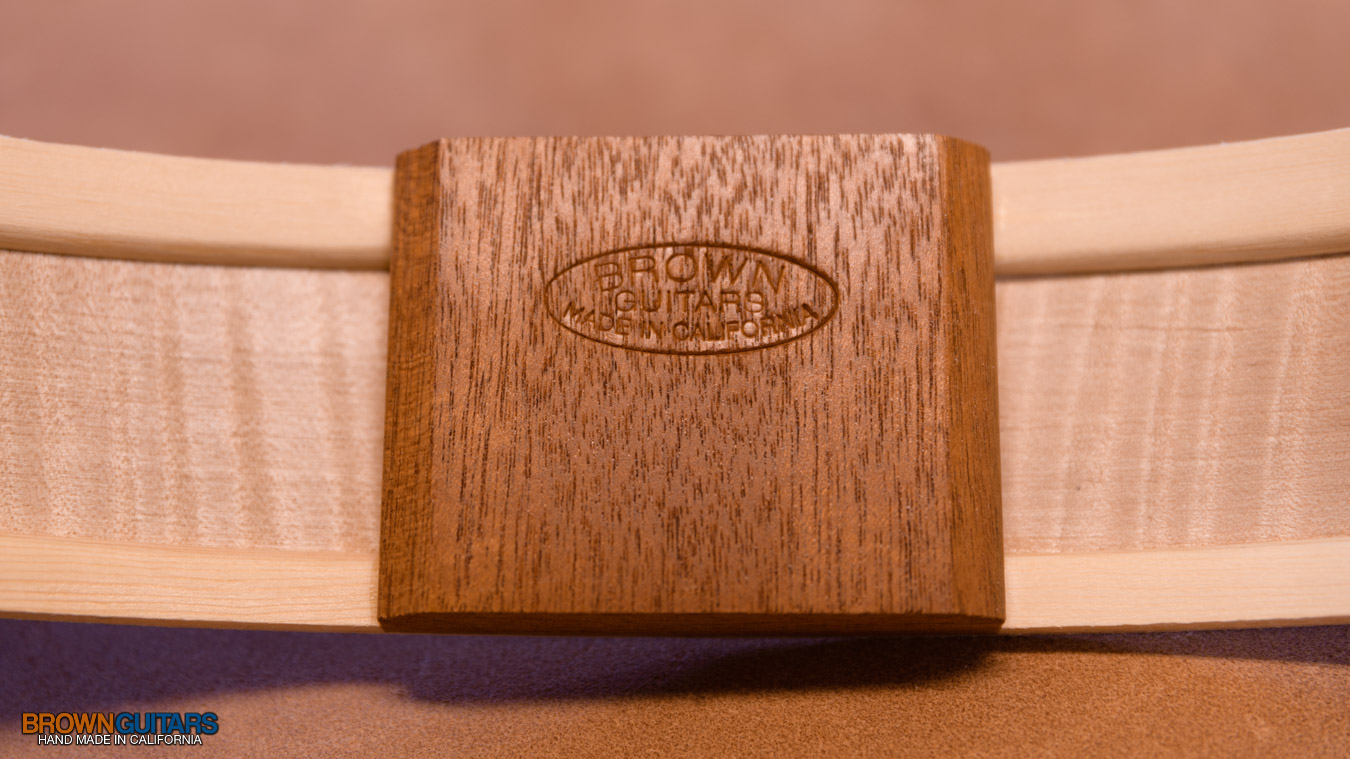
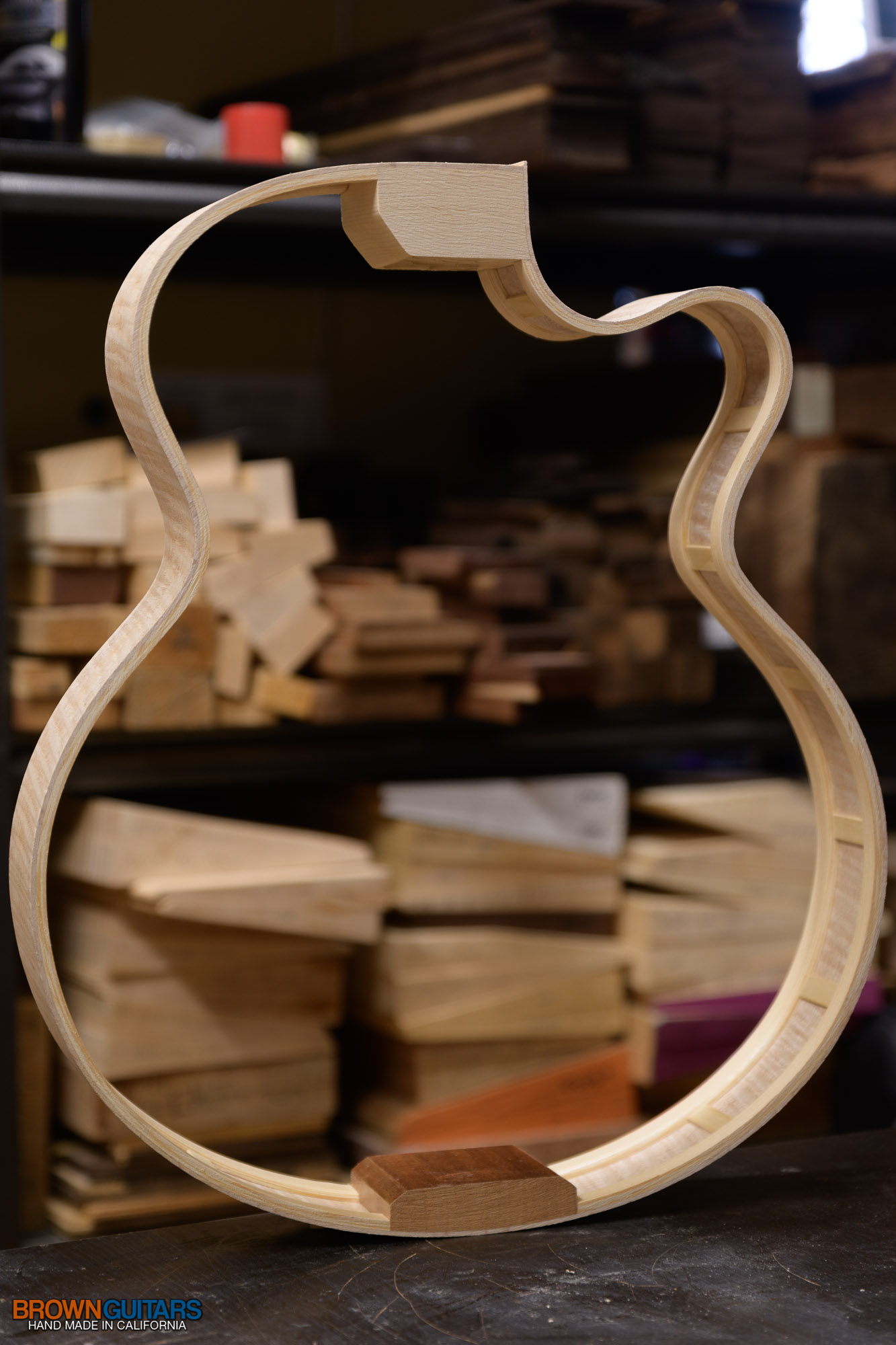
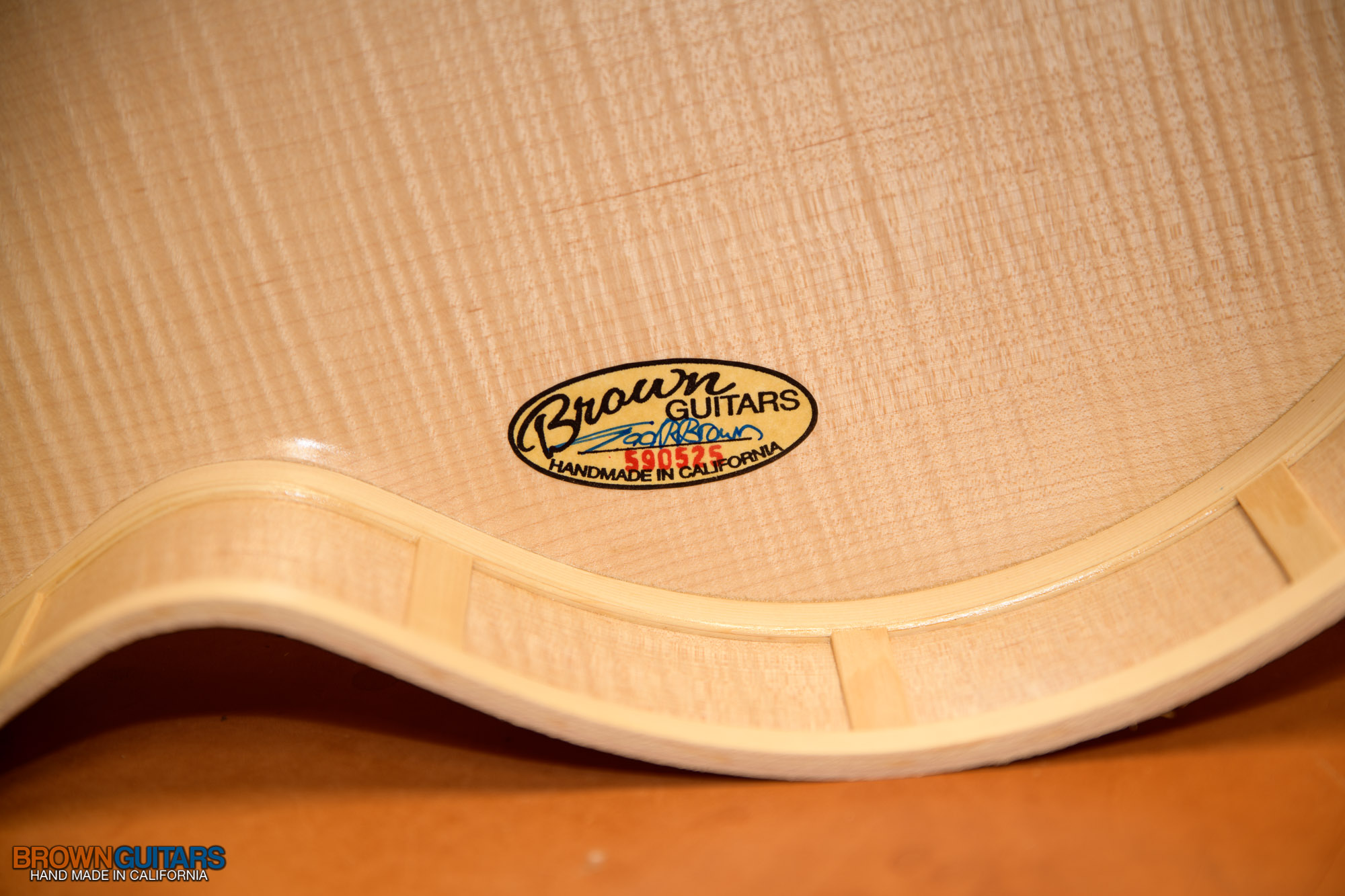
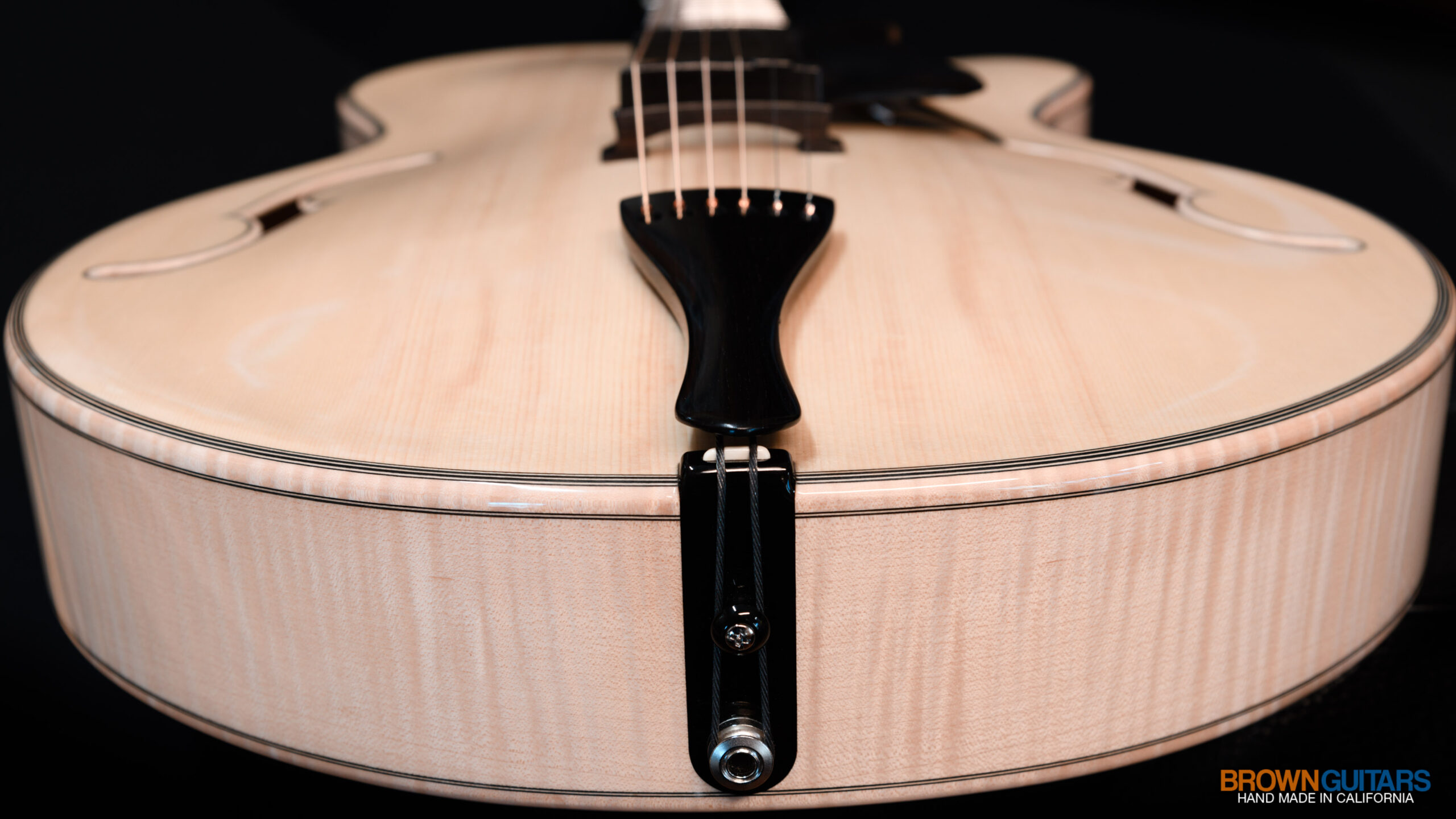
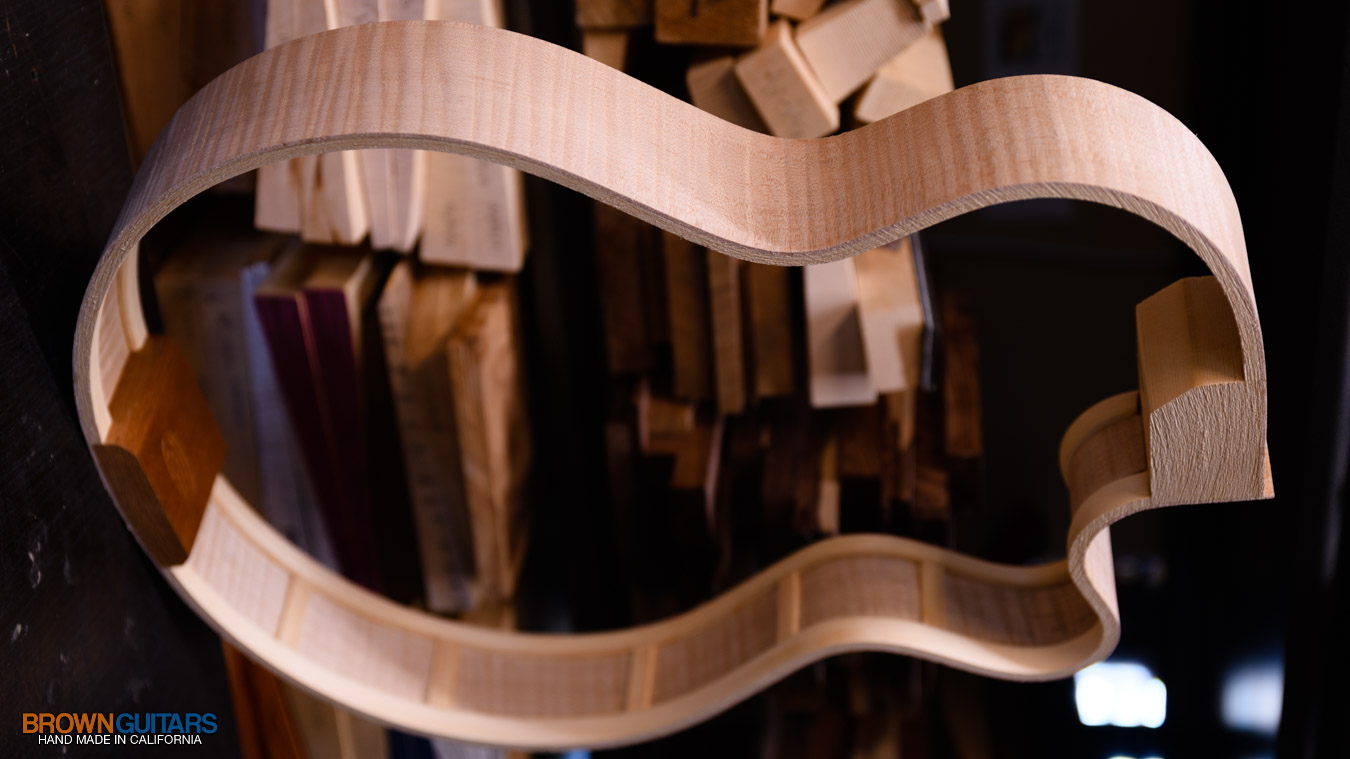
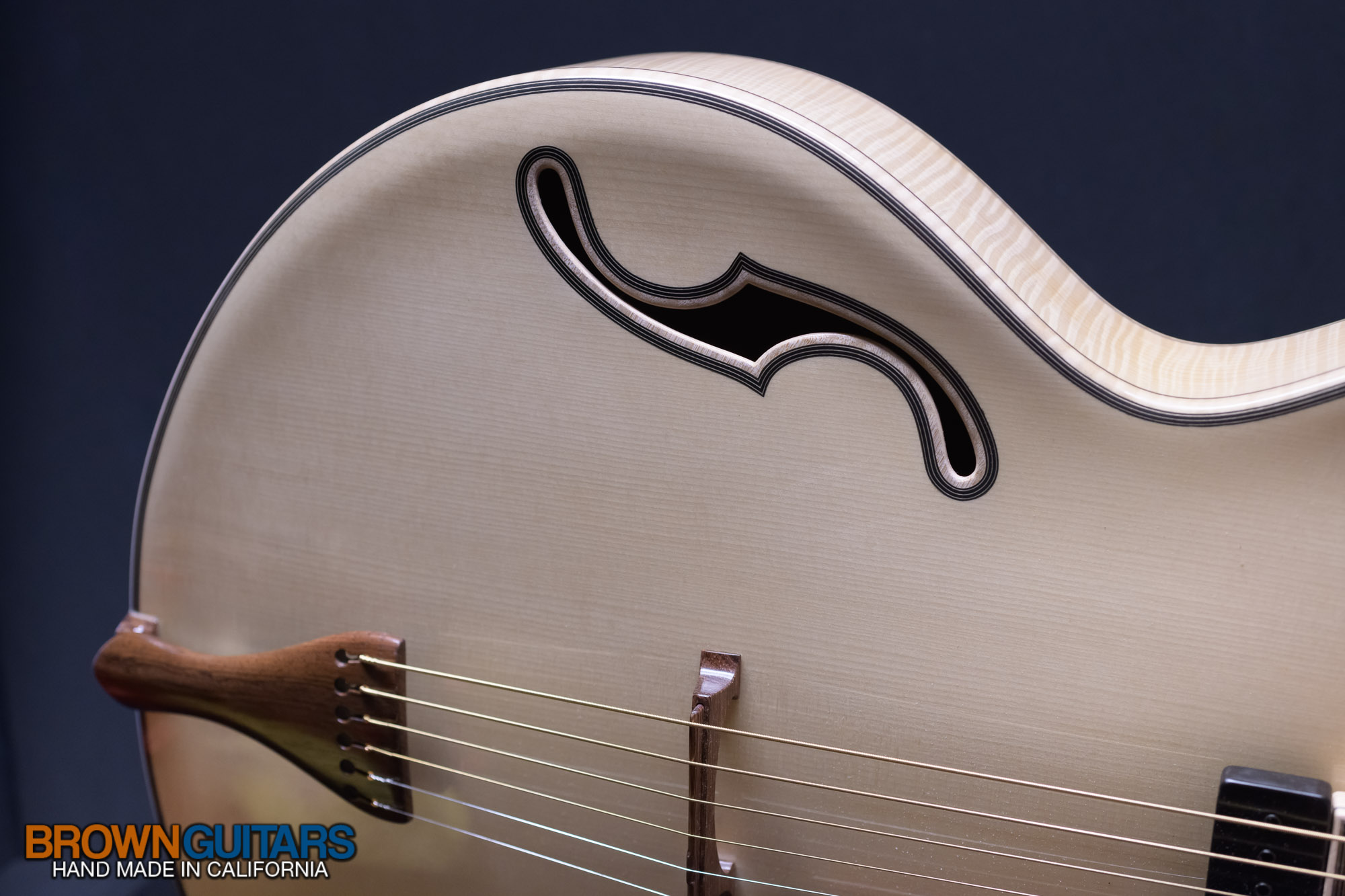
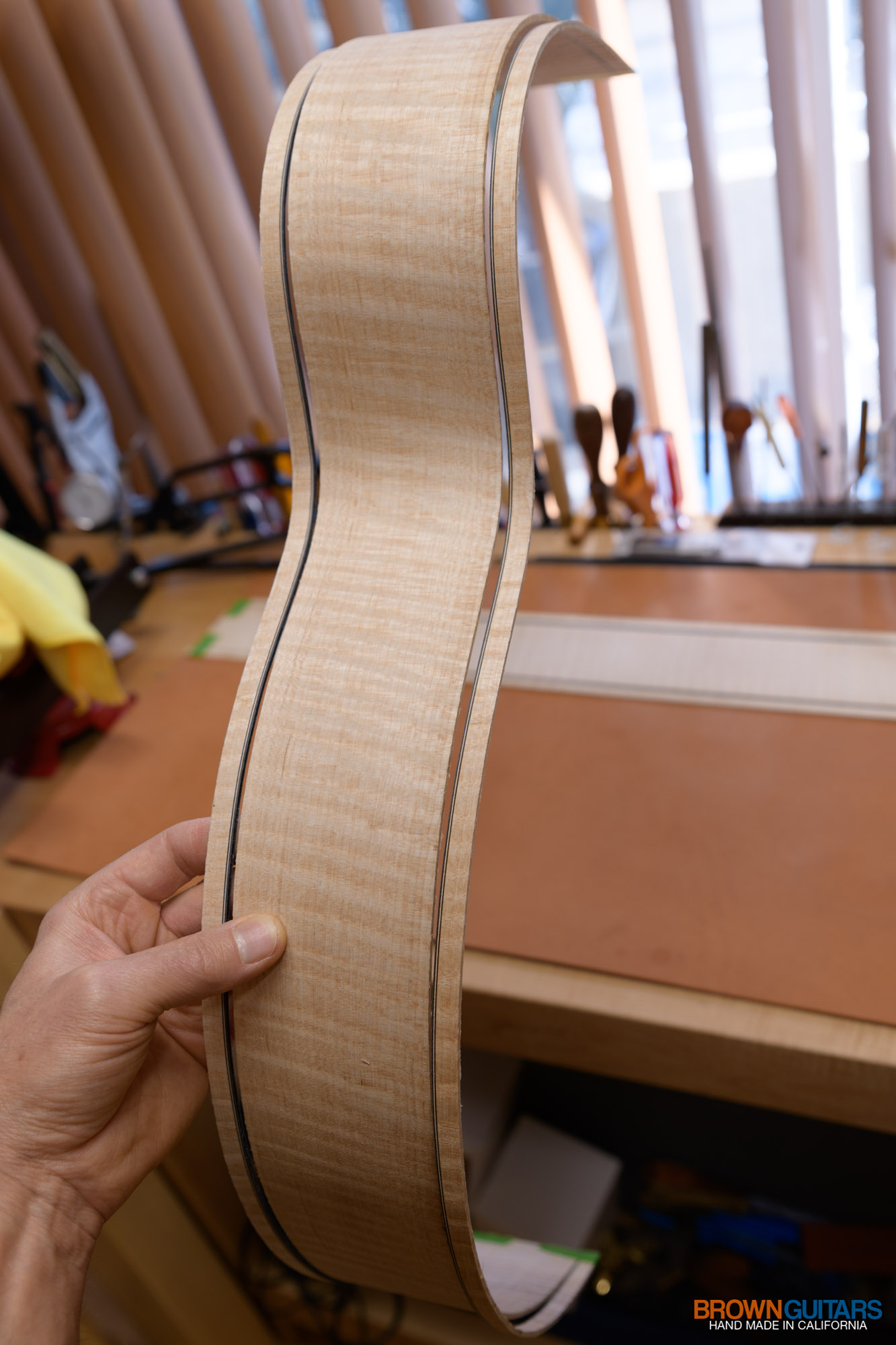 Unlike factory-built guitars that rely on synthetic plastic bindings, Tad uses durable, solid wood bindings that age gracefully and support the instrument’s natural voice. Also, by employing the classic technique of solid linings rather than standard kerfed linings, the top, back, and sides are joined as a single, cohesive, highly resonant body with superior structural integrity.
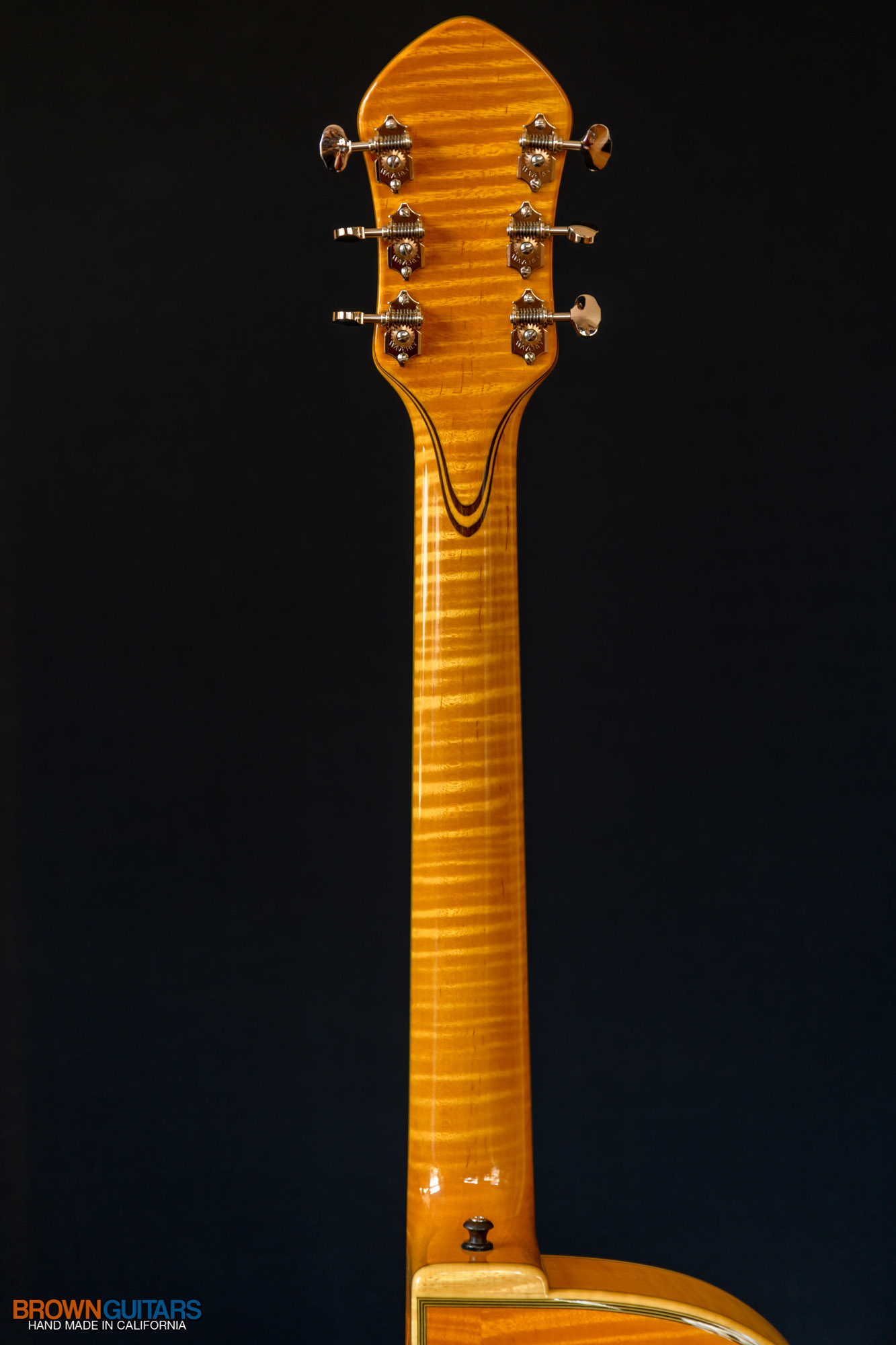
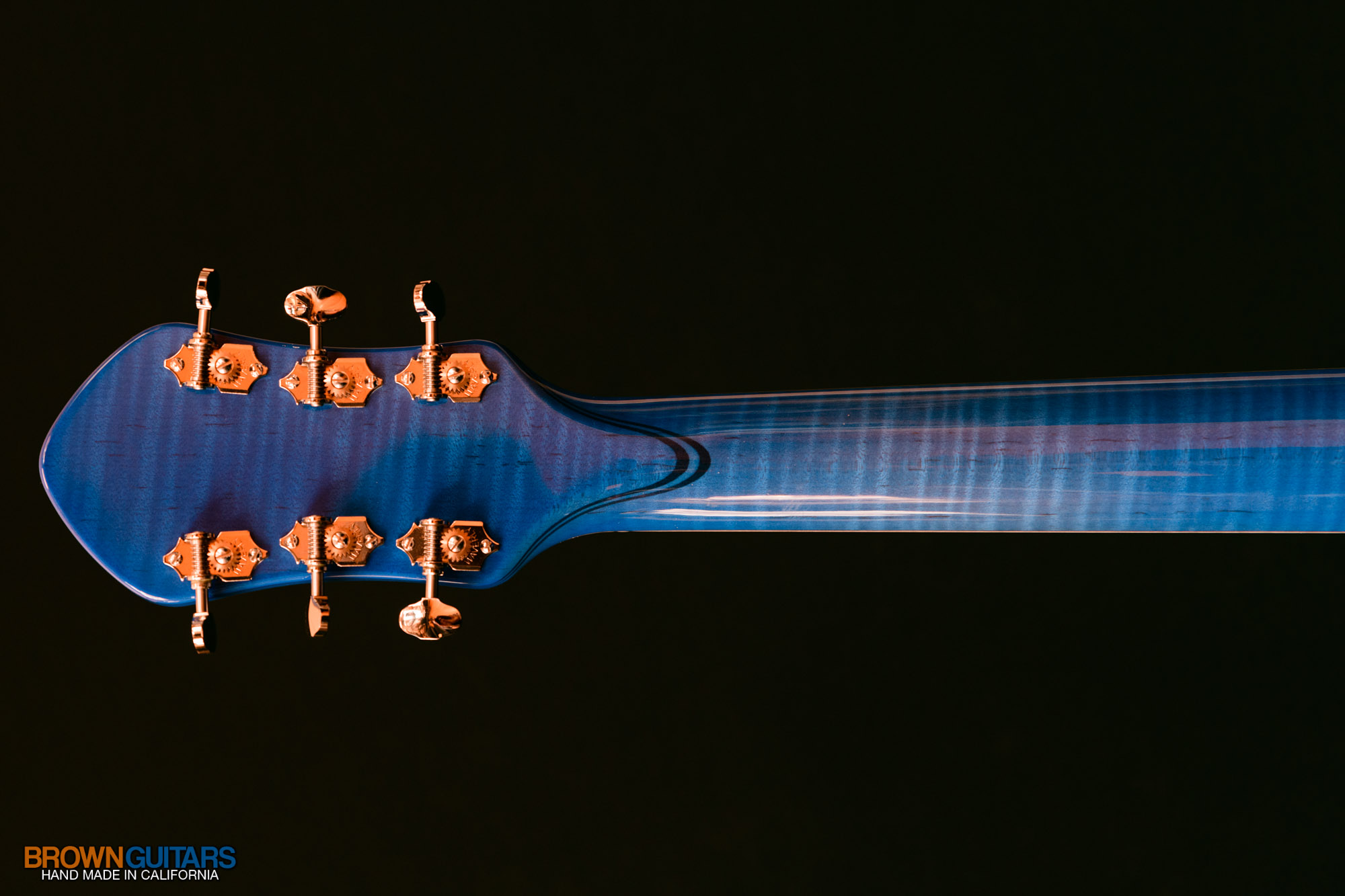
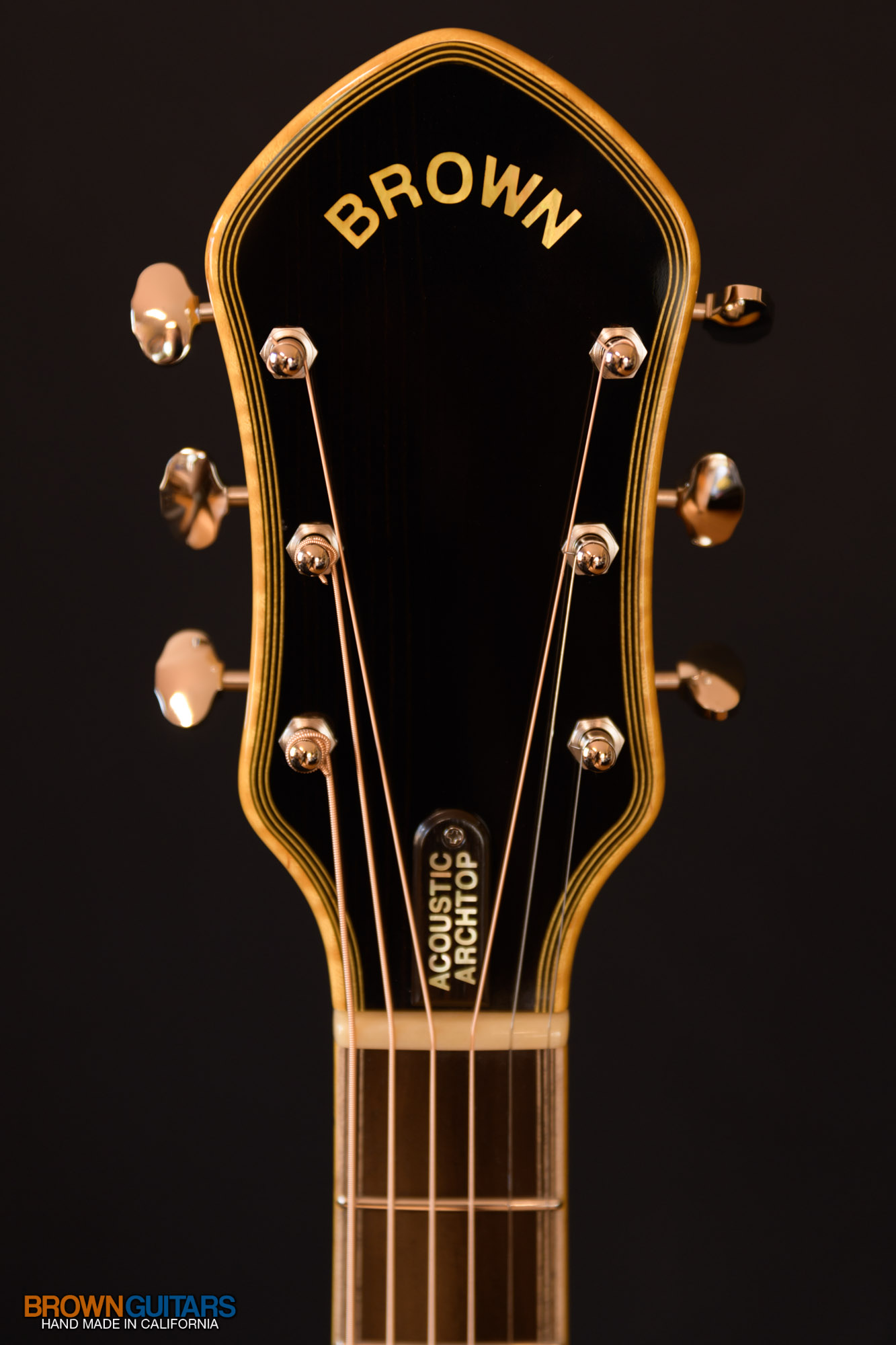
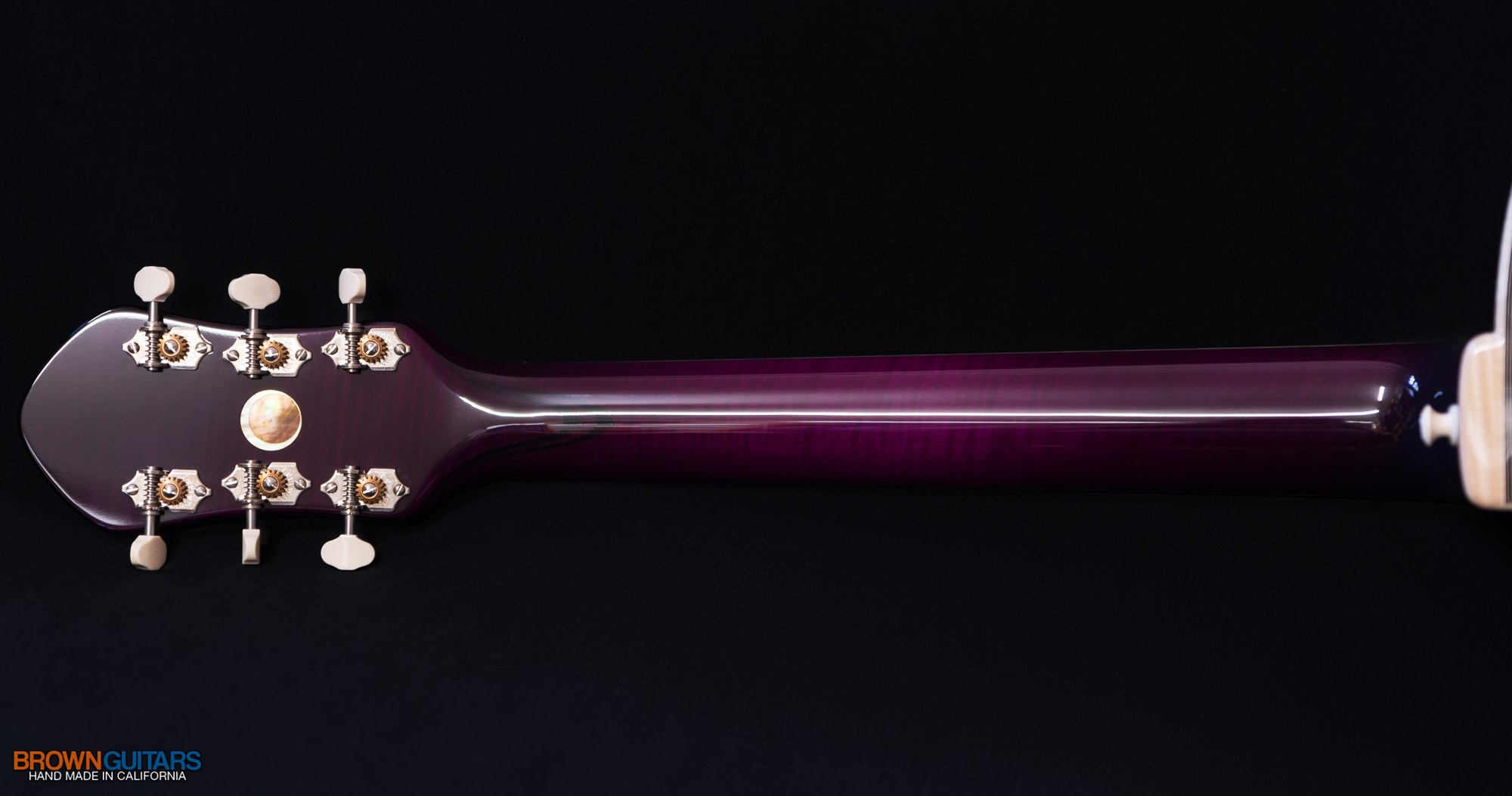
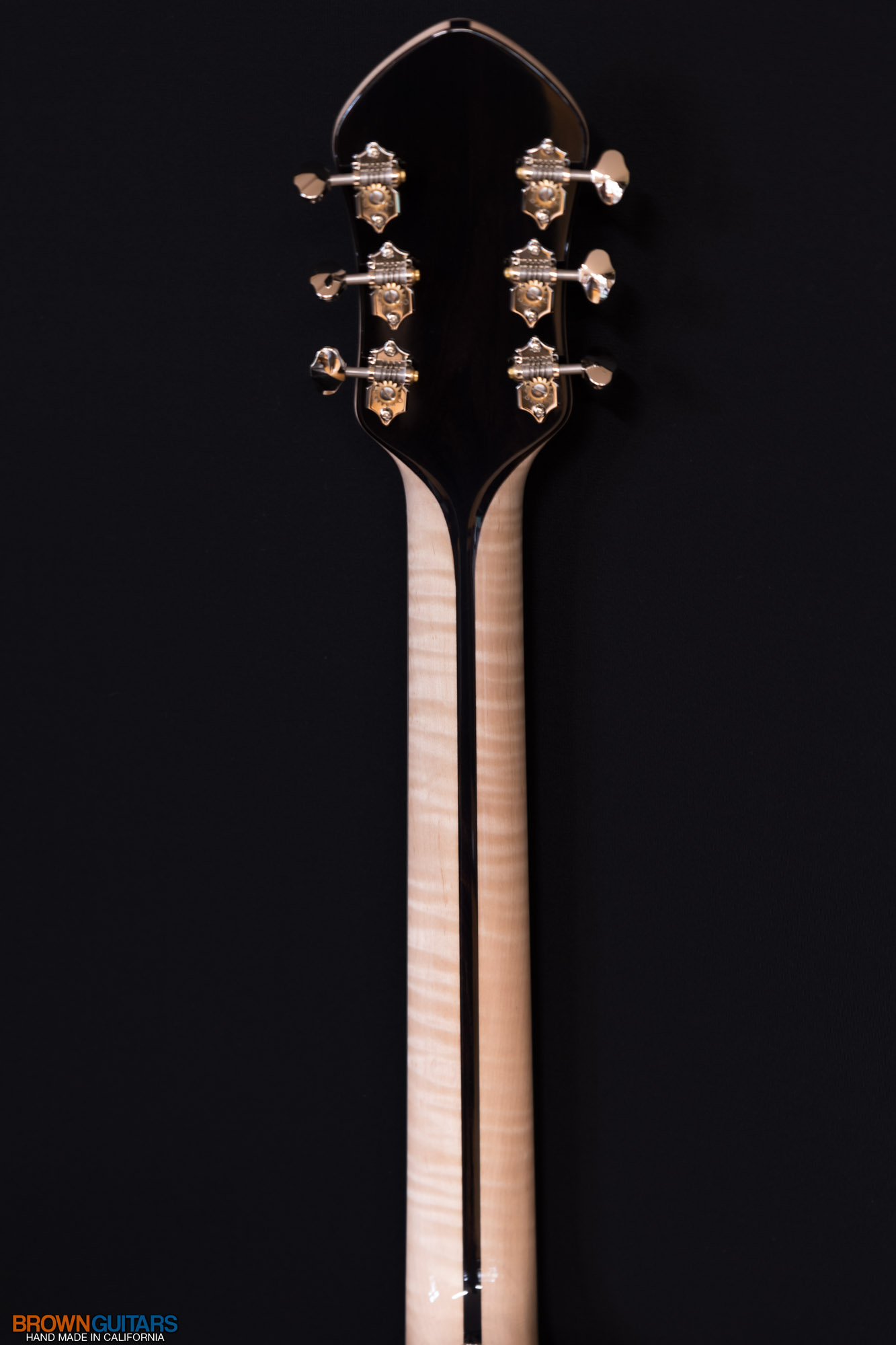
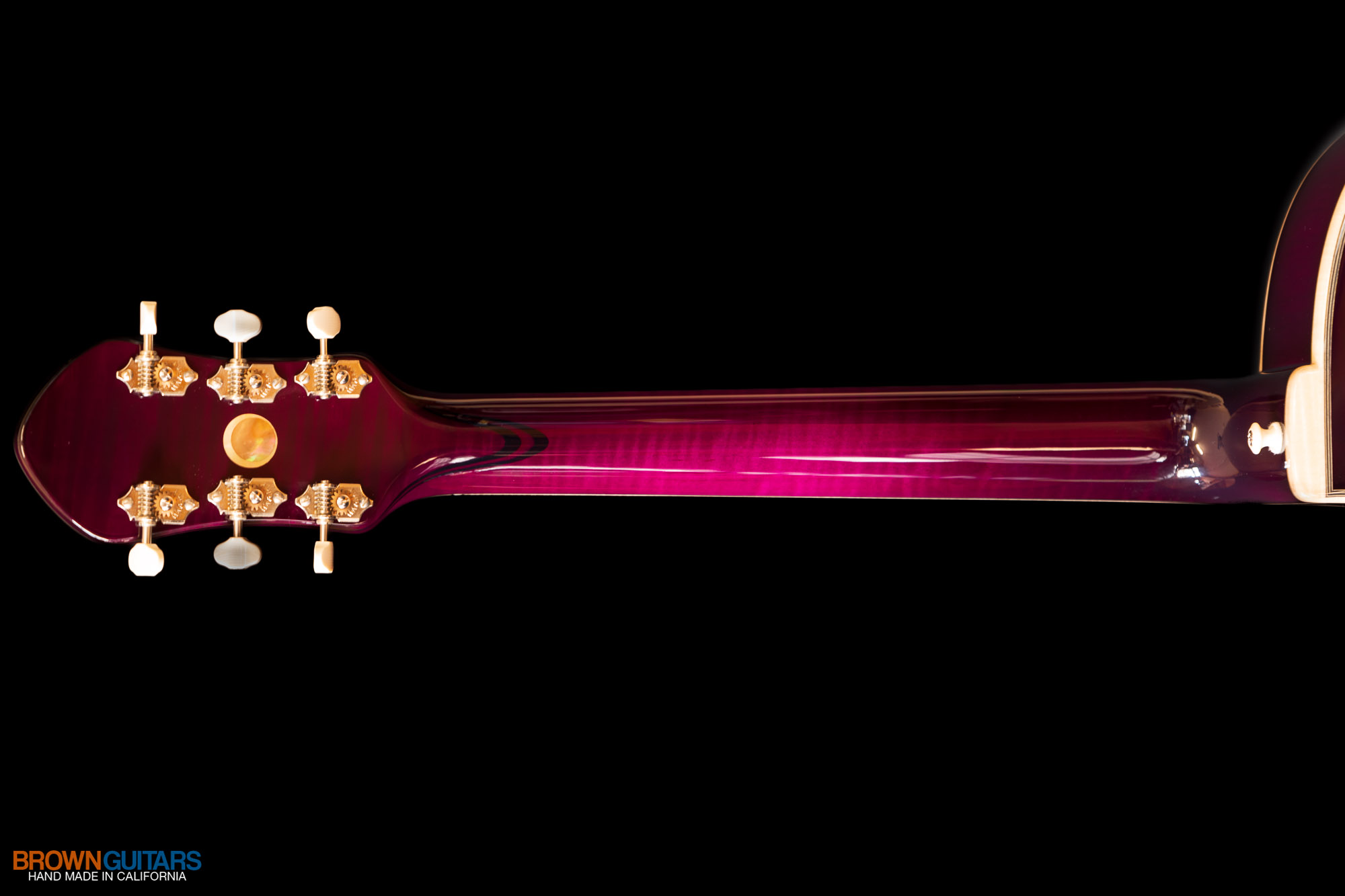
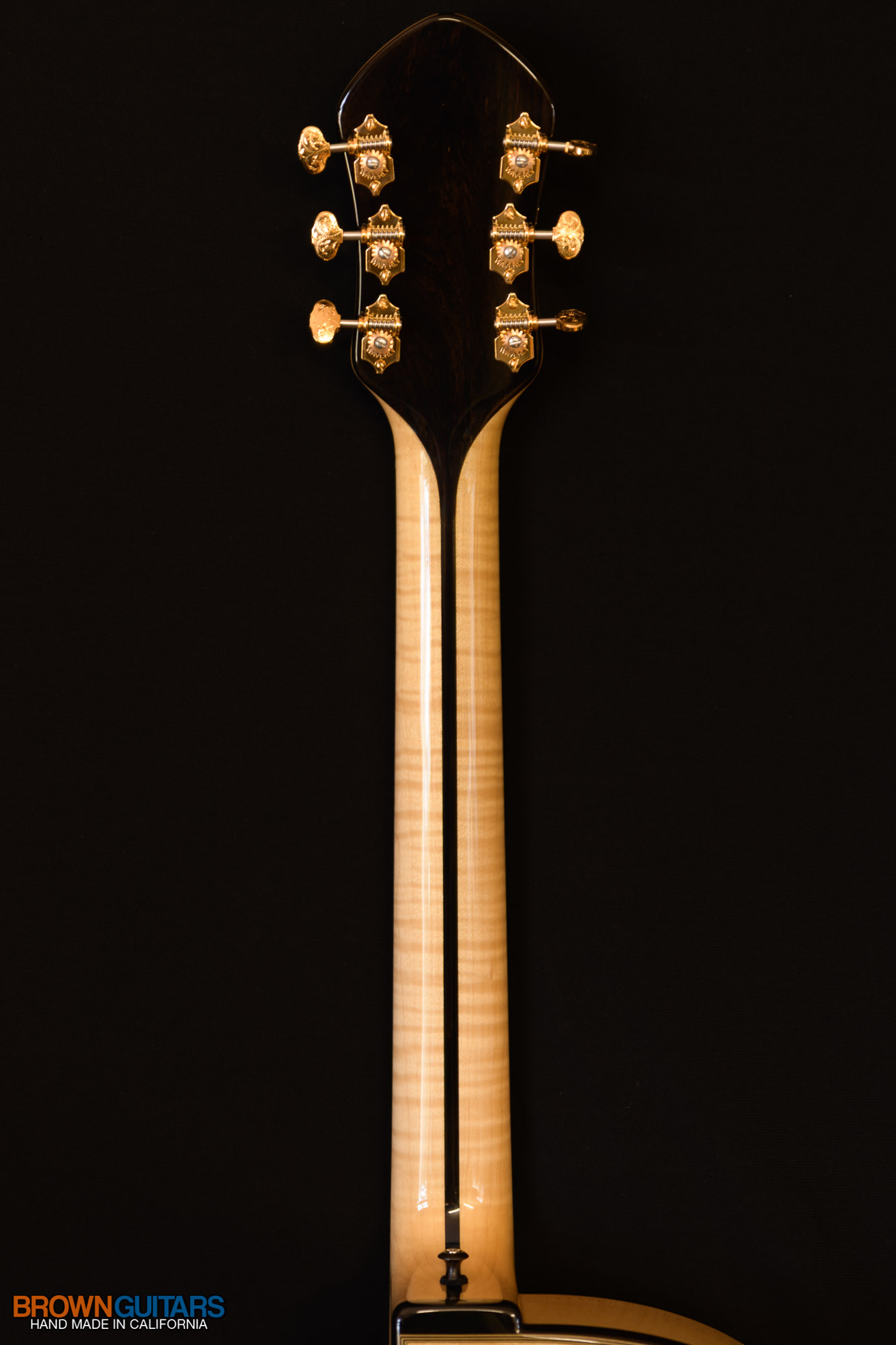
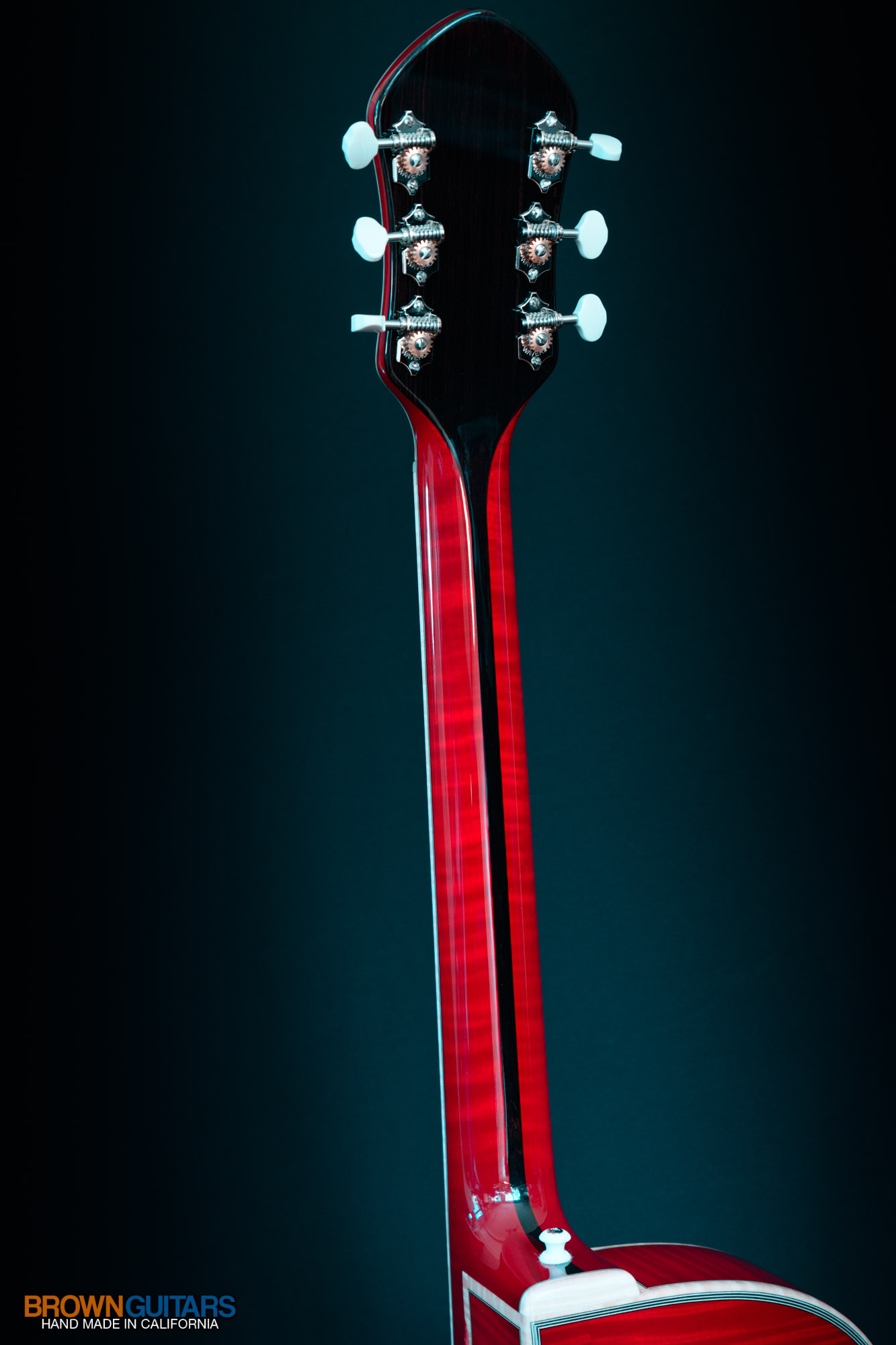
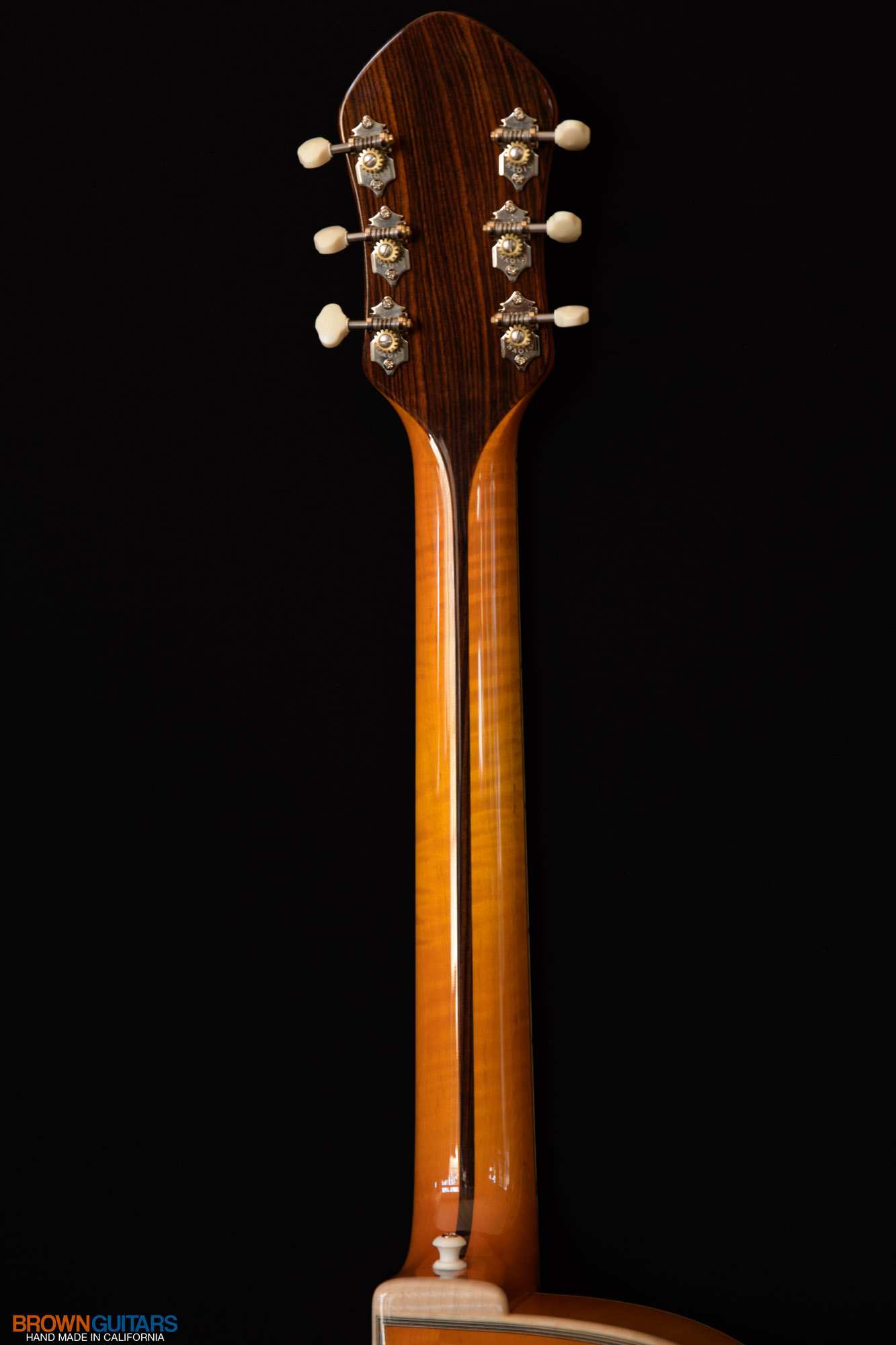
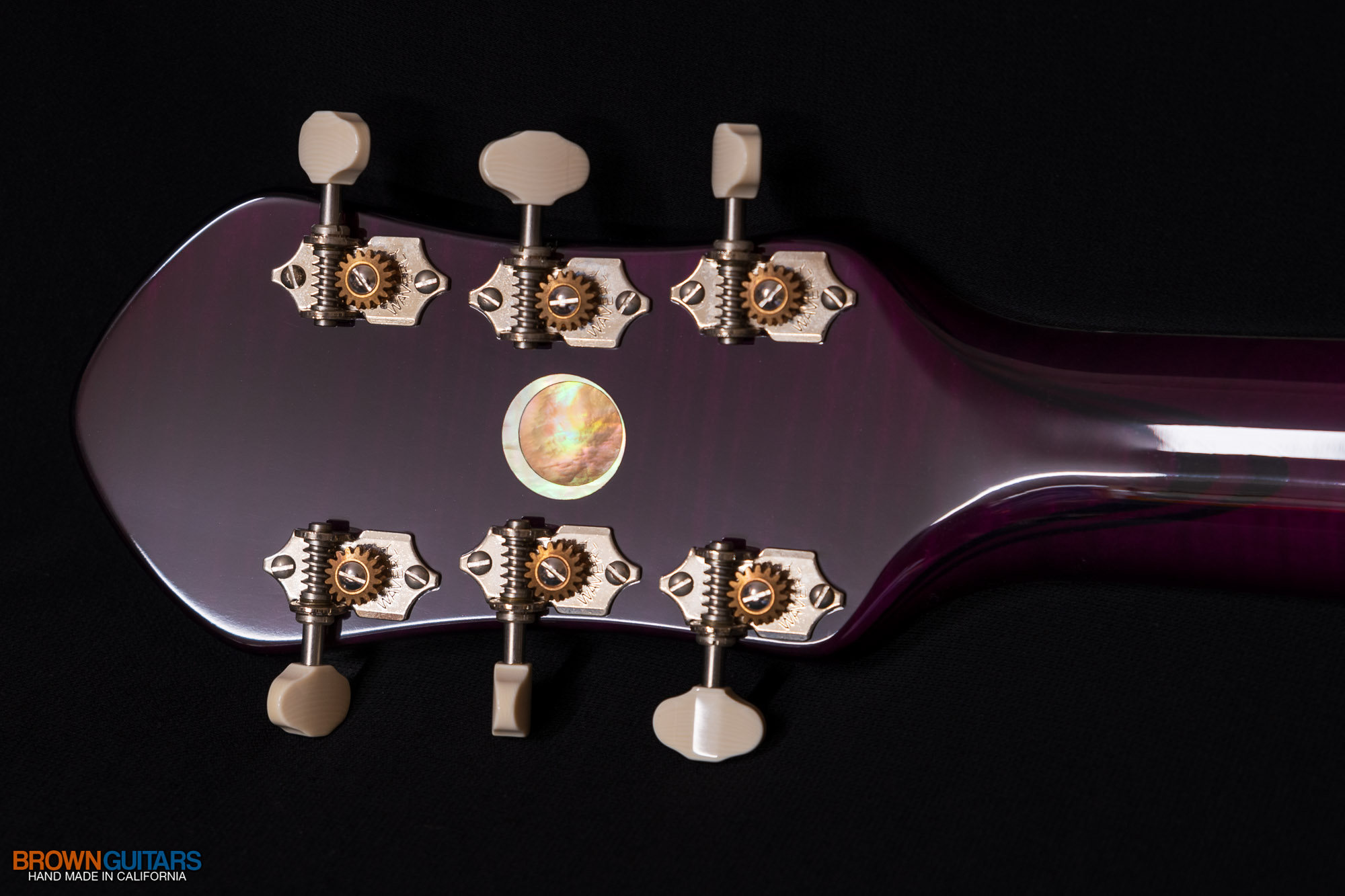
To prevent neck warpage and headstock weakness, twin carbon fiber rods run the entire length of the neck and extend directly into the headstock. This added rigidity locks in neck stability, enhances energy transfer, and ensures optimum playability for decades to come.
Working alongside these carbon fiber rods is a traditional single-action compression truss rod. While there are modern dual-action alternatives, Tad specifically uses a traditional single-action rod installed in a precisely milled curved slot. This historical design is engineered to apply pressure exactly where the neck needs support to bend evenly, preventing the high spots and uneven humps common in mass-produced instruments.
While some modern builders use two-way rods as a safety net for unstable wood, many knowledgeable pro players and vintage guitar experts swear that the single compression rod is part of what makes historic instruments sound so great—a difference you can easily hear when you play and tap on the neck. A solid 3/16-inch steel rod compresses the neck shaft with an anchor and nut, actively contributing to the overall rigidity and sound transmission of the neck.
In contrast, modern two-way truss rods act very differently on the wood. Tightening a two-way rod causes the rod itself to bend within a sleeve, applying uneven pressure on the wood at focal hot spots that can sometimes rattle and introduce an unwanted S-curve to the fingerboard. A single-action compression rod is simply the lightest, most acoustically vibrant way to build a neck.
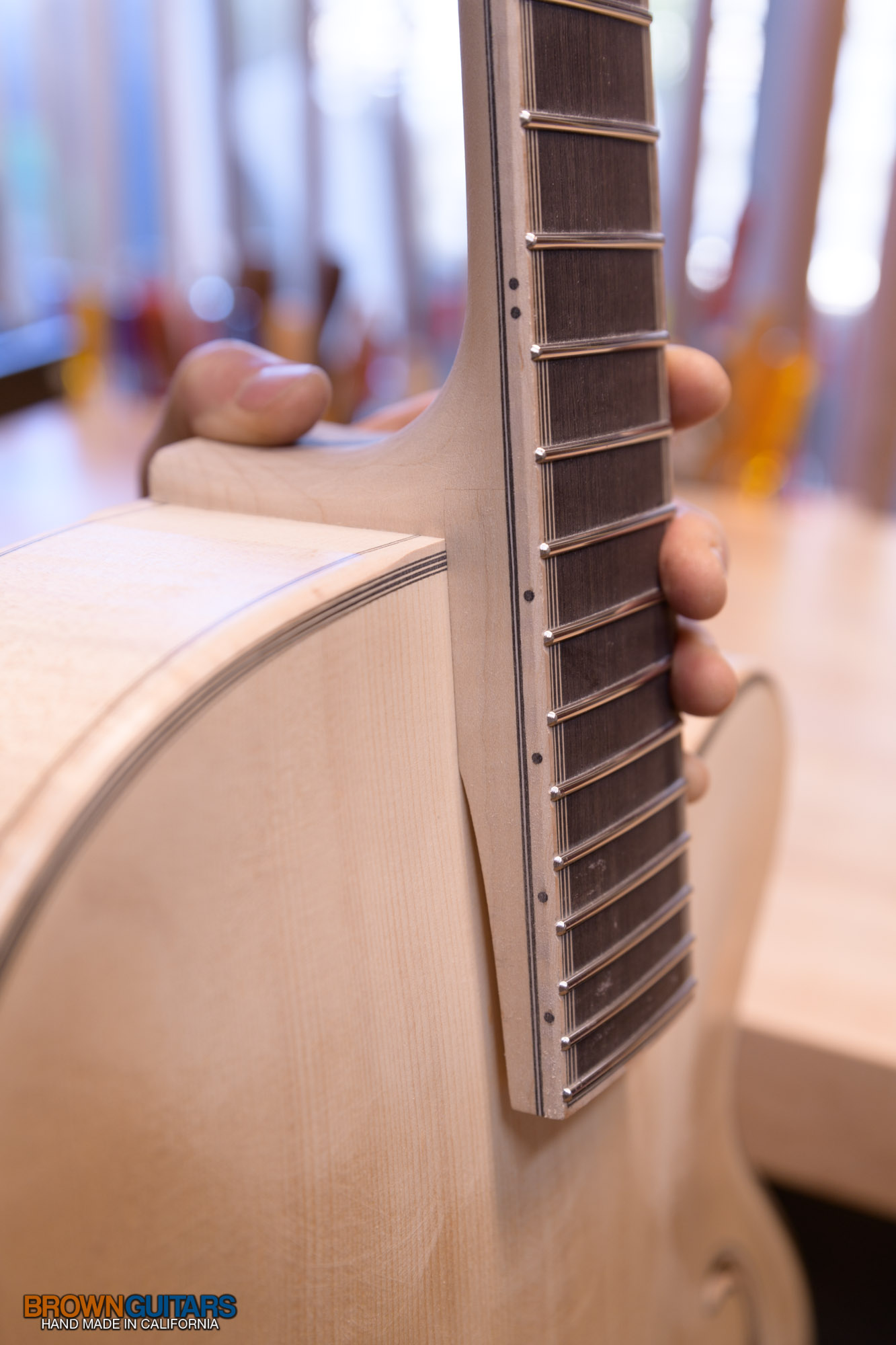 While bolt-on necks and adjustable-height neck hinges have gained popularity among modern builders, Tad remains dedicated to the time-tested straight dovetail joint. Achieving a perfect dovetail is an arduous, painstaking process that requires precision hand-fitting, but the result is unmatched: once the joint is locked and the glue cures, the neck and body become a single, cohesive structure. There are no air gaps, mechanical clutter, or energy loss—just pure, 100% sound transmission from the fingerboard straight into the body.
Bolt-on necks, while convenient for factory assembly line production, introduce structural tradeoffs. Threaded metal inserts installed into the neck’s tenon can loosen over years of string tension. Similarly, complex mechanism-driven adjustable neck joints operate on the assumption that an archtop requires constant action height tweaks. In reality, a carved archtop top plate is inherently more stable and resilient to environmental shifts than a thin, flat-top acoustic or classical guitar. Seasonal action adjustments are minor and easily managed, making complex neck mechanisms unnecessary. A hand-fit, traditional dovetail remains the strongest, lightest, and most acoustically vibrant neck joint ever designed.
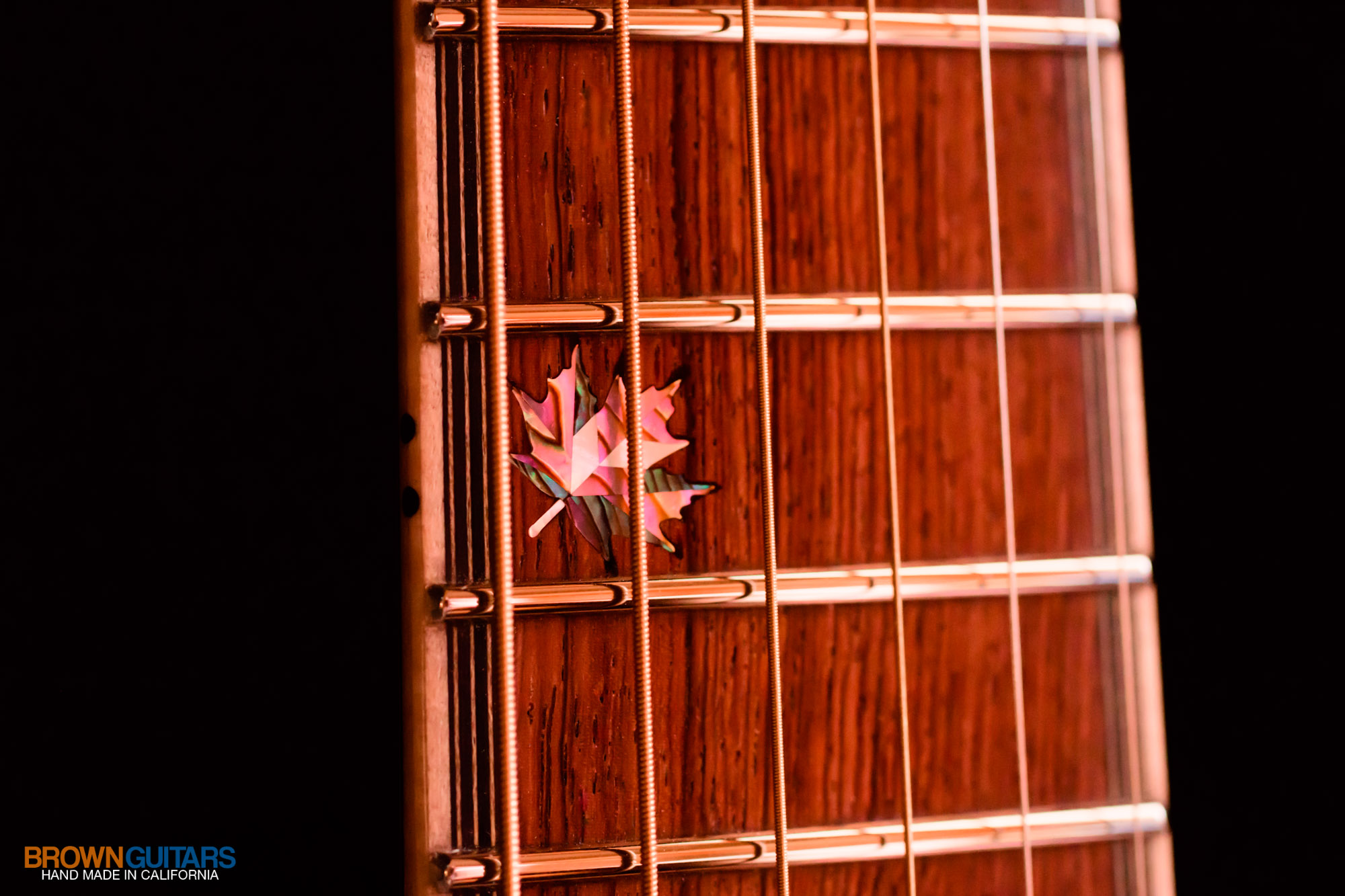
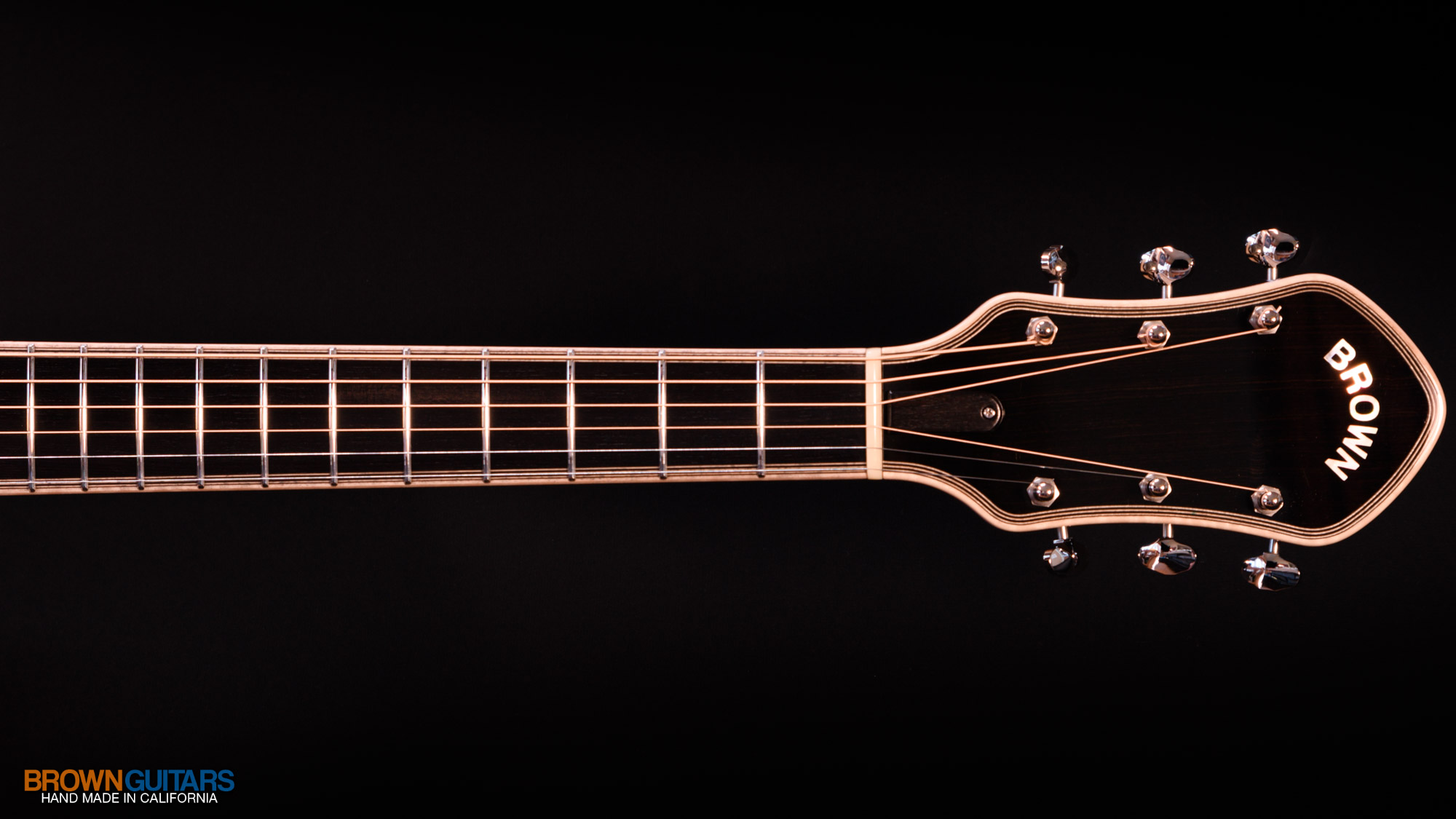
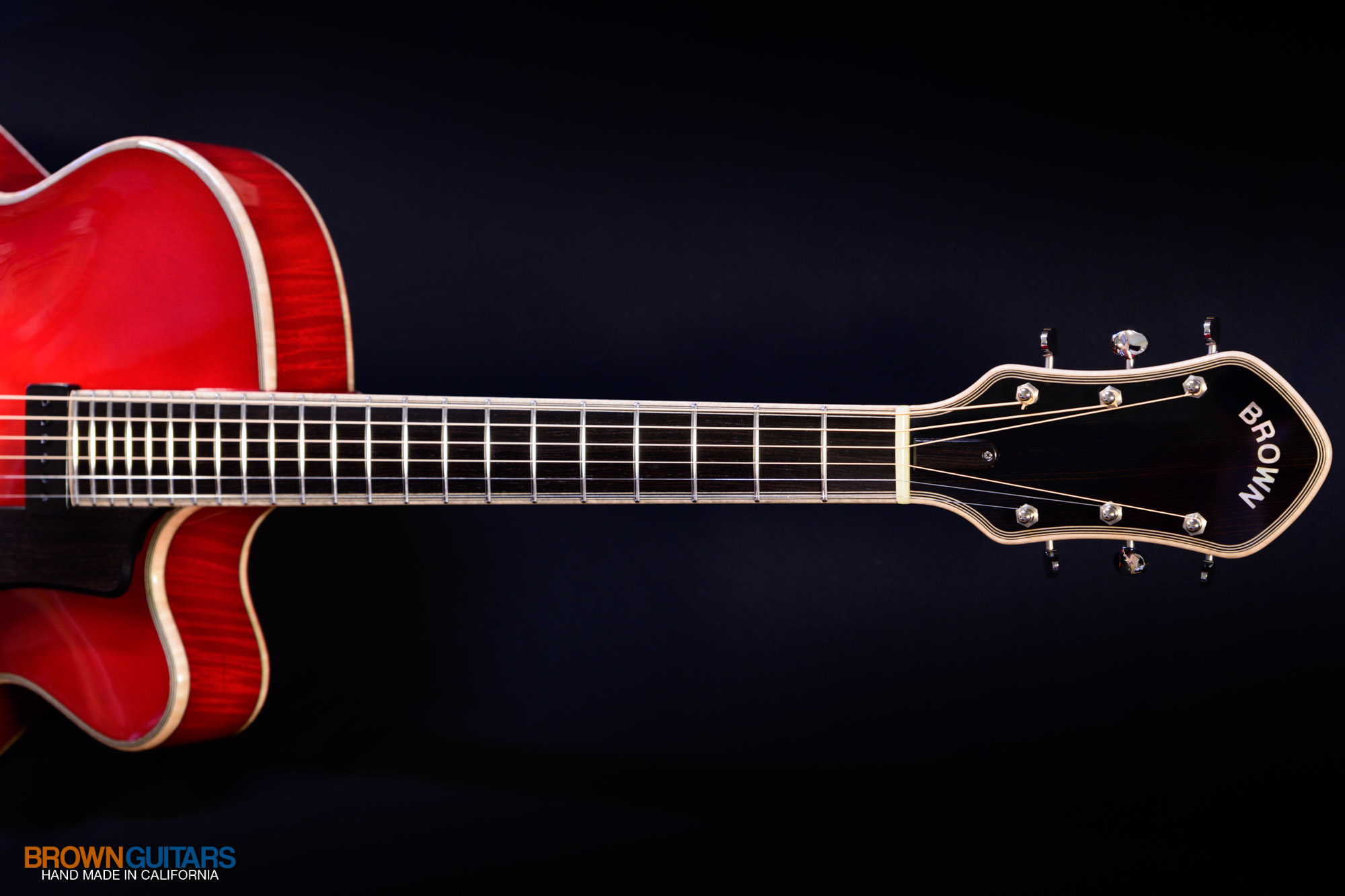
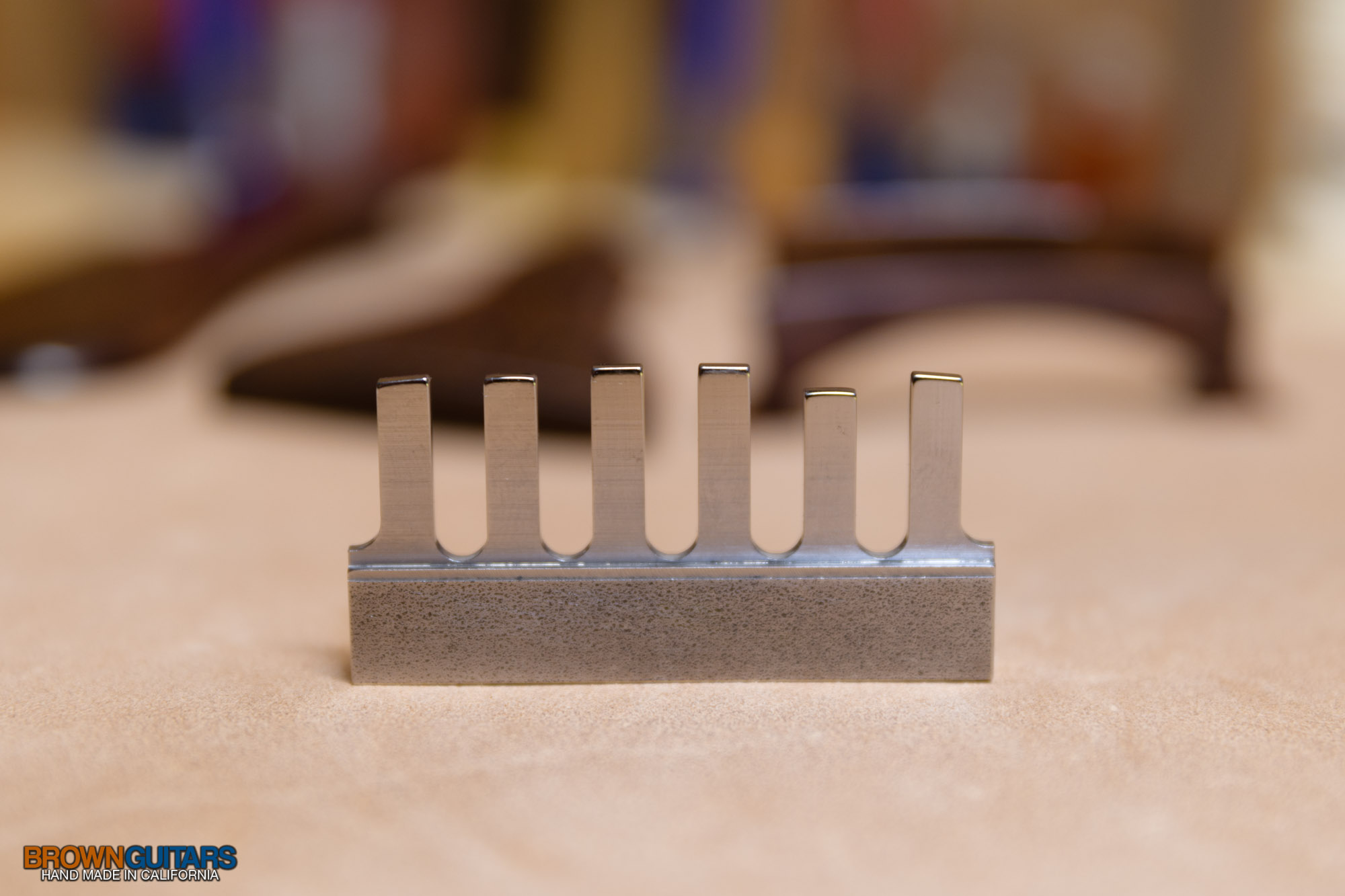
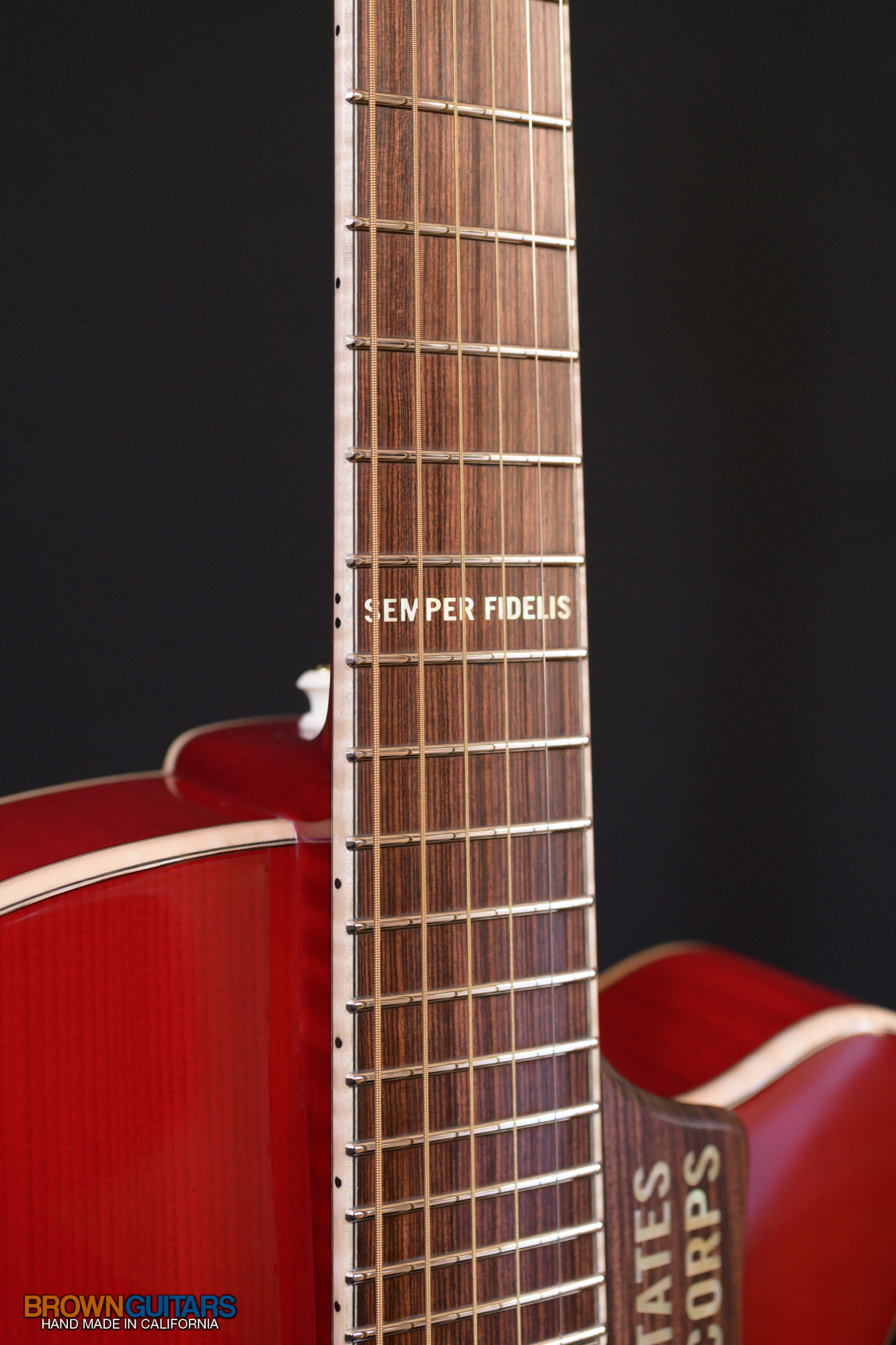
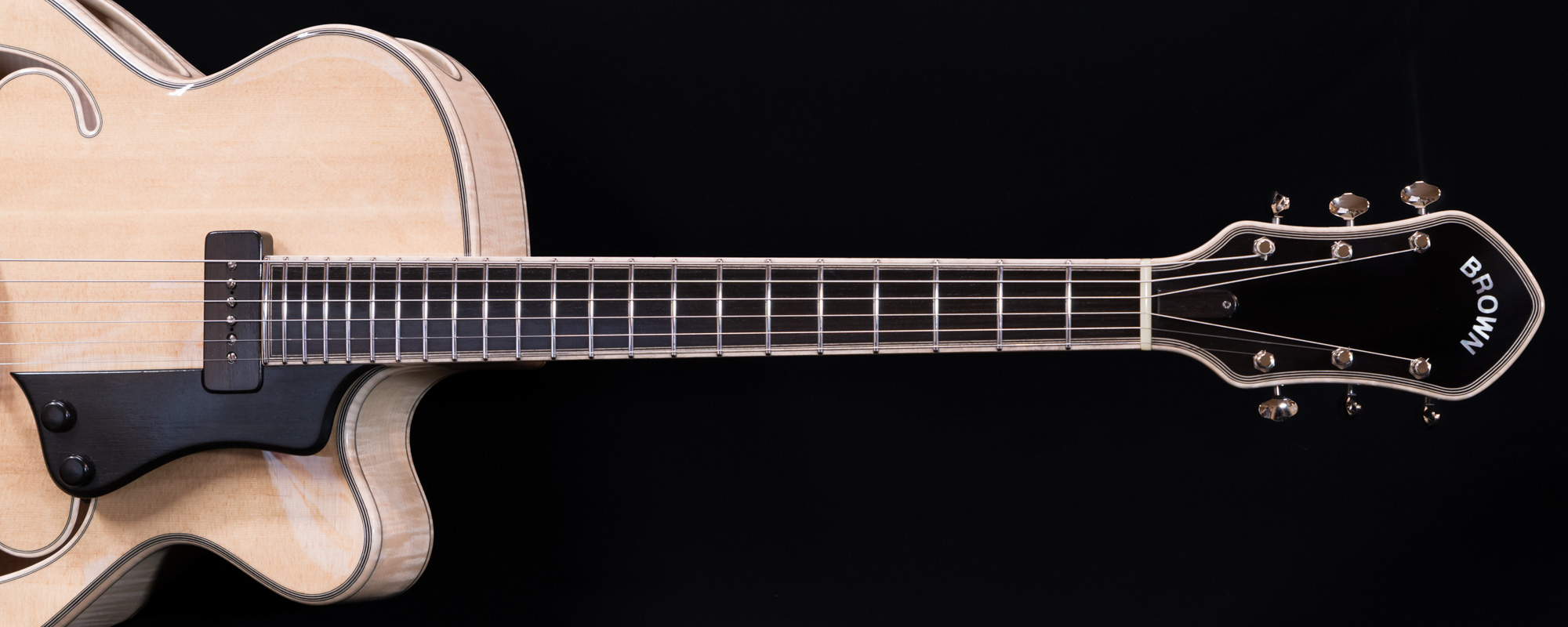 Leveraging decades of specialized setup and repair experience, Tad hand-finishes every fretboard. His guitars feature mirror-polished stainless steel frets with smoothly rounded edges. Unlike traditional nickel-silver frets that wear down and pit, stainless steel maintains a silky glass-like feel and lasting durability through years of intensive playing.
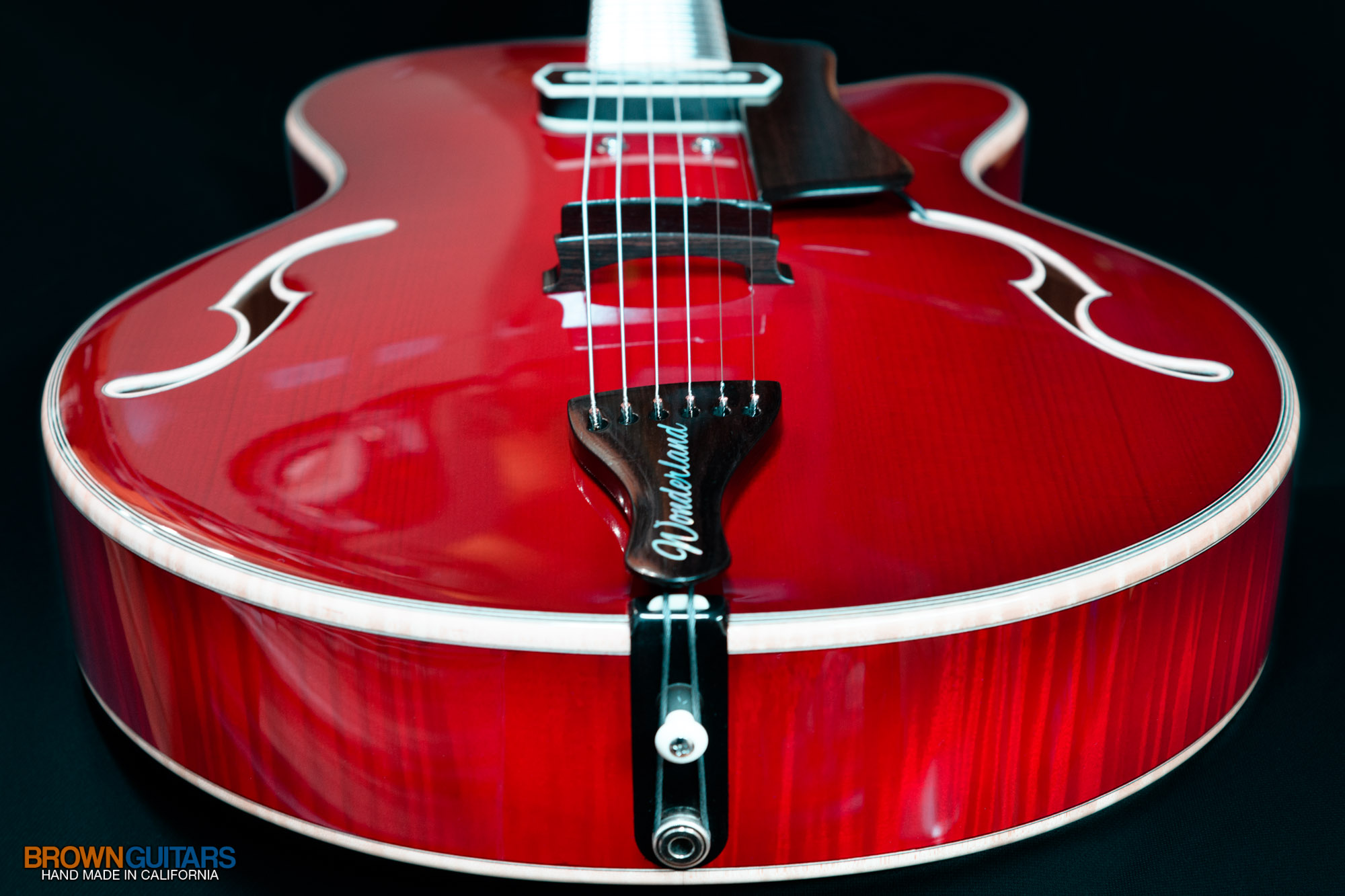
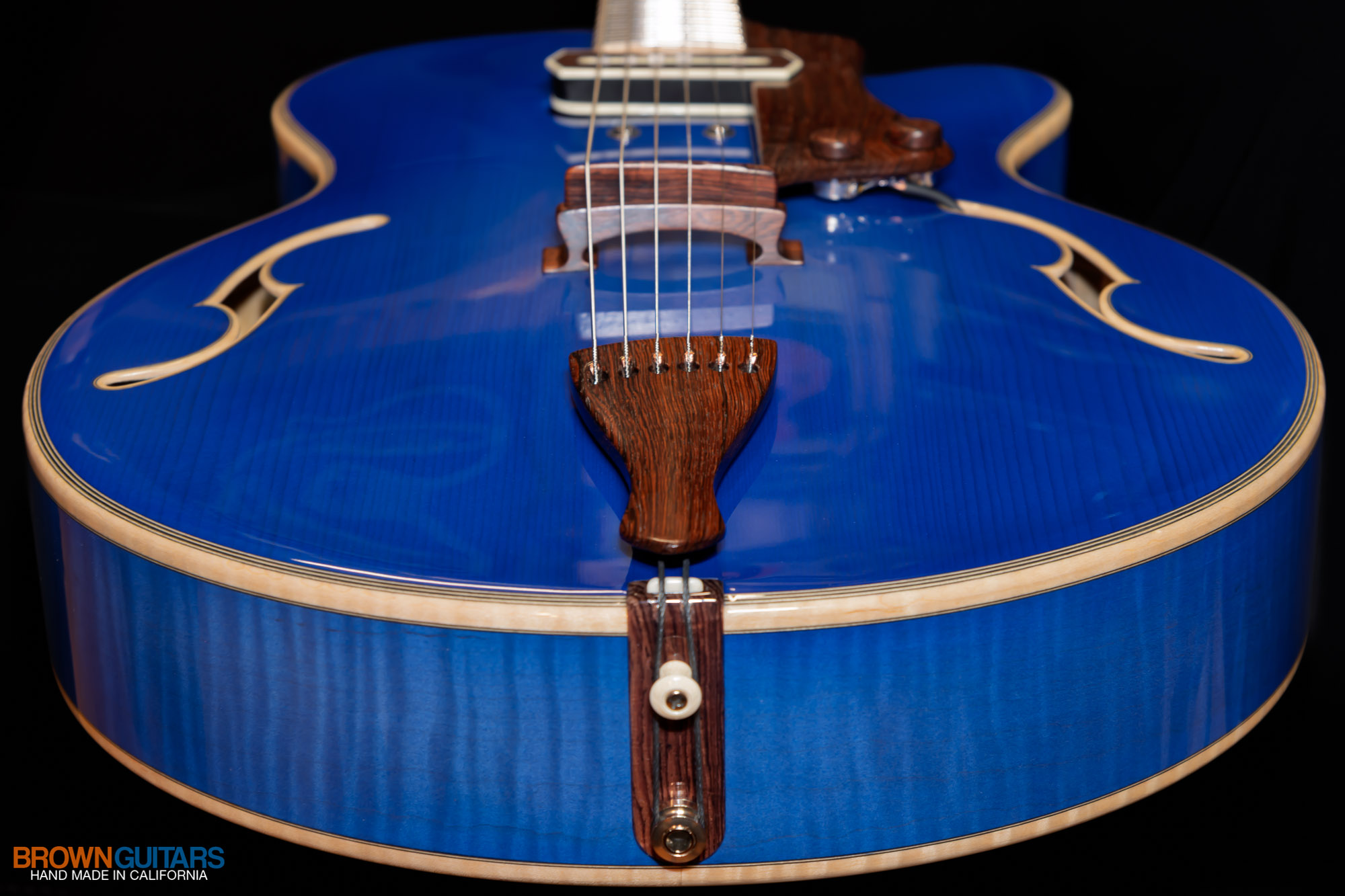
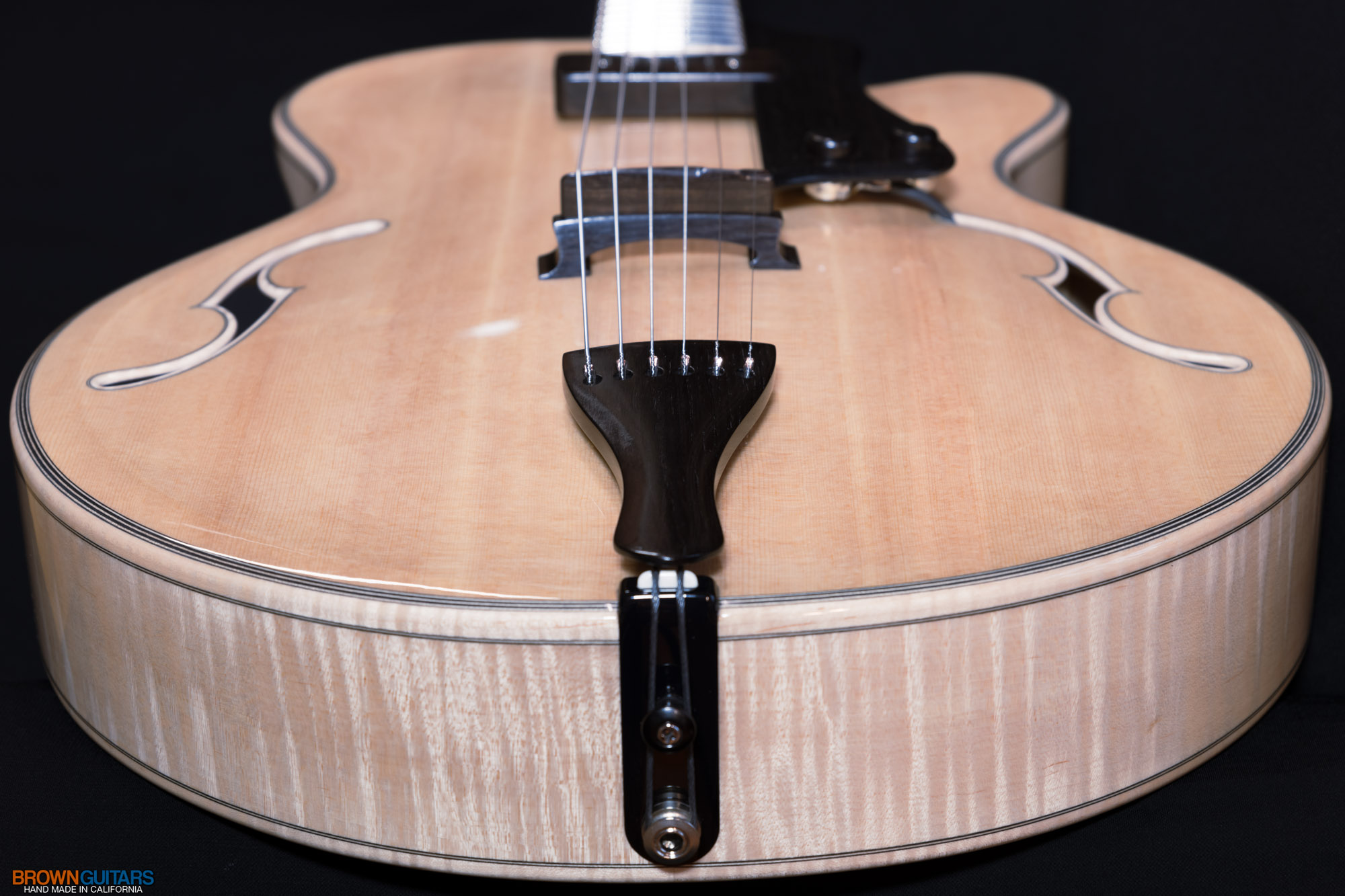
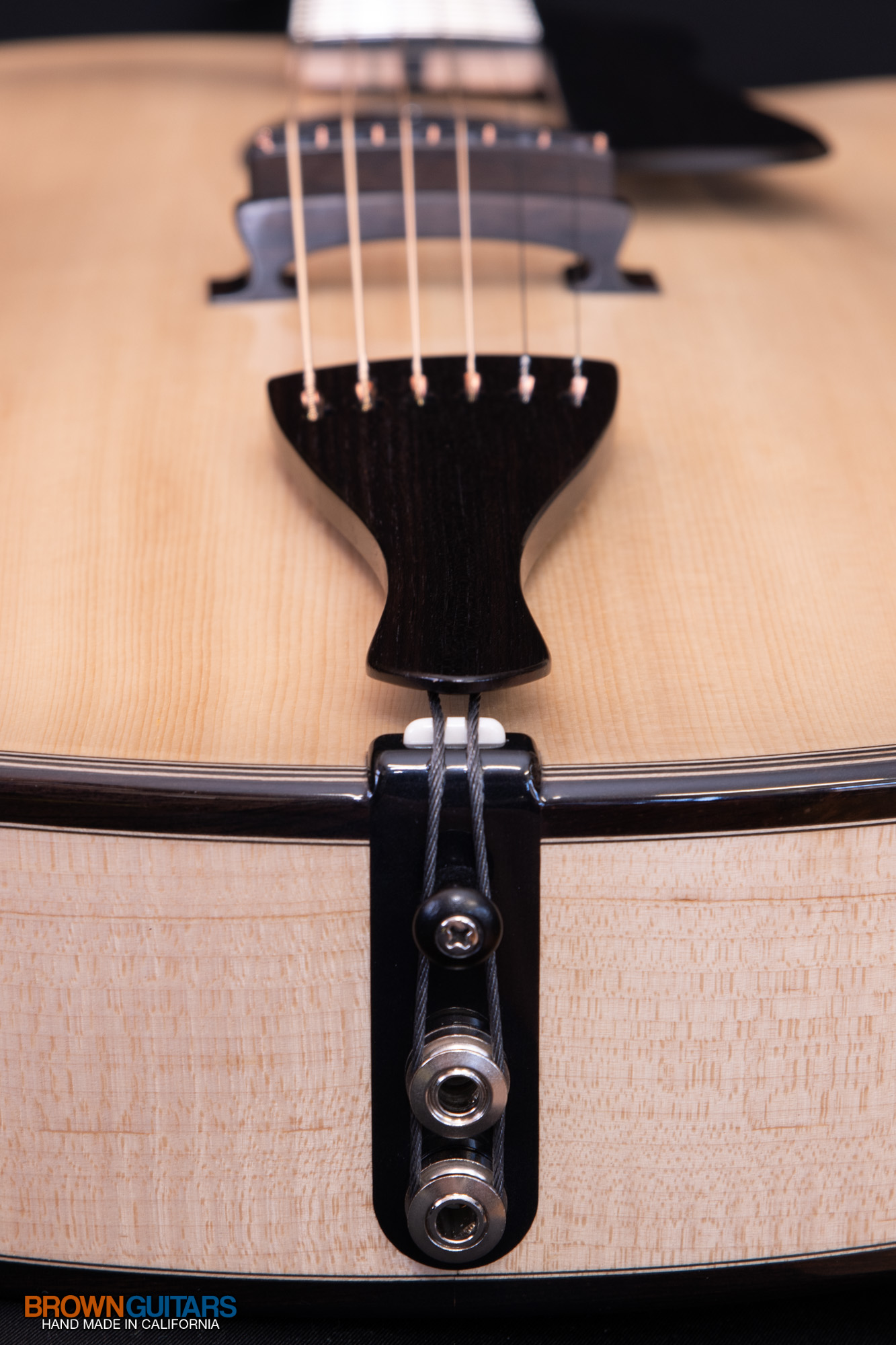 While string afterlength—the distance between bridge and tailpiece—is a critical component of orchestral instrument setup, it is curiously overlooked by most guitar luthiers. Guitars frequently feature random, haphazard afterlengths, forcing players to attach foam or dampers to mute dissonant “wolf tones” caused by afterlengths vibrating out of sync with the main scale length. Tad eliminates this problem by tuning the string afterlengths to exactly 1/6th of the scale length, mirroring the golden proportions of the violin family. Instead of choking string vibration, this precise tuning harmonizes the afterlengths with the scale, transforming potential unwanted noise into rich, expressive overtones that bloom naturally to complement every note.
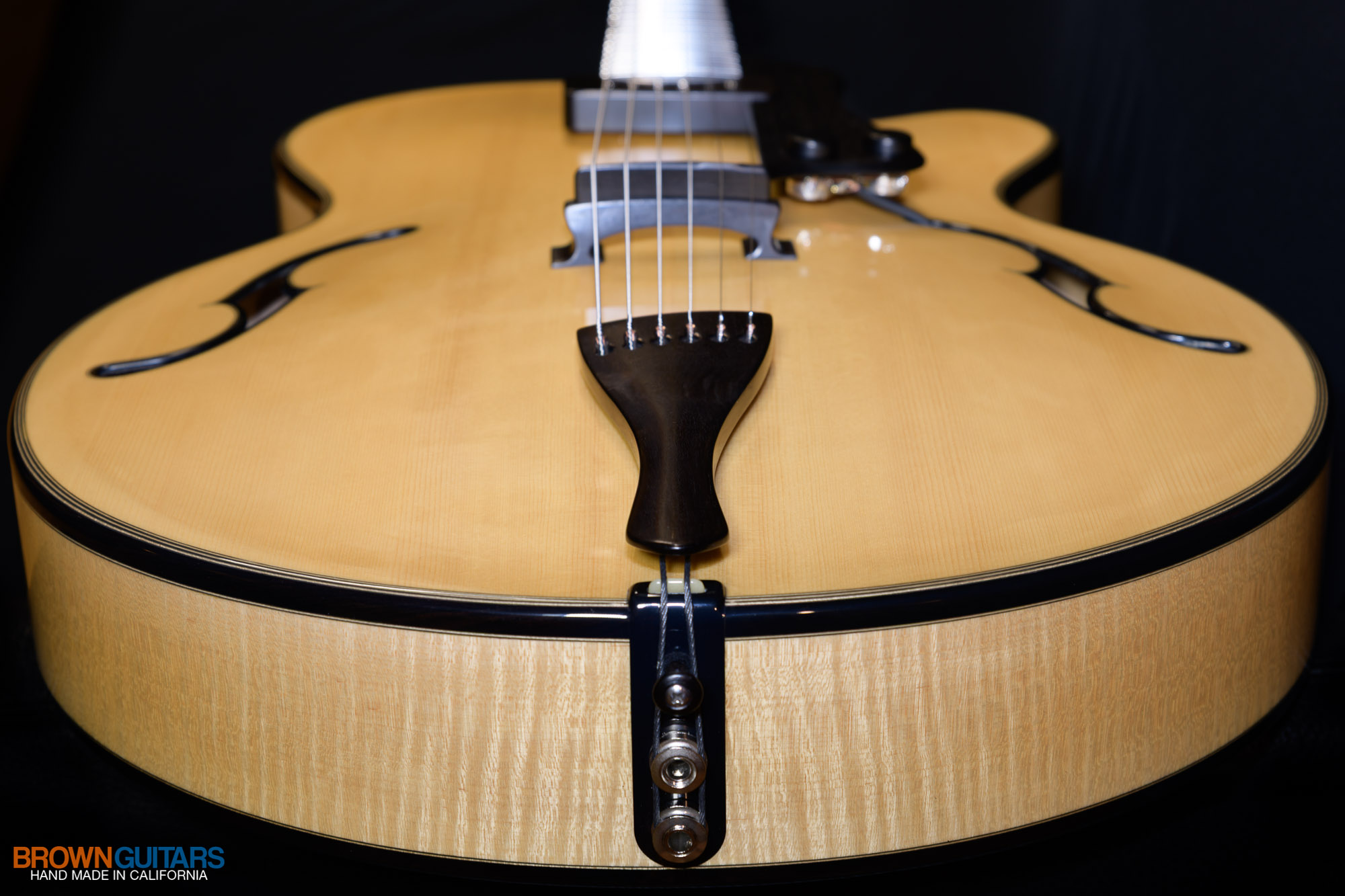
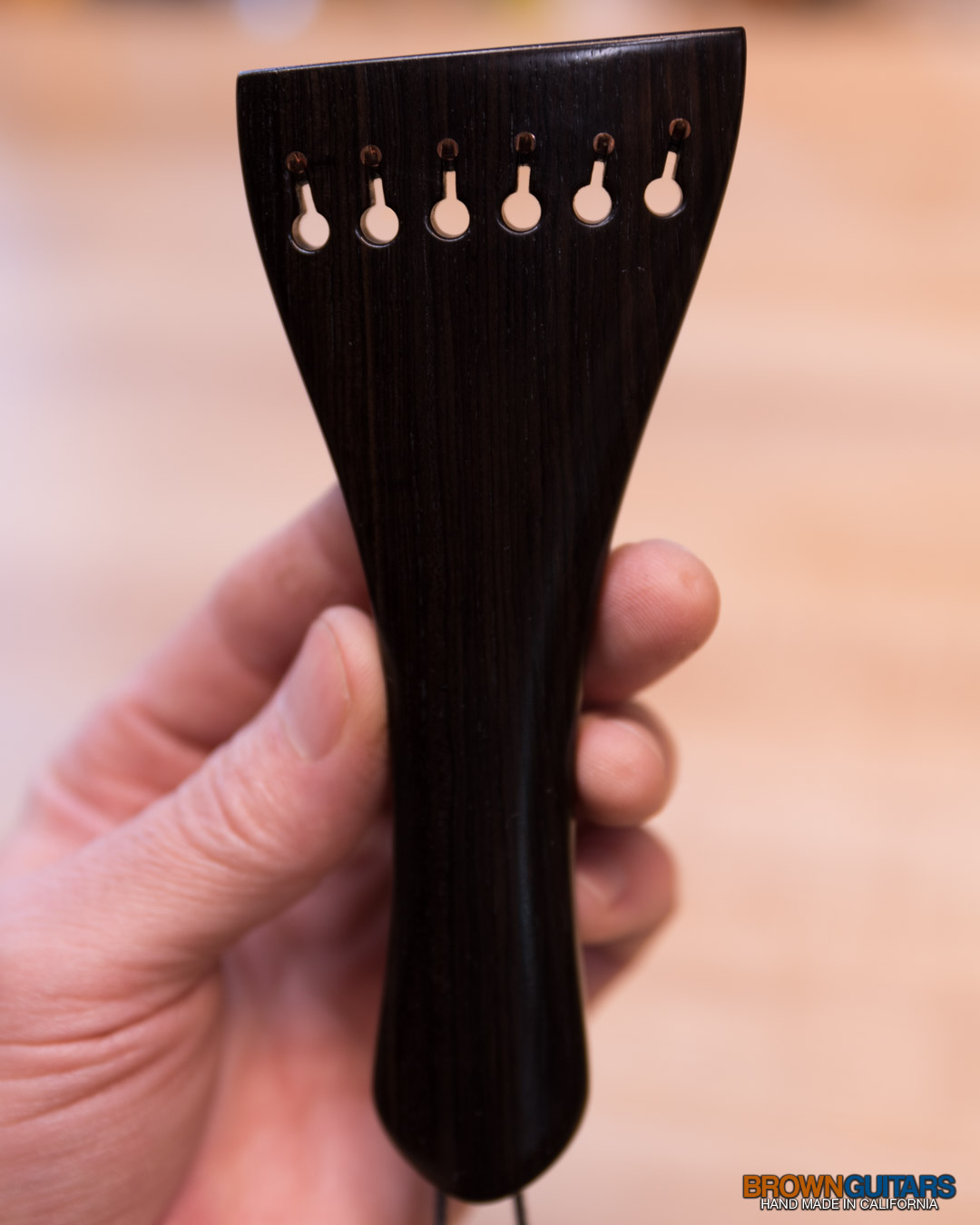
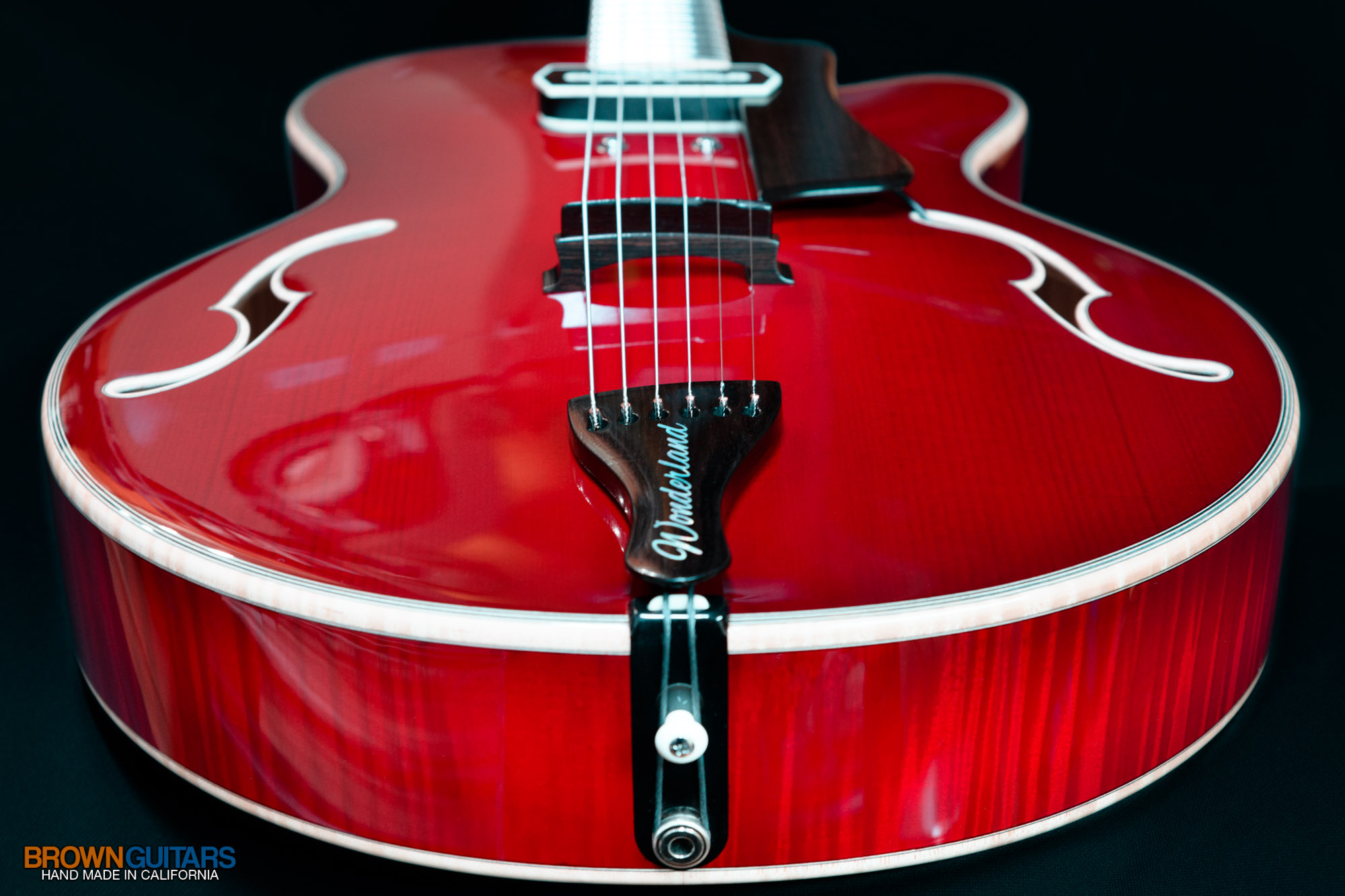
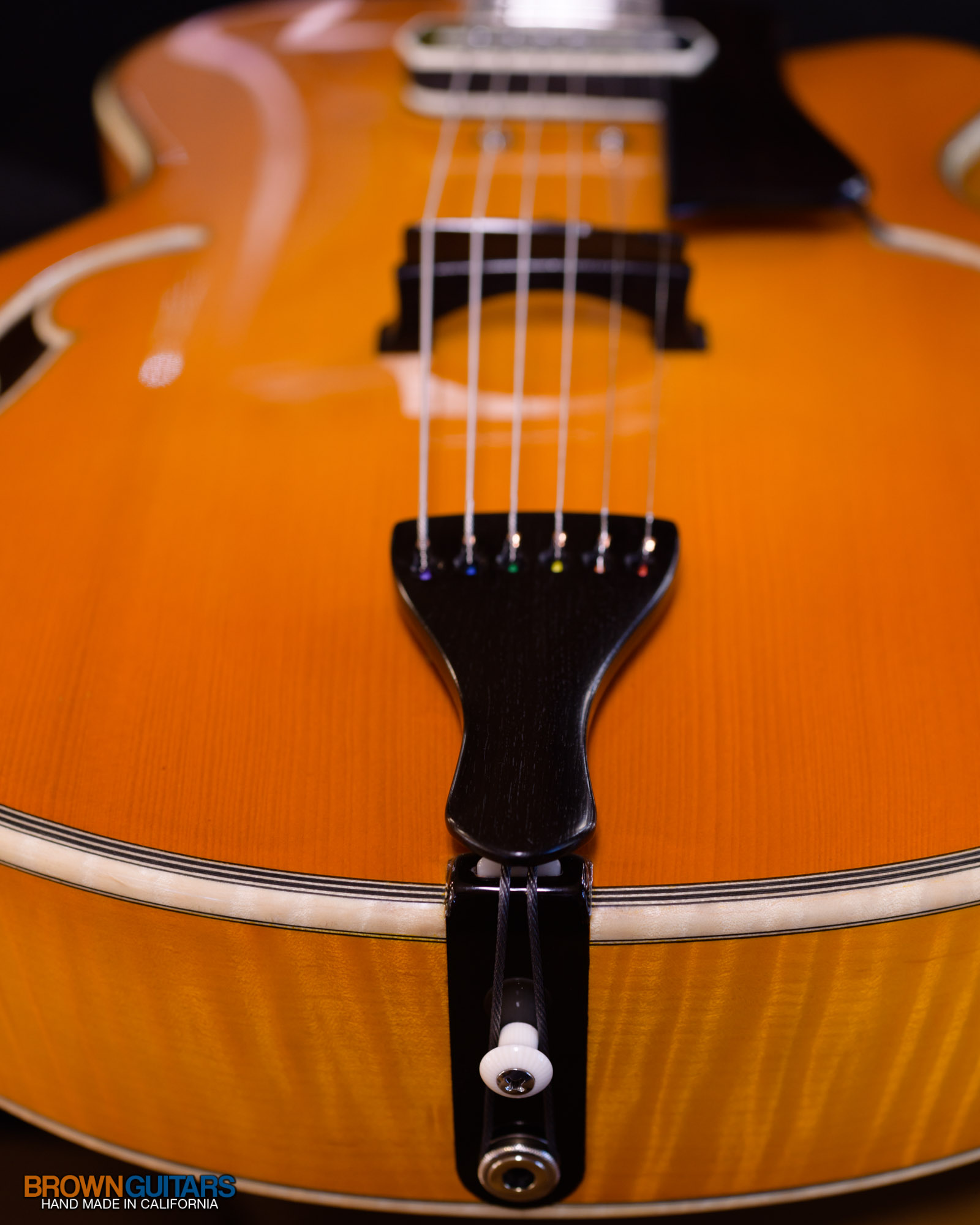
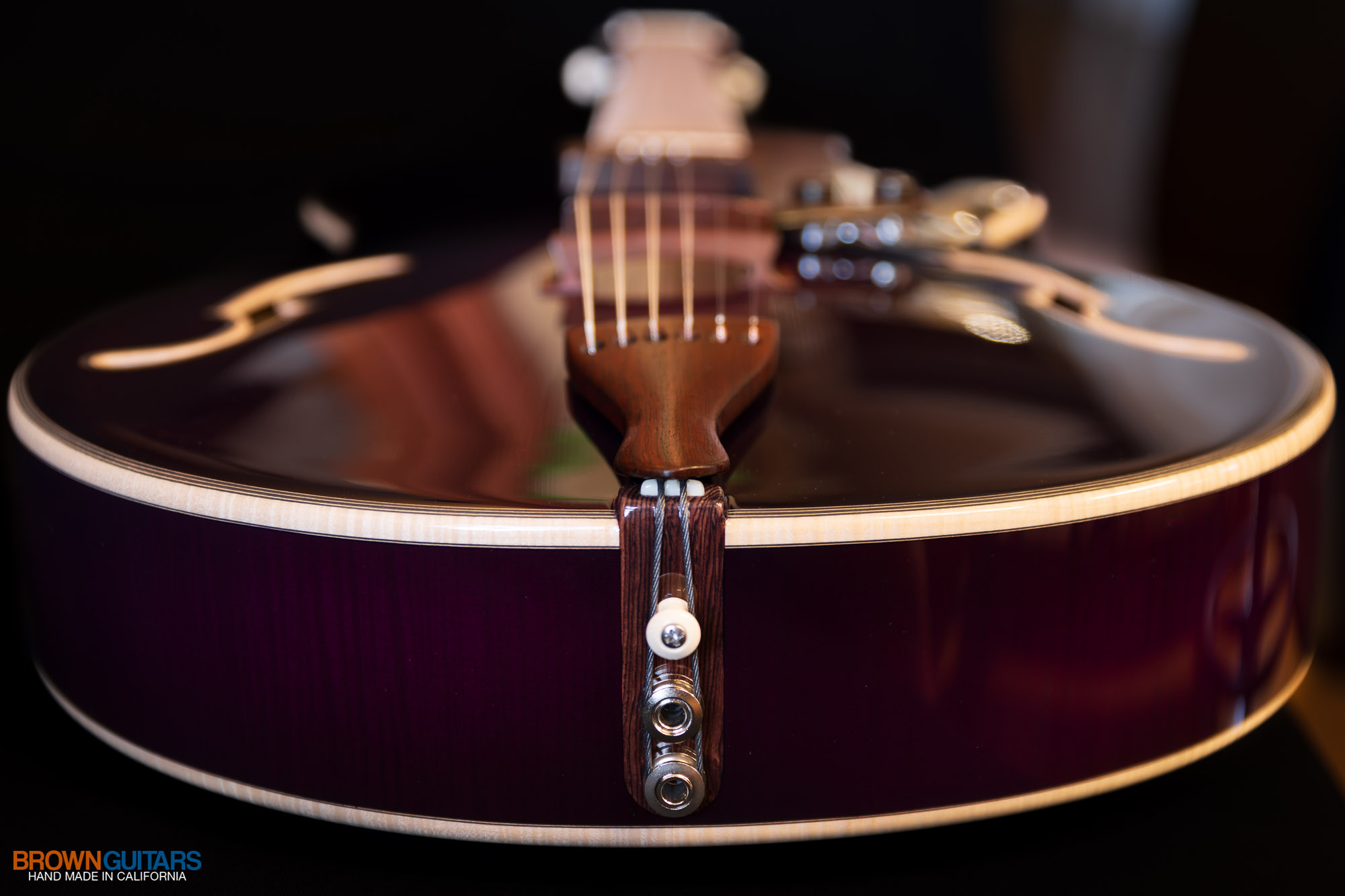
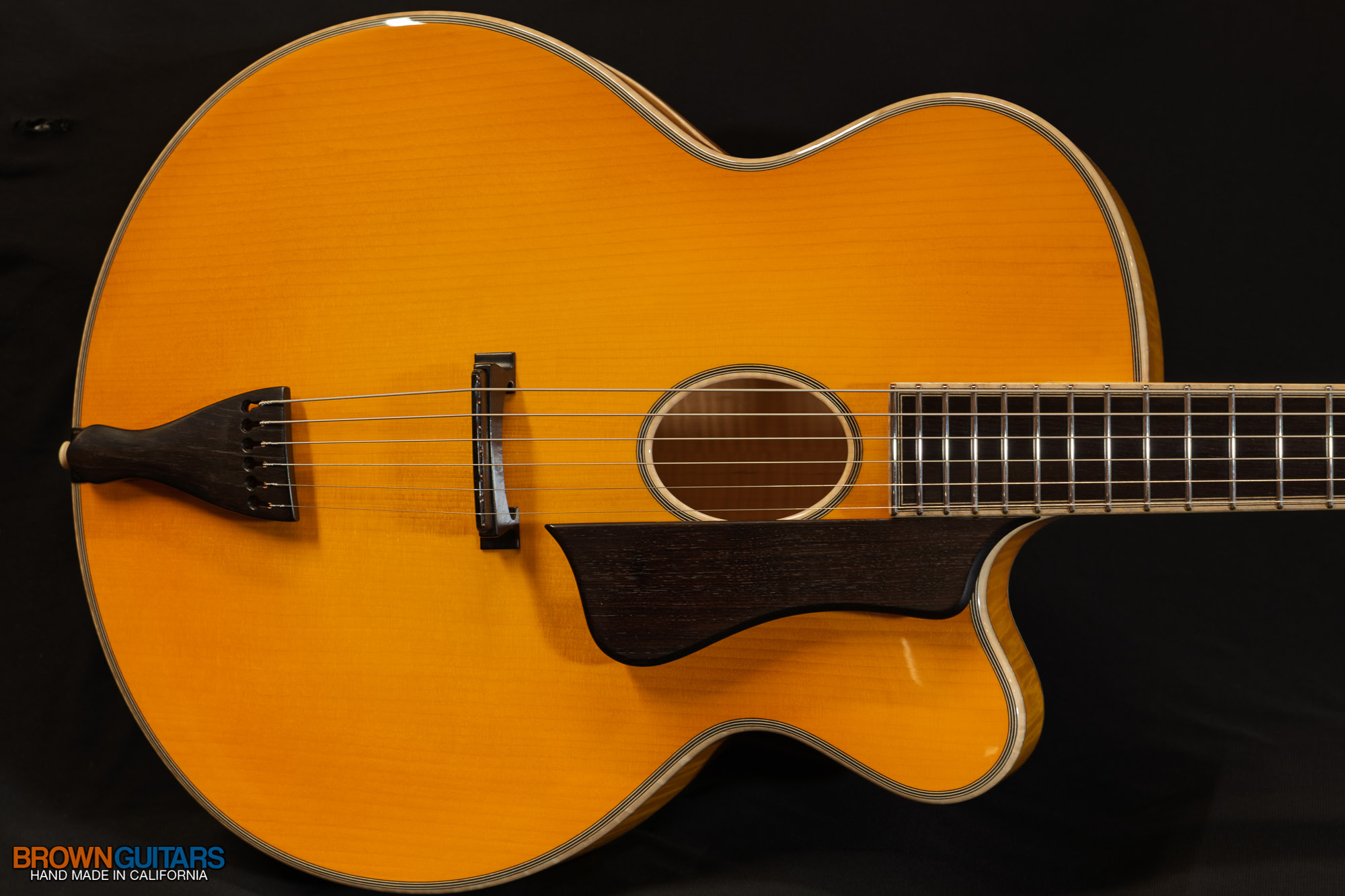
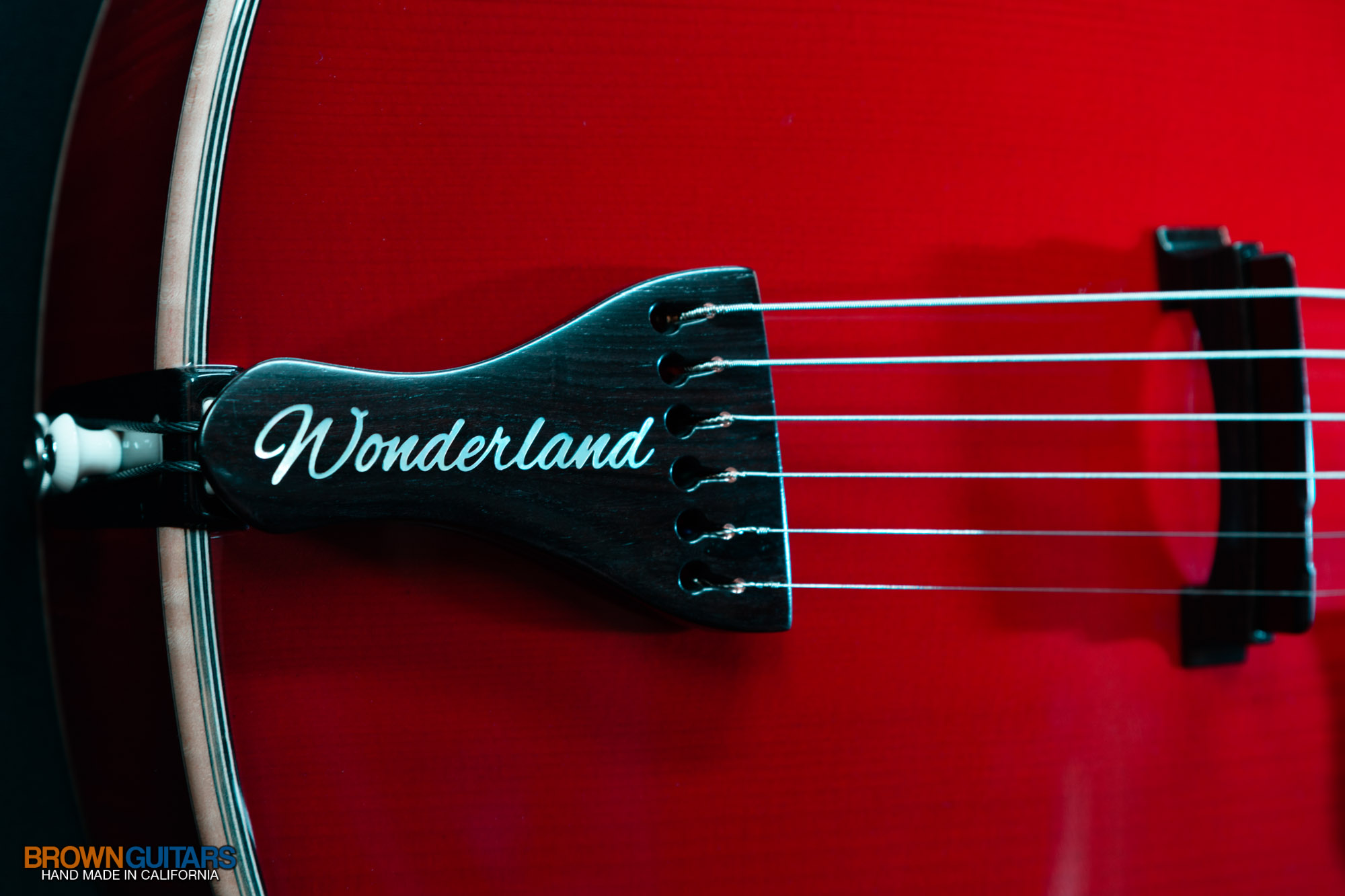
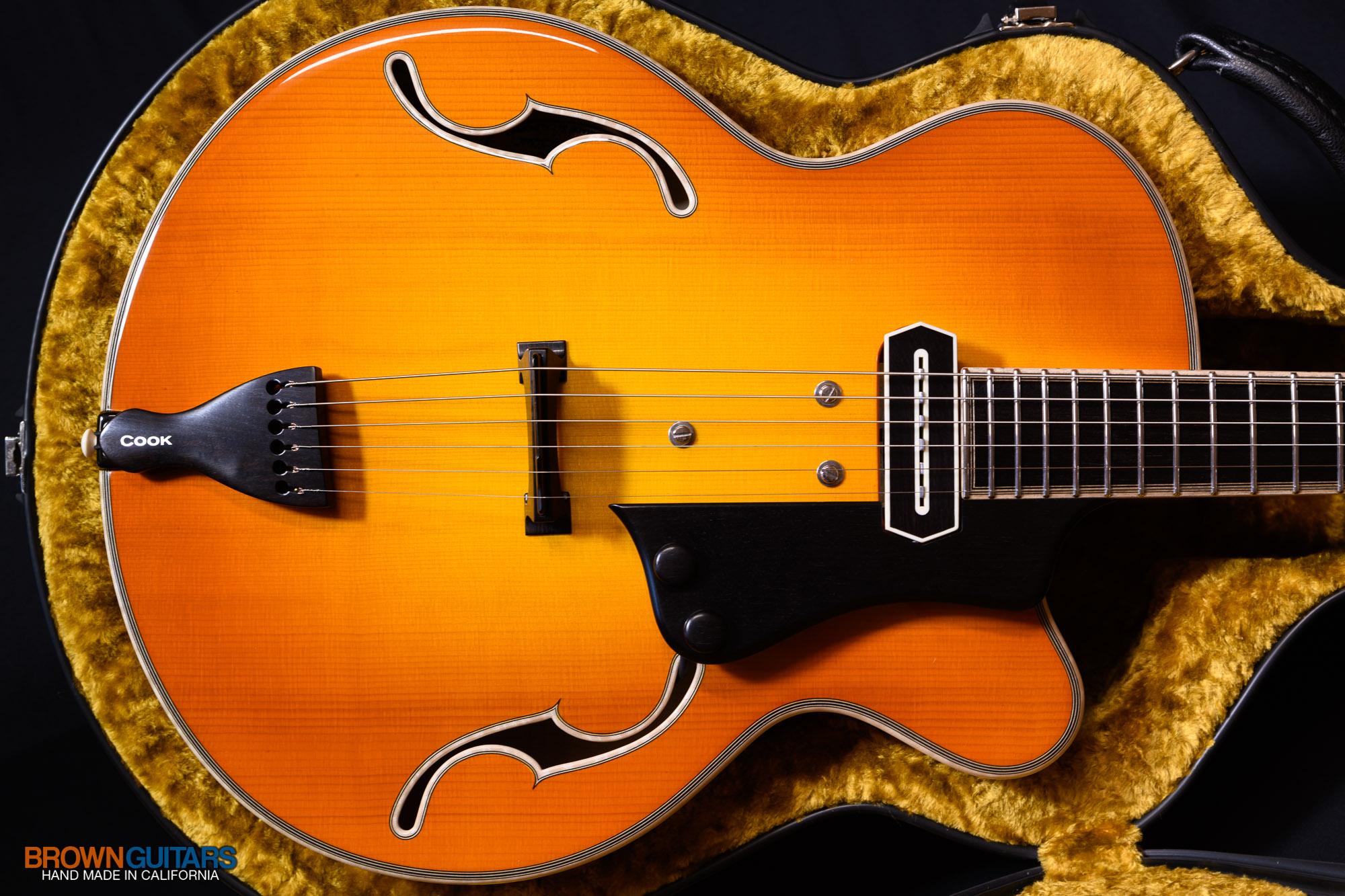
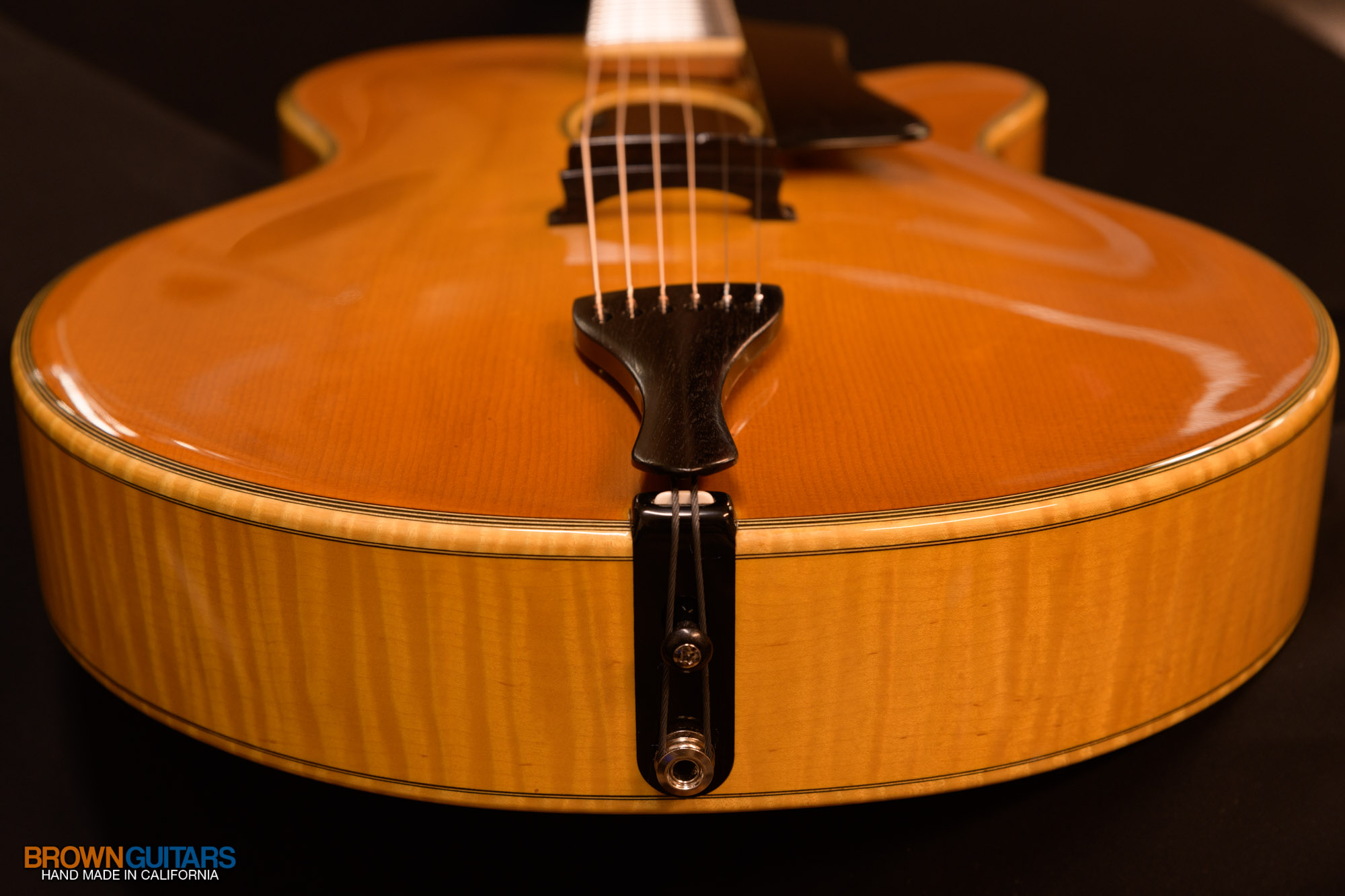
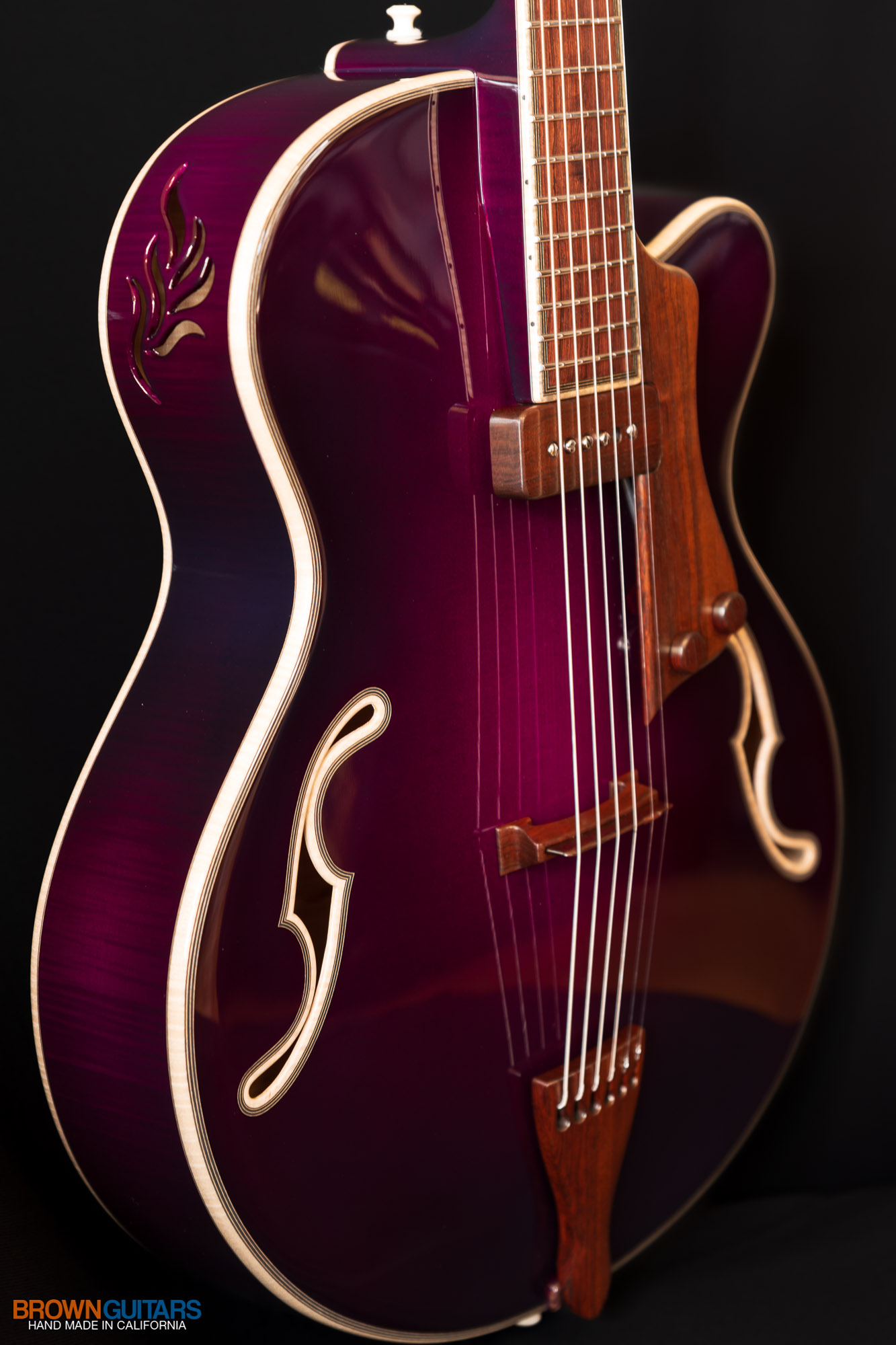
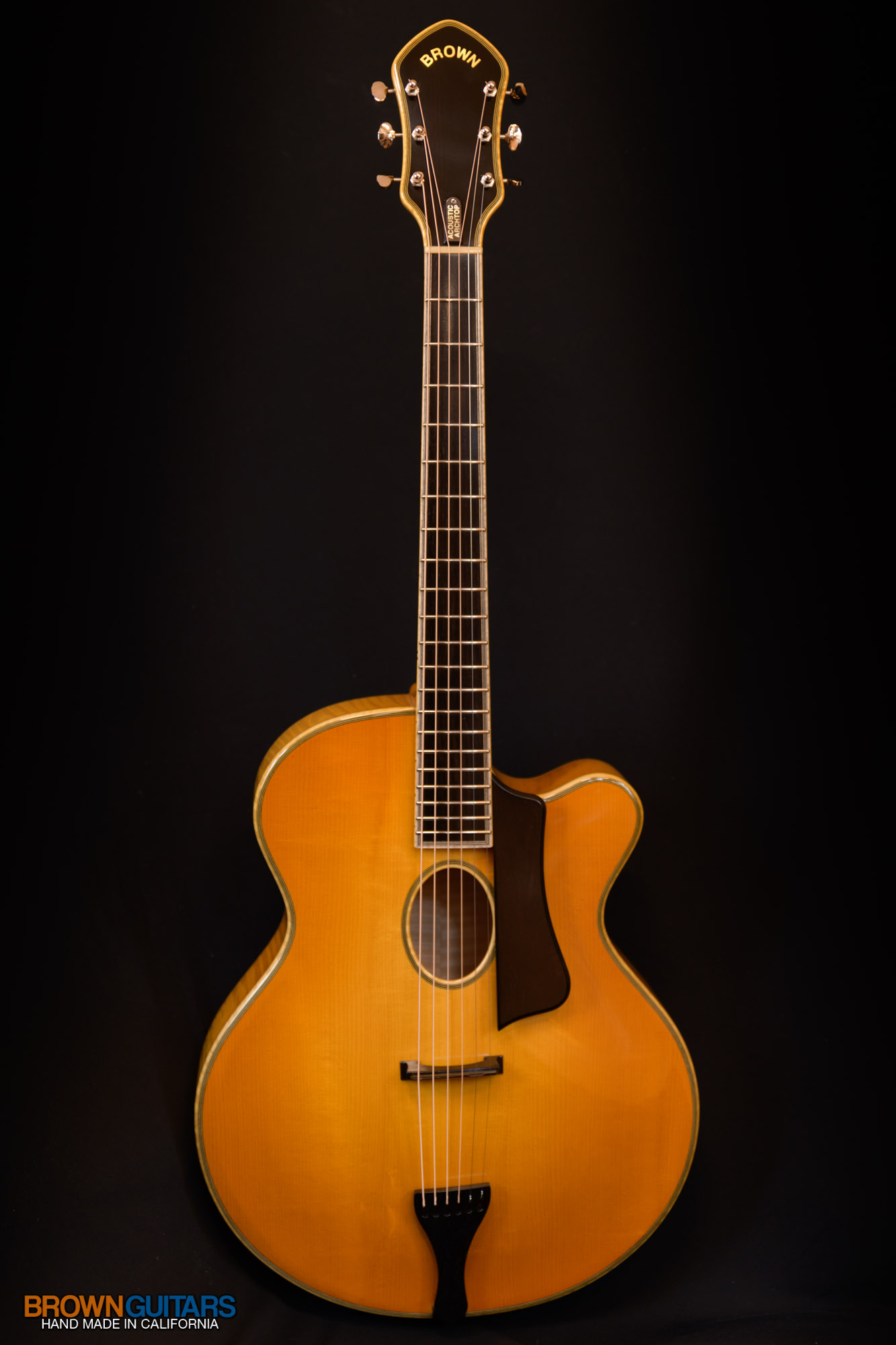
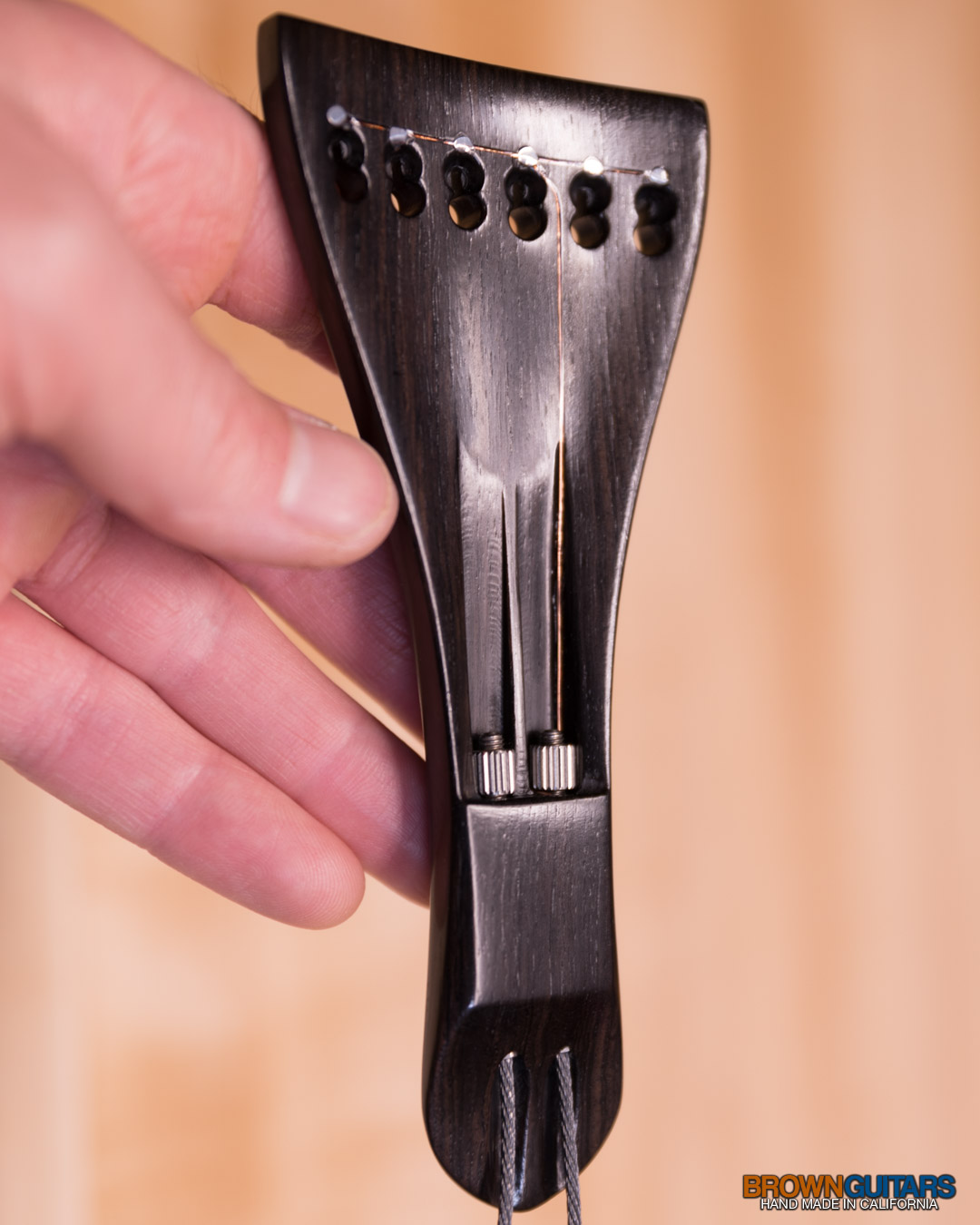
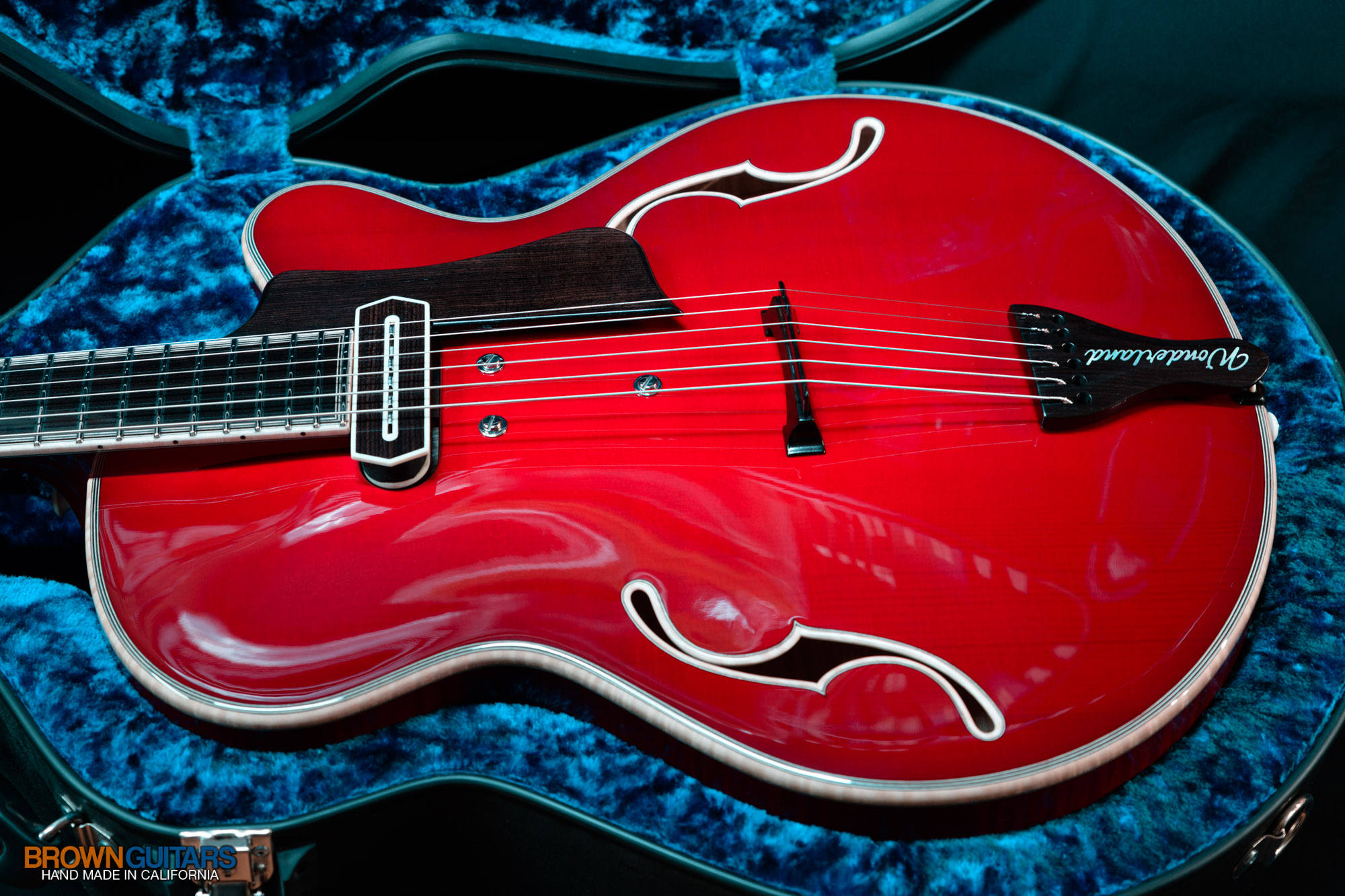
The hand-carved rosewood tailpiece is suspended on a titanium cello tail gut wire, which is supported at the edge of the rim by a bone saddle, both preventing the high-tension wire from crushing into the top and ensuring the tailpiece remains entirely suspended. Unlike conventional tailpieces that are acoustically restricted by metal hinges, or hard mounts, this free-floating design encourages the tailpiece to vibrate and resonate with maximum harmonic overtones. Combined with the titanium wire—which is stronger than steel, inherently more musical sounding, and completely inert to environmental changes—this elegant setup delivers lively acoustic response and exceptional tonal clarity.
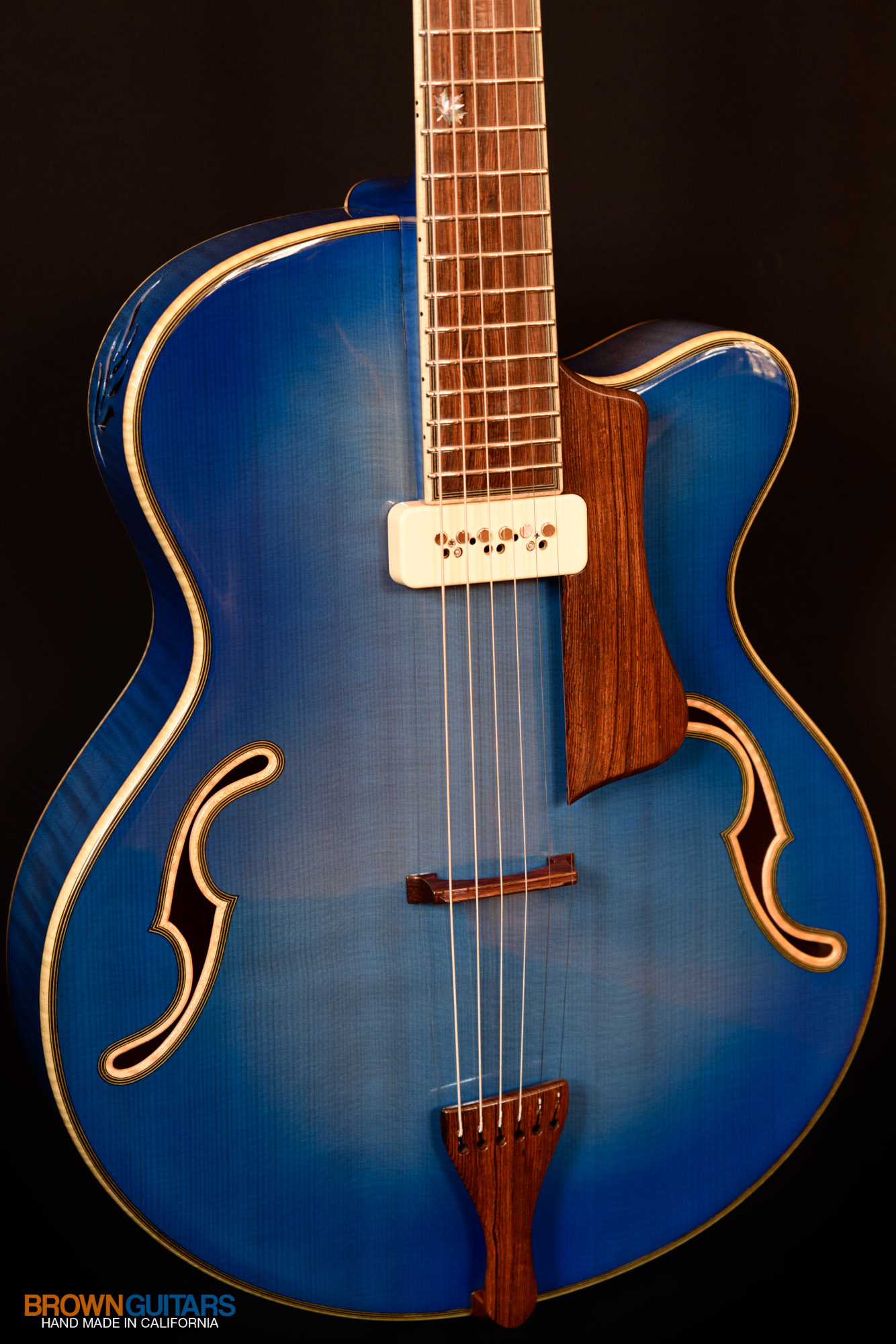
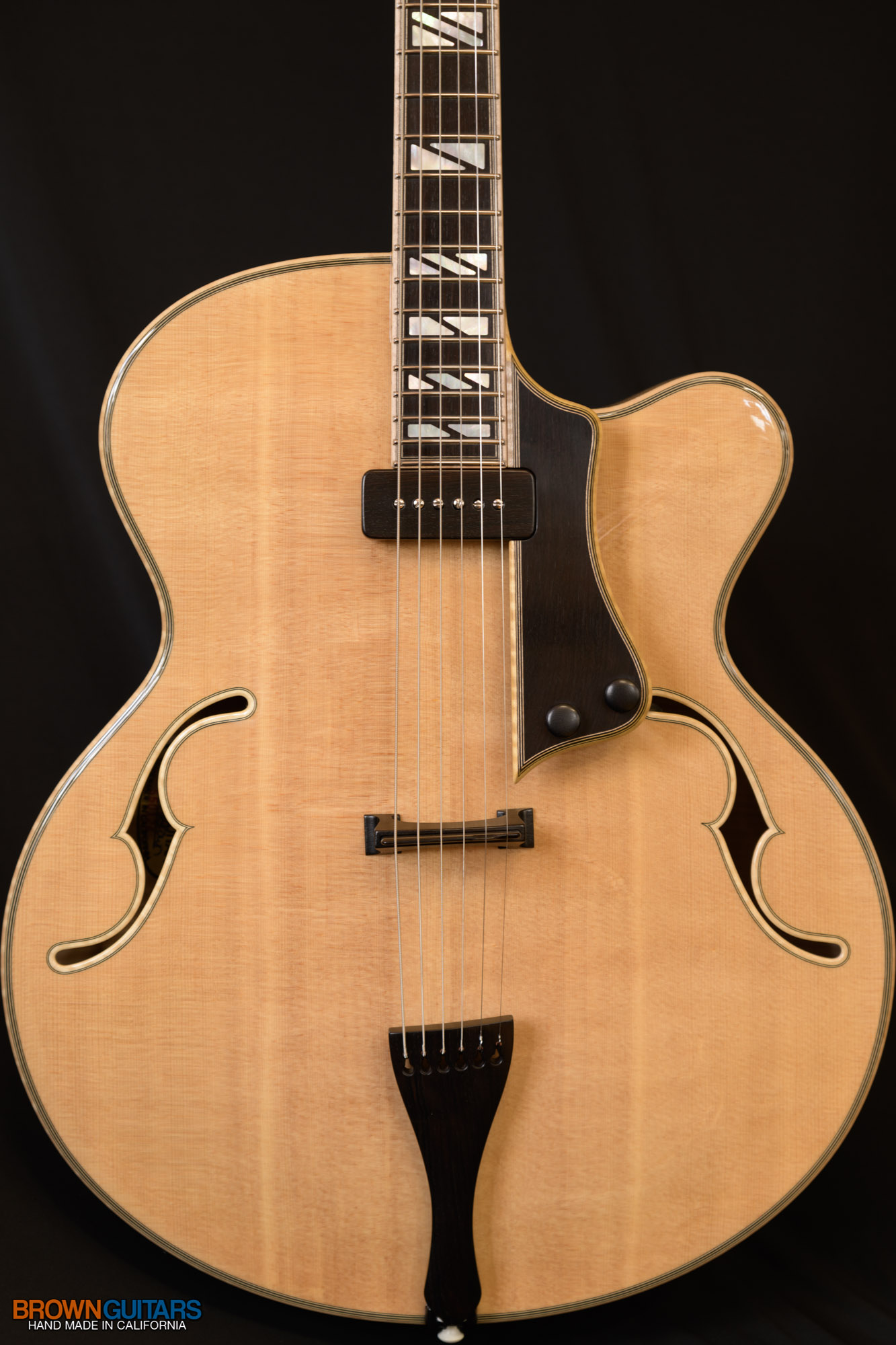
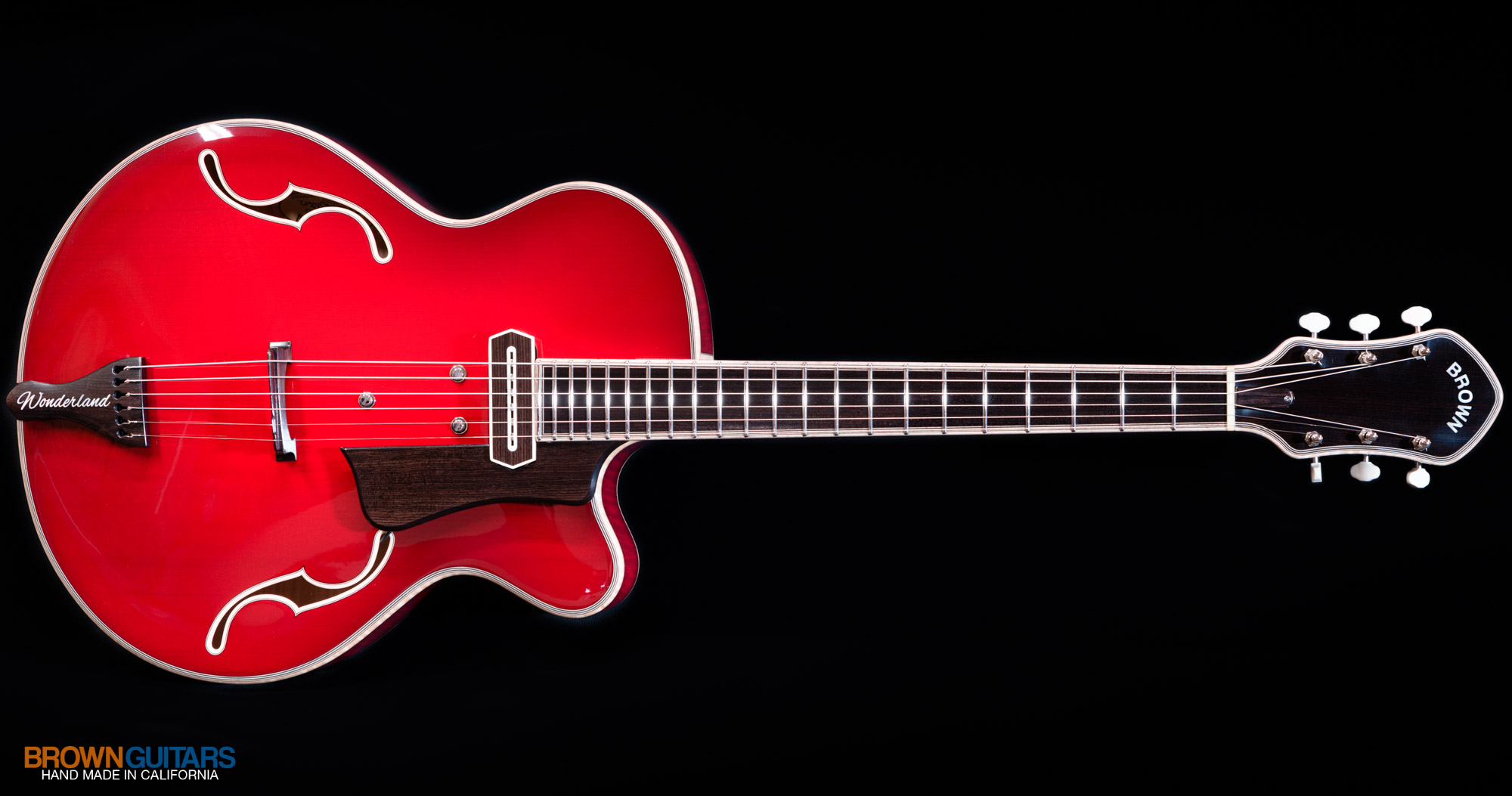
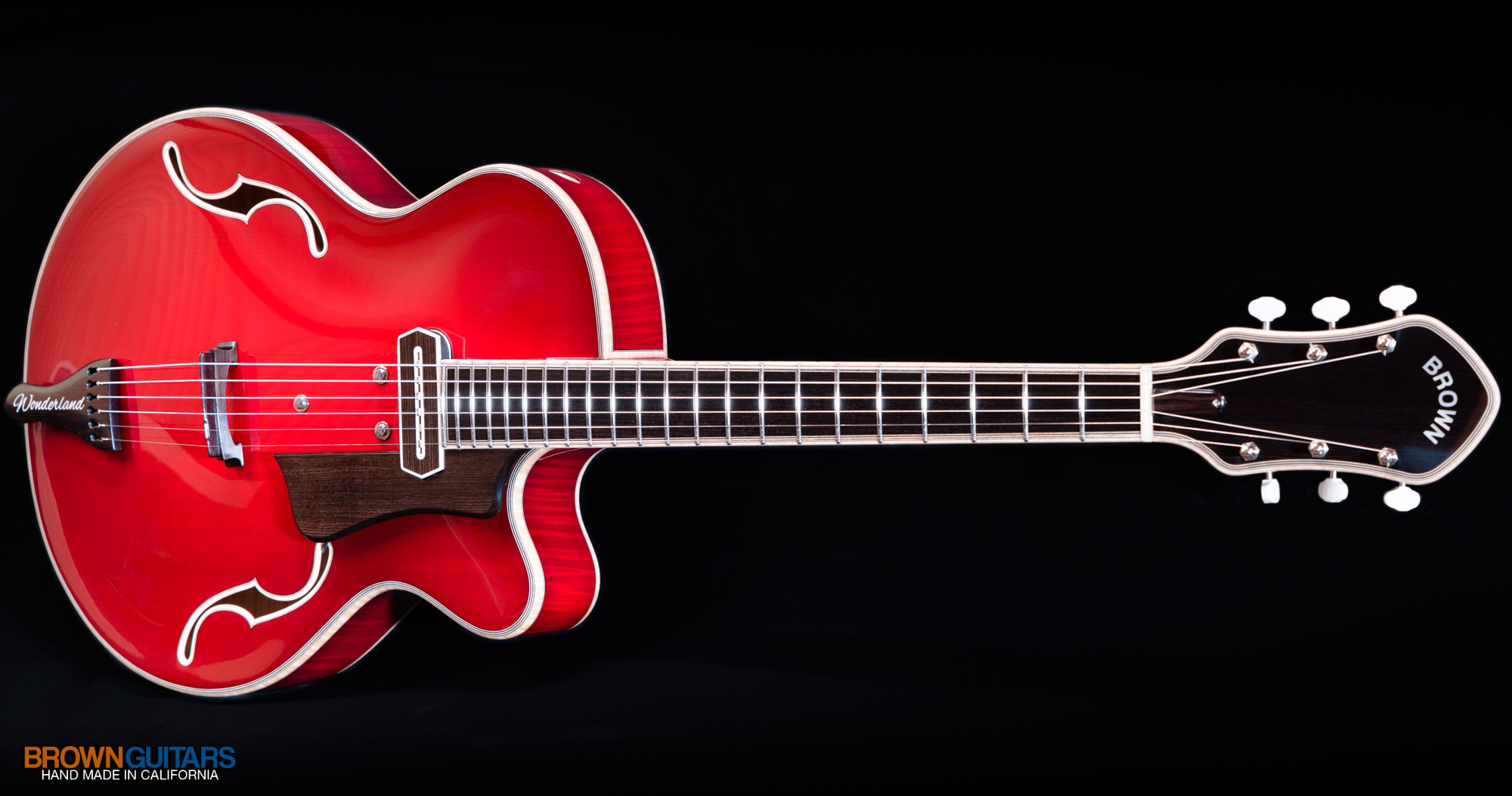
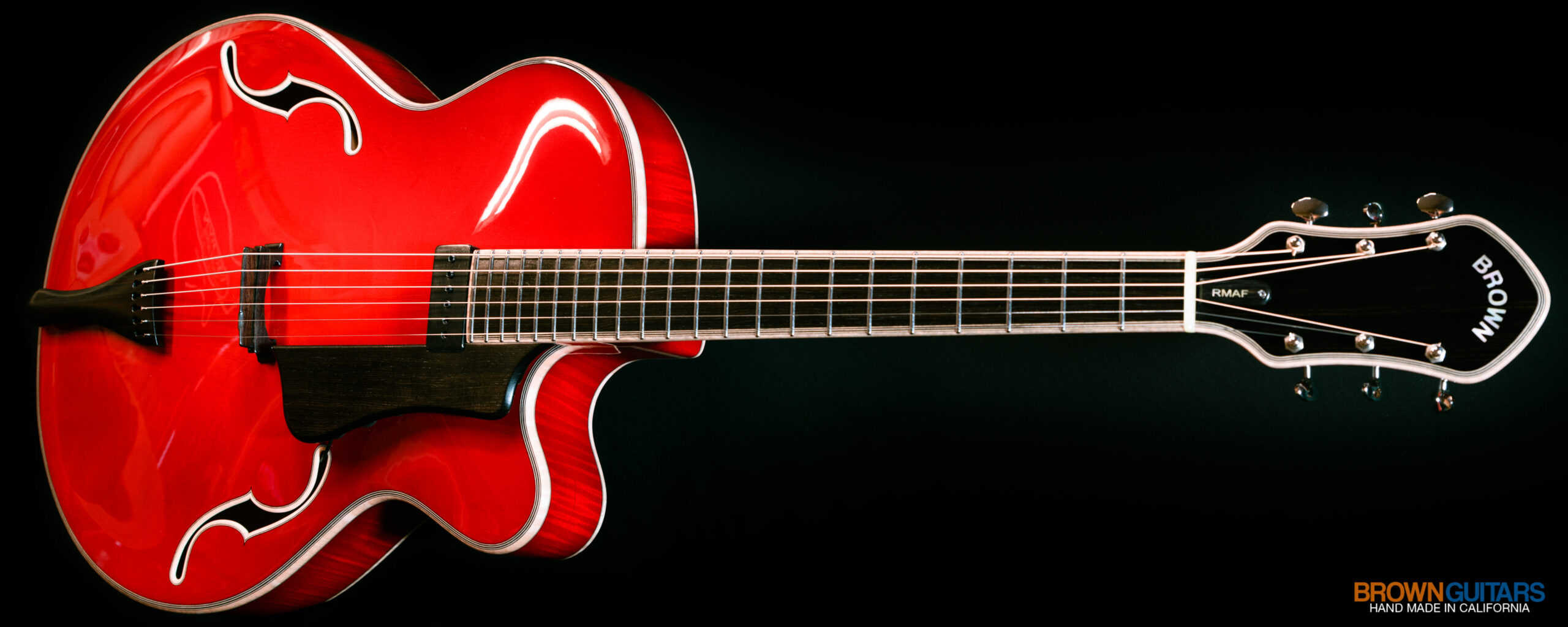
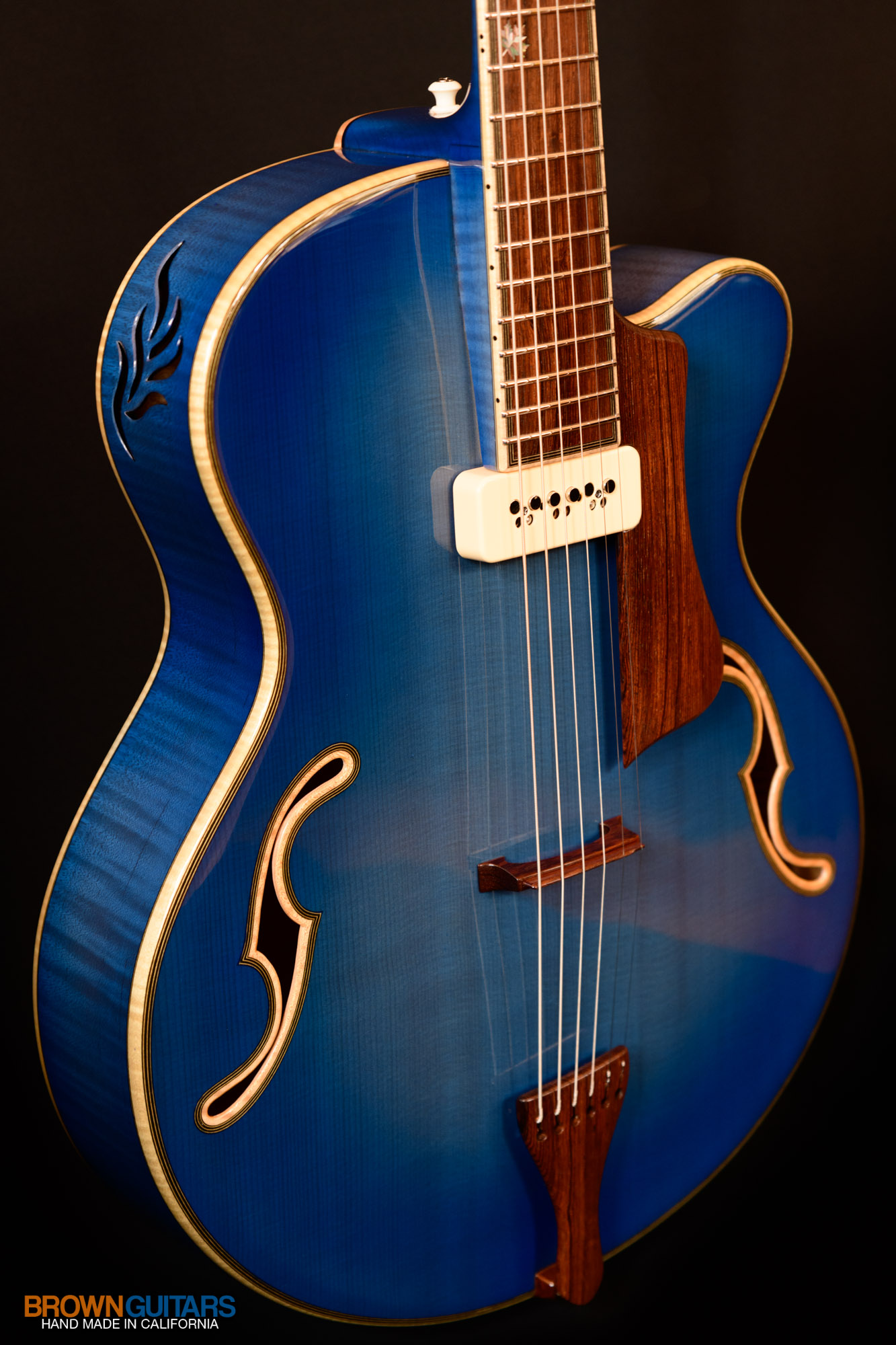
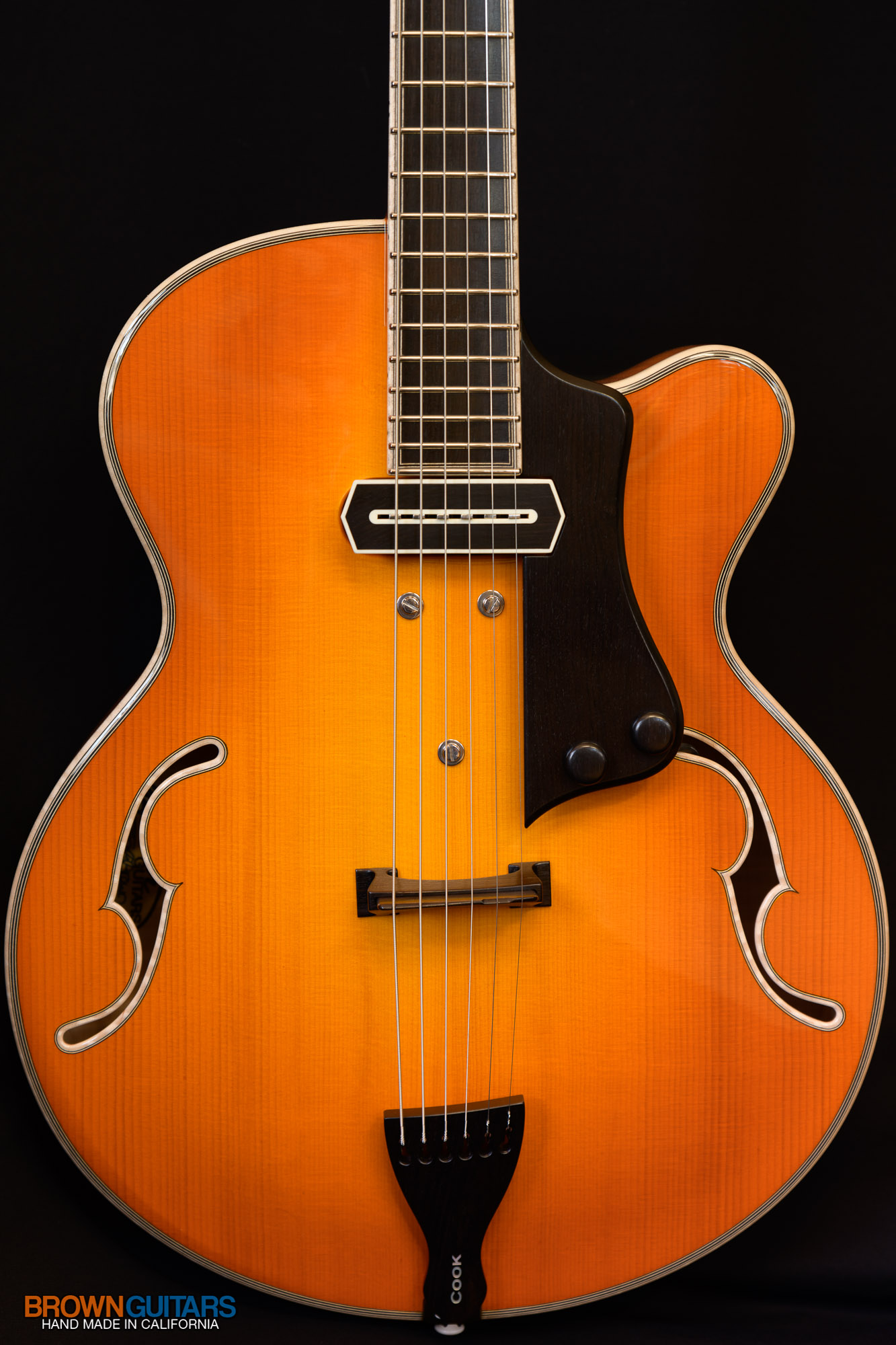
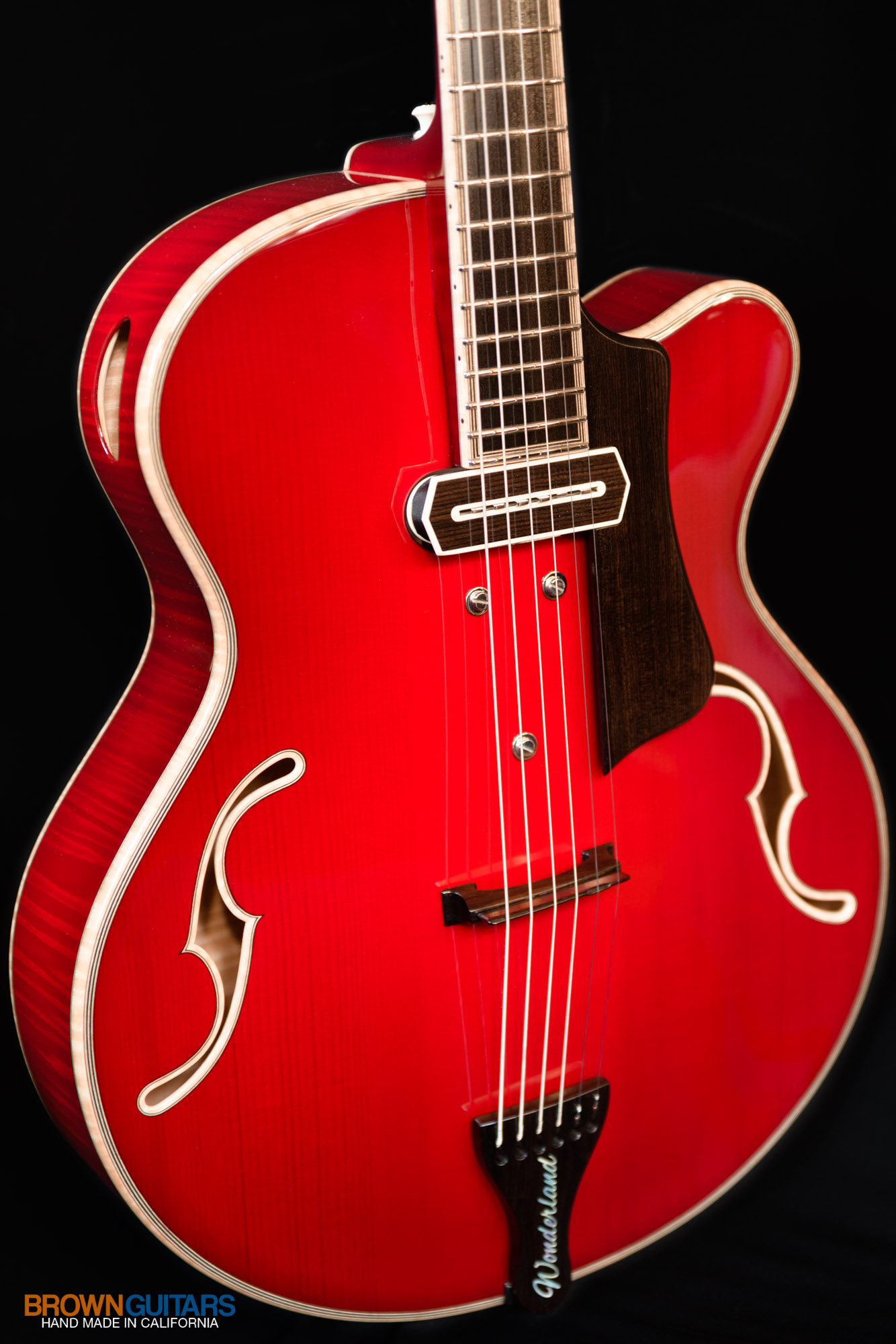
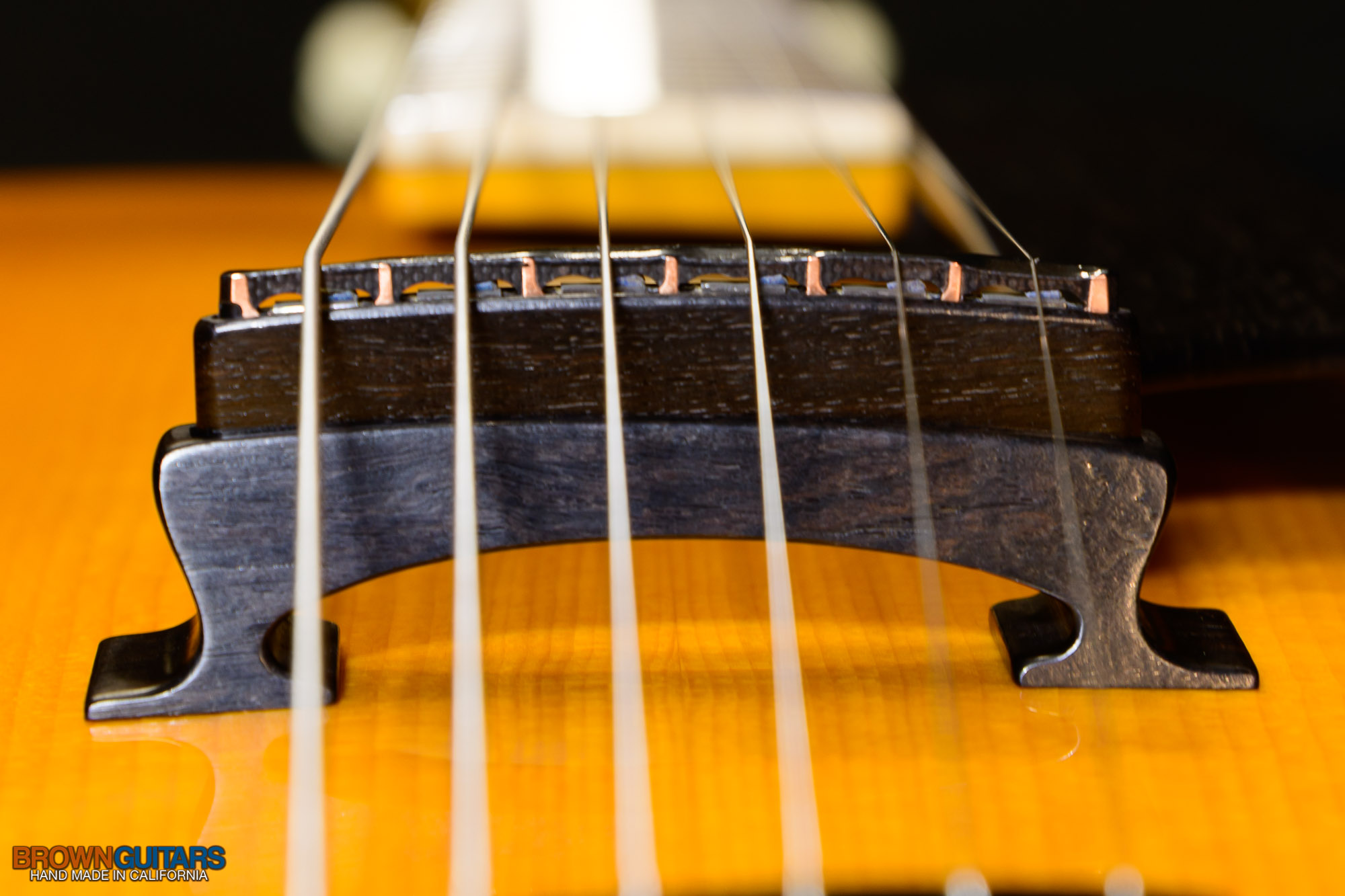
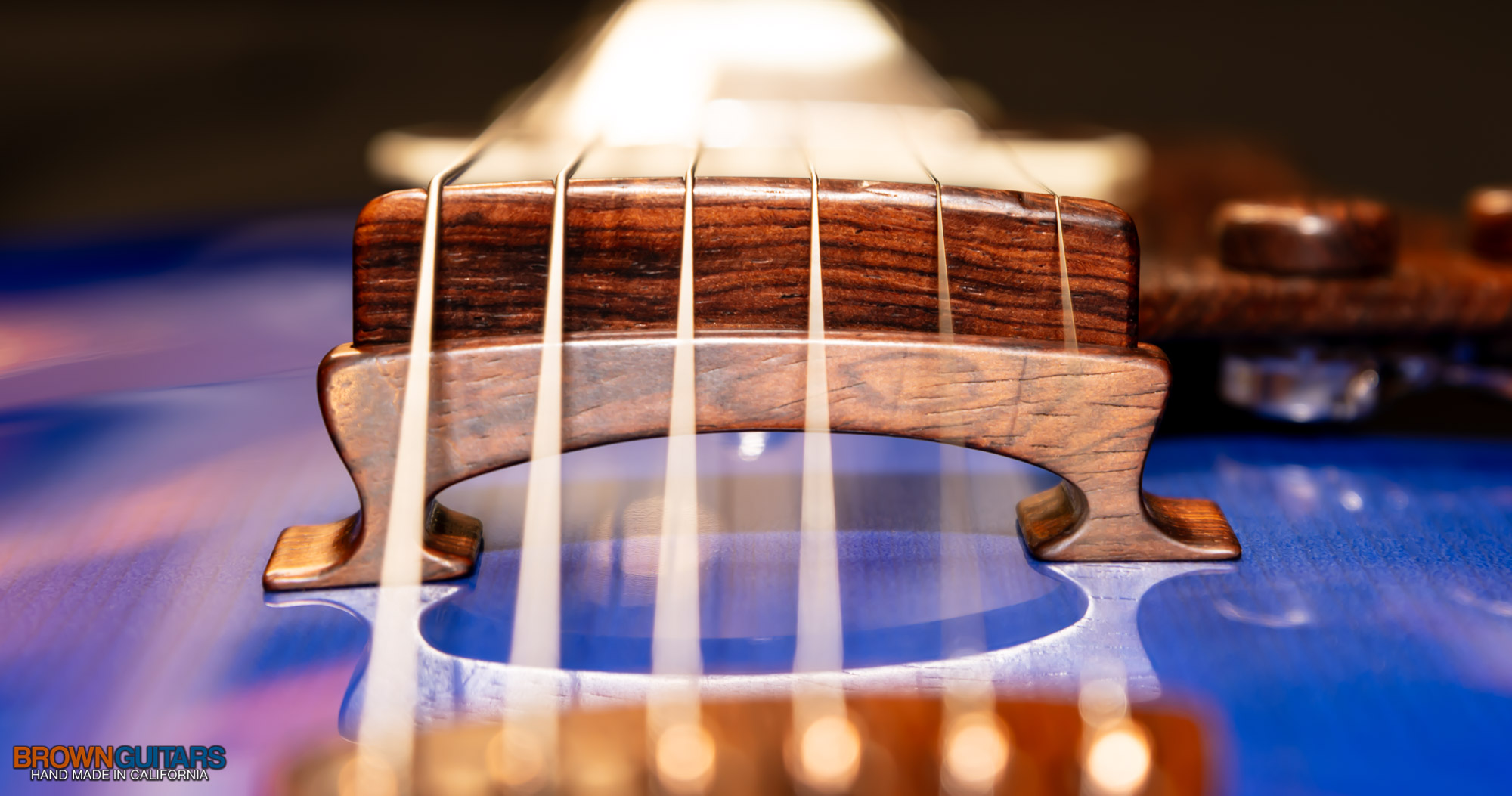
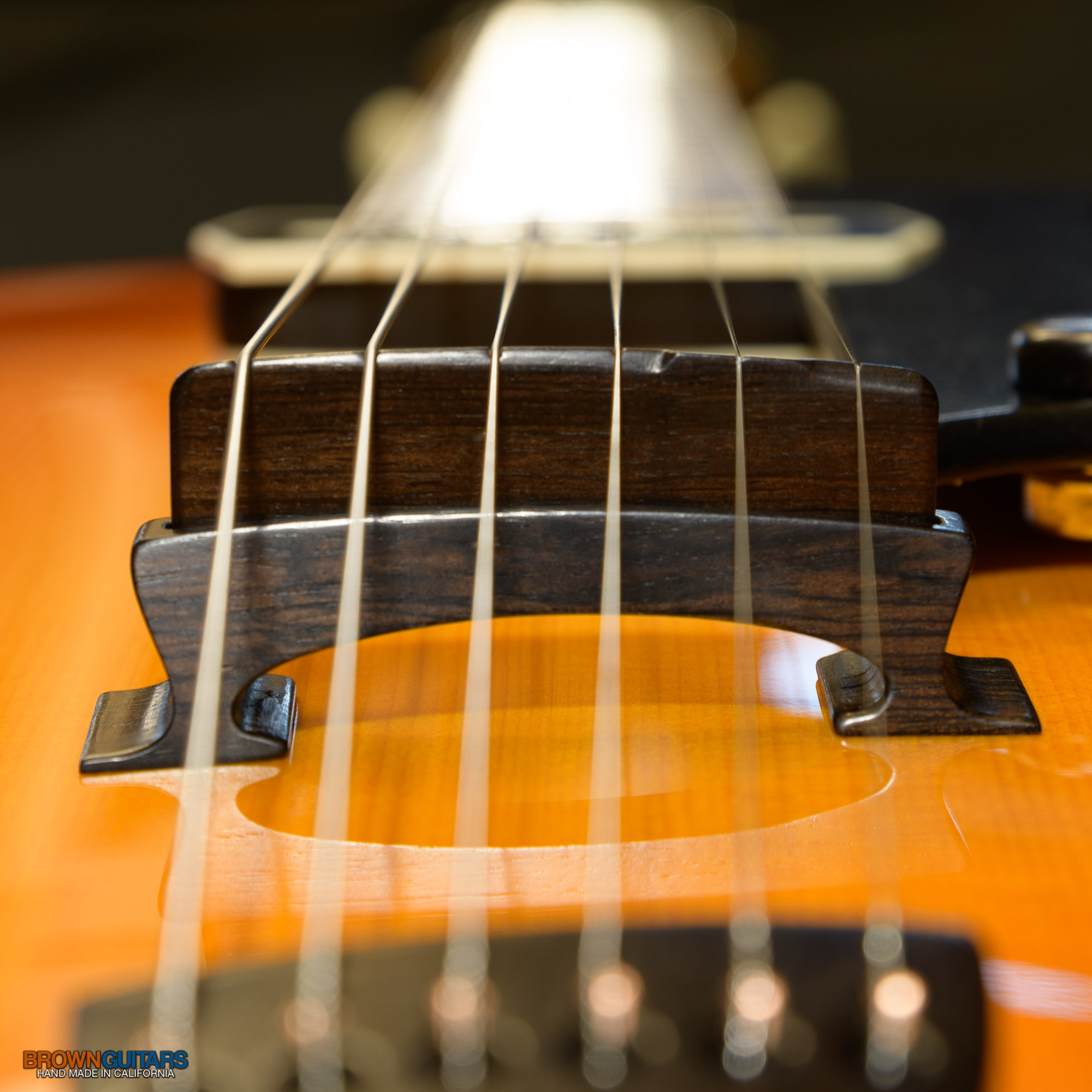
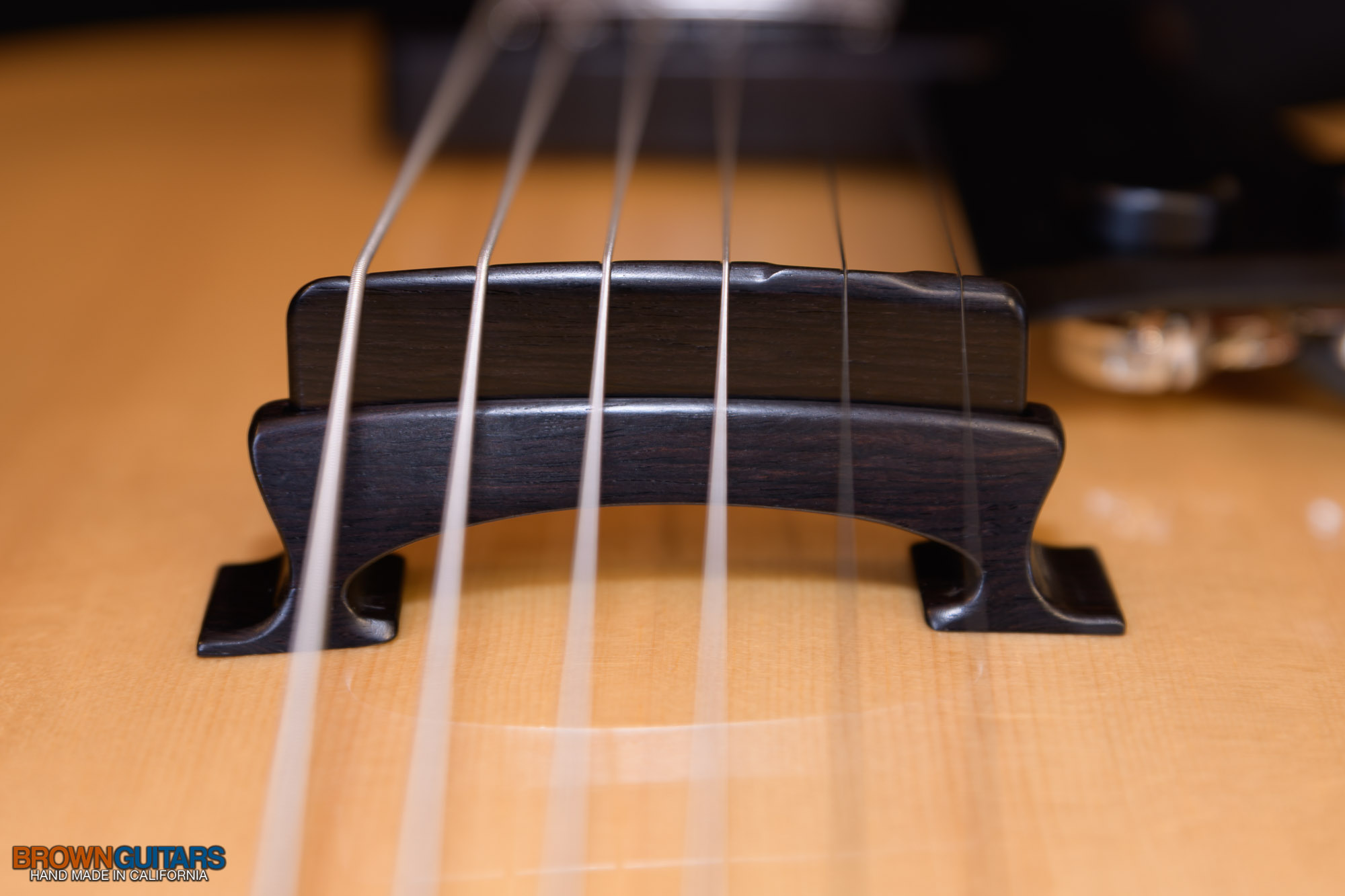 Perhaps the most defining feature of a Brown archtop is the ultra-lightweight bridge. Traditional archtop bridges frequently showcase heavy, oversized, Art Deco-style appointments with metal adjustment wheels. While many players have come to expect this factory-standard aesthetic, it is an outlier among acoustic instruments. Even a massive orchestral double bass utilizes a finely carved, minimal-footprint bridge for one simple reason: excess mass dampens tone. Metal adjustment wheels can also sometimes drift with vibration during play, ironically requiring frequent readjustment.
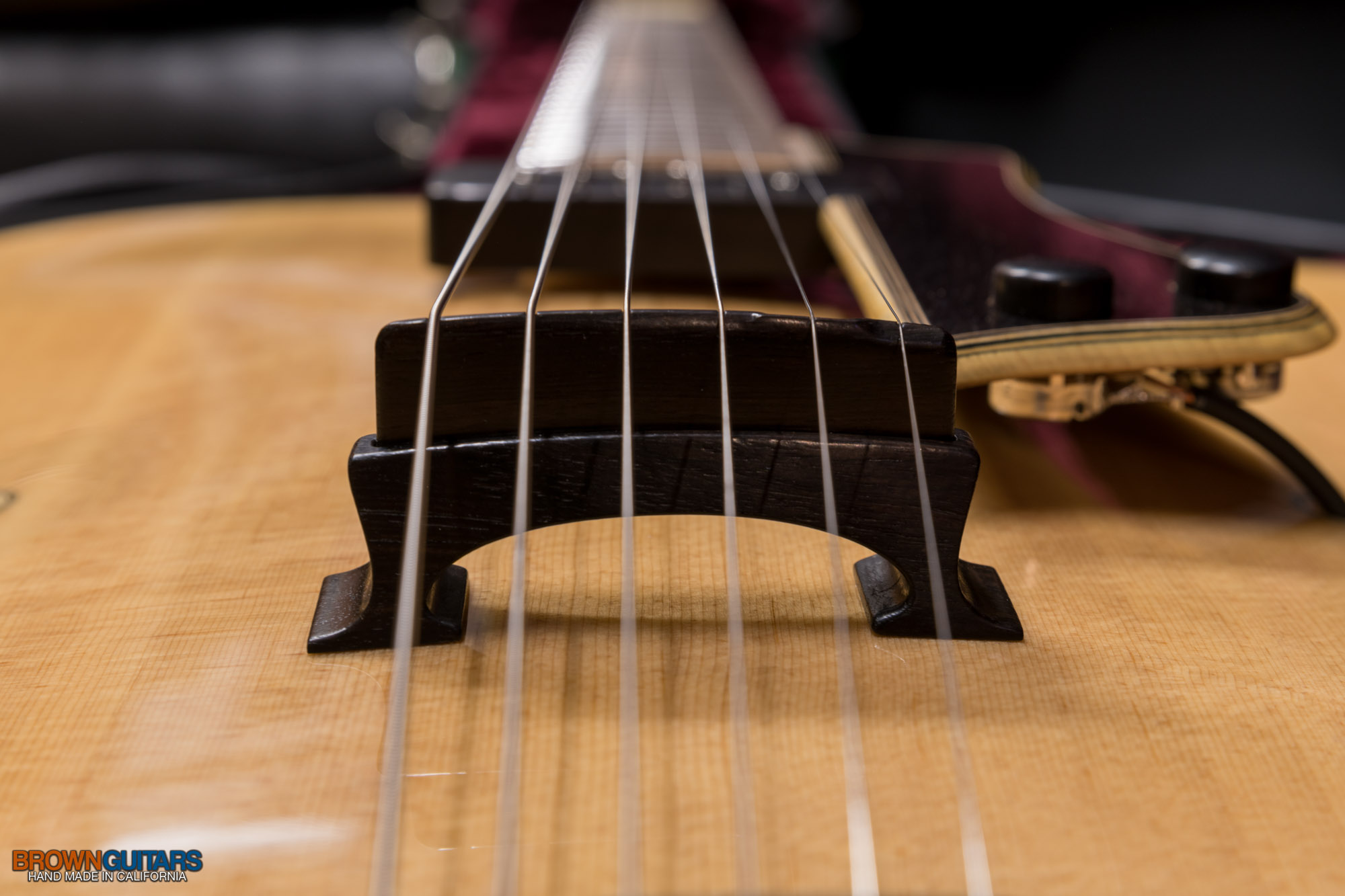
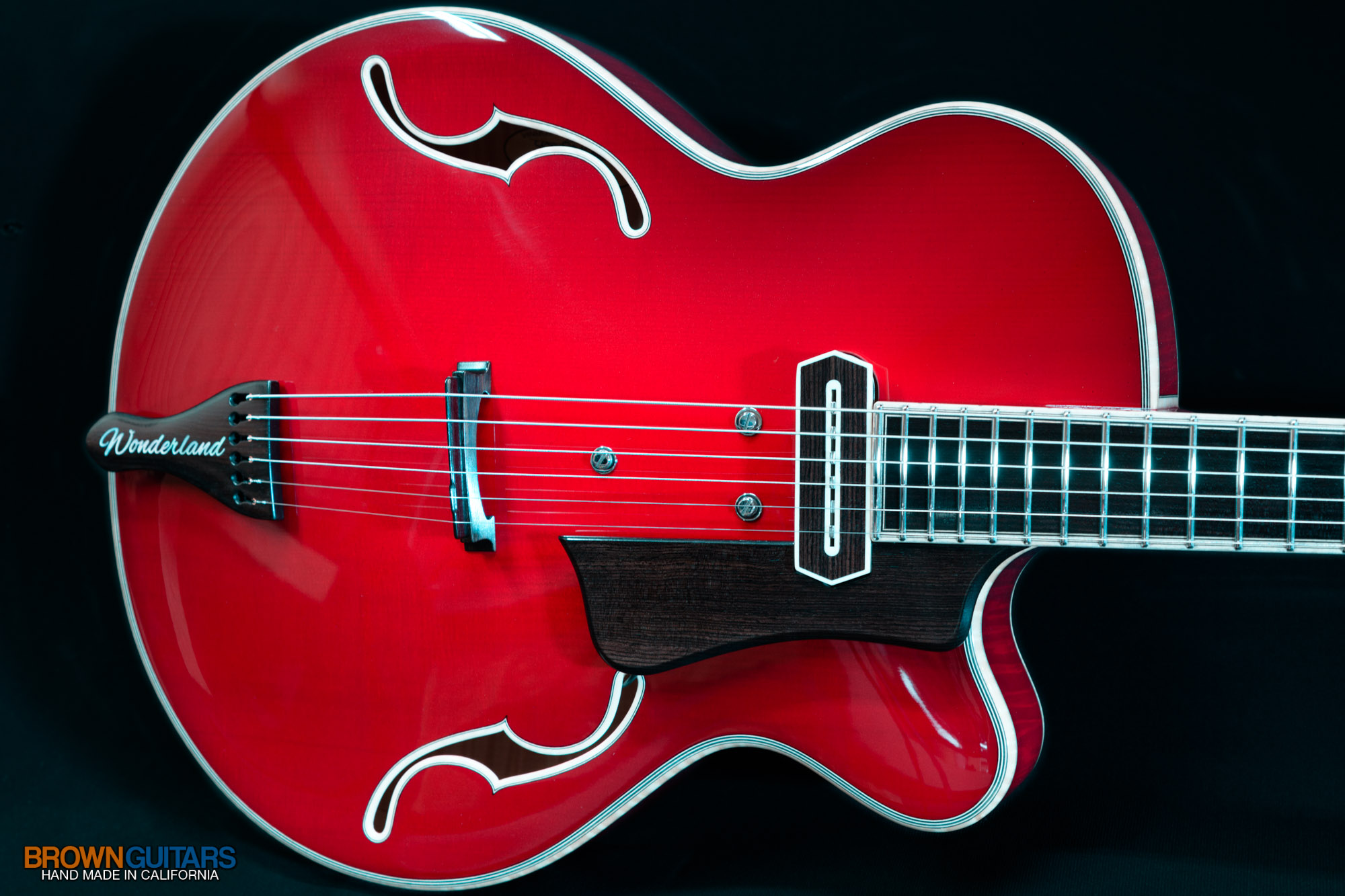
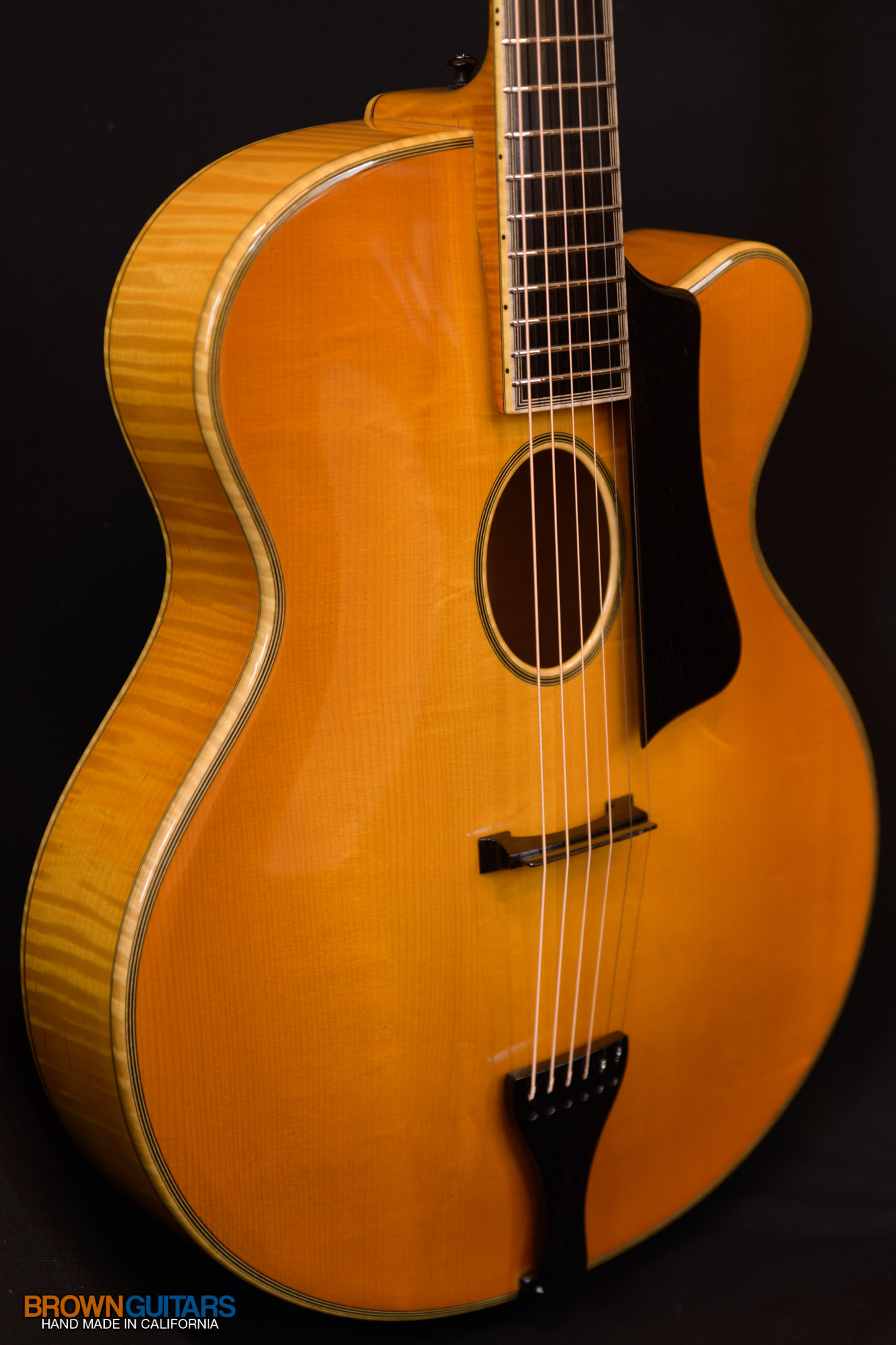
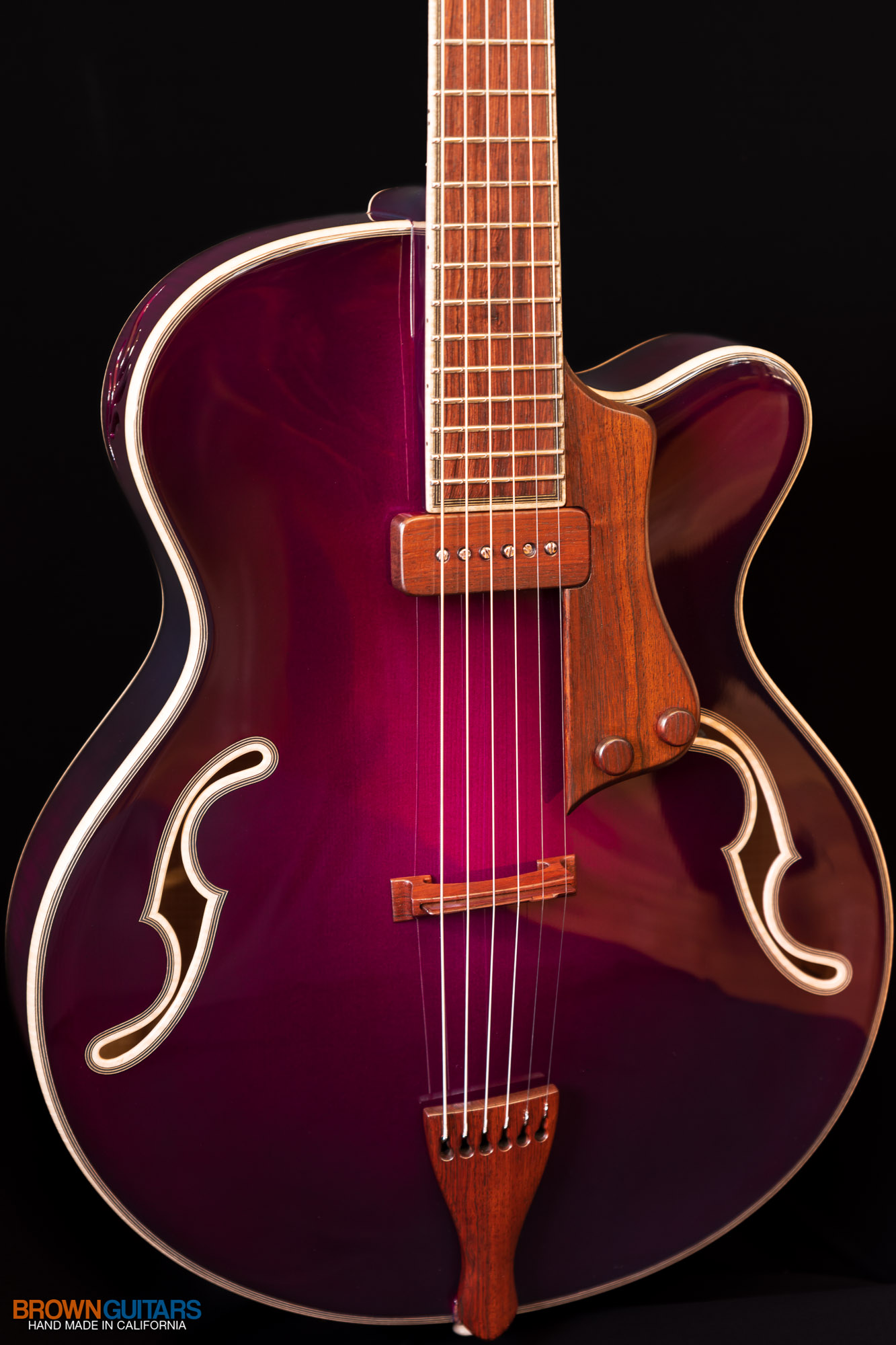
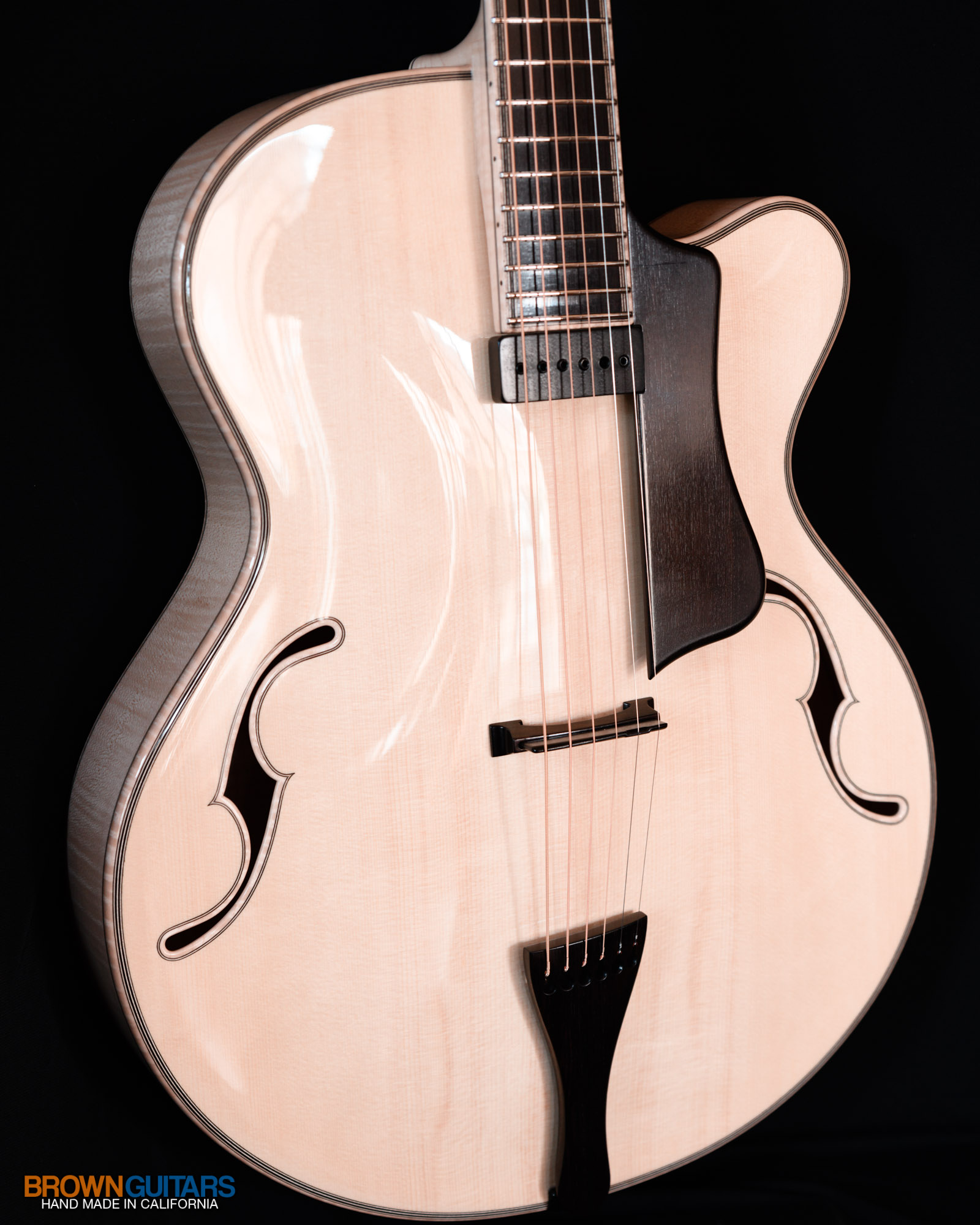
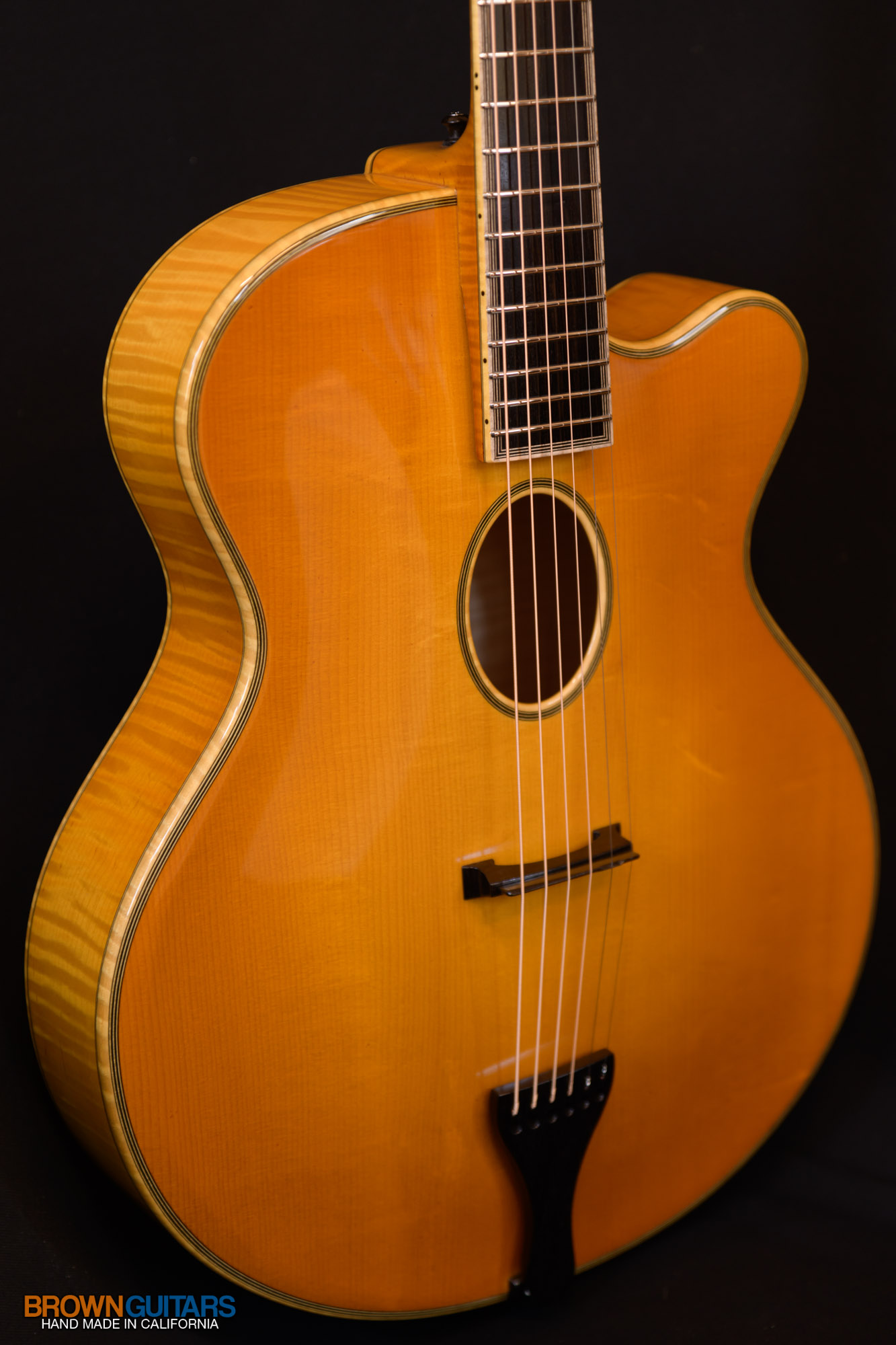
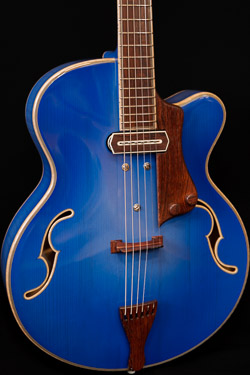
History has proven time and again the acoustic benefit of a lightweight, all-wood bridge. But without metal thumbwheels, how is the action adjusted? Tad answers this with an elegant two-piece rosewood design featuring a lightweight slotted base and a removable saddle, providing action adjustments similar to a classical guitar. The bridge is carved only as wide as necessary to support the string spacing, with its minimal feet sitting directly over the instrument’s internal tone bars. The entire finished assembly typically weighs around 15 grams. The bridge’s primary job is to transfer the strings’ energy directly into the top with minimal loss, without choking the spruce under excess dampening mass. This pure wood-to-wood energy transfer rewards the player with an immediacy of attack, remarkable touch sensitivity, and beautifully enhanced sustain.
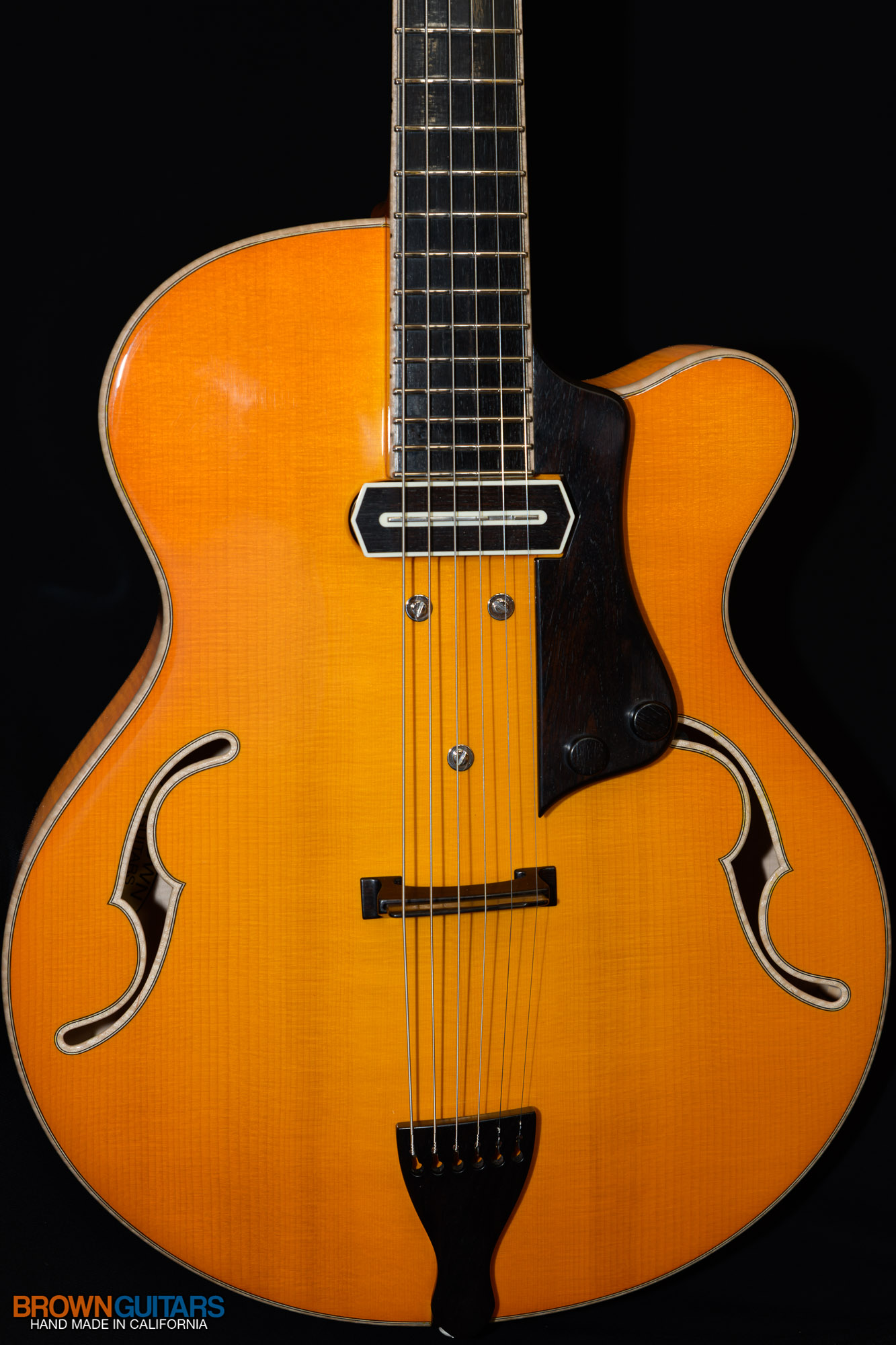
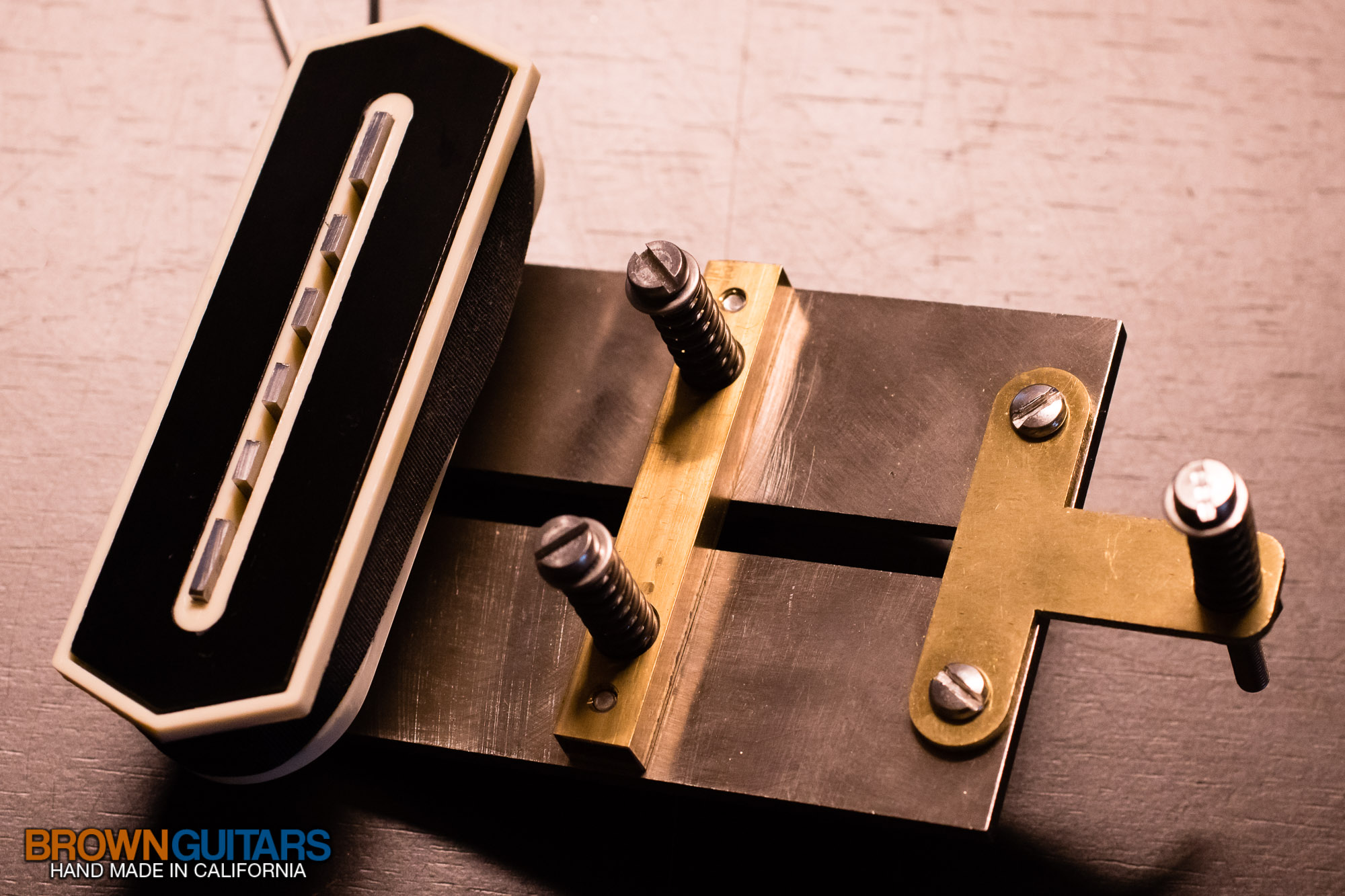
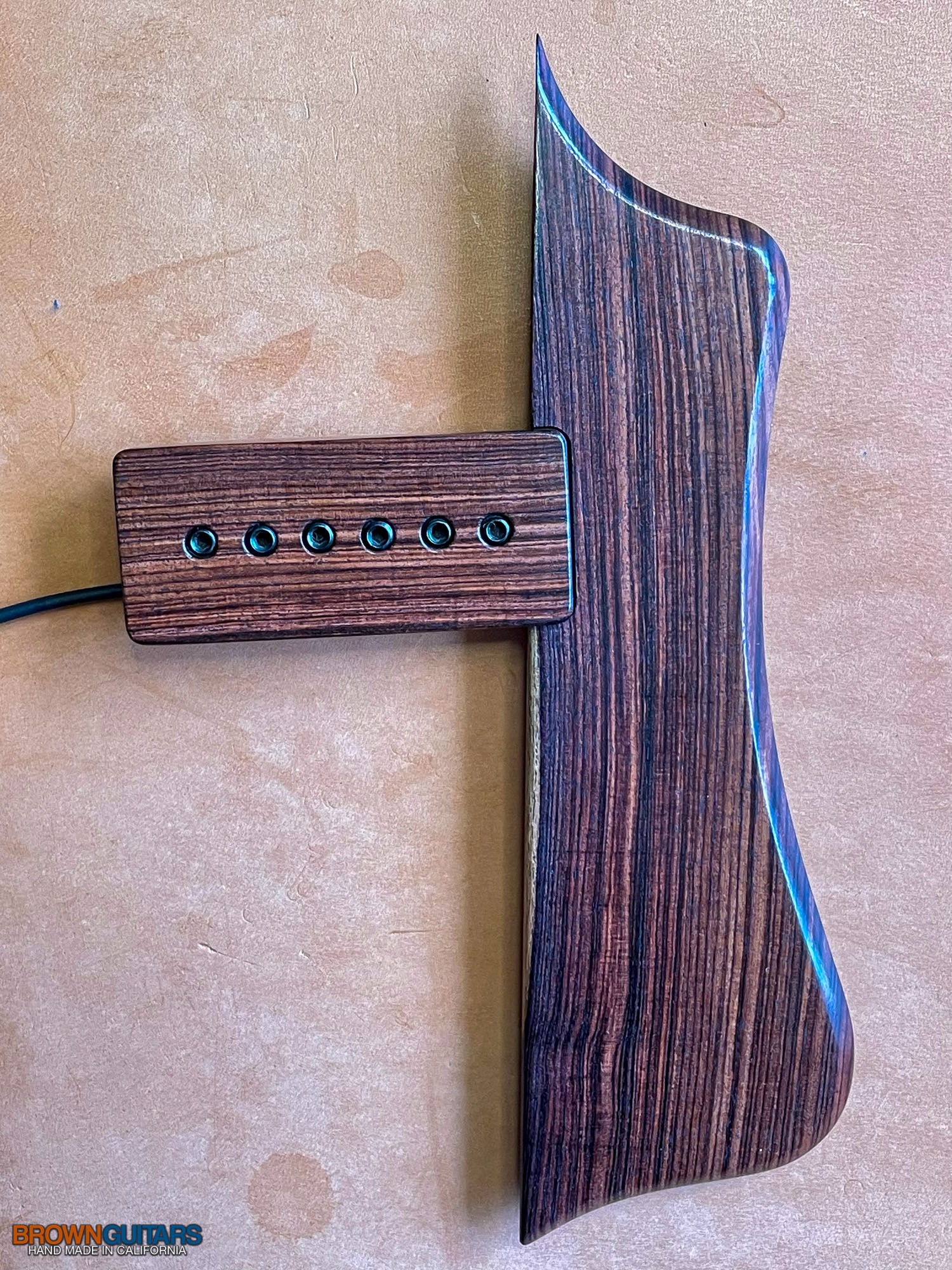
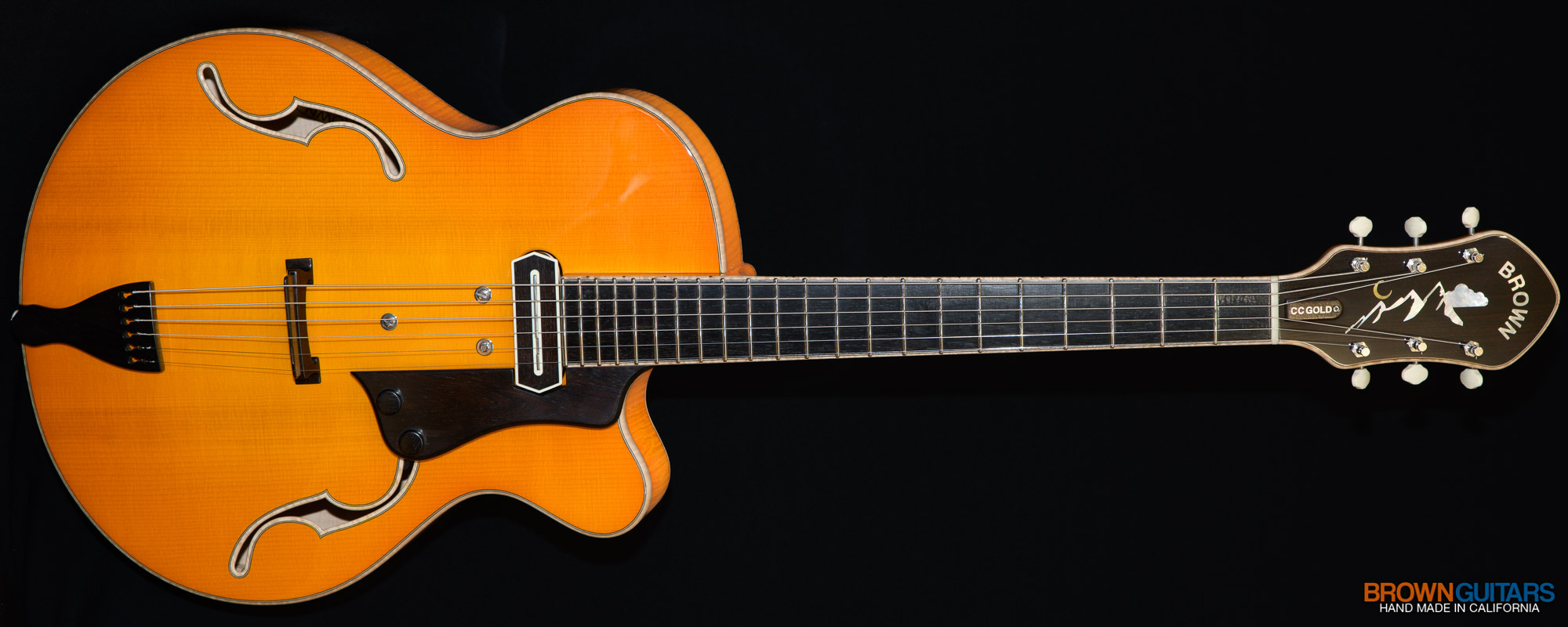
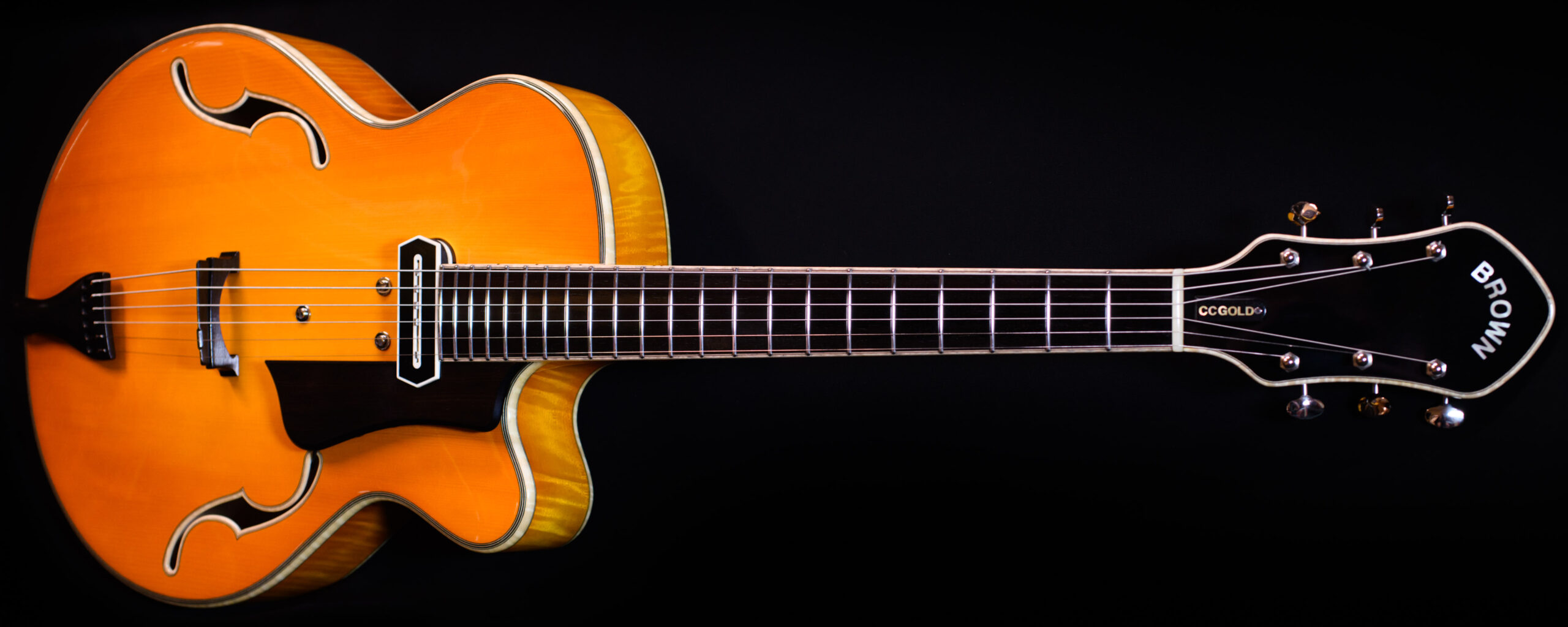
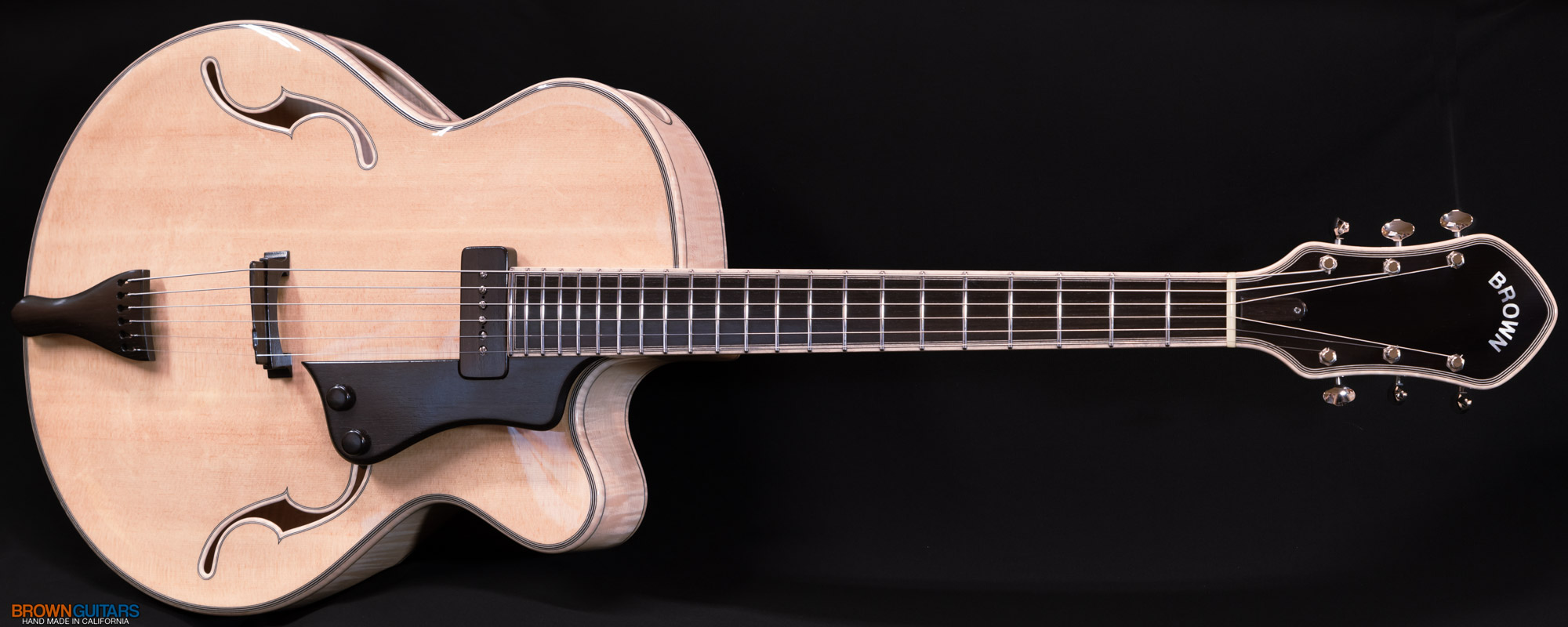
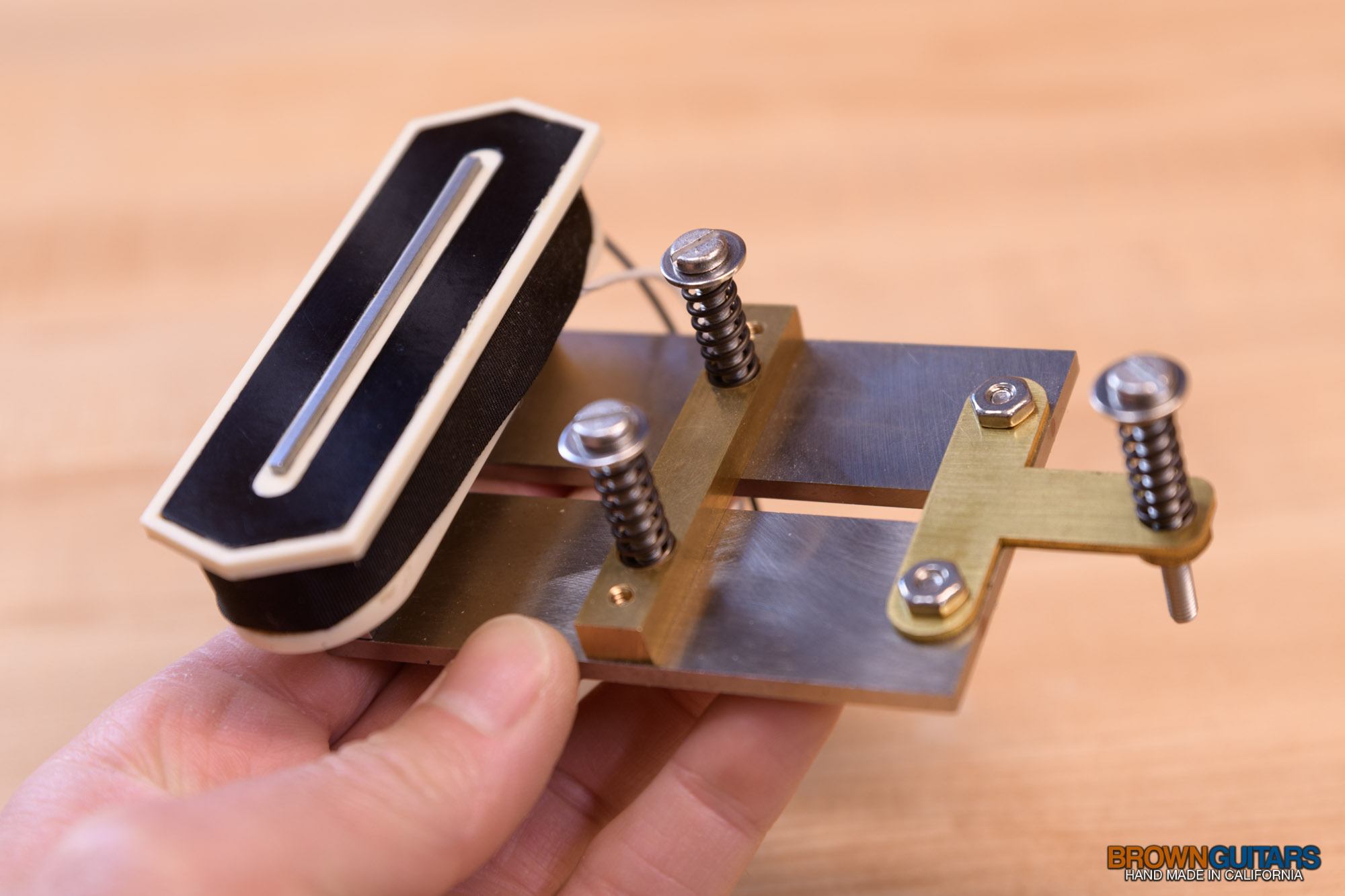 When it comes to amplifying an archtop guitar, Tad strongly favors the dynamic clarity of single-coil pickups—a choice perfectly in keeping with his ‘sound first’ philosophy. For Tad, it is all about the tone; a little bit of hum is simply part of the charm when the reward is uncompromising sonic character. His favorites include the Ron Ellis P90—a meticulously handcrafted reproduction of the original 1950s design—and the authentic 1930s-style Charlie Christian pickup by CC Pickups UK. Built to exact original specifications, the CC pickup utilizes the rare, cobalt steel bar magnets that are absolutely integral to its unparalleled tone, delivering the legendary vintage voices that jazz and blues players know and love.
At the same time, modern players are increasingly gravitating toward instruments with highly expressive acoustic resonance. Interestingly, when it comes to live amplification, a finely carved acoustic archtop can often outperform a standard acoustic flattop. While amplified flattops can easily become tubby, muddy, and feedback-prone on stage, a tuned archtop delivers superior clarity, projection, and feedback resistance.
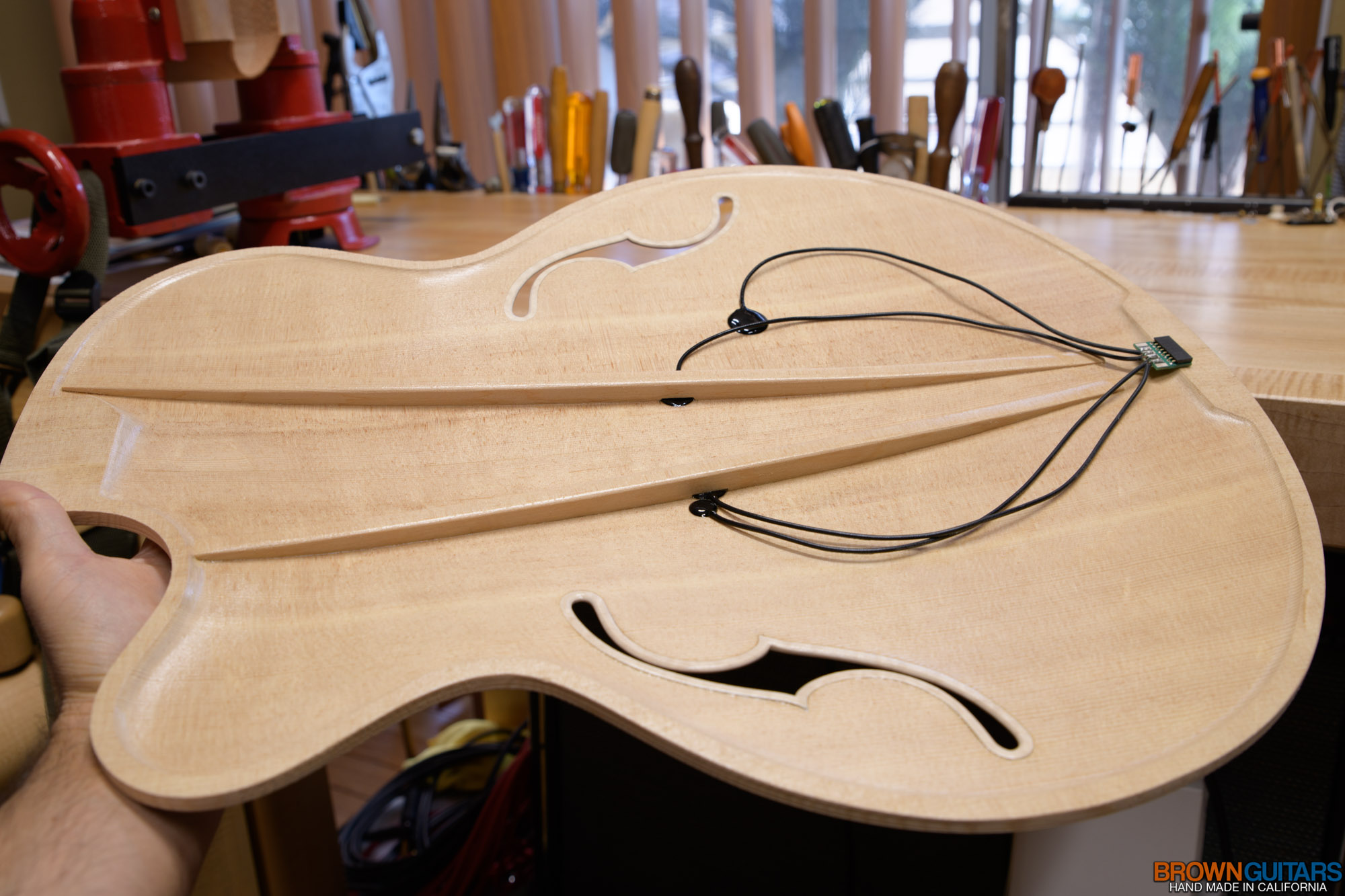 To capture this acoustic brilliance, Tad frequently goes beyond traditional magnetic setups by offering cutting-edge acoustic systems like the James May Ultratonic (soundboard transducer) and the Rich Barbera Soloist (saddle transducer). By combining a magnetic pickup with soundboard and saddle transducers, Tad creates a highly advanced multi-source array. Each pickup captures a unique, complementary slice of the tonal spectrum. The result is a massive dual or three-way stereo sound that captures a wider dynamic range, offering more sonic dimensions than a standard magnetic pickup could achieve alone.
Archtop builders and players frequently debate X-bracing vs parallel tone bars. Yet among all other carved, tailpiece-driven stringed instruments—from the violin and viola to the cello and double bass—X-bracing is completely non-existent. X-bracing was engineered specifically for flattop acoustic guitars to get around the center soundhole while reinforcing the missing spruce, and withstanding the rotational torque of a glued-on pin-bridge. A carved archtop, however, operates under an entirely different set of physical forces: pure downward compression from a floating bridge.
Parallel tone bars run longitudinally along the top plate, reinforcing the arch directly alongside the F-holes while supporting the bridge footprint—allowing the top to be carved thinner and lighter, maximizing acoustic efficiency and energy transfer. By aligning the internal bracing with the natural physics of the arched plate, Tad creates instruments that project with acoustic power, clarity, and balance across the entire register.
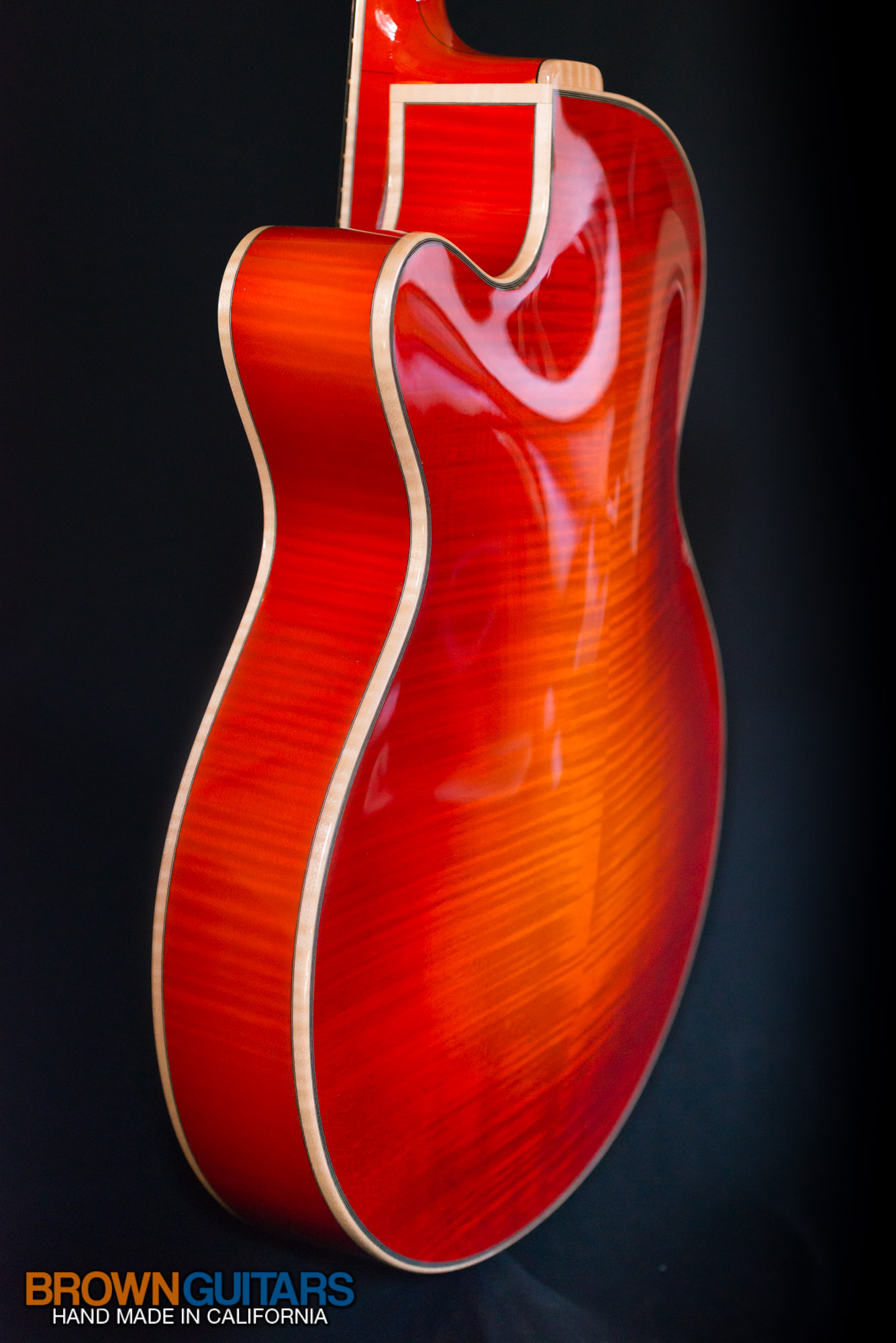
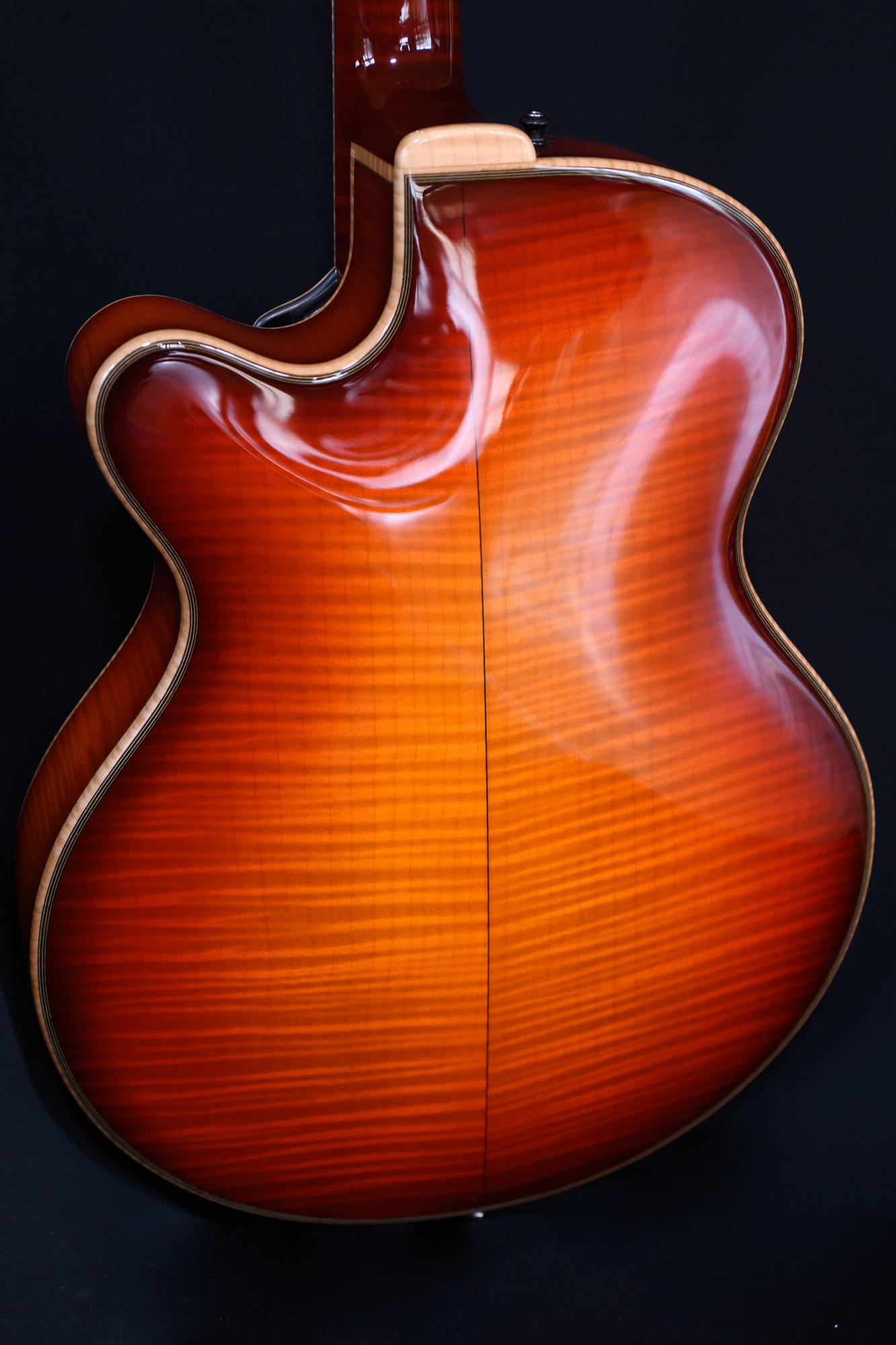
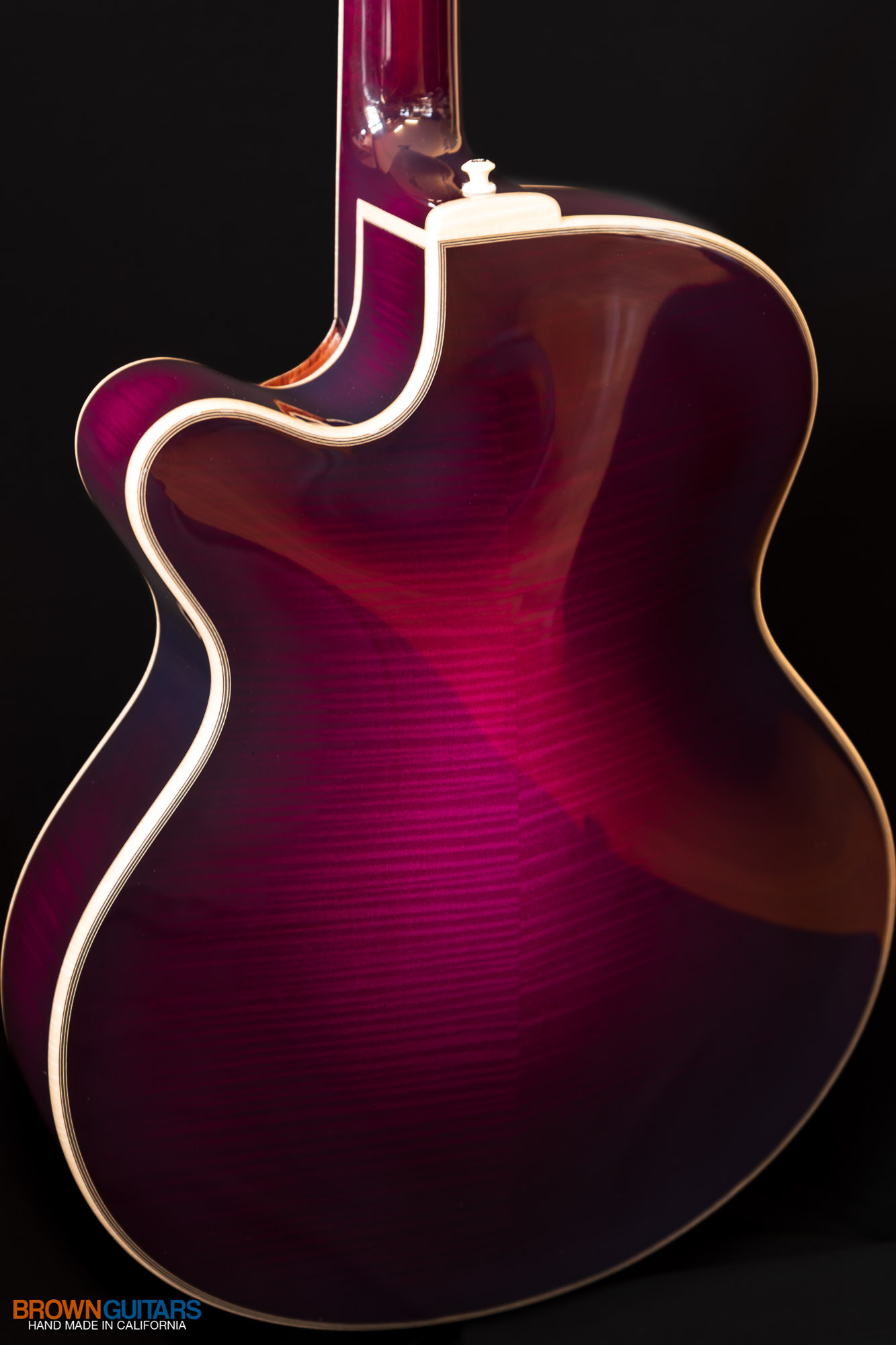
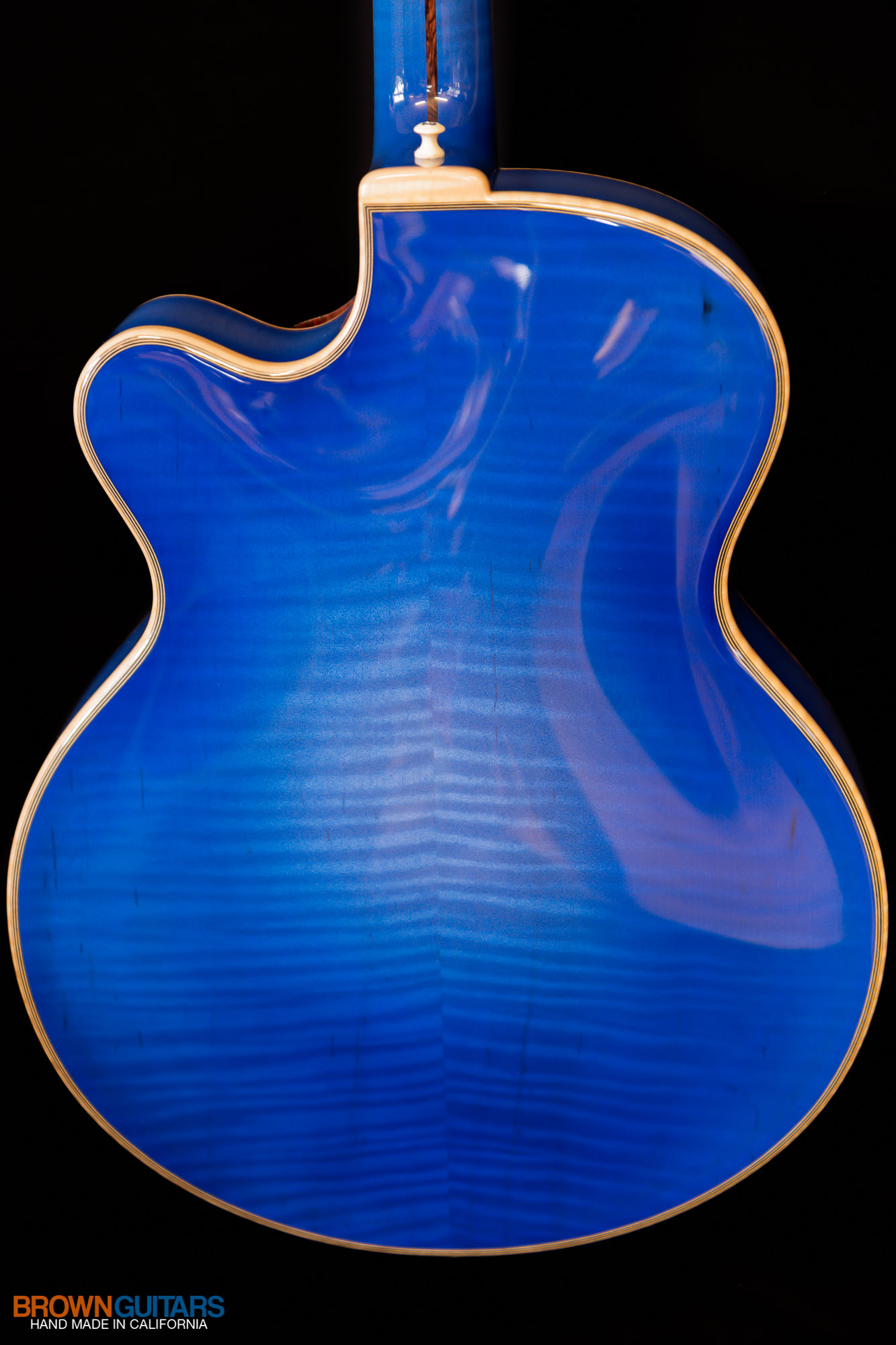
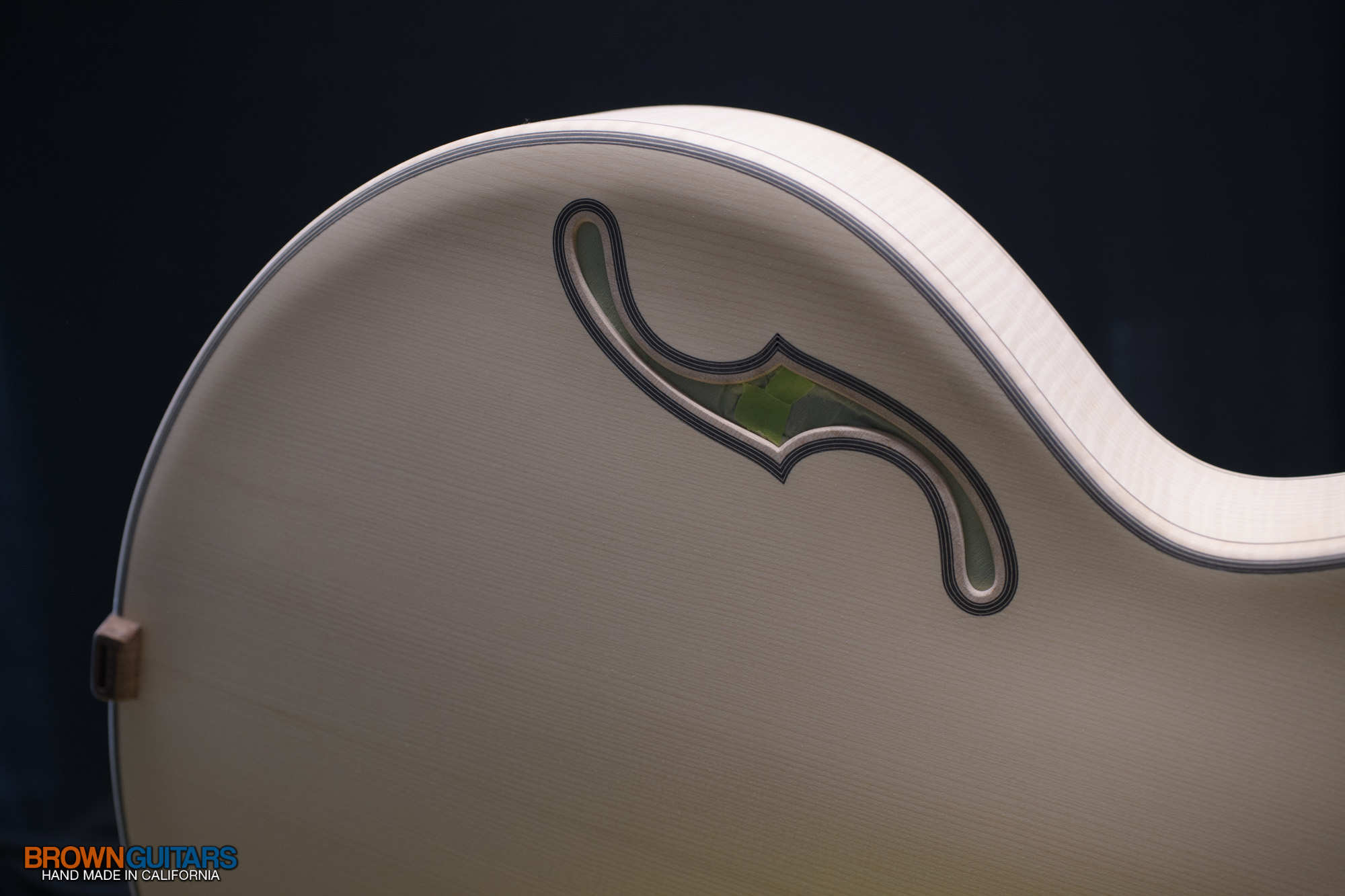 Traditional archtops often feature sharp perimeter edges that press uncomfortably into the player’s arm and body. To solve this, builders often cut away sections of the top and back rim, patching them over with decorative veneer. This introduces three tradeoffs: the veneer can delaminate over time, an internal structural reinforcement block must be added (which increases total instrument weight), and the cutout physically narrows the vibrating surface area of the solid spruce top. Tad avoids these compromises by hand-carving smooth, ergonomic arm and rib contours directly into the solid top and back plates. This continuous-wood approach eliminates veneer failure risks, avoids unnecessary internal weight, and preserves the full vibrating area and acoustic integrity of the tonewoods—delivering player comfort without sacrificing tone.
Tad’s work is grounded in a core belief: there are no shortcuts in lutherie—only a lifelong commitment to honing one’s craft, a deep respect for the instrument, and a constant drive for refinement. His guitars are the embodiment of passion, decades of experience, and a relentless pursuit of excellence. In an industry dominated by overseas factories and big brand names, Tad’s instruments quietly distinguish themselves through uncompromised personal craftsmanship, a spirit of forward-thinking design, and an unwavering commitment to delivering exceptional performance.
With profound respect for the master luthiers who paved the way, Tad builds each instrument as a bridge between past, present, and future. Every hand-carved plate and meticulously shaped neck honors the rich heritage of the archtop while empowering the modern musicians who push its boundaries—creating heirloom instruments built to inspire generations of storytellers to come.